Valentine's, White Day, Black Day: Love Across East Asia
From Valentine's to White Day and Black Day, how Japan, Korea, and China reinvented love holidays. Plus: the horror game White Day.
La rédaction Kotoba Interactive
Studio éditorial
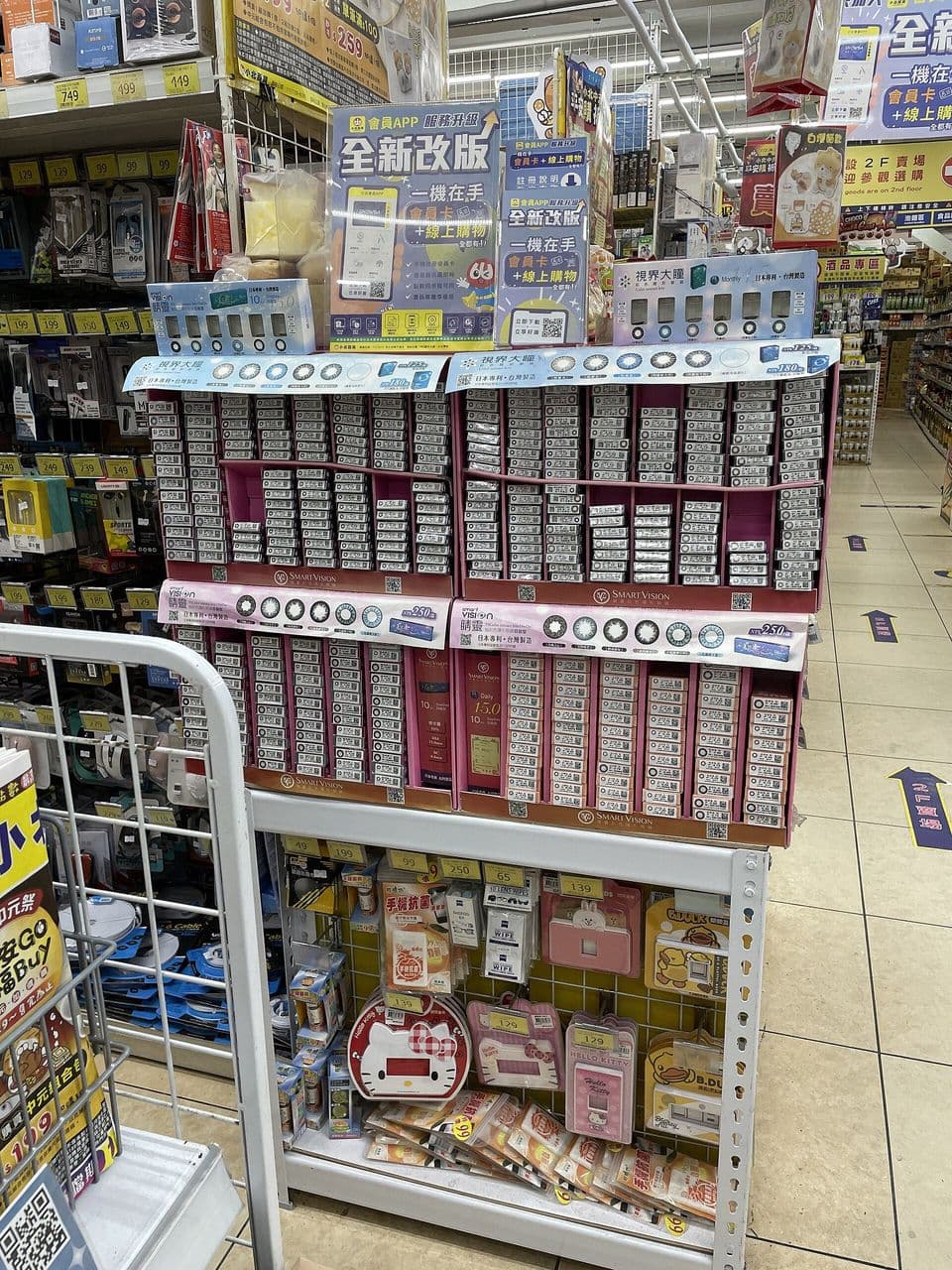
February fourteenth, inside a konbini in Tokyo's Shibuya district: the shelves overflow with pink, red, and gold boxes. In Japan, Valentine's Day is not a candlelit dinner between lovers, it is a codified social ritual in which women give chocolate to men. And that is only the first act of a romantic calendar that stretches over three months, crosses three countries, and touches on questions far deeper than romance: gender roles, social pressure, loneliness, and sometimes pure terror.
Valentine's Day, Japanese Style#
In 1936, the Russian confectionery company , established in Kobe since 1926, published an advertisement in the Japan Advertiser aimed at the city's foreign community: give chocolate to your sweetheart for Valentine's Day. It was not until the 1950s that major Japanese department stores, led by Isetan and Takashimaya, launched full-scale campaigns around February fourteenth. But something went sideways in the cultural translation: instead of the Western pattern where the man courts the woman, the reverse took hold.
The most widespread theory cites a translation error in a late-1950s campaign that presented Valentine's Day as "the day when women express their feelings." Others point to a social reality: in postwar Japan, where rigid conventions prevented women from declaring their love openly, the holiday offered an emotional safe-conduct pass framed by the calendar.
The system quickly codified itself around three categories of chocolate, each carrying a distinct message:
| Chocolate | Recipient | Message | Investment |
|---|---|---|---|
| 本命チョコ (honmei choko) | The person you love | Sincere love | High (homemade or artisanal) |
| 義理チョコ (giri choko) | Colleagues, supervisors, friends | Social duty (giri) | Low to moderate |
| 友チョコ (tomo choko) | Close female friends | Female friendship | Variable |
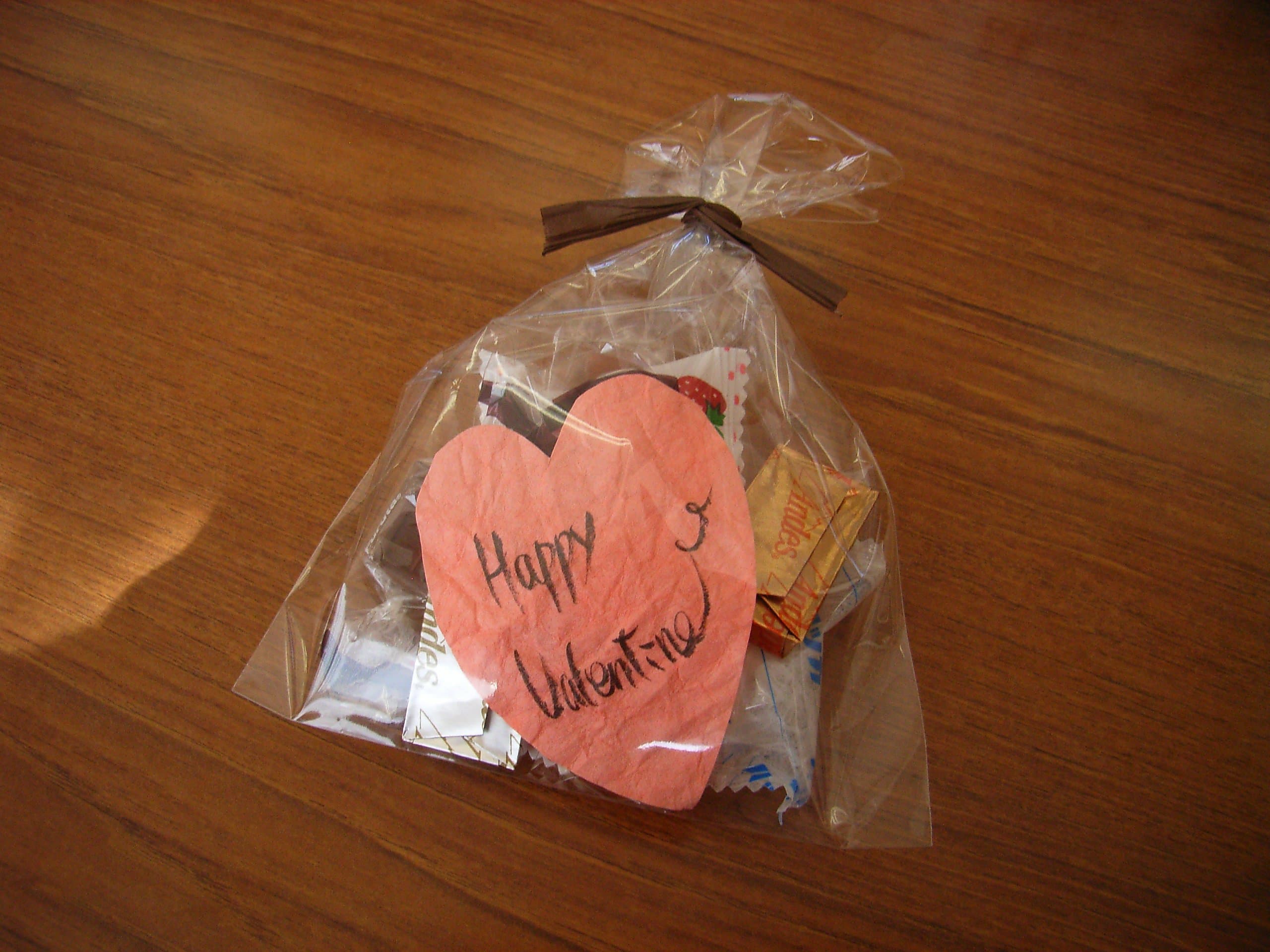
- is meant for the person you genuinely love. Often homemade or purchased from a renowned artisan chocolatier, it represents a considerable emotional and financial investment.
- is given to colleagues, supervisors, teachers, or male friends. It carries no romantic charge: it is a social lubricant rooted in the logic of , the sense of duty that structures interpersonal relationships in Japan.
- , which emerged in the 2000s, circulates among female friends and has turned the holiday into a celebration of female friendship.
According to the Japan Chocolate and Cocoa Association, chocolate sales around Valentine's Day amount to roughly fifty billion yen per year, nearly half of the industry's annual revenue. Konbini, department stores, and luxury boutiques compete in inventiveness: limited editions, collaborations with French pastry chefs, calligraphed packaging. February fourteenth has become the single most important day of the year for Japan's chocolate industry.
The phenomenon also draws criticism. Since the 2010s, many Japanese companies have banned giri choko in the workplace to eliminate social pressure and forced spending. The movement is gaining ground, driven by women who refuse a chore disguised as tradition.
Inside a Japanese box of chocolates, there is far more than cocoa and sugar. There is a map of the invisible bonds connecting a woman to her world: love, friendship, duty, and sometimes the relief of having forgotten no one.
White Day: March Fourteenth, the Men Respond#
If Valentine's Day is the day women give, is the day men give back. One month later, on March fourteenth, men who received chocolate respond with a gift. The tradition is neither ancient nor Western: it was invented from scratch by the Japanese confectionery industry.
In 1977, , a Fukuoka confectionery firm, marketed white marshmallows as a return gift, calling the promotion "Marshmallow Day." In 1978, the formalized the concept as "White Day," set on March fourteenth, with white symbolizing the purity of the feelings offered in return.
The unspoken rule is the : the man's gift should be worth roughly three times the chocolate received. A giri choko at five hundred yen calls for a return gift at fifteen hundred; an artisan honmei choko may demand jewelry, a handbag, or dinner at a starred restaurant. The original marshmallows gave way to cookies, white chocolate, macarons, and jewelry, the gift expected to be white or pastel. Certain luxury brands, from Tiffany to Cartier, earn a significant share of their annual revenue in Japan during the first two weeks of March.
White Day has spread beyond Japan. In South Korea, it has been celebrated since the 1990s, with a preference for candies. In Taiwan, men often add flowers to the sweets. In mainland China, the tradition remains more subdued but is gaining ground in major cities, fueled by e-commerce and social media.
Behind 義理 (giri, social duty) and 本命チョコ (honmei choko, true-feeling chocolate) lies a whole cultural grammar. Learn to read these words in their original script with JapaneseSRS and its spaced repetition, from チョコ (choko, chocolate) to the subtler shades of the Japanese heart.
Black Day: April Fourteenth, the Singles Strike Back#
And what about those who received nothing on February fourteenth or March fourteenth? In South Korea, they have their own day: , observed on April fourteenth. Singles gather at restaurants to eat , noodles smothered in a thick black sauce made from fermented soybean paste called . The black color mirrors the mood of lonely hearts, a contrast to Valentine's red and White Day's white.
Born in the 1990s with no identifiable corporate sponsor, Black Day is a spontaneous, self-deprecating reaction to the romantic pressure of the two preceding months: people go with friends, laugh about their situation, and console each other over a big steaming bowl of black noodles.
Restaurants offer special Black Day menus, some bars organize singles meetup nights, and Korean social media fills with selfies in front of plates of jajangmyeon, between feigned melancholy and unapologetic pride. Black Day has become a cultural phenomenon in its own right, a wry retort to the chocolate and jewelry industries.
The Romantic Calendar of East Asia#
These three holidays are merely the first chapters of a romantic calendar that spans the entire year in East Asia.
In South Korea, every fourteenth of the month carries a name and a tradition. invites couples to exchange roses; speaks for itself; is for exchanging silver rings; sends couples into nature while singles drown their sorrows in soju; closes the year with an embrace.
deserves special mention. The 11/11 notation resembles four sticks of Pepero, the chocolate-coated Korean biscuits made by , and the date has become a massive commercial holiday on which Lotte earns a substantial share of its annual revenue. The rivalry with Japan's Pocky Day, celebrated on the same date for Glico's Pocky biscuits, adds cross-border cultural competition.
In China, the traditional lovers' holiday is , on the seventh day of the seventh lunar month, usually in August. It rests on one of the most beautiful Chinese legends: the cowherd and the weaver girl , separated by the Milky Way on the orders of the Queen Mother of the West, can reunite only once a year, when magpies form a celestial bridge with their wings. More than two thousand years old, the legend has crossed borders: in Japan it became , celebrated on July seventh, when people hang wishes written on strips of colored paper called on bamboo branches.
The Western Valentine's Day has also established itself in China, coexisting with Qixi: young people in major cities celebrate both, doubling the occasions and the expenses. E-commerce platforms like Taobao and JD.com amplify the phenomenon with aggressive campaigns.
White Day: When Love Turns to Horror#
The name "White Day" evokes marshmallows and shy confessions. But for video game enthusiasts, it evokes a Korean high school plunged into darkness and haunted corridors.
is a survival horror video game developed by the Korean studio and released in 2001 for PC. A high school student named sneaks into at night to place a White Day gift in the locker of a classmate, . But the doors lock behind him, the lights go out, and he discovers that he is not alone.
The player has no weapons: the only defenses are flight and concealment. The primary enemies are the night janitor, whose footsteps echo with chilling regularity, and a series of ghosts inspired by Korean urban legends. The game exploits the architecture of an ordinary Korean high school, empty classrooms, service stairwells, poorly lit restrooms, to create an atmosphere of claustrophobia.
In 2001, when survival horror was dominated by Resident Evil and Silent Hill, Sonnori offered a game with no combat, focused on exploration, puzzles, and psychological fear. Its dynamic difficulty system adjusted ghost appearances and janitor behavior based on the player's style. The game became a cult classic in Korea but remained virtually unknown outside Asia, due to the lack of localization.
In 2015, the studio ROI Games published a complete remake titled White Day: A Labyrinth Named School for PC, followed by PlayStation 4, iOS, and Android. It preserved the narrative structure and level design of the original while modernizing the graphics in Unreal Engine 4, adding new endings, and enriching the lore with collectible documents. The title achieved modest but passionate international success.
The title is no accident: the plot hinges on the initial romantic gesture, leaving a gift for White Day, that spirals into nightmare. The school, a space of socialization and first crushes, becomes a lethal labyrinth: behind the codified rituals of adolescent love lurk very real anxieties, the fear of rejection, the dread of failure, loneliness in the middle of a crowd.
A Cultural Mirror#
Taken together, these holidays paint a portrait of contemporary East Asia. Japanese Valentine's Day, with its tripartite system of obligation, love, and friendship chocolate, reveals a society where gift-giving functions as a coded language. White Day illustrates capitalism's ability to create traditions ex nihilo that acquire an emotional authenticity of their own. Korean Black Day, with its dark humor and consolation noodles, speaks to a culture that knows how to laugh at its own contradictions.
These holidays also reveal tensions. The gendered roles (women give, men return) are increasingly contested, and the movement against giri choko reflects a growing refusal of automatic social obligations. In Korea, the monthly love calendar is criticized for the pressure it places on singles in a country where the marriage rate is plummeting and loneliness has become a public health concern.
There is also something touching in these traditions: the teenage girl who spends three hours crafting a honmei choko for the boy who never looks her way, the Korean singles laughing over their black noodles on a rainy April fourteenth. The video game White Day says it better than anyone: its hero does not break into a haunted school to fight ghosts, he enters to leave a gift. Love, in Asia as everywhere else, is an act of ordinary courage.
Photo credits: the images used in this article come from Pexels and Unsplash and are royalty-free.
In this article
The cultural terms covered here, each with a short definition.
- Black Day
- Korean day on April 14 when singles eat black jajangmyeon noodles.
- Valentine's Day
- Lovers' holiday, celebrated in Asia with its own codes where women give chocolate.
- White Day
- Asian holiday on March 14 when one returns a gift received on Valentine's Day.
Ib, Mad Father, Misao: Asian Indie Horror Games
From Ib to Mad Father, Misao to White Day: explore the Japanese and Korean indie horror games that terrified a generation through pixel art, dread and unforgettable storytelling.
Cover image: Ishikawa Ken from Kamakura, Japan · Wikimedia Commons · CC BY-SA 2.0