Makgeolli: Korea's milky rice wine
History and secrets of makgeolli, Korea's cloudy, fizzy rice wine: nuruk fermentation, the farmers' drink, rainy-day pajeon pairing, and trendy revival.
La rédaction Kotoba Interactive
Studio éditorial
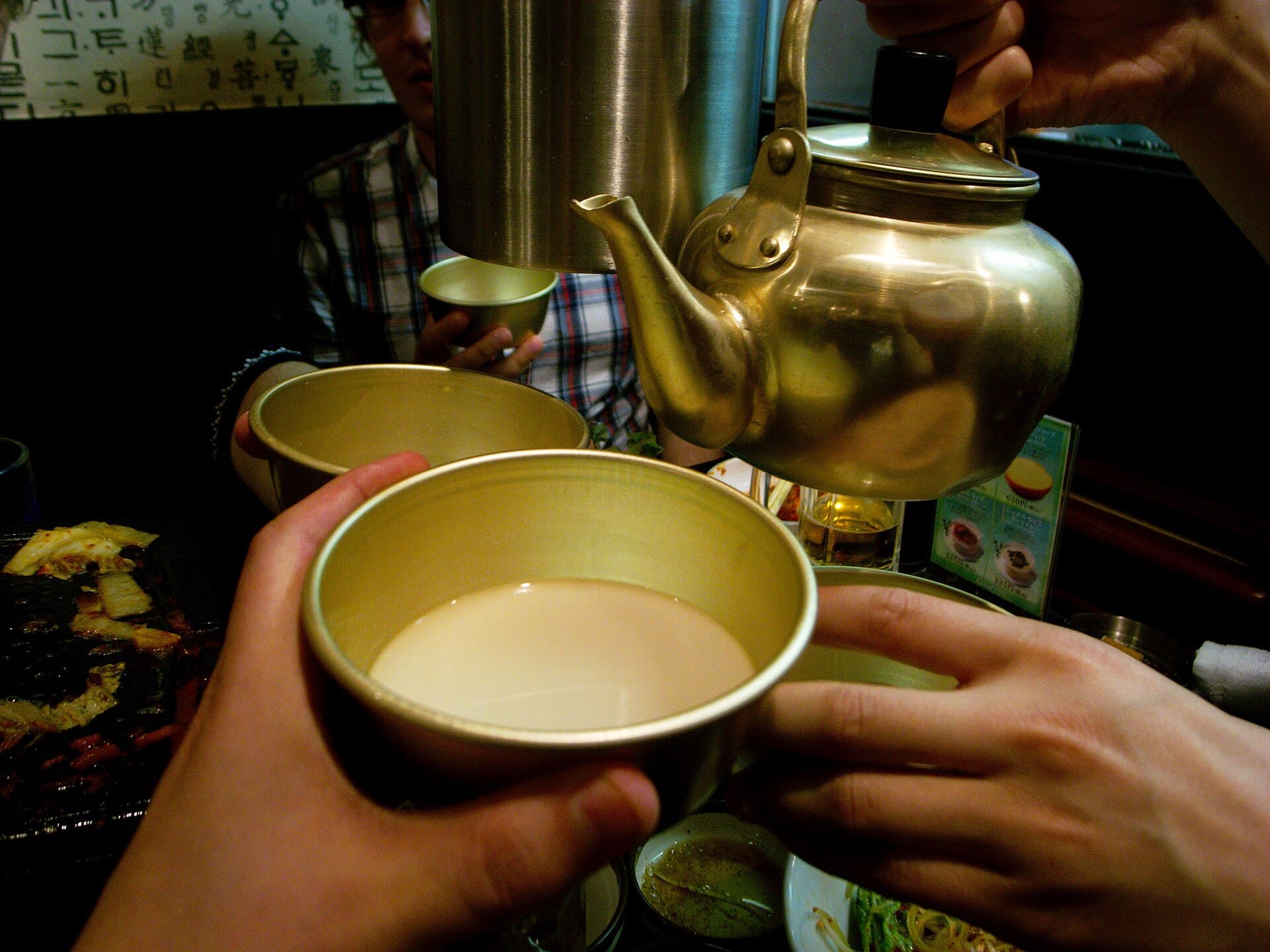
In a wide, low ceramic bowl, a white and cloudy liquid sits, faintly effervescent. You stir it first, because the sediment has settled at the bottom, then raise it to your lips: it is sweet, tangy, lightly sparkling, with a taste of rice and leaven. Low in alcohol, fresh on the palate, it accompanies the laughter of a gathered table on a rainy day. This simple, convivial drink is makgeolli.
is a fermented Korean rice wine, recognisable by its milky look and its low strength, generally between six and eight percent. The oldest drink on the peninsula, long the drink of peasants, it is enjoying a spectacular return to favour today. To understand it is to taste a rural and warm-hearted Korea, a world away from clear, stiff spirits.
A drink of rice, water and ferment#
Makgeolli is born of just three ingredients: rice, water and , a traditional Korean ferment. Nuruk, a kind of grain cake on which yeasts and moulds develop, is the key to fermentation: it turns the starch of cooked rice into sugars, which the yeasts then convert into alcohol. The mixture ferments for a few days, yielding an alcoholic mash that is coarsely filtered.
It is precisely this rough filtration that gives makgeolli its cloudy appearance and its name. Where other alcohols are clarified, makgeolli keeps in suspension the fine rice particles that lend it its milky colour, its slightly thick body and that inimitable rustic taste. Served unfiltered and alive, it sometimes keeps gently fizzing in the bowl.
Makgeolli is not a drink one refines: it is a drink one shares, cloudy like the earth it comes from.
The drink of fields and seasons#
For centuries, makgeolli was the farmers' drink, so much so that it was called nongju (농주), "farming alcohol." People drank it in the fields to regain their strength during labour, and at village festivals. Cheap, nourishing, lightly alcoholic, it was the everyday rural drink, within everyone's reach, far from the prestige of courtly liquors.
One association has remained etched in Korean culture: that of makgeolli and rainy days. When the sky clouds over, many Koreans crave a bowl of makgeolli paired with pajeon (파전), the crispy spring-onion pancake. The explanations vary (the sound of rain recalling that of the sizzling pancake, the longing for comfort on grey days), but the ritual is very real.
The name 막걸리 (makgeolli) is explained by how it is made: it combines mak (막), which evokes the idea of "roughly, hastily," and the verb georeuda (거르다), "to filter." Literally, then: "roughly filtered." The name describes the drink itself: an alcohol that is not clarified, and which draws its whole identity from that.
Makgeolli and soju: two Koreas in the glass#
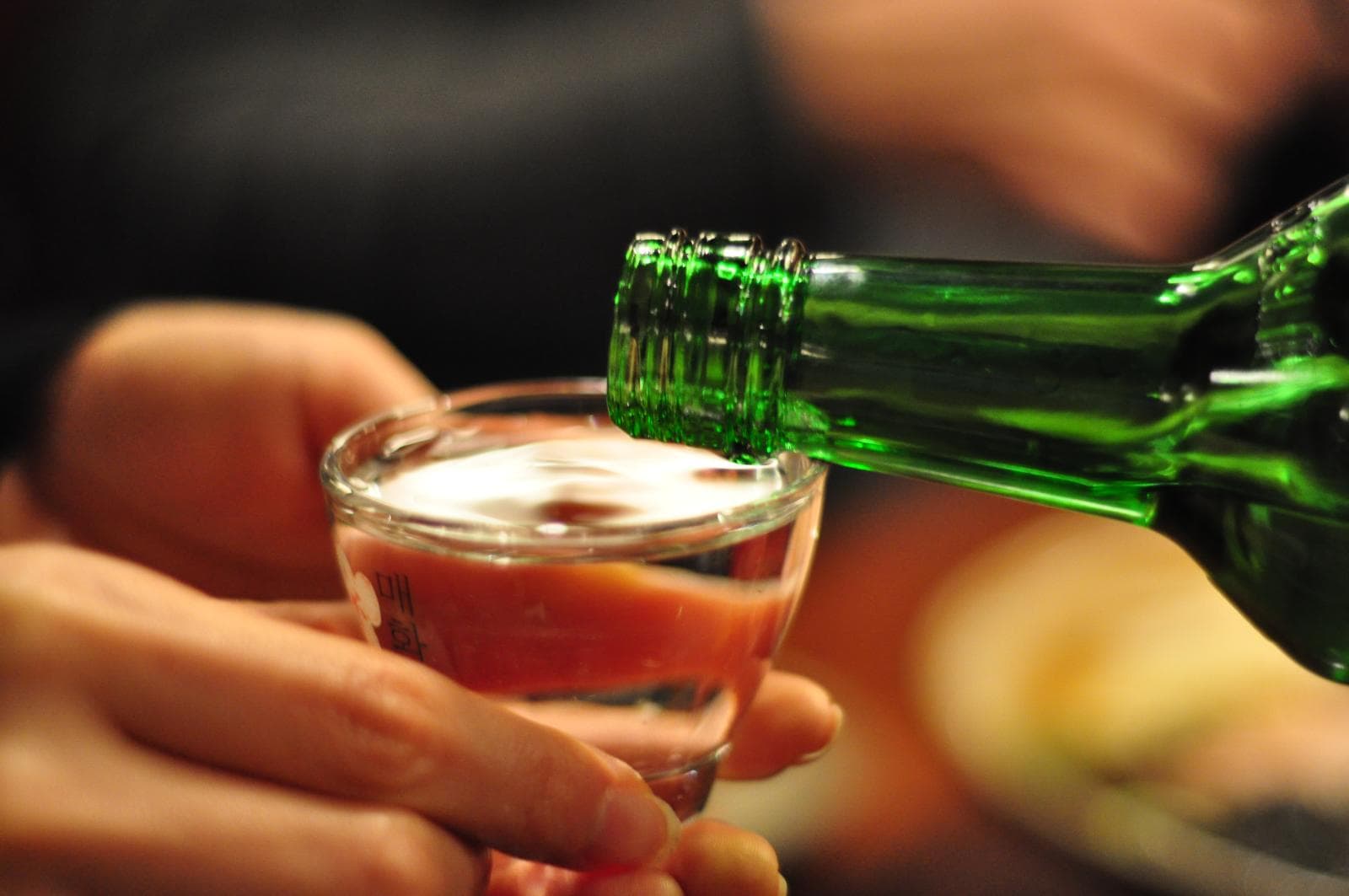
Makgeolli and soju are sometimes confused, the two great popular alcohols of Korea, even though everything sets them apart. Soju is a distilled alcohol, clear, stronger, drunk in small shot glasses; makgeolli is a fermented alcohol, cloudy, sweet and light, drunk from a bowl with a ladle. One evokes the night out and quick intoxication, the other quiet conviviality and the shared table.
| Criterion | 막걸리 (makgeolli) | 소주 (soju) |
|---|---|---|
| Process | Fermented, coarsely filtered | Distilled, clarified |
| Appearance | White, cloudy, milky | Clear, transparent |
| Alcohol strength | Low (about 6 to 8%) | Stronger (about 16 to 20%) |
| Serving | From a bowl, with a ladle | In small shot glasses |
| Mood | Quiet conviviality, shared table | Night out, quick intoxication |
Makgeolli tastes better once you can name what surrounds it: 막걸리 (makgeolli, the cloudy rice wine), 누룩 (nuruk, the traditional ferment) and 파전 (pajeon, the rainy-day spring-onion pancake). With KoreanSRS and spaced repetition, memorise this Korean vocabulary and order your bowl with confidence.
Makgeolli's great rival is soju, the other emblematic alcohol of Korea, distilled and clear where it is fermented and cloudy. To compare the two, discover the history of soju.
A return to favour#
Long seen as an old-fashioned drink of the older generation, makgeolli has for a few years been living a true revival. Young brewers offer artisanal and refined versions, sometimes flavoured with fruit, flowers or grains, served in dedicated bars. Prized for its natural, probiotic character, it appeals to a new generation in Korea as abroad.
From the rice paddies where it was drunk by the ladle to the trendy bars of Seoul, makgeolli has crossed the centuries without losing any of its warmth. To discover it is to taste a modest and joyful Korea, and learning Korean means being able to order a bowl of makgeolli on a rainy day, understand why it calls for pajeon, and raise your cup to the rhythm of a table of friends.
FAQ#
What is makgeolli? Makgeolli (막걸리) is a fermented Korean rice wine, white and cloudy in appearance and low in strength (around 6 to 8%). Made of rice, water and nuruk ferment, then coarsely filtered, it is the oldest alcoholic drink in Korea.
What is the difference between makgeolli and soju? Makgeolli is a fermented alcohol, cloudy, sweet and light, drunk from a bowl. Soju is a distilled alcohol, clear, stronger, drunk in small glasses. The first evokes quiet conviviality, the second the night out.
Why is makgeolli drunk on rainy days? It is a deeply rooted cultural association in Korea: in rainy weather, people enjoy a bowl of makgeolli with a pajeon pancake. It is explained by the comfort sought on grey days and by the sound of rain that evokes that of the sizzling pancake.
Is makgeolli strong in alcohol? No, it is a relatively light alcohol, usually between 6 and 8%, barely more than a strong beer. This is one of the reasons for its convivial character and its popularity as a drink for sharing.
Photo credits: the images used in this article come from Pexels and Unsplash and are royalty-free.
Soju: The History and Etiquette of Korea's National Spirit
The history of soju, Korea's national spirit: its Mongol origins, the rice ban, the Jinro brand, the etiquette of the glass and soju's place in Korean culture.
Cover image: Jon Åslund from Sweden · Wikimedia Commons · CC BY 2.0