Pepero Day: November 11, Korea's Beloved Snack Holiday
On 11/11, South Korea celebrates Pepero Day. History of Lotte's iconic snack, marketing genius, Pocky Day rivalry, and cultural phenomenon.
La rédaction Kotoba Interactive
Studio éditorial
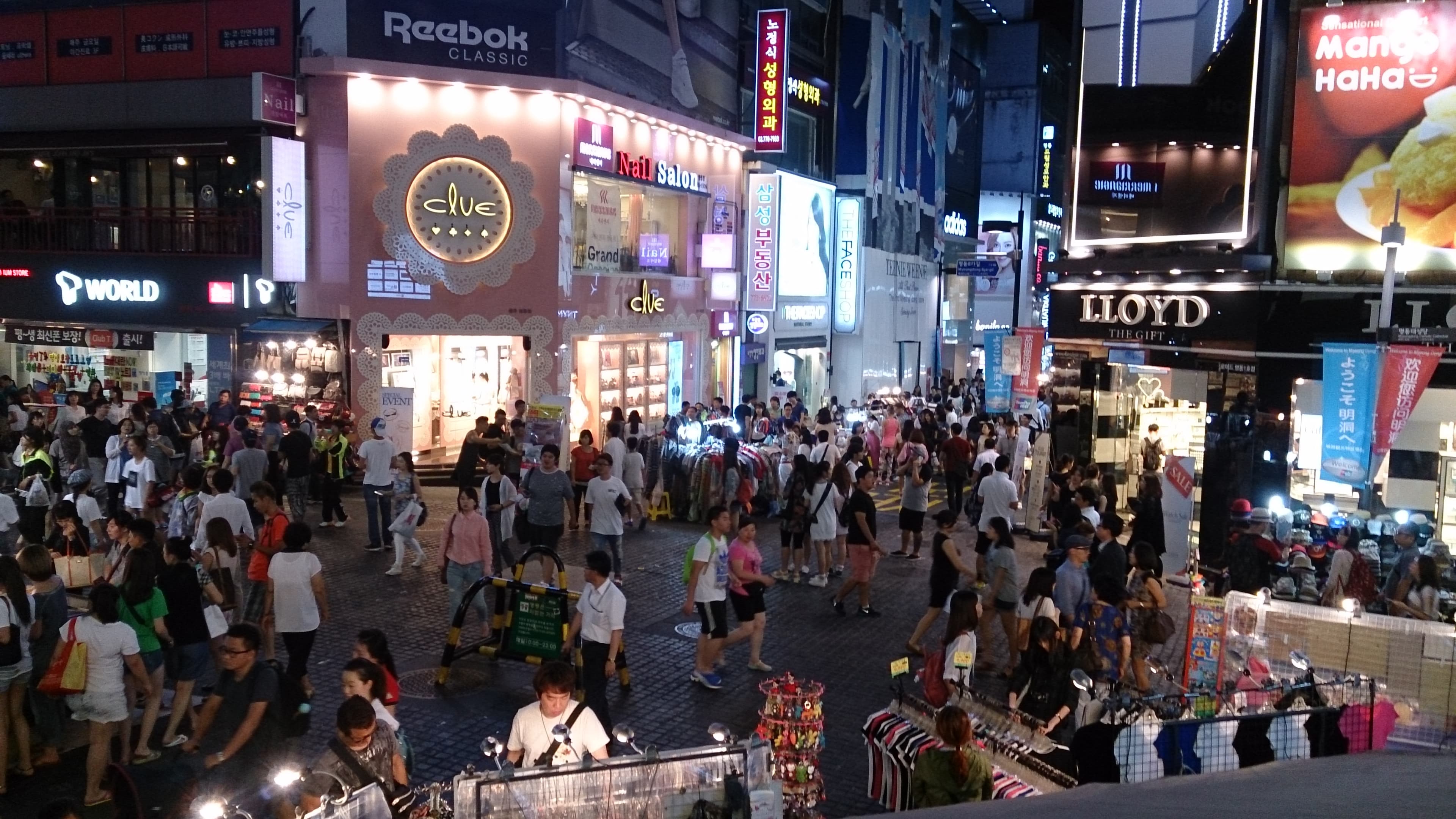
Seoul, November eleventh, eight in the morning. Inside a in Hongdae, the storefront has vanished behind a wall of pink, red, and gold boxes stacked to the ceiling in columns that echo the four sticks of the number 11.11. Two high school girls compare bags of customized boxes with stickers and ribbons. One hands a package to her friend: "Happy Pepero Day!" It is South Korea's strangest unofficial holiday, a celebration of the biscuit stick that mobilizes millions of people and generates hundreds of millions of dollars in revenue.
appears on no official calendar. No decree established it, no ancient tradition justifies it. Yet every November eleventh, all of South Korea transforms into a gigantic biscuit stall. How did a simple factory-made snack become the excuse for a festival celebrated by tens of millions of people? It is the story of an unlikely meeting between a biscuit, a date, and the marketing genius of a country.
A Biscuit, a Date, a Phenomenon#
The origin of Pepero Day is the subject of several accounts, but all point to , South Korea's second-largest metropolis, a port facing the Korea Strait. According to the most widespread version, everything began in the mid-1990s, at a girls' middle school in the district. A group of schoolgirls supposedly started exchanging Pepero sticks on November eleventh because the date, written 11/11, looks like four thin biscuits lined up side by side. The gesture carried a wish: to stay slim and slender like a Pepero. Other versions place the origin in 1994, others in 1997; some accounts mention high schoolers and the neighborhood instead of Yeongdo.
Popular holidays rarely spring from a single, datable event; they emerge from an accumulation of spontaneous practices that become "tradition." By the late 1990s, the habit of exchanging Pepero on November eleventh had spread far beyond Busan to the entire country. The media picked it up, and , the manufacturer of Pepero, quickly realized it was sitting on a gold mine.
The date possesses a numerical elegance: November eleventh, month eleven, day eleven, is written 11/11. Four vertical lines, four biscuit sticks. The year 2011 was a peak: 11/11/11, six ones in a row, triggered an unprecedented commercial frenzy, and Pepero sales that day shattered Lotte's forecasts. Couples got married on the date for the anecdote, and babies born on 11/11/11 at 11:11 made the evening news.
Pepero: The Story of a National Snack#
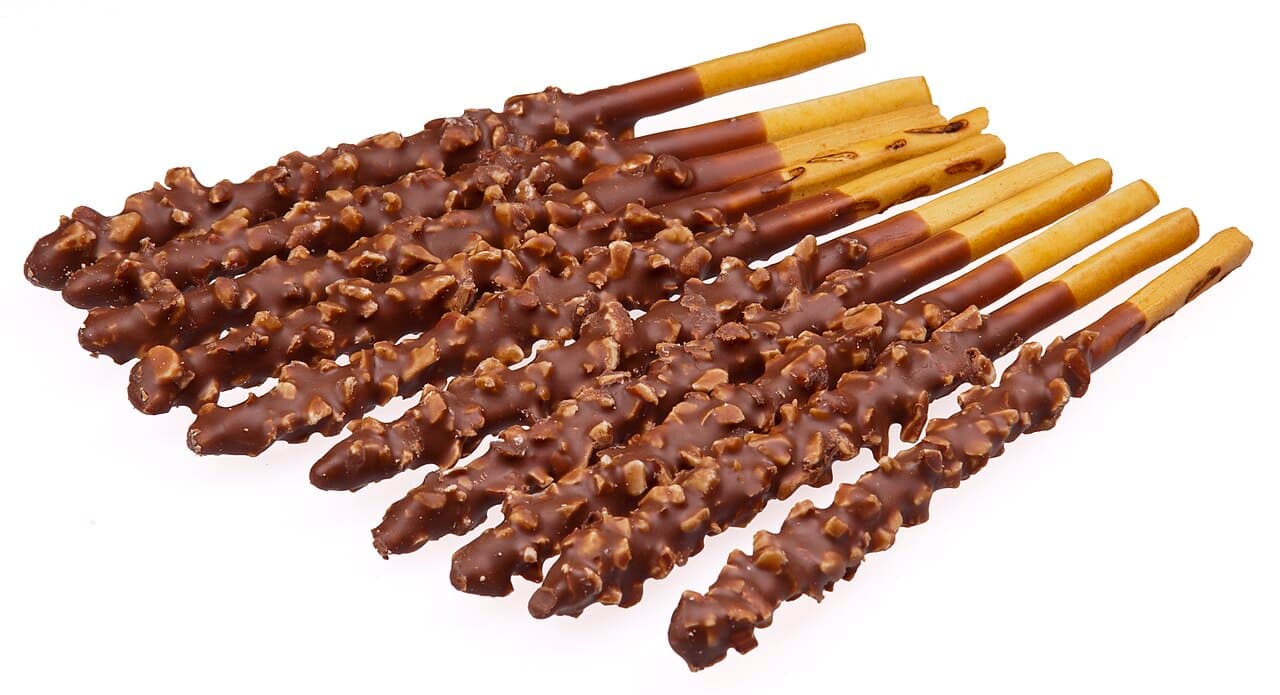
This chocolate-coated biscuit stick is manufactured by , the confectionery arm of the South Korean conglomerate Lotte Group. The first Pepero rolled off the line in 1983: a crunchy stick about twelve centimeters long, its upper two-thirds coated in milk chocolate, the bare lower third serving as a grip. The name "Pepero" is thought to derive from a Korean onomatopoeia evoking something long and thin, though Lotte has never officially confirmed this etymology.
The success was immediate. Pepero filled a niche: a sweet, portable, clean (no greasy crumbs thanks to the uncoated section), shareable, and affordable treat. In the 1980s, South Korea was experiencing explosive economic growth, and a new urban middle class was discovering mass consumption. Pepero became one of the era's iconic snacks, alongside Orion's and Nongshim's .
The Variants: An Empire of Flavors#
Lotte has expanded Pepero into dozens of variants. The current catalog includes more than fifteen permanent lines and numerous seasonal editions:
- Pepero Original: the classic, biscuit and milk chocolate, the one that started it all.
- : chocolate studded with crushed roasted almonds, the most popular variant after the original.
- : a conceptual inversion where the chocolate is inside a hollow biscuit tube, forming a shell filled with chocolate cream.
- : for those who prefer a more intense cocoa profile.
- Pepero White Cookie: cocoa biscuit coated in white chocolate sprinkled with cookie pieces.
- : matcha coating, a nod to the Korean and Japanese love of green tea.
- : pink strawberry coating, popular in spring.
- Pepero Tiramisu, Pepero Blueberry Yogurt, Pepero Melon: limited editions that appear according to seasons and trends.
Lotte Confectionery produces hundreds of millions of boxes every year. In a normal month, Pepero sales hover around eight to ten billion won (roughly six to eight million euros). But in October and November, production surges: according to Lotte's annual reports, sales during those two months account for roughly half of the product's annual revenue. The factory then operates around the clock, seven days a week.
Pepero vs Pocky: The Biscuit Stick Wars#
It is impossible to discuss Pepero without mentioning its rival and model: . Manufactured by , an Osaka-based company founded in 1922, Pocky has existed since 1966, seventeen years before the first Pepero. The resemblance is striking: same chocolate-coated biscuit stick, same format, same logic of expansion into multiple flavors.
The Copycat Accusation#
Whether Pepero is a copy of Pocky has fueled decades of debate and lawsuits. Glico has filed complaints against Lotte on multiple occasions, notably in 2014 before Japanese courts, arguing that the shape of the coated biscuit stick constituted a protectable trade dress. The Tokyo court dismissed the complaint, ruling that the shape was too generic to be protected under trademark law; the appeal was also rejected. In South Korea, Lotte has never been found guilty of counterfeiting.
On flavor, connoisseurs note differences: Japanese Pocky has a thinner, crunchier biscuit with a coating richer in cocoa; Korean Pepero offers a thicker, more floury biscuit with sweeter, milkier chocolate. Online debates between "Team Pocky" and "Team Pepero" reach a surprising intensity.
Pocky Day: The Japanese Twin#
Japan also celebrates November eleventh. Glico officially established in 1999, a dual anniversary for its two flagship products: Pocky (sweet stick) and . Glico's strategy is more institutional: the company has repeatedly attempted to break the Guinness World Record for the most people shouting "Pocky!" simultaneously. In November 2012, it rallied tens of thousands of participants via social media, and the hashtag #pocky became one of the most tweeted in the world that day.
The coexistence of both holidays on the same date illustrates the cultural dynamic between Korea and Japan: two countries that are geographically close, linked by centuries of exchange (and conflict), celebrating an almost identical product, each claiming emotional ownership of the holiday. In Korea, saying that Pocky is "the original" can provoke an irritated reaction; in Japan, some people are entirely unaware Pepero Day exists. This friendly (or not so friendly) rivalry mirrors the complex relationship between the two nations.
Pepero Day is a tasty gateway into the Korean language: behind 빼빼로 (ppeppero, pepero) sit everyday words like 편의점 (pyeonuijeom, convenience store) and 정 (jeong, the human warmth that makes people give gifts). With KoreanSRS and its spaced repetition, words like these will stick in memory as reliably as November eleventh comes around.
November 11: A Marketing Empire#
Pepero Day is one of the most brilliant marketing coups in the history of Asia's food industry. Lotte did not create the holiday: it captured it, amplified it, and institutionalized it.
November 11 actually gathers three distinct East Asian celebrations, one number carried by three cultural logics:
| Holiday | Country | Product or symbol | What it celebrates |
|---|---|---|---|
| 빼빼로 데이 (ppeppero dei, Pepero Day) | South Korea | Lotte biscuit stick | Connection, sharing, offered affection |
| 포키의 날 (poki-ui nal, Pocky Day) | Japan | Pocky and Pretz (Glico) | The brand, the institutional event |
| 광군절 (gwanggunjeol, Singles' Day) | China | Online shopping (Alibaba) | Being single, personal reward |
The Numbers That Make Your Head Spin#
In 2019, a pre-pandemic year, Pepero sales for the month of November alone reached approximately 25 billion won (roughly twenty million euros). By 2023, that figure surpassed 30 billion won. Measured against Pepero's annual revenue (estimated between 60 and 70 billion won), more than 40 percent of yearly sales are concentrated in the six weeks leading up to and including November eleventh; adding October, the proportion reaches roughly 50 percent. Half of all Pepero consumed in Korea each year is thus purchased in connection with Pepero Day.
Limited Editions and Collaborations#
Starting in October, Lotte unleashes an avalanche of limited editions, and special packaging is core to the strategy: heart-shaped boxes, gift sets with printed messages ("I love you," "You are my best friend," "Thank you, Teacher"), customizable packaging. Prices range from a thousand won (less than one euro) for a standard box to over thirty thousand won (about twenty-five euros) for a premium set containing multiple varieties, a ribbon, and sometimes a small extra gift.
Collaborations with idols are a decisive lever. Lotte has enlisted BLACKPINK, BTS, EXO, TWICE as ambassadors. Special editions featuring a group's members generate lines outside convenience stores, and fans collect the packaging like photocards. In 2016, Pepero boxes bearing the faces of EXO members resold on e-commerce sites at three to five times the original purchase price.
Pepero Bouquets and Cakes#
Pepero Day has spawned an entire artisanal ecosystem. Florists offer Pepero bouquets, where biscuit sticks replace flowers, wrapped in tissue paper with ribbons. Pastry chefs create Pepero cakes decorated with dozens of sticks planted vertically. On online marketplaces like and in gift shops, handcrafted sets sometimes include plush toys, scented candles, or tea sachets.
Social media amplifies the phenomenon. On Instagram and TikTok, the hashtag #PeperoDay generates millions of posts: bouquet tutorials, flavor comparisons, photos of "Pepero Day dates." The holiday has become content as much as celebration.
Beyond the Biscuit: What Pepero Day Reveals About Korea#
The Consumerist Critique#
Pepero Day does not enjoy universal approval. Every year, voices denounce a purely commercial holiday, massively exploited by a multinational corporation to sell biscuits. The parallel with Valentine's Day is frequently invoked. In South Korea, this critique has a name: .
In 2018, the organization published a report showing that certain Pepero Day gift sets were sold at margins 30 to 50 percent higher than the same products during the rest of the year, simply by changing the packaging. The report sparked a debate, but the following November eleventh, Lotte recorded yet another record.
Some commentators see in Pepero Day the symptom of a society caught in a cycle of conspicuous consumption where every month brings its own commercial "day": White Day (March 14, the answer to Valentine's Day), Black Day (April 14, for singles), Rose Day (May 14), Pepero Day (November 11), not to mention Christmas, now celebrated in Korea more as a romantic couples' holiday than a religious observance. The proliferation of these dates, all tied to purchases, raises questions about the Korean relationship between affection and its commodification.
A Genuine Moment of Sharing#
Reducing Pepero Day to a marketing operation would be unfair. For millions of Koreans, November eleventh is a genuine moment of warmth. Pepero sticks are not exchanged solely between lovers: they circulate among friends, colleagues, students and teachers, parents and children. In elementary schools, children make handmade Pepero in cooking class, dipping sticks into melted chocolate. In offices, boxes appear on desks with short notes. In families, it is an excuse to gather and laugh at a holiday everyone knows is a little absurd.
This emotional dimension fits into a Korean culture of , that deep feeling of attachment and human warmth. Offering a Pepero is a modest gesture that says "I am thinking of you" without the solemnity of an expensive gift: a pretext for expressing affection that Korean culture, Confucian at its roots, does not always encourage people to verbalize directly.
November 11 Elsewhere in Asia: China's Singles' Day#
November eleventh is also a major commercial date in China, but for different reasons. There, 11/11 is , created in the 1990s by students at Nanjing University to celebrate (with self-deprecating humor) being single. The four "ones" in the date symbolize four lonely people. In 2009, e-commerce giant transformed it into the world's largest online shopping event, with tens of billions of dollars in transactions within twenty-four hours.
The two holidays share a common structure: a striking date (11/11), a grassroots student origin, and massive commercial co-optation. But their meanings diverge. Pepero Day is a holiday of connection, sharing, and gifts offered to others; Singles' Day is a holiday of buying for yourself, of personal reward. One celebrates the relationship, the other the individual.
Four sticks lined up on a calendar: Korea sees a gift to share, China sees a freedom to celebrate. The same number, two philosophies of happiness.
A Phenomenon That Travels#
Pepero Day was for a long time a strictly Korean affair. But with the rise of and a Korean diaspora across every continent, the holiday has crossed borders. In Korean neighborhoods in Los Angeles, Tokyo, Sydney, and Paris, Asian grocery stores set up Pepero displays starting in October, and K-pop fans around the world celebrate it on social media.
Lotte has intensified its export efforts: Pepero is now distributed in more than fifty countries, with packaging carrying text in English, Chinese, Japanese, and sometimes Arabic. The brand sponsors events related to Korean culture abroad.
Will Pepero Day become a global holiday, the way Halloween crossed the Atlantic? Or will it remain a specifically Korean charm? The question remains open. What is certain is that every November eleventh, on the streets of Seoul, Busan, and Daegu, millions of chocolate-coated biscuit sticks change hands, carrying a message that needs no translation: someone thought of you today.
In this article
The cultural terms covered here, each with a short definition.
- Pepero Day
- Korean holiday on November 11 when people give each other stick-shaped Pepero biscuits.
Korean military service: length, exemptions, realities
18 to 21 months depending on the branch, a seven-grade fitness exam, vanishingly rare exemptions: how South Korean conscription works and what it costs.
Cover image: Evan-Amos · Wikimedia Commons · CC0