Palli-palli: The Culture of "Hurry, Hurry" That Keeps Korea Running
Bullet delivery, the world's fastest internet, the Miracle on the Han River: inside palli-palli, the national reflex that built Korea and sometimes broke it.
La rédaction Kotoba Interactive
Studio éditorial
It is eleven at night in Seoul, and you have just ordered a pair of earbuds on your phone. The next morning at seven, a neatly tied bag is already waiting at your door, dropped off while you slept. In the subway, the doors have not yet opened before the crowd has massed to surge out. At the restaurant, the banchan arrive before you have finished sitting down, and when the pedestrian light turns green, nobody strolls: everyone quickens their pace. One word is on every tongue, hammered out twice to drive the point home: palli-palli.
In South Korea, speed is not a constraint, it is second nature. The term , a reduplication of the word ppalli (빨리, "quickly"), means far more than mere impatience: it is a cultural trait raised to the level of a national reflex, a way of inhabiting time, of working, eating, consuming, and dreaming. This little word alone condenses an entire trajectory, that of a country that went from ruin to prosperity in a single generation, with its dazzling miracles and its resounding tragedies.
Two Syllables That Run a Country#
Palli-palli is no abstract concept reserved for sociology essays: it is a daily injunction, uttered dozens of times a day, from the construction site to the classroom. You hear it from the boss pressing his employees, the impatient customer, the parent hurrying a child, the taxi driver squeezing out the seconds. The reduplication gives it its force: ppalli alone would be a mere adverb, but ppalli-ppalli becomes a mantra, almost a rallying cry.
is the reduplication of the adverb , itself derived from the adjective . In Korean, reduplicating a word intensifies its meaning and lends it an insistent, colloquial, almost physical quality: ppalli-ppalli is not "quickly" but "come on, hurry up, right now."
Foreigners who settle in Korea often learn palli-palli before they even know the polite phrases. It is one of the first words they pick up, so thoroughly does it structure everyday life. Some see in it a permanent stress, others a formidable efficiency. Koreans themselves speak of it with a mix of pride and self-mockery: they know this reflex has taken them far, and that it costs them dearly.
Palli-palli is not an individual quirk: it is the metronome of an entire nation, set to a tempo the rest of the world struggles to follow.
The Roots: From Disaster to Miracle#
To understand palli-palli, you have to go back to the middle of the twentieth century, when Korea was nothing but rubble. Colonized by Japan until 1945, immediately divided, then ravaged by the Korean War (1950-1953), the southern half of the country ranked among the poorest on the planet as the conflict ended, more destitute than many nations of sub-Saharan Africa. Everything had to be rebuilt, and fast.
That "fast" became state policy. Under the authoritarian regime of General , who seized power in 1961, Korea launched a forced-march industrialization, planned and compressed in time as no nation had ever attempted. In three decades, an agrarian, bloodless country rose to the rank of an exporting industrial power. Economists gave a name to this dizzying metamorphosis: the Miracle on the Han River.
refers to South Korea's blistering economic growth from the 1960s to the 1990s. The runs through Seoul: the "miracle" that bears its name echoes Germany's postwar "Miracle on the Rhine," but in an even more condensed and spectacular form.
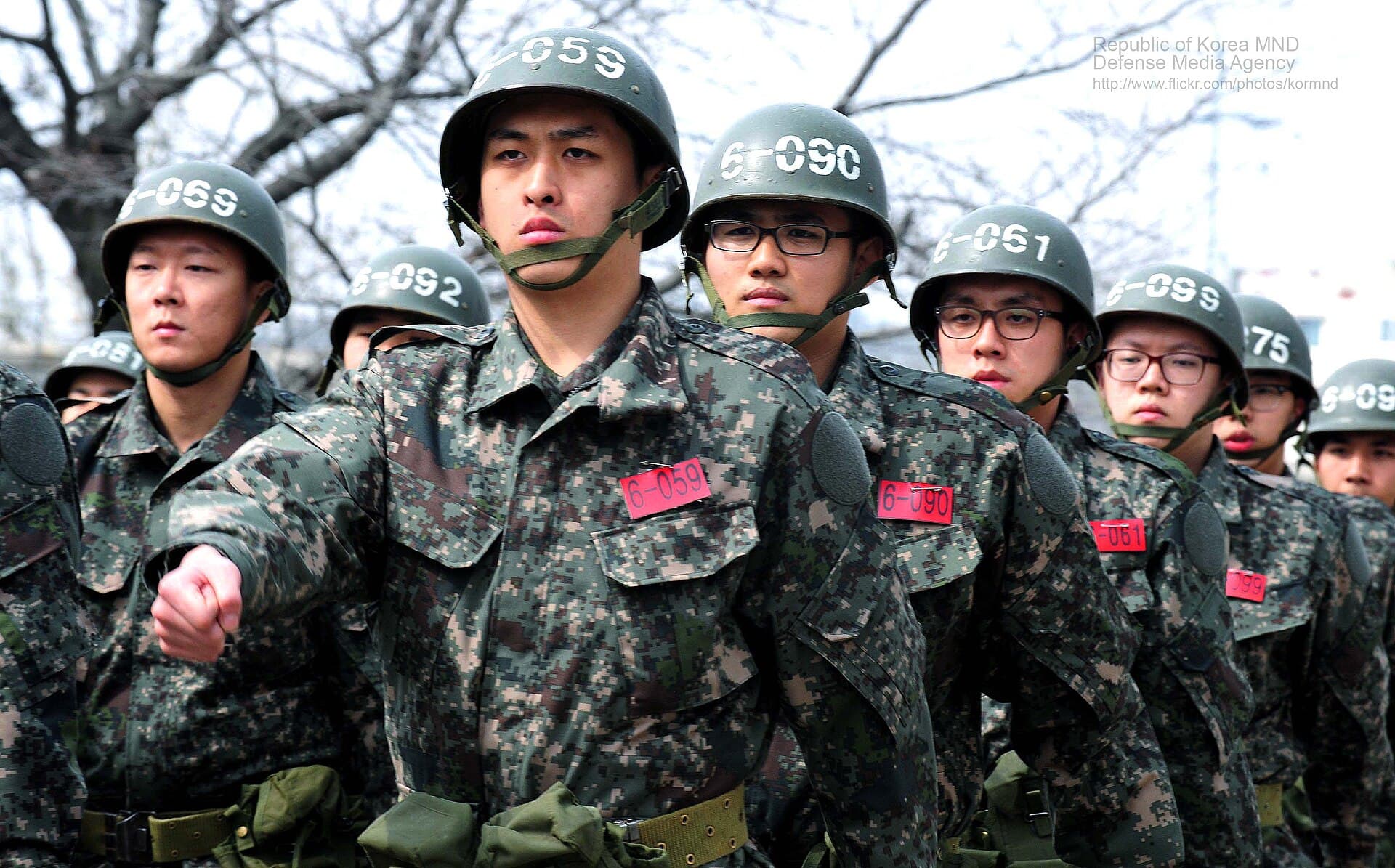
This race against the clock drew on several legacies. Military culture, ever-present in a country where service is compulsory and where former generals ran the state, imposed its reflexes of discipline, swift execution, and targets to be met at any cost. Postwar reconstruction, the urgency of escaping poverty, the fear of the neighbor to the North: everything pushed toward doing things fast, faster, ever faster. Palli-palli did not fall from the sky, it was born of this historical pressure, turned into a collective habit and then into a national trait.
In a single generation, Korea went from famine to skyscrapers. The price of that mad acceleration has a name everyone knows: palli-palli.
Palli-palli Day to Day: A Nation at High Speed#
Nothing illustrates palli-palli better than the ordinary life of a Seoulite. South Korea has made speed a way of life and an economic model, to the point of becoming one of the most connected and fastest countries on the planet.
Delivery is its most spectacular showcase. People speak of , a service that guarantees an order placed in the evening will be delivered the next morning, sometimes before dawn. The warehouses run through the night, couriers drop off parcels while customers sleep, and the Korean consumer has come to take this feat for granted. A two-day wait would almost look like negligence.
Korean internet was long the fastest in the world, and the country remains a global benchmark for speed and coverage. This ultra-high-performance infrastructure is no luxury: it is the very condition of a way of life in which everything must be instant, from mobile payment to online gaming, from streaming to paperless government.
| Domain | How palli-palli shows up |
|---|---|
| Commerce | Bullet delivery (총알배송), parcels dropped before dawn |
| Digital | Ultra-fast internet, instant mobile payment |
| Dining | Dishes served in minutes, immediate banchan |
| Urban life | Shops open 24/7, tightly scheduled transit |
| Technology | Lightning-fast adoption, constant renewal |
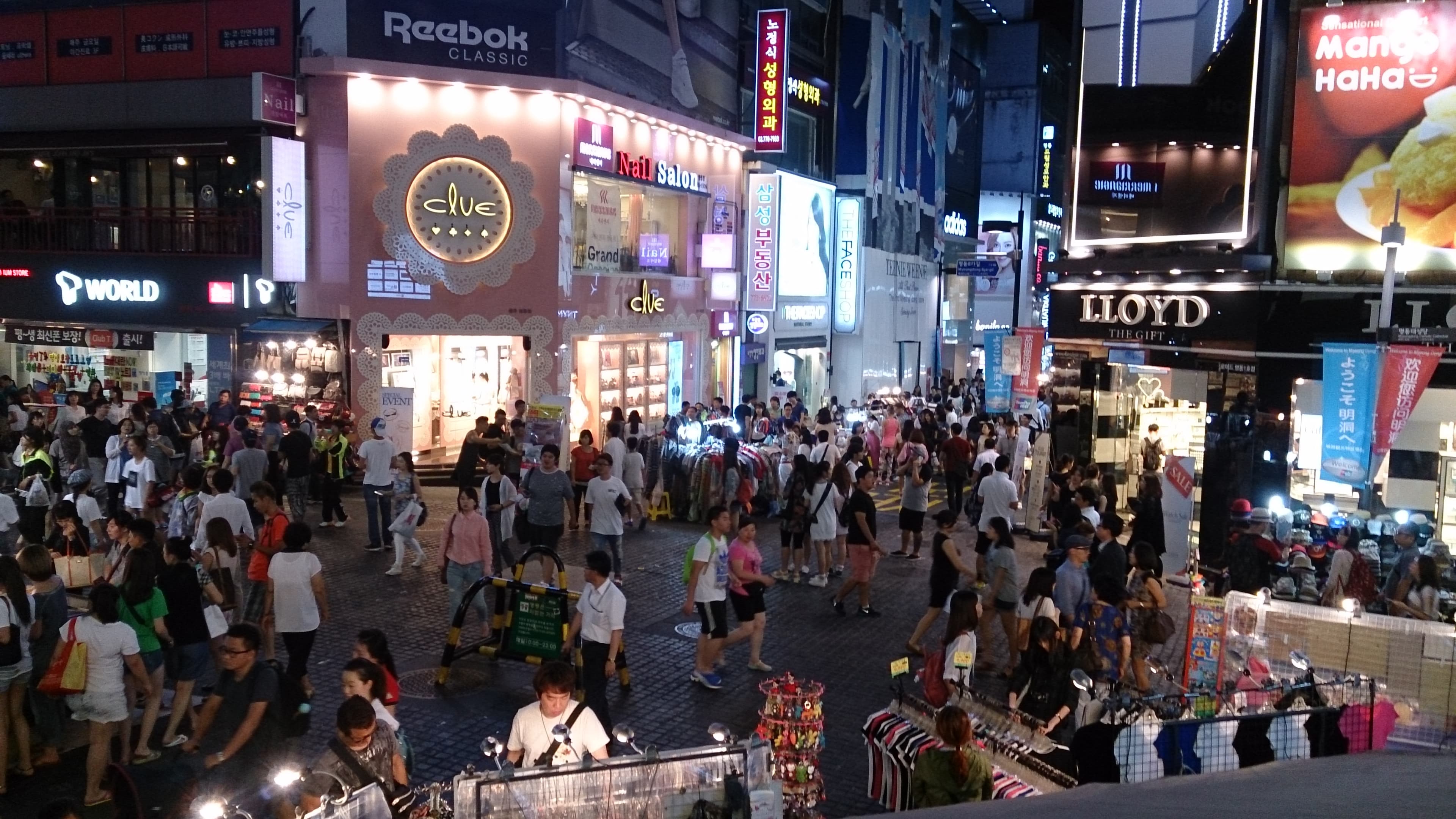
Dining obeys the same tempo. In a Korean restaurant, waiting time is counted in minutes, the side dishes arrive at once, and no one lingers. The city itself never sleeps: convenience stores open around the clock, cafés, saunas, and restaurants accessible at any hour, transit of military regularity. Technology adoption, finally, is lightning-fast: the country embraced the smartphone, contactless payment, robotics, and artificial intelligence with a speed that leaves foreign observers dumbfounded. What takes years to catch on elsewhere spreads here in a matter of months.
Palli-palli has left its mark right down to the elevators: many Koreans press the door-close button the instant they step into the cabin, without waiting. Some manufacturers have even noted that this button wears out faster in Korea than elsewhere. An impatience so deep it leaves a mark on the metal.
The Flip Side: When Speed Kills#
Every coin has its flip side, and palli-palli's is written in tragic letters. The same culture that built skyscrapers in record time sometimes built too fast, too poorly, in disregard of safety. Two disasters haunt Korea's collective memory and come up without fail whenever the price of haste is raised.
The , which spans the Han River in Seoul, partially collapsed on October 21, 1994. An entire span gave way at peak hour, plunging vehicles and passengers into the river and killing several dozen people. The inquiry pointed to construction defects and neglected maintenance, symptoms of growth pursued too quickly.
The following year, on June 29, 1995, the collapse of the Sampoong department store (삼풍백화점, Sampung baekhwajeom) was deadlier still, one of the worst disasters in modern Korea, with more than five hundred dead. The building, poorly designed, altered after the fact to add floors, built with insufficient materials and without regard for regulations, caved in on itself in a matter of seconds. The warning signs had been ignored that very day so as not to lose a single day of revenue.
The Seongsu Bridge and the Sampoong department store became the painful symbols of a country that had learned to build fast, but not always to build safe.
These tragedies deeply marked the national conscience. They are often cited as the price of palli-palli: safety sacrificed on the altar of speed and profit. They prompted a reckoning and a tightening of standards, but they remain etched as a lesson, that of a nation that paid dearly for its haste.
Beyond the visible catastrophes, palli-palli exacts a more diffuse and daily cost: chronic stress, professional exhaustion, burnout. South Korea posts some of the longest working hours among developed countries, a crushing academic pressure, and a high rate of anxiety. To live at the rhythm of palli-palli is to live under permanent tension, where rest itself ends up feeling like a waste of time.
Engine and Poison: The Korean Ambivalence#
Should palli-palli be condemned or celebrated? The honest answer is: both at once. Therein lies all its ambivalence, and that is why it fascinates as much as it worries.
On one hand, palli-palli is undeniably an engine of dynamism. It partly explains Korea's economic vitality, its capacity to seize trends before others, to pivot quickly, to turn an idea into a product in record time. From industrial giants to the studios that export the Korean cultural wave across the globe, this responsiveness is a major competitive asset. Without palli-palli, no Miracle on the Han River.
On the other hand, it is a source of collective anxiety. The pressure of ever-faster weighs on mental health, feeds fierce competition, sacrifices the long haul, reflection, care for detail. By wanting everything immediately, one ends up no longer knowing how to wait, or rest, or simply be.
There is, moreover, a telling counterpart to palli-palli in Korean: . To do something daechung is to botch it, to stick to the essentials without polishing. Palli-palli and daechung form an ambiguous couple: going fast sometimes leads to doing things approximately, and the obsession with speed can be paid for in neglected quality. The Seongsu Bridge and the Sampoong store were, in a sense, projects carried out daechung under the pressure of palli-palli.
The vocabulary of the Korean tempo becomes clear once you can read hangeul: 빨리빨리 (palli-palli, "hurry, hurry"), 한강의 기적 (the Miracle on the Han River), and 총알배송 (bullet delivery) tell the story of a whole society. Learn to decipher them with KoreanSRS and its spaced repetition.
Toward a Slowdown? The Longing for "Slow Life"#
For a few years now, a hushed pushback against palli-palli has been rising within Korean society itself. Worn out by the race, part of the population, especially among the younger generations, longs for a different rhythm. The desire for slow life, for deceleration, for time given back to oneself, finds a thousand outlets.
You see it in the enthusiasm for cafés where people linger, retreats in the countryside, meditation, slow tourism, a return to patient, hands-on pastimes. You see it in public debates over the working week, mental health, work-life balance. Movements advocate for "disconnection," for the value of rest, for a refusal of the permanent one-upmanship. Some municipalities and companies are experimenting with policies meant to loosen the grip of time.
This shift remains partial and fragile. Palli-palli is too deeply rooted to disappear, and the country's economic competitiveness still rests heavily on it. But the very emergence of this counter-discourse says something important: Korea is beginning to question its own relationship with speed, to ask whether the price of haste has not been too high, and to seek a balance between the energy that made it grow and the serenity it has lacked.
Read alsoNunchi: The Korean Art of Reading the RoomAfter running for half a century, Korea is asking aloud whether it might not be time, sometimes, to slow the pace.
The social counterpart to palli-palli: nunchi, that Korean art of reading the mood and the intentions of others in the blink of an eye.
Speed is learned from childhood: a deep dive into the hagwon, the private academies where the Korean academic race is won and lost.
Behind the frantic race, a tenacious melancholy: han, that Korean emotion made of sorrow, resentment, and resilience.
FAQ#
What exactly does "palli-palli" mean? Palli-palli (빨리빨리) literally means "hurry, hurry." It is the reduplication of the adverb ppalli (빨리, "quickly"). Far from a mere expression, it is a major cultural trait of South Korea, denoting a collective reflex of speed and efficiency that pervades work, consumption, and daily life.
Where does the palli-palli culture come from? Its roots run deep in twentieth-century history: postwar reconstruction, the ultra-rapid industrialization pursued under Park Chung-hee, the "Miracle on the Han River" (한강의 기적), the legacy of military culture, and the urgency of escaping poverty. This historical pressure turned into a collective habit and then into a national trait.
Did palli-palli cause accidents? Yes. The collapse of the Seongsu Bridge (성수대교) in 1994 and of the Sampoong department store (삼풍백화점) in 1995, which killed hundreds, are often cited as the "price of palli-palli": construction carried out too fast, in disregard of safety standards, under the pressure of profit and speed.
Is palli-palli a good thing or a bad thing? Both at once. It is a powerful engine of economic dynamism and innovation, which partly explains Korea's spectacular success. But it is also a source of stress, burnout, and collective anxiety, and it has at times led to sacrificing safety and quality.
Is Korea trying to slow down? In part. A "slow life" movement is emerging, especially among the younger generations, with debates over working hours, mental health, and life balance. Palli-palli remains deeply ingrained, however, and the country is still seeking a balance between its legendary energy and a more sustainable rhythm.
Photo credits: images in this article come from Wikimedia Commons and are under free licenses.
Korean age: why Koreans were one or two years older
Understanding Korean age: born at one, aging on New Year's Day, the three coexisting systems and the 2023 reform that made a whole country younger.
Cover image: ProjectManhattan · ProjectManhattan, via Wikimedia Commons · CC BY-SA 3.0