Kissaten: inside Japan's retro coffee house culture
The kissaten, Japan's café before the chains: its legal origin, jazz kissa, naporitan, cream soda, morning service and the unlikely revival of a genre declared dead.
La rédaction Kotoba Interactive
Studio éditorial
Until 1 June 2021, Japanese food hygiene law distinguished two kinds of eating establishment: the , licensed to cook and to serve alcohol, and the , which could serve drinks and simple food but not a drop of alcohol. That administrative line, now abolished, manufactured an entire category of places: establishments which, unable to sell drink, staked everything on coffee, on décor, and on the right to stay seated.
The is therefore not an aesthetic category invented by nostalgists. It is a legal category that became a civilisation of the counter, with its velvet seats, its heavy cups, its silent owner and its plate of tomato-sauced spaghetti.
1888, Ueno: Japan's first coffee house#
The first Japanese establishment to serve coffee to the public opened in April 1888 in Tokyo's Ueno district. It was called the , and its founder, Tei Ei-kei (鄭永慶), had returned from the United States with the idea of a place where people would talk while reading the newspapers, on the European model. He installed billiard tables, a library, card games. The public did not follow, and the business closed after four years.
Lasting implantation came from elsewhere, and from a diplomatic arrangement. In 1911, Mizuno Ryō (水野龍) opened Café Paulista in Ginza, supplied with Brazilian coffee provided free by the state of São Paulo in return for Japanese emigration to its plantations. Coffee cost five sen, and the place, still trading today, made the drink popular with students and writers. The commercial formula was set: cheap coffee, an armchair, and the right to stay.
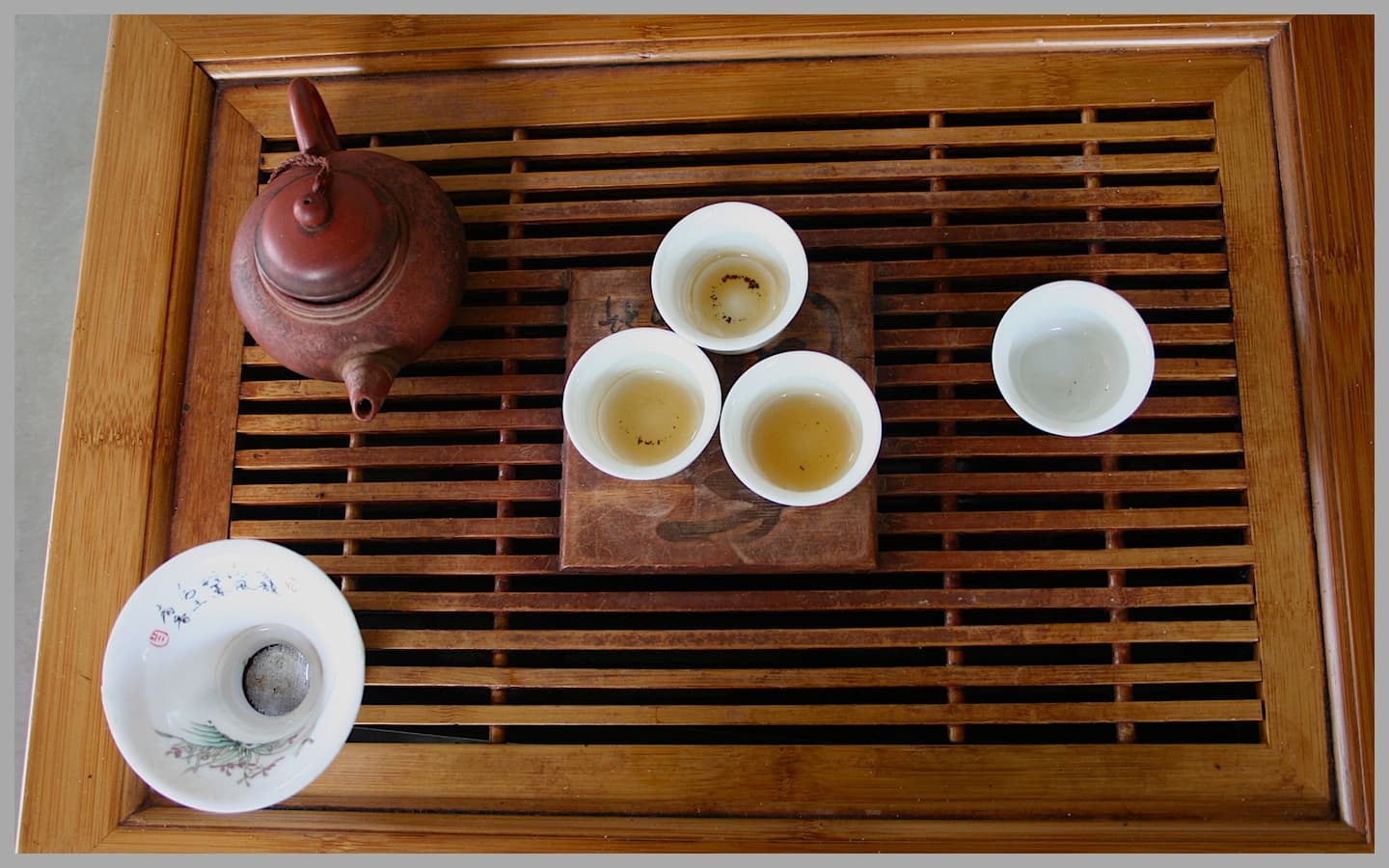
The word 喫茶 (kissa) combines 喫 ("to consume, to swallow") and 茶 ("tea"). It originally names the act of drinking tea, long before coffee reached Japan. A kissaten that serves nothing but coffee therefore carries the memory of another drink in its name, exactly as the English word "café" names both a beverage and a room.
Junkissa, meikyoku, jazz kissa: a typology#
By the 1930s, western-style had drifted towards waitress service and alcohol, closer to a cabaret. To distance themselves, establishments serving only hot drinks began calling themselves , "pure kissaten". The word survives on neon signs still visible in provincial streets.
After the war the genre specialised according to what you listened to.
The , the classical music café, bought the records and the sound system nobody could afford at home. The Lion on Dōgenzaka in Shibuya, founded in 1926 and rebuilt in 1950, still arranges its armchairs facing the speakers like a concert hall, and you do not talk there.
The applied the same principle to American jazz, whose imported records were out of private reach in the 1950s and 1960s. The customer paid for a coffee and got a listening session. Silence was the rule, selection belonged to the owner, and the room became an entry point into student counterculture.
The , where customers sang Russian songs and protest anthems in chorus, occupied the militant side of the same years. The is the contemporary descendant: what is sold there is no longer listening but time, by the half-hour, with a booth and a connection.
The kissaten table#
A kissaten menu is a fossil of postwar Japanese modernity, when western cooking was being reinvented with whatever was available.
, spaghetti fried with ketchup, sausage, green pepper and onion, was born at the Hotel New Grand in Yokohama, where chef Irie Shigetada took his cue from the pasta and ketchup rations of American soldiers. Nothing about it is Neapolitan and everything about it is Japanese.
pairs an impossibly green melon soda, a scoop of vanilla ice cream and a glacé cherry. It is now the single most photographed object in the entire genre.
, caramel custard ringed with fruit and whipped cream, came out of the same Hotel New Grand in the 1950s. The , the katsu sando, omurice and complete a menu that has barely moved in sixty years.
Then there is , the institution of the Chūbu region. In Nagoya, and above all in Ichinomiya, ordering a coffee in the morning entitles you, at no extra charge, to a thick slice of toast and a boiled egg. The custom grew in the 1950s in a weaving region where business was conducted in cafés, and it spread until it became a point of regional pride. The Komeda Coffee chain (コメダ珈琲店), founded in Nagoya in 1968, exported it nationwide.
| Term | Script | What it is |
|---|---|---|
| Kissaten | 喫茶店 | The traditional Japanese coffee house |
| Junkissa | 純喫茶 | Kissaten with no alcohol and no floor service |
| Jazz kissa | ジャズ喫茶 | Listening café for jazz records |
| Meikyoku kissa | 名曲喫茶 | Listening café for classical music |
| Master | マスター | The owner, usually working alone |
| Jōren | 常連 | The regular, who has their own seat |
| Naporitan | ナポリタン | Ketchup spaghetti, the signature dish |
| Kurīmu sōda | クリームソーダ | Melon soda with vanilla ice cream |
| Mōningu | モーニング | Breakfast included with the coffee |
| Reikō | 冷コー | Iced coffee, Kansai abbreviation |
Walking into a kissaten and reading the menu takes a handful of words: 珈琲 (kōhī, coffee), お冷や (ohiya, the glass of cold water served automatically) and お会計 (okaikei, the bill). JapaneseSRS, our spaced repetition app for learning Japanese, is coming soon: join the waiting list and order without pointing.
The coffee they serve#
The kissaten never followed the third wave. It defends two slow gestures inherited from the 1950s.
The , that glass globe heated on a burner where water rises by vapour pressure before falling back filtered, is as much theatre as extraction. , filtration through a cotton flannel the owner rinses and keeps for years, produces a thick cup without sharp bitterness.
The roast is traditionally dark, the house blend carries the establishment's name, and the cup arrives with a glass of iced water, a small spoon and a sugar bowl. Café de l'Ambre, opened in Ginza in 1948, pushed the logic to ageing its beans for years; its founder, Sekiguchi Ichirō, worked there into extreme old age and died in 2018 at one hundred and three.
, opened in 1949 in the bookshop district of Jinbōchō, claims to have introduced "Viennese coffee" (ウインナーコーヒー) to Japan, a long espresso crowned with whipped cream. The name misleads: it is not a Viennese recipe but the Japanese idea of one, which has itself become a local tradition three quarters of a century old.
The decline, and the surprise#
Japan's commercial census counted a peak of roughly 154,000 kissaten in 1981. Four decades later, economic statistics record something on the order of three times fewer. Three waves carried off the difference.
The first was the chains. Doutor opened its first outlet in 1980 selling standing coffee at a hundred and eighty yen, a third of the kissaten price. Starbucks arrived in Ginza in August 1996 and imposed another relationship to the room: fast turnover, cup to go, power socket.
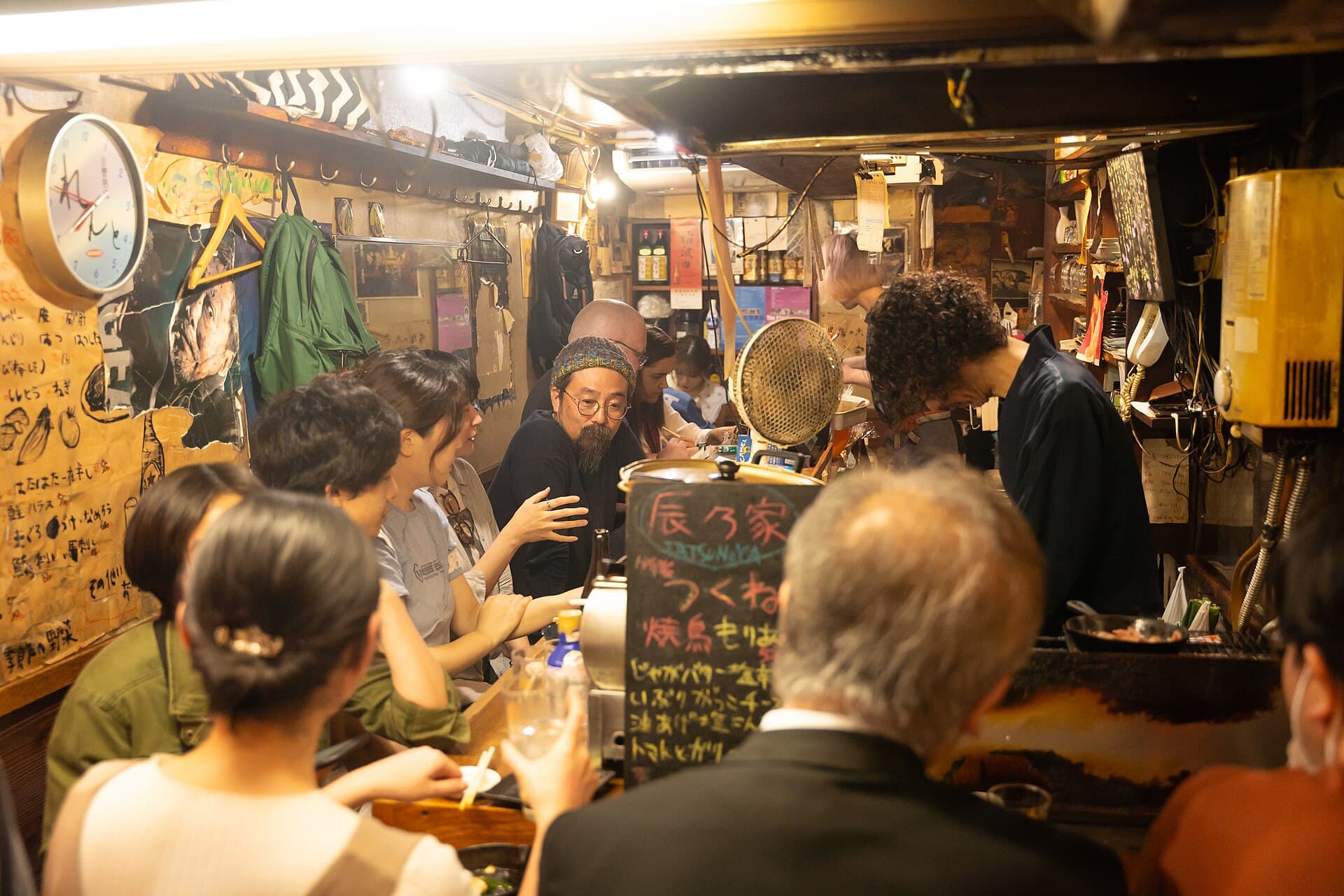
The second was demographic. A kissaten is a business run by a couple or a single person, without employees, kept going into old age. Many close for lack of a successor, never having been in financial trouble.
The third was regulatory. The revised Health Promotion Act, in force since April 2020, made indoor smoking the exception in eating establishments. Small existing businesses benefit from an exemption regime, which makes the kissaten one of the last places in Japan where you can smoke at your table. That reprieve attracts one clientele and repels another.
Saved by photography#
Rescue came from a generation that never knew these cafés in their prime. Since the mid-2010s, the wave has turned kissaten into sought-after settings: patterned carpet, garnet velvet banquettes, etched glass, amber pendant lamps. Cream soda, with its saturated green and its white scoop, has become a photographic subject in its own right, with whole guidebooks devoted to it.
The effect is real but uneven. It benefits the photogenic establishments of the big cities far more than the station cafés of the provinces, which make up the bulk of the stock. Several young roasters have nonetheless taken over old businesses while keeping the furniture, the menu and sometimes the regulars, producing a hybrid object: a specialty coffee bar that serves naporitan.
The kissaten will thus have crossed a century by changing function with each generation: reading room, listening room, provincial office, smokers' refuge, photographic set. What does not change is the original contract: a cup buys a seat, and the seat has no closing time.
Read alsoCoffee versus Tea: The Drink War That Divides AsiaWhy Japan swung from tea to coffee while China and Korea followed other trajectories.
The other pillar of everyday Japanese coffee, sold over the counter for a hundred yen.
FAQ#
What is the difference between a kissaten and a café? Kissaten names the traditional Japanese establishment, often run by one person, with period décor, a fixed menu and filter or siphon coffee. Kafe (カフェ) names the western-style or third-wave places, more recent and built on faster turnover.
Can you stay a long time in a kissaten? Yes, that is the point. One order buys a seat with no explicit limit, and many customers read or work there for hours. The unwritten rule is to order a second drink after a long stay, and not to occupy a table for four alone at peak times.
Should you tip? No. Tipping does not exist in Japan and would be misunderstood. The bill is usually settled at the counter on the way out, by handing over the slip left on your table.
Where can I find a morning service? Throughout the Nagoya region, where the custom began, and in the chains that spread it, notably Komeda Coffee. It generally applies until eleven in the morning and is limited to coffee ordered on the premises.
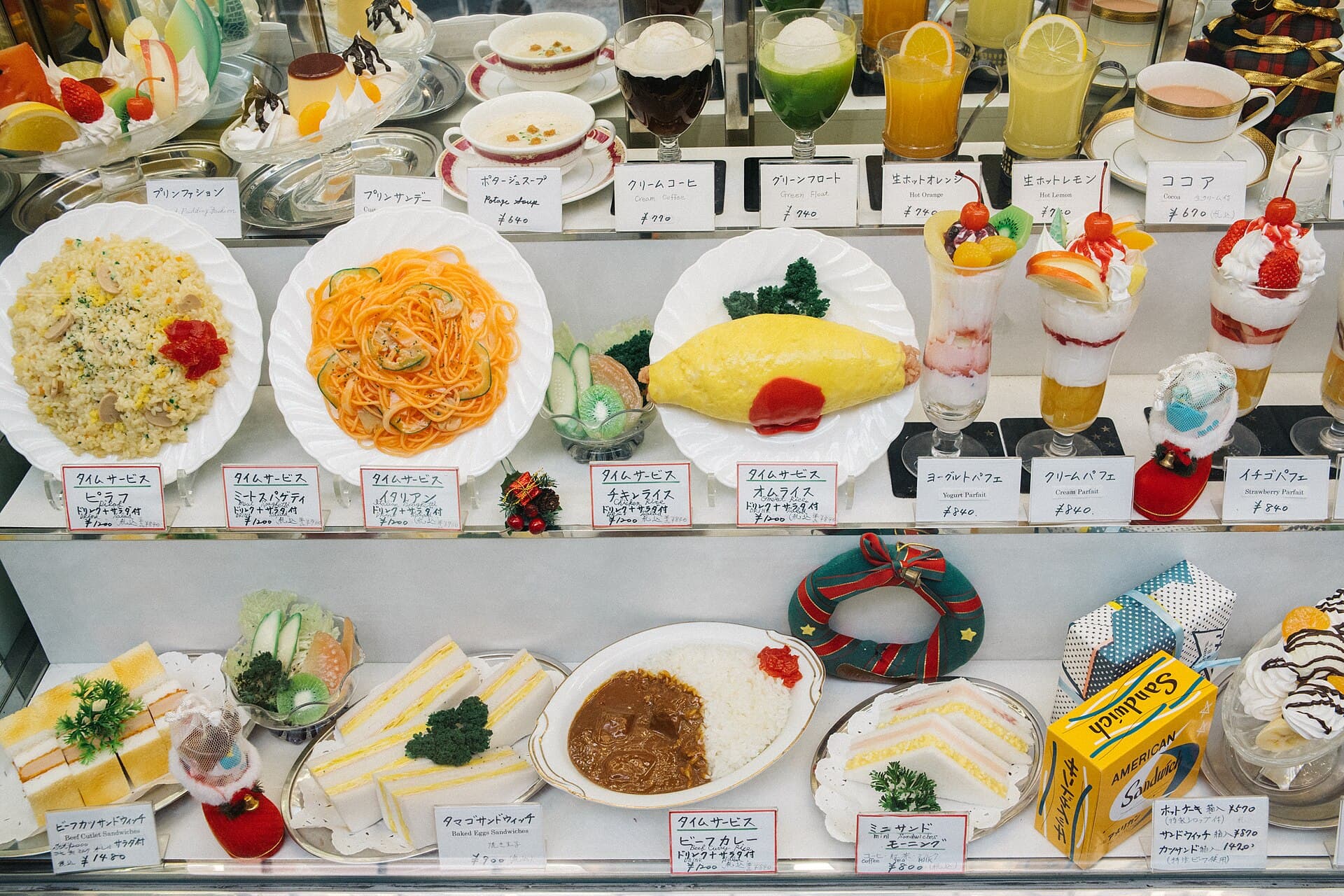
How do you recognise a real kissaten from outside? Look for a neon sign carrying the characters 純喫茶 or 珈琲, a window display of resin food models, a heavy door with a brass handle, and the complete absence of an open frontage onto the street. A kissaten closes itself off; it does not display itself.
Photo credits: the images in this article come from Wikimedia Commons and are under a free license.
Coffee versus Tea: The Drink War That Divides Asia
Ancestral tea against imported coffee: how China, Japan and Korea arbitrate between tradition, ceremony and urban modernity in their cups.
Cover image: Dick Thomas Johnson · Dick Thomas Johnson, via Wikimedia Commons · CC BY 2.0