Kissaten, dalgona, Luckin: how Asia turned to coffee
Tea was Asia's mother drink. In a century, the Japanese kissaten, Korean dalgona and China's Luckin have installed coffee alongside it.
La rédaction Kotoba Interactive
Studio éditorial
It is eight in the morning in Seoul, and two worlds cross paths on the same street. On one side, a traditional tea room where a hostess pours green tea into a ceramic bowl with small, careful gestures, the steam rising in silence. On the other, thirty meters away, a franchise café packed with students hunched over their laptops, an iced, sweating cup of coffee in hand. The same country, the same hour, two gestures that tell of two Asias: one that slowly steeps a millennial leaf, the other that gulps down a brew that arrived from elsewhere barely a century ago.
This tension runs through all of East Asia. On one side, , an ancestral drink charged with spirituality, ceremony and slowness. On the other, , a modern import that became, in a few decades, an urban obsession, a marker of status and the default backdrop for the sociability of younger generations. To understand this battle of cups is to read two centuries of Asian modernization in a hot liquid.
Tea, the Mother Drink of Asia#
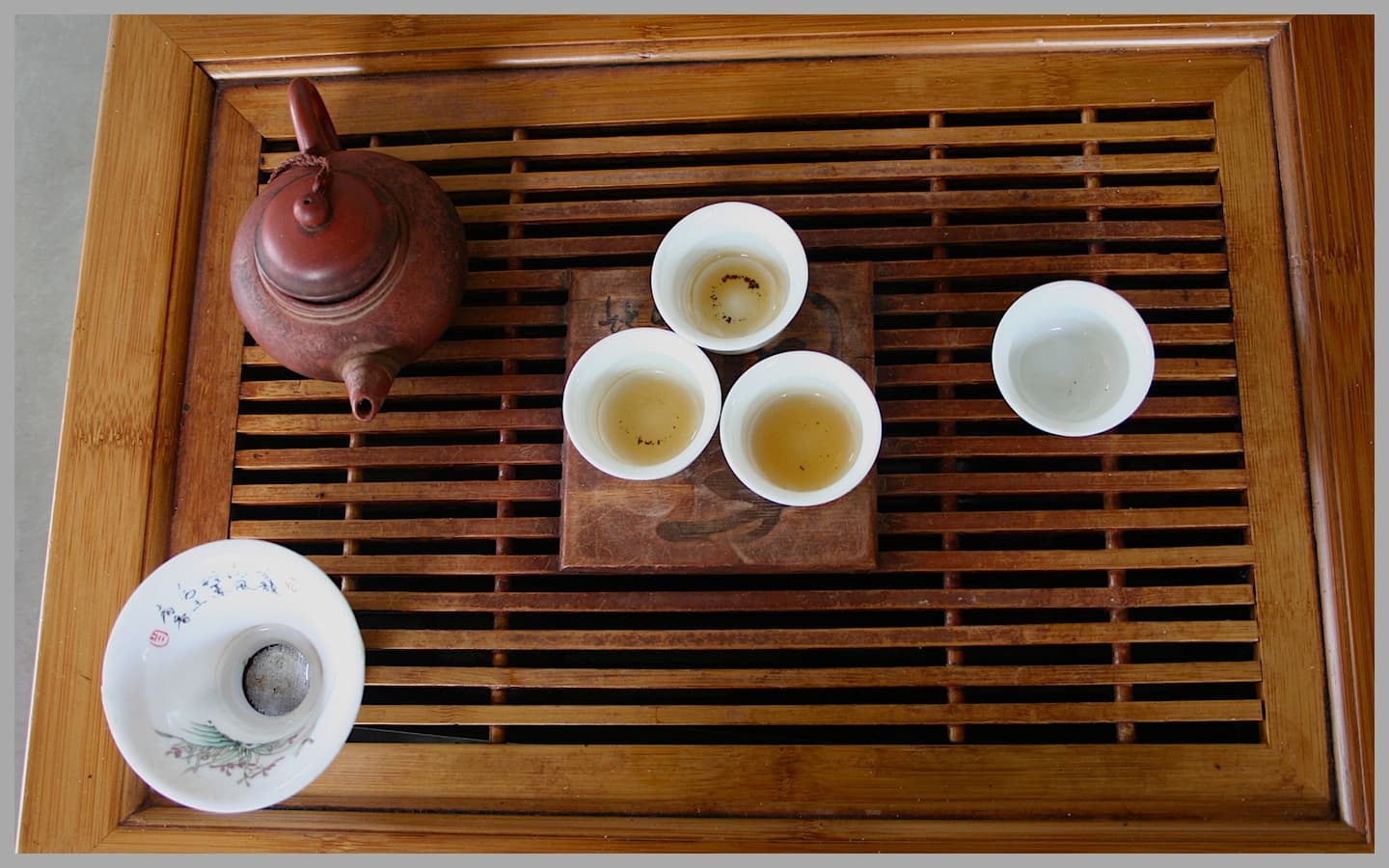
Before coffee, there was , and there was China. The Camellia sinensis plant has been cultivated and consumed in southwestern China for millennia, first as a remedy, then as a daily drink, finally as an art. It was in China that tea became an object of thought, under the Tang dynasty (唐, 618-907), when a scholar named composed the first treatise ever devoted to the drink.
The character 茶 (chá) denotes tea in nearly every East Asian language, and its pronunciation traveled with the leaf: chá by the overland route (whence Russian chai, Turkish çay), te by the maritime route out of Fujian (whence English tea, French thé). A single leaf, two trade routes, and the world map of the word still bears the trace of it.
Lu Yu's work, the , written around 760, codifies everything: the varieties of plant, the ideal water, the utensils, the preparation, the tasting. It raises a simple brew to the rank of an aesthetic and moral discipline. From China, tea radiated outward: it reached Japan and Korea by way of Buddhist monks, who made it a drink of asceticism and meditation, apt to keep the mind alert during the long sessions of zazen.
Tea, in Asia, is not drunk first for pleasure or for caffeine: it is drunk to slow down, to order a moment, to touch with a fingertip a harmony vaster than oneself.
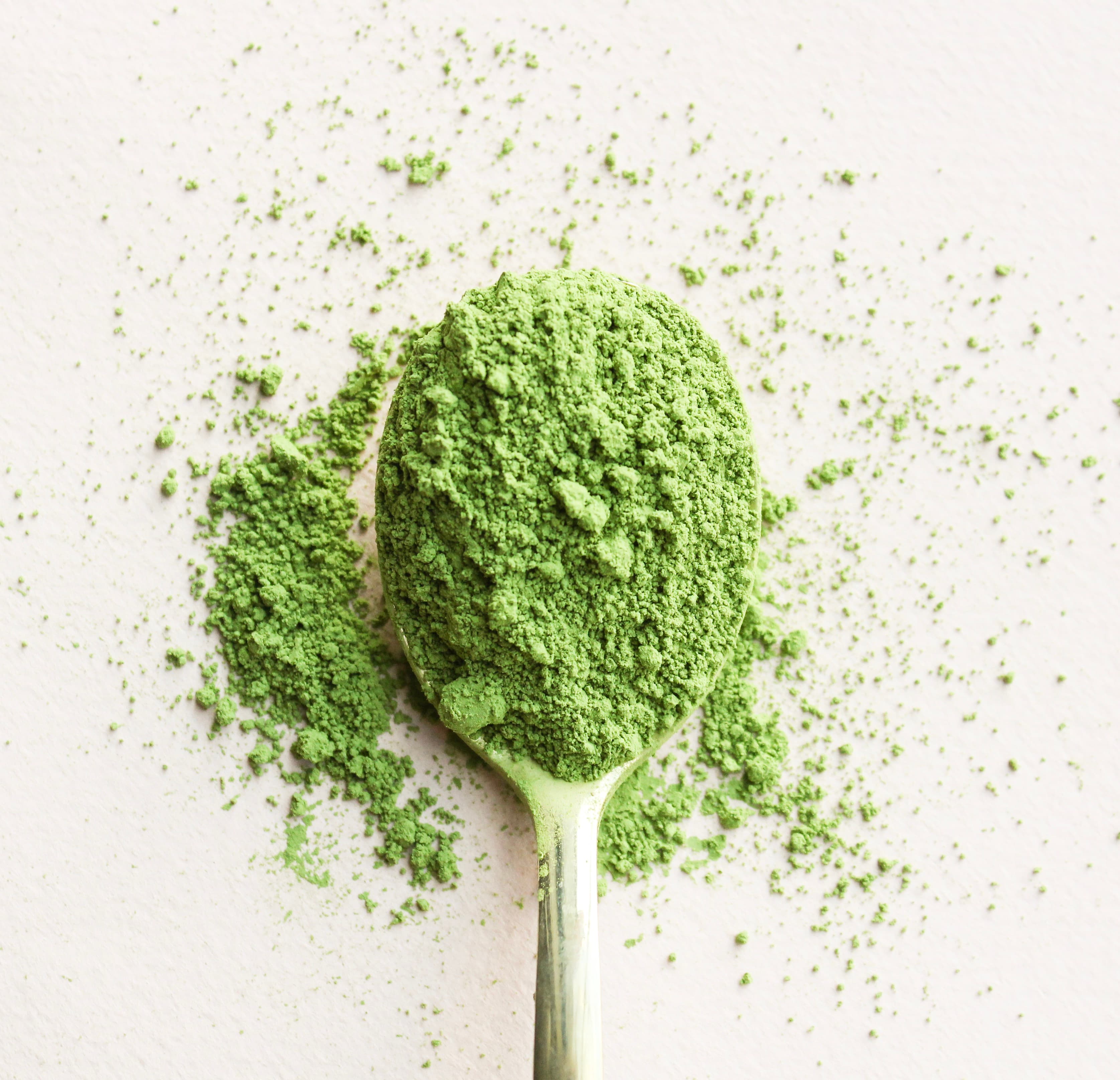
In Japan, powdered matcha tea (抹茶), introduced in the twelfth century, became the heart of a refined ritual, the tea ceremony known as or . In Korea, the tradition of cultivates an aesthetic of simplicity and spontaneity, less codified than its Japanese counterpart but just as steeped in Buddhist and Confucian spirituality. Everywhere, tea carries the same values: tradition, harmony (和, hé / wa), slowness, contemplation.
Coffee, an Intruder from the West#
is, on the scale of Asia, a newcomer. Introduced by the European colonial and trading powers from the nineteenth century onward, it long remained a foreign curiosity, a brew of ports and concessions. Nothing foretold that a century later it would become the daily obsession of tens of millions of urban Asians.
For coffee did end up winning, and spectacularly so. Where tea spoke of tradition and the home, coffee speaks of the city, of modernity, of work and of social status. It is not only a matter of drinking: it is a matter of sitting down in a place, of being seen there, of working there, of meeting one's friends there. The Asian café of the twenty-first century is as much a space as a drink, a substitute living room in megacities where private space grows scarce.
In Chinese, the word 咖啡 (kāfēi) is a pure phonetic transcription of the English coffee: the two characters 咖 and 啡 have almost no other use and carry the "mouth" radical (口), signaling that this is a borrowed sound, not a translated concept. The word itself confesses its status as an import.
This rise of coffee did not erase tea; it doubled it. In most households, the two drinks coexist: tea for the home, the elders, the rituals and the meals; coffee for the street, the office, the young and the date. The geography of the cup has split in two, and each country has negotiated this division in its own way.
Korea, Champion of Coffee#
No Asian country has embraced coffee with as much fervor as South Korea. Per capita consumption there is among the highest on the continent, far above what one would expect of a country historically devoted to tea and grain infusions. Cafés are of a stunning density: they are found on every street corner, sometimes several per block, from the franchise giant to the tiny auteur establishment.
This omnipresence stems from a precise social function. In a society where housing is cramped and days are long, the Korean café serves as a reception room, an overflow office, a study hall and a spot for a date. People spend hours there, a single cup in hand, laptop open. The ancestor of these places, the , the tea-and-coffee salon of the postwar decades, has given way to a galaxy of modern cafés, but the function remains: the Korean café is a heated, lit and legitimate public space where one has the right to stay.
Korea has even exported its own caffeinated icon: , that whipped coffee with a dense, sweet foam, born of a domestic knack, which gained worldwide fame when millions of people in lockdown took to beating it with a fork. Korean coffee is no longer merely imported: it invents itself, photographs itself and spreads.
Japan, from the Kissaten to the Third Wave#
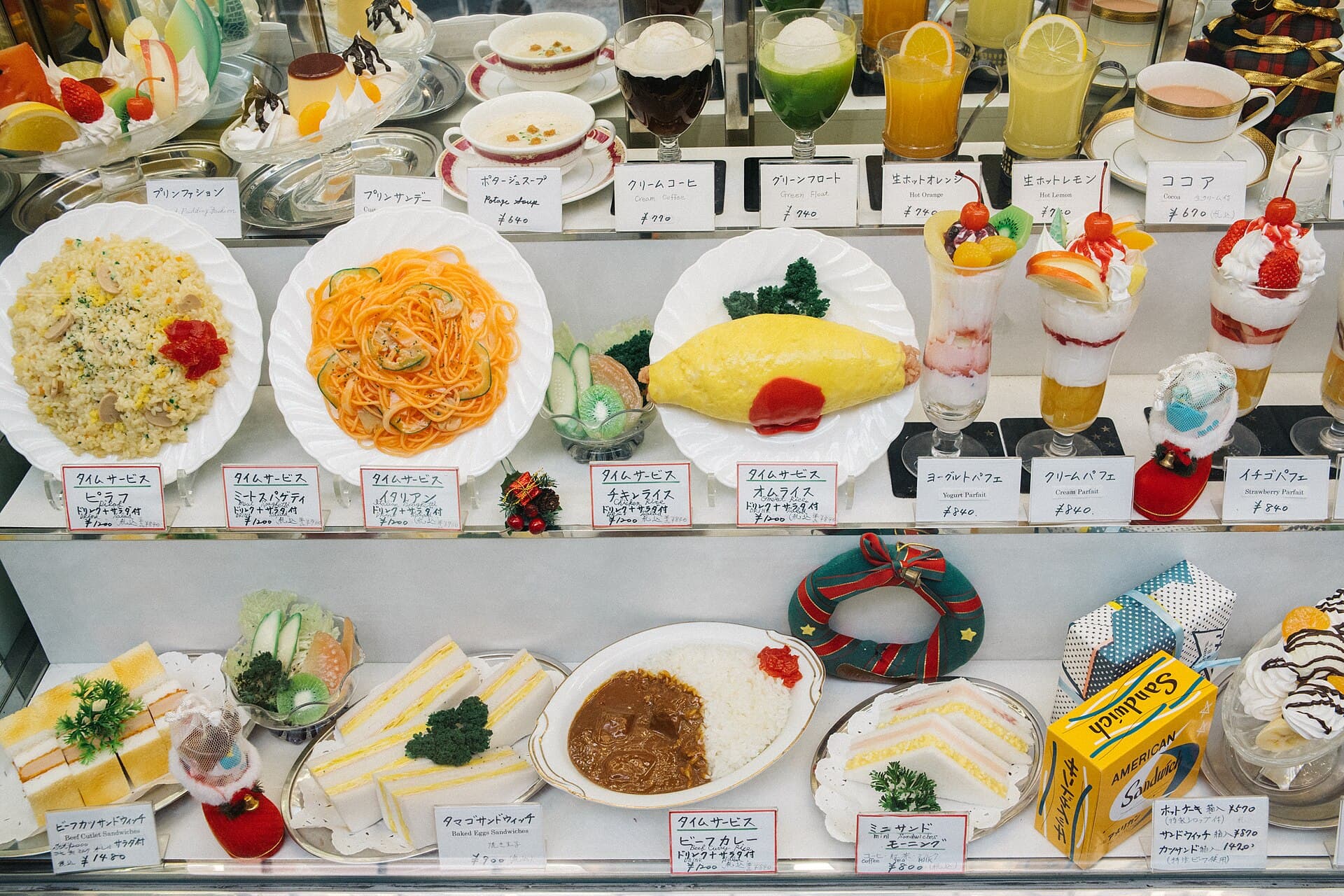
Japan has an older and more muted history of coffee. As early as the prewar years, the appeared, often dim and refined establishments where a carefully brewed coffee, sometimes drip by drip, was served in an atmosphere of classical music or jazz. The kissaten is a place of silence and concentration, the Japanese ancestor of the auteur café, and some, nearly a century old, still survive.
breaks down into kissa (喫茶, "to drink tea," from 喫 "to consume, to ingest" and 茶 "tea") and ten (店, "shop"). The name literally says "shop where one consumes tea," even though the establishment serves above all coffee: a linguistic fossil in which tea still names a place devoted to coffee.
Japan also invented a caffeinated modernity all its own: , sold hot or cold in the countless vending machines that grid the archipelago, a brew for the hurried salaryman available at any hour and in any weather. This industrial coffee, long mocked by the purists, is an integral part of the Japanese daily landscape.
Then came the , that global movement of specialty coffee, lightly roasted and served by the cup, which celebrates the origin of the bean and the gesture of the barista. Tokyo adopted it enthusiastically, even attracting the American brands emblematic of the genre, whose opening of a first establishment in the Kiyosumi district became an event. Japan, homeland of ceremonial tea, now applies to coffee the same demand for perfection of gesture.
In Japan, things are not done by halves: the nation that codified the tea ceremony today treats the pulling of an espresso with the same devotion to detail.
China, between Luckin, Starbucks and Bubble Tea#
China, the world's cradle of tea, is also the stage for the fastest caffeinated rise on the planet. For decades, coffee there was negligible, confined to a few international hotels. Then an American chain patiently implanted a Western-style coffee culture, turning the cup into a marker of an aspirational, urban middle class.
The affair took a spectacular turn with the eruption of a local champion, , which deployed at lightning speed a model of mobile app, digital ordering and aggressive pricing, until it surpassed its American rival in the number of outlets on Chinese soil. The duel between the historic giant and the local challenger has become one of the most closely watched commercial confrontations in Chinese consumption, a symbol of , that rising power of Chinese brands claiming a homegrown modernity.
But China's most resounding invention is neither quite tea nor quite coffee: it is , the famous bubble tea, born in Taiwan and become a global phenomenon. Made of tea, milk, sugar and tapioca pearls, served iced and endlessly varied, naicha is a generational bridge between the ancestral leaf and sweet modernity: a tea, yes, but drunk as a youthful pleasure, through a fat straw, while walking, a smartphone in the other hand.
| Country | Relation to tea | Relation to coffee | Signature drink |
|---|---|---|---|
| China | Cradle of tea (茶), Lu Yu, gongfu cha | Meteoric rise, Luckin / Starbucks duel, guochao | Naicha (奶茶), bubble tea |
| Japan | Matcha (抹茶) and chanoyu ceremony (茶の湯) | Kissaten, canned coffee, third wave | Matcha and canned coffee (缶コーヒー) |
| Korea | Darye (다례), traditional infusions | Record consumption, cafés everywhere | Dalgona (달고나), whipped coffee |
Vietnam, the Exception That Confirms the Passion#
A nod southward is in order. Vietnam developed a coffee culture so original it deserves its own mention. A legacy of French colonization, coffee there is slowly brewed through a small metal filter set atop the cup, the phin, drip by drip, from a bold, bitter robusta bean that the country produces in colossal quantities, to the point of being one of the world's leading exporters.
Lacking fresh milk in the old days, the Vietnamese added sweetened condensed milk, then invented spectacular variations such as cà phê trứng, egg coffee, in which a yolk beaten with sugar forms a creamy foam that crowns the black coffee like a liquid dessert. Vietnam proves that imported coffee was not merely adopted in Asia: it was reinvented, bent, appropriated until it became a heritage in its own right.
The vocabulary of the Asian drink can be read at a glance once you master the characters: 茶 (chá, tea), 咖啡 (kāfēi, coffee) and 奶茶 (nǎichá, milk tea) form the basic trio of any Chinese menu. Learn to decipher them with ChineseSRS and its spaced repetition.
Two Drinks, Two Visions of Time#
At bottom, the battle of tea and coffee is not a matter of taste but of one's relation to time and to society. Tea embodies tradition, ceremony, the home, harmony (和) and meditative slowness; it looks toward a past it perpetuates. Coffee embodies modernity, the city, social status, speed and the sociability of youth; it looks toward a globalized present.
But to oppose the two would be too simple. China drinks coffee while exporting naicha; Japan treats espresso with the rigor of chanoyu; Korea invents whipped coffees while preserving its tea rooms. Far from replacing each other, the two drinks coexist, contaminate one another and answer each other. Matcha itself, once reserved for ritual, is now found in an iced latte in the very cafés that serve Italian espresso. The border between the ancestral leaf and the imported bean has become porous, and perhaps that is where the true Asian culture of the drink is decided: not in choosing one against the other, but in the art of making them coexist within a single day, a single street, sometimes a single cup.
Read alsoChanoyu: The Sacred Art of Japanese TeaThe spiritual summit of Japanese tea: enter the ritual of chanoyu, where every gesture has been codified for centuries.
Back to the Chinese sources of the art of tea: discover gongfu cha, the meticulous steeping that made tea a discipline.
Dive into the Korean caffeine obsession: themed cafés, substitute living rooms and the sociability of a hooked youth.
FAQ#
Is tea or coffee more consumed in East Asia? It depends on the country and the generation. Tea remains the dominant traditional drink at home and with meals, but coffee has taken an immense place in the city, especially among the young. In South Korea, per capita coffee consumption is even among the highest in Asia, while the country remains attached to its traditional infusions.
Why is coffee so successful in Korea? Beyond taste, the Korean café fills a social function: in dense cities with cramped housing, the café serves as a living room, an office and a study hall where one can stay for hours. This heritage traces back to the dabang (다방), the postwar tea-and-coffee salon, whose role modern cafés have taken over.
What is bubble tea, and is it tea or coffee? Bubble tea, or naicha (奶茶, "milk tea"), is a sweetened milk tea garnished with tapioca pearls, born in Taiwan. It is indeed tea at its base, but consumed as a modern pleasure drink, iced and sweet, through a fat straw. It bridges the tradition of tea and the tastes of urban youth.
What is a kissaten in Japan? The kissaten (喫茶店) is a traditional Japanese coffee salon, often prewar, with a muted and refined atmosphere, where a carefully brewed coffee is served. Despite its name, which literally means "shop where one drinks tea," it serves above all coffee and is the ancestor of the auteur café in Japan.
Who wrote the first book on tea? The Chinese scholar Lu Yu (陸羽), under the Tang dynasty, is the author of the Classic of Tea (茶經, Chájīng), written around 760. This founding treatise codifies the cultivation, preparation and tasting of tea, and makes Lu Yu the tutelary figure of all Asian tea art.
Photo credits: images in this article come from Wikimedia Commons and are under free licenses.
In this article
The cultural terms covered here, each with a short definition.
Kissaten: inside Japan's retro coffee house culture
The kissaten, Japan's café before the chains: its legal origin, jazz kissa, naporitan, cream soda, morning service and the unlikely revival of a genre declared dead.
Cover image: Kandukuru Nagarjun · Kandukuru Nagarjun, via Wikimedia Commons · CC BY 2.0