Why Sichuan eats so much chilli
Chilli has only existed in China since the 16th century. How Sichuan, already famous for its taste for pungency, made it the pillar of its cuisine: migration, climate, economics.
La rédaction Kotoba Interactive
Studio éditorial
Around 355 CE, the scholar Chang Qu (常璩) completed the Chronicles of the Land of Huayang (華陽國志), the oldest surviving regional monograph in China. Of the people of Shu, present-day Sichuan, he noted a phrase every cook in the province still quotes: the people of Shu prize flavour and love fragrant pungency (蜀人尚滋味,好辛香).
The text predates chilli by twelve centuries. The plant comes from Central America and did not reach China until the very end of the sixteenth century. Sichuan was therefore already famous for its burning cuisine long before it had the ingredient the whole world now identifies it with. That chronology is what makes the question interesting: chilli did not create the Sichuanese palate, it arrived in a place that was waiting for it, and it found conditions no other province combined to the same degree.
Before chilli: pepper, evodia and ginger#
Old Chinese pungency rested on three native plants, grouped in the texts under the term .
, misleadingly called Sichuan pepper, is the dried berry of a shrub of the genus Zanthoxylum. It does not burn: it numbs, it makes the lips vibrate. The Book of Odes, compiled before the fifth century BCE, already mentions it, and Sichuan has cultivated it for more than two millennia. , the fruit of Tetradium, supplied an acrid burn; it all but vanished from kitchens once chilli arrived and did the same job better. completed the palette.
A cuisine of pungency therefore existed, but it rested on expensive or low-yielding ingredients. Huajiao was even an imperial tribute good: the pepper of Hanyuan (漢源花椒), south of Chengdu, was reserved for the court.
The character 麻 (má), which forms half of 麻辣 (málà), means neither "spicy" nor "strong". It names numbness, the pins-and-needles feeling of a limb falling asleep. 辣 (là) is the burn. Málà therefore literally names two distinct sensations, produced by two different plants, rather than a single intensity.
Arrival as an ornamental plant#
The first known Chinese text to describe chilli dates from 1591. In his Eight Treatises on Nurturing Life (遵生八箋), the scholar Gao Lian (高濂) presents , "foreign pepper": a bushy plant with white flowers whose red pointed fruits resemble a worn writing brush, hot in taste and, he adds, most pleasing to look at. This is a garden plant, not a kitchen one.
Its route of arrival can still be read in Sichuanese vocabulary, where chilli is commonly called , "sea pepper". The name points to Portuguese and Spanish maritime trade, which introduced it along the southeastern coast from the Philippines and Macao before it travelled up the rivers inland.
More than a century passed before anyone ate it. The earliest documented culinary use comes from Guizhou, the mountainous and poor province next door: the 1722 gazetteer of Sizhou prefecture notes that chilli was "used by the local people in place of salt" (土苗用以代鹽). Guizhou had no coast, no deposits and no easy roads; salt arrived on men's backs and cost dearly. Chilli, which grows anywhere and gives flavour to a bowl of rice, filled the gap.
Three reasons that explain Sichuan#
Chilli reached Sichuan along the same geography. The gazetteer of Dayi county records it in 1749, and its spread became massive in the nineteenth century. But Sichuan was not Guizhou: it had salt, drawn since antiquity from the wells of Zigong, where Chinese drillers were reaching several hundred metres long before Europe. The salt-shortage explanation is therefore not enough. Three other factors compound.
A new population, from a province that already ate chilli#
Seventeenth-century Sichuan was a devastated land. The wars of the Ming-Qing transition, epidemics and famine collapsed its population in proportions historians still debate but every source describes as catastrophic. From 1671, the Kangxi emperor organised resettlement through tax exemptions and land grants: this is the movement known as , "Huguang fills Sichuan".
For a century, millions of migrants arrived from Hunan, Hubei, Jiangxi, Guangdong and Fujian. Hunan happens to be one of the provinces where chilli took root earliest and hardest. Today's Sichuanese overwhelmingly descend from those newcomers, and what is called traditional Sichuan cuisine is, in large part, a creation of that recomposed population. The taste was not invented locally: it was imported, then married to the local huajiao.
A basin without sun#
Sichuan sits in a bowl closed by mountains on all four sides. Air stagnates, relative humidity frequently exceeds 80 percent, and Chengdu ranks among the least sunny major Chinese cities, on the order of one thousand to twelve hundred hours of sunshine a year. A proverb attested from the Tang sums it up: 蜀犬吠日, "the dogs of Shu bark at the sun", because they see it too rarely to recognise it.
Chinese medicine classes chilli among the warming foods that "dispel damp and disperse cold" (祛濕散寒), and the climatic argument is the one Sichuanese offer spontaneously. It deserves qualification: plenty of humid regions eat no chilli at all, and correlation is not cause. What is verifiable is that the sweating provoked by capsaicin produces a sensation of cooling, and that the medical belief genuinely shaped habits.
An economics of flavour#
Chilli is a democratic plant. It grows on poor slopes, dries without equipment, keeps for a year and turns a bowl of rice or sweet potato into a meal. In a densely populated province worked by intensive agriculture, it supplies savour where meat is missing. The hottest cuisines in China are, unsurprisingly, those of inland and long-poor provinces: Sichuan, Hunan, Guizhou, Jiangxi.
| Ingredient | Chinese name | Origin | Effect |
|---|---|---|---|
| Sichuan pepper | 花椒 (huājiāo) | Native, Sichuan | Numbing, tingling |
| Erjingtiao chilli | 二荊條 (èrjīngtiáo) | Americas, 17th century | Fragrance, moderate heat |
| Chaotianjiao chilli | 朝天椒 (cháotiānjiāo) | Americas | Strong heat |
| Pixian broad bean paste | 郫縣豆瓣 (dòubànjiàng) | Sichuan, 18th century | Salty fermented base |
| Evodia | 茱萸 (zhūyú) | Native | Older pungency, abandoned |
| Chilli oil | 紅油 (hóngyóu) | Sichuan | Aroma and colour |
Three characters open any Sichuanese menu: 辣 (là, hot), 麻 (má, numbing) and 鍋 (guō, the pot). ChineseSRS, our spaced repetition app, teaches you the vocabulary of the Chinese table so ordering stops being a lottery.
Two molecules, two nerves#
What the mouth registers as a single experience in fact mobilises two independent mechanisms, which is what gives mala its sense of depth.
Capsaicin from chilli binds to the TRPV1 receptor, identified in 1997 by David Julius and his team, work that earned him the Nobel Prize in Medicine in 2021. That receptor is the heat receptor: it normally fires above 43 °C. Chilli does not burn the tongue, it lies to the brain about temperature.
Hydroxy-alpha-sanshool from huajiao acts elsewhere, on touch fibres. A study led by Nobuhiro Hagura at University College London, published in 2013 in the Proceedings of the Royal Society B, asked volunteers to match the sensation against mechanical vibrations: the tingle of Sichuan pepper corresponds to a vibration of roughly 50 hertz. The mouth literally believes it is feeling an object vibrate.
Sichuan pepper was banned from import into the United States from 1968 to 2005, not on grounds of taste but of plant quarantine: the berry was suspected of carrying citrus canker to orange groves. The ban was lifted only on condition that consignments be heat-treated, which weakens precisely the molecule responsible for the tingling.
What chilli hides about Sichuanese cooking#
Reducing Sichuan to chilli is the most widespread misreading of it. The modern codification of this cuisine recognises around twenty , and chilli appears in only a third of them.
, "fish fragrance", contains no fish: it is a balance of pickled chilli, garlic, ginger, spring onion, sugar and vinegar, named after the seasoning traditionally used for fish. , "strange flavour", layers salty, sweet, sour, hot, numbing and sesame in one sauce. At the far end of the spectrum, , "cabbage in boiling water", a banquet dish from the imperial kitchens, serves a cabbage heart in a perfectly clear consommé obtained by long clarification, without a trace of red.
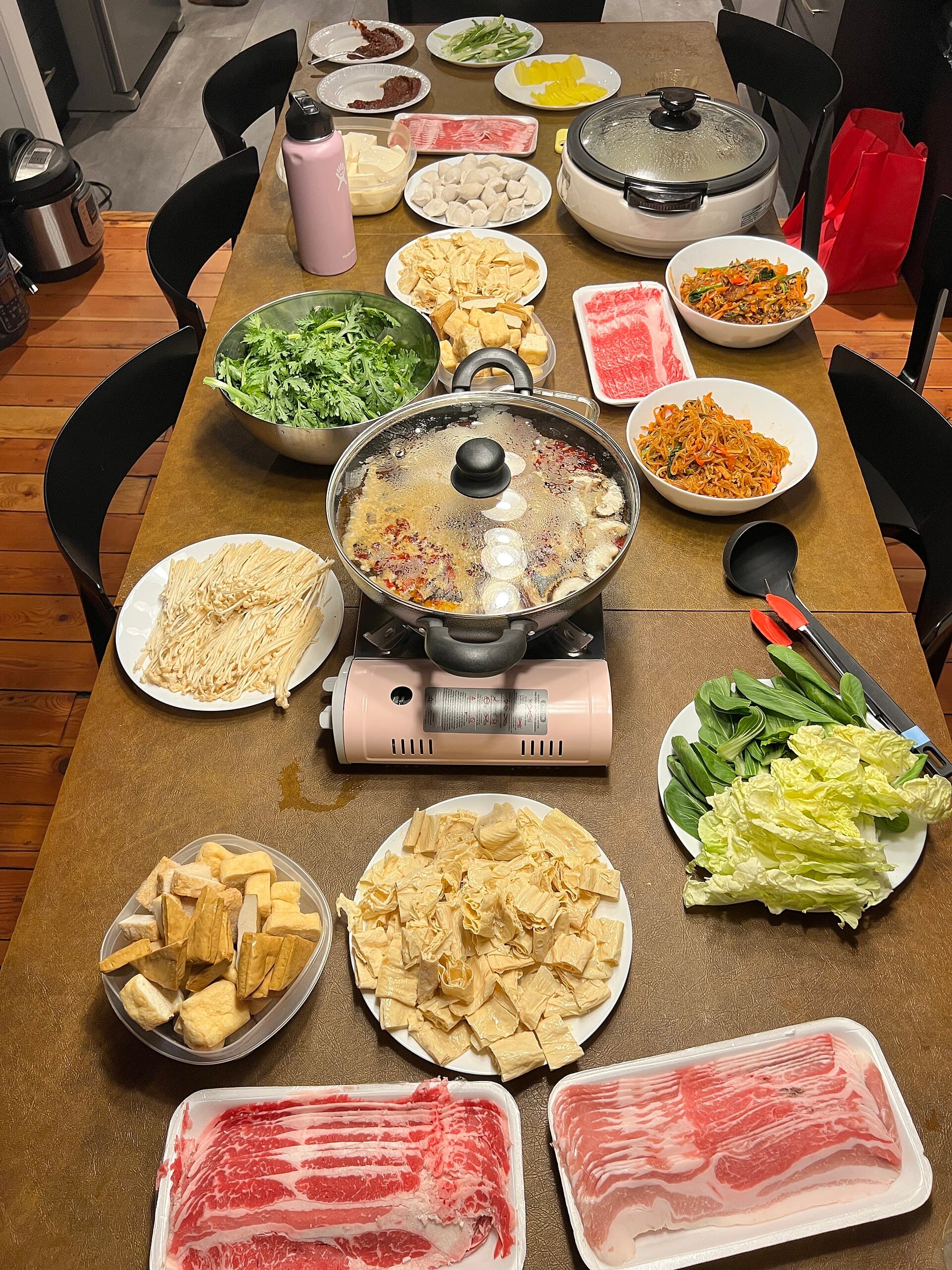
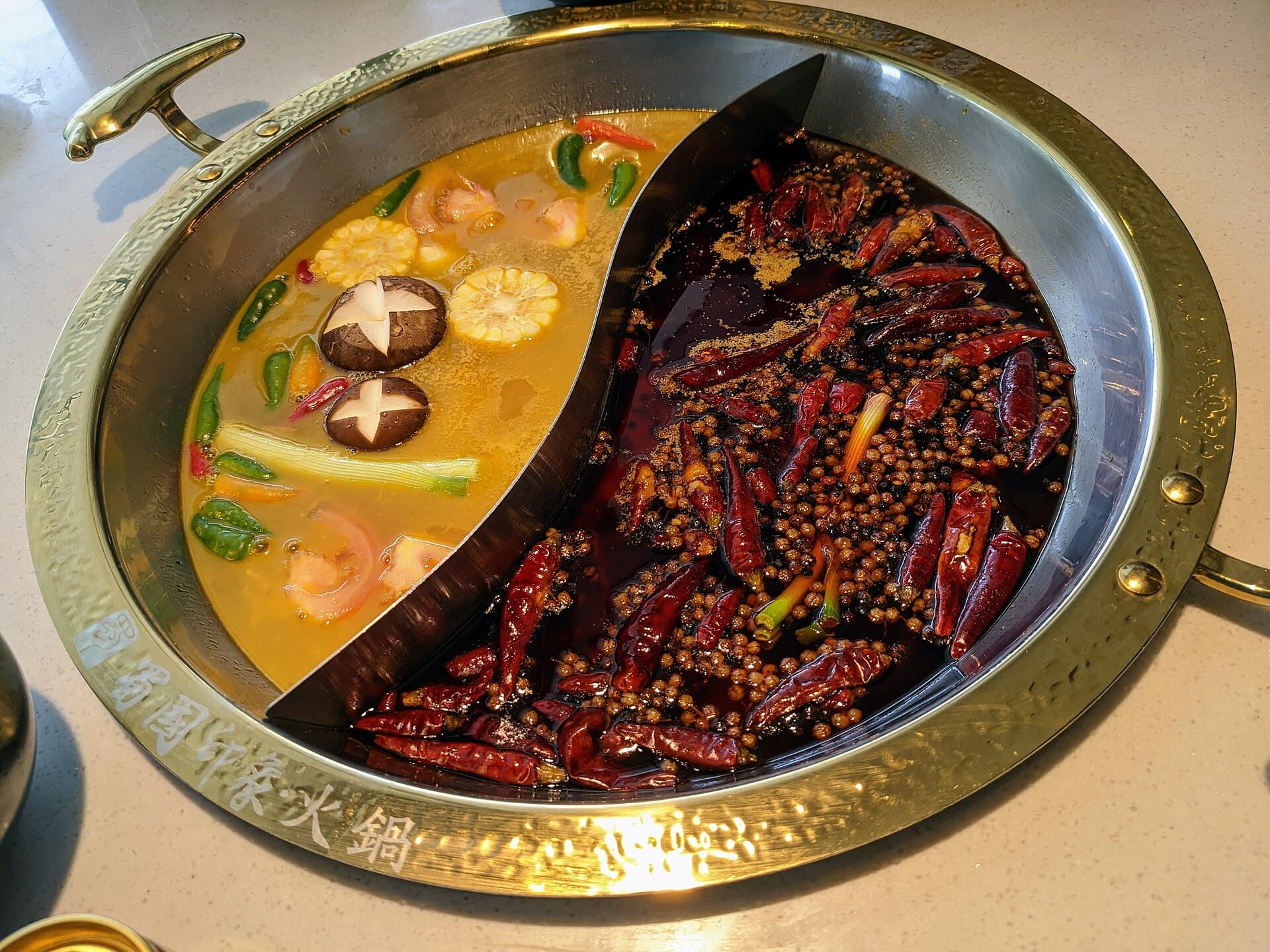
Chilli has also become an industry. , a ferment of broad beans and Erjingtiao chillies turned under the sun in open jars for months or years, is nicknamed "the soul of Sichuan cuisine"; its origin is attributed to a family of Fujianese migrants settled in the late seventeenth century, precisely during the resettlement. Chongqing hot pot was born on the Jialing docks in the early twentieth century: porters cooked cheap beef offal there in a broth of tallow and chilli, divided into compartments so each man paid his share.
Sichuan did not adopt chilli because it loved fire. It received an American plant in a humid basin, resettled by chilli eaters, that already possessed a spice capable of making the tongue vibrate. Mala is the product of that improbable meeting between a two-thousand-year-old local berry and a nightshade that arrived by ship.
Read alsoSichuan cuisine: mala, the fire that numbs the tongueThe dishes themselves, the Chengdu and Chongqing variants, and the art of balancing mala on the plate.
FAQ#
How long has China eaten chilli? The plant is first described in 1591 as a garden ornament. The earliest documented culinary use dates from 1722 in Guizhou, and mass adoption in Sichuan belongs to the nineteenth century. Sichuanese "chilli cuisine" is therefore less than two centuries old in its present form.
Is Sichuan pepper actually pepper? No. It is the dried berry of a shrub of the genus Zanthoxylum, botanically unrelated to the pepper vine. It supplies no burn but an electric numbness caused by a molecule, hydroxy-alpha-sanshool, that acts on touch receptors.
Is all Sichuanese food spicy? No. Of the twenty or so codified flavour profiles, roughly a third involve chilli. Traditional banquets deliberately alternate fiery and mild dishes, and classics such as cabbage in boiling water contain no chilli at all.
Why is Hunan also famous for heat? Hunan received chilli early and uses it with more pure burn and less numbness, having no local huajiao. The distinction is often summed up this way: Sichuan is mala, Hunan is xiangla (香辣), fragrant heat.
How do you calm chilli burn? With fat or protein, not water. Capsaicin is fat-soluble: milk, yoghurt, rice or something fatty dissolve it, while water spreads it around the mouth. Hot tea, despite tradition, tends to make it worse.
Photo credits: the images in this article come from Wikimedia Commons and are under a free license.
In this article
The cultural terms covered here, each with a short definition.
- Sichuan cuisine
- Chinese cuisine known for its heat and the numbing sensation called "mala."
Sichuan cuisine: mala, the fire that numbs the tongue
Understanding Sichuan cuisine and its mala flavour: Sichuan pepper, chilli, mapo tofu, dandan noodles, Chengdu and Chongqing and the art of Chinese heat.
Cover image: Jpatokal · Jpatokal, via Wikimedia Commons · CC BY-SA 4.0