K-indie: Korea's alternative scene, from Hongdae to Spotify
Crying Nut, Jang Kiha, Hyukoh, wave to earth, Parannoul: the story of Korea's independent scene, its clubs, its labels and its way out through abroad.
La rédaction Kotoba Interactive
Studio éditorial
In 1994, a basement in Hongdae opened under the name . The room held about a hundred people, the sound system was bad, and the district was still just a cluster of art students' studios around Hongik University. Two years later a punk band called came out of it with a song, Mal Dalija (말달리자, "let's gallop"), that Korea still sings at company parties thirty years on.
The Korean independent scene is neither an alternative version of K-pop nor its waiting room. It is a parallel circuit, with its own venues, labels, festivals and critics' award, which took twenty years to find its audience and finally found it abroad before finding it at home.
Hongdae, a district that works as a genre#
In Korean people do not only say "indie". They say 홍대 감성 (Hongdae gamseong), "the Hongdae sensibility", as though it were a musical genre. The phrase names a sound more than a place: clean guitars, voices close to the mic, everyday lyrics, arrangements without excess.
The district played that role because it brought three things together in one spot: an art school, cheap basement rents and a student audience. Venues opened next to one another, within walking distance, which made possible the format that still structures the scene: the multi-band night, where one ticket buys three or four sets.
| Venue | Opened | Role |
|---|---|---|
| Drug (드럭) | 1994 | Cradle of Korean punk, Crying Nut, No Brain |
| Rolling Hall | 1990s | Reference venue for rock, still active |
| FF | 2000s | Concerts and club nights |
| Sangsangmadang | 2007 | Venue and cinema, corporate funding |
| Prism Hall | 2010s | Mid-size capacity, international tours |
Three generations, three sounds#
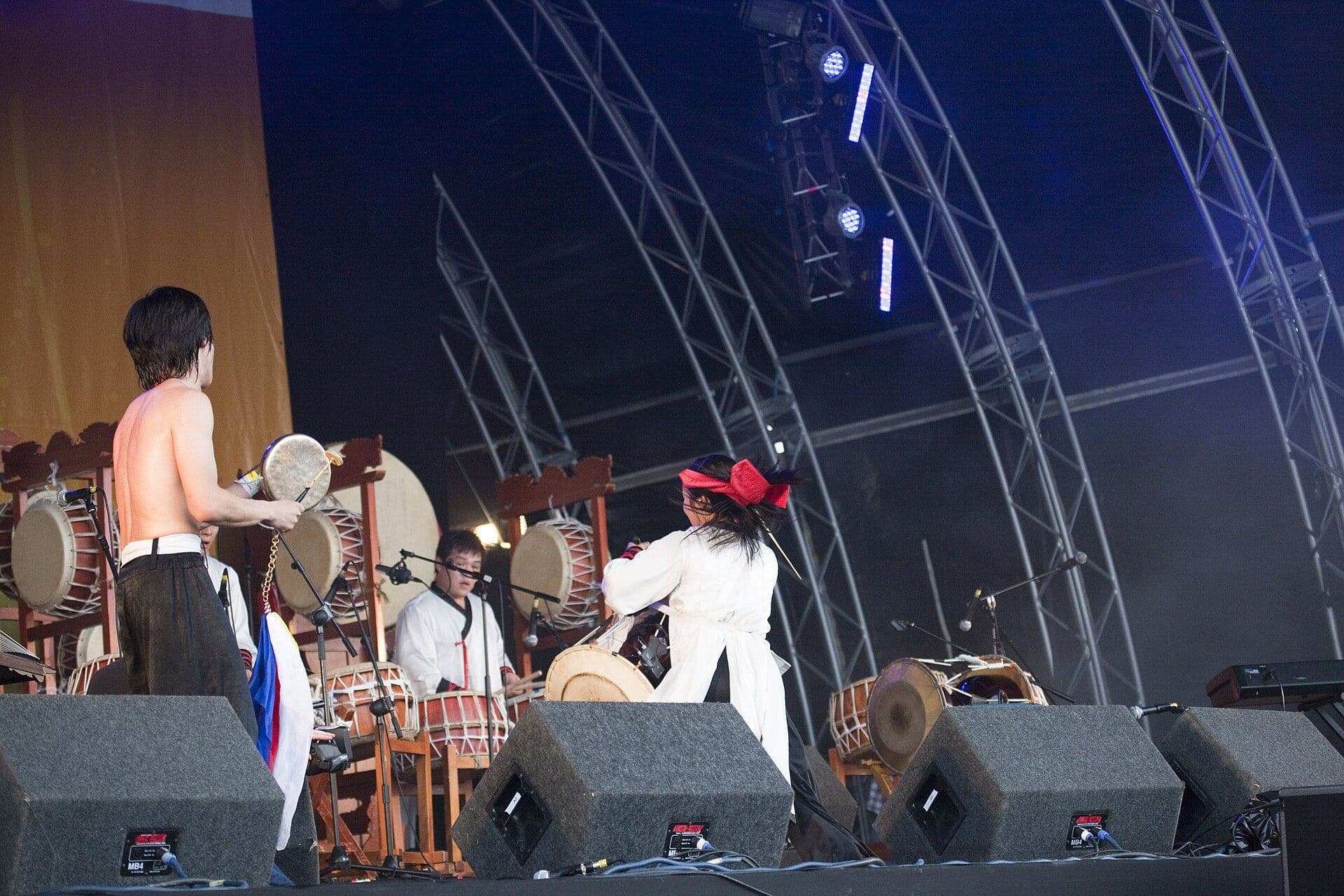
The first is punk and loud. Crying Nut, No Brain and their contemporaries came out of Drug in the late 1990s, in a Korea just emerging from the 1997 Asian financial crisis. Their energy is that of a youth with nothing left to lose, saying so quickly.
The second is ironic and spoken. In 2008, released Ssagury keopi (싸구려 커피, "cheap coffee"), a drawling monologue about a damp room and a life going nowhere. The song became a phenomenon and opened a decade of Korean indie that sings about daily life rather than love.
The third is atmospheric and exportable. emerged in 2014, then broke through in 2015 after appearing on a national variety show. His music, sung in Korean, English and sometimes Chinese, worked immediately outside Korea. Behind him came , , , .
감성 (gamseong) means "sensibility" in the sense of emotional climate. Used as a suffix it describes an atmosphere: Hongdae gamseong for Seoul indie, ppalgan gamseong for a warm mood. It is a working term of Korean music criticism, hard to translate as anything other than "vibe".
The circuit that keeps the scene standing#
The , created in 2004, is the prize awarded by critics rather than by sales. For years it was the only place a Hongdae band could be ranked alongside a major production, and it remains the best entry point for discovering the scene year by year.
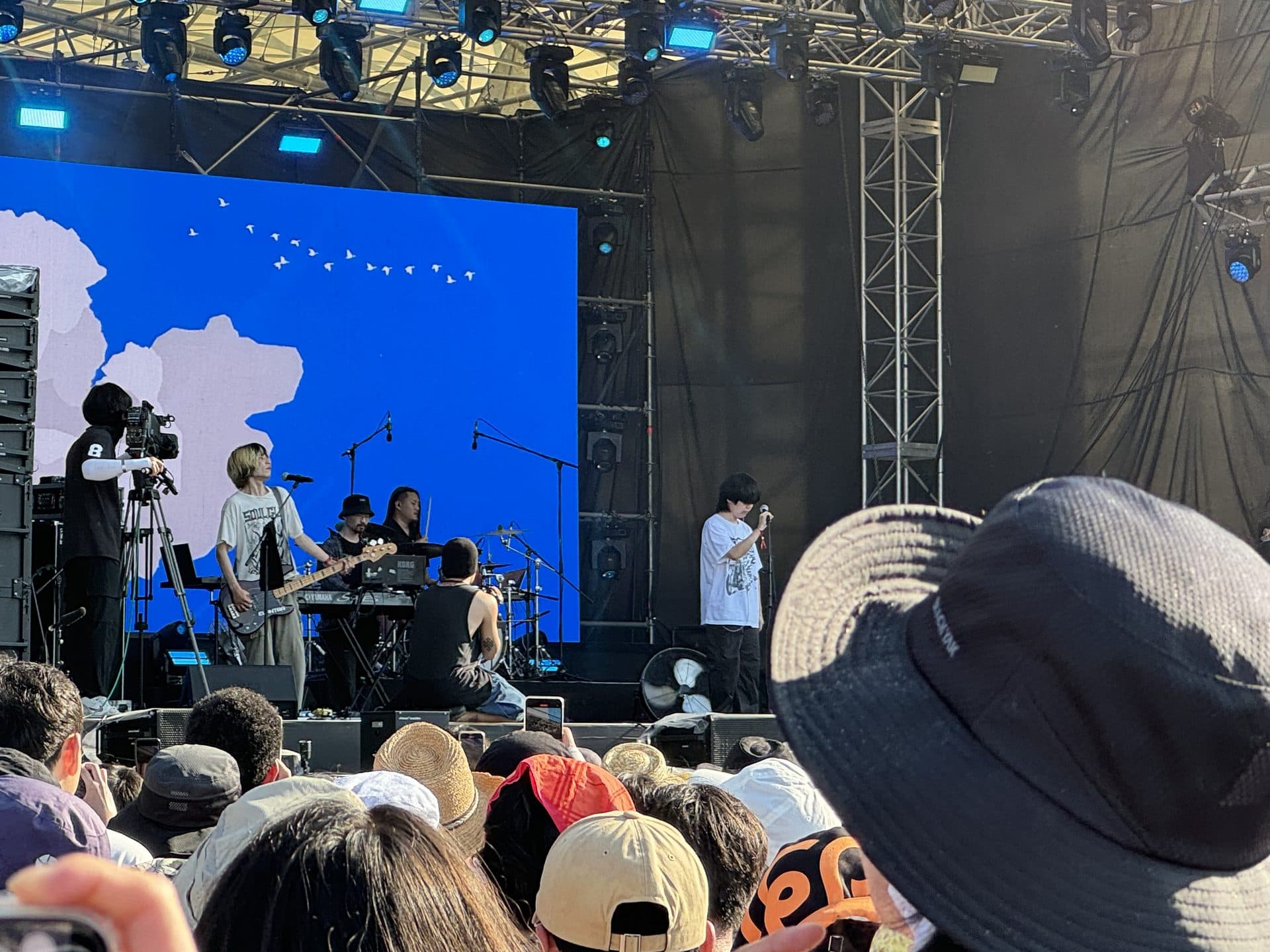
Among festivals, , launched in 2012, takes over the whole Hongdae district for an autumn weekend with dozens of showcase bands, on the model of European industry festivals. Pentaport Rock Festival, in Incheon since 2006, plays the role of the big summer rock gathering, and Grand Mint Festival its pop counterpart.
Independent labels do the rest: Pastel Music for the melancholy pop of the 2000s, Magic Strawberry Sound, Mirrorball Music, DooRooDooRoo. None has the firepower of a major agency, but all survived the dominance of Korean streaming platforms, where promotion was long reserved for large catalogues.
A scene that never had access to national charts ended up being discovered by foreign algorithms.
Three words are enough to talk music in Korean: 노래 (norae, the song), 공연 (gongyeon, the concert) and 밴드 (baendeu, the band). KoreanSRS, our spaced repetition app, installs that vocabulary and the everyday Korean that goes with it.
The way out through abroad#
Two recent cases sum up the reversal of the 2020s.
wave to earth, a trio formed in 2019, plays gentle pop with jazzy guitars, mostly in English. The band built an international audience through platforms and playlists before being recognised in Korea, then toured Europe and North America to full rooms.
is more radical still. This solo bedroom shoegaze project, whose author stayed anonymous, released an album in 2021, To See the Next Part of the Dream, praised by specialist English-language music criticism before it had any media existence in Korea at all. No concerts, no photographs, no major label: only files and a forum.
That route inverts the historic logic of Korean music, in which national recognition preceded export. It owes much to a technical fact: international platforms recommend by sonic proximity, not by nationality.
The band Say Sue Me, formed in Busan in 2012, sings almost entirely in English and is signed to a British independent label. It is better known in London and Glasgow than in Seoul, and is one of the rare Korean bands to have built an entire career from a provincial city.
What gentrification displaced#
Hongdae's success eventually made it unlivable for its own musicians. Rising rents from the 2010s closed historic venues and pushed studios and rehearsal rooms towards other districts: Mullae-dong, a former metalworking area turned studio quarter, Yeonnam-dong just to the north, and Euljiro, whose printworks buildings have housed bars and venues since the late 2010s.
The word 젠트리피케이션, a direct transliteration of "gentrification", entered the vocabulary of Korean cultural journalism on that occasion. Hongdae remains the name of the genre; it is no longer always its address.
Read alsoThe five generations of K-pop: from Seo Taiji to NewJeansThe other half of Korean music, the one with agencies and systems.
Hongdae, Mullae, Euljiro: where these scenes actually are.
FAQ#
Is K-indie a musical genre? No, it is a mode of production. It contains punk, folk pop, shoegaze, electronica and alternative rock. What they share is independence from the major agencies, not a sound.
Which band should you start with? Hyukoh for the widest entry point, Jang Kiha and the Faces to understand the scene's humour, wave to earth for the recent gentle side, Silica Gel for rock. Crying Nut if you want to go back to the source.
Can you see these bands live in Europe? Increasingly. Several have toured outside Asia regularly since 2023, and European festivals now programme Korean artists outside the K-pop box.
Where do you listen to the current scene? The annual Korean Music Awards list gives a reliable map. The Zandari Festa and Pentaport line-ups, published each summer, serve as a second filter.
Do these artists sing in Korean? It varies. The first generation sang exclusively in Korean; recent bands alternate, and some, like Say Sue Me, write almost everything in English. Korean remains the majority language of the scene's writing.
Photo credits: the images in this article come from Wikimedia Commons and are under free licences.
Pansori: Korea's opera of a single breath
Discovering pansori, the Korean epic chant: the singer and his drum, han, the great tales, the UNESCO listing and its surprising revival.
Cover image: 올해의수상자 · 올해의수상자, via Wikimedia Commons · CC BY 4.0