The five generations of K-pop: from Seo Taiji to NewJeans
Seo Taiji, TVXQ, BTS, NewJeans: what really separates K-pop's five generations, with dates, founding groups and shifts in the model.
La rédaction Kotoba Interactive
Studio éditorial
In 1992, three young men step onto the stage of a televised talent contest in Seoul. Their music blends American rap, new jack swing and Korean-language lyrics. The judges are baffled and give them the lowest score. The audience, however, is electrified. Within weeks their album sells over a million copies, and Korean music will never be the same again. Those three men are , and the moment they take the stage is widely considered the birth of K-pop.
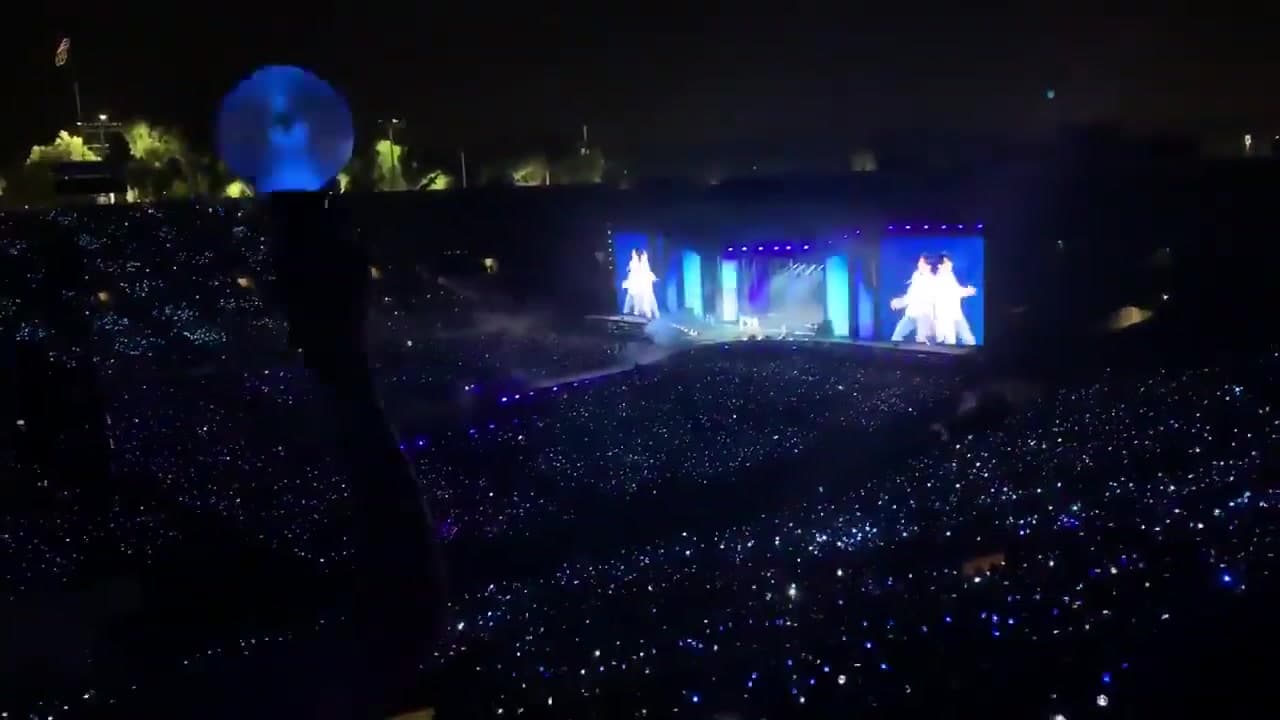
Thirty years later, K-pop is a global phenomenon worth billions of dollars, with artists filling stadiums from Los Angeles to Paris, fandoms organised like armies, and a cultural influence that has redrawn the boundaries of world pop music. To understand where it stands, you need to understand where it came from, and the story of K-pop is told in five generations.
| Generation | Period | Founding act | Defining trait |
|---|---|---|---|
| 1st | 1992-2003 | Seo Taiji and Boys (서태지와 아이들) | Birth of the idol system (아이돌, aidol) |
| 2nd | 2003-2012 | TVXQ, Girls' Generation (소녀시대) | Explosion of the Hallyu (한류, hallyu) |
| 3rd | 2012-2017 | BTS (방탄소년단), BLACKPINK | Global conquest and organised fandoms |
| 4th | 2018-2022 | Stray Kids, aespa | Narrative universes and choreographic virtuosity |
| 5th | 2022- | NewJeans (뉴진스) | Genre fluidity and pared-down aesthetics |
is simply short for "Korean pop." But the term describes far more than a musical genre: it is a complete production system encompassing music, dance, fashion, artist training, fandom management and digital content strategy. K-pop is an industry as much as it is an art form.
First generation (1992-2003): the foundation#
Seo Taiji and Boys: the big bang#
did not just create a new sound: they invented a new model. Before them, Korean popular music (가요, gayo) was dominated by sentimental ballads and trot (트로트), a genre derived from Japanese enka. Seo Taiji imported hip-hop, rock and techno, and above all he showed that a Korean artist could take control of his own music, write his own lyrics, and defy convention.
The first "idols"#
The first generation saw the emergence of the as we know it. , founder of SM Entertainment in 1995, conceptualised the model: recruit teenagers, train them for years (singing, dancing, languages, media presence), then debut them in carefully calibrated groups.
The landmark groups of this generation:
- H.O.T. (1996-2001): SM's first idol boy band, a national phenomenon with fans wearing white bandanas
- Sechs Kies (1997-2000): H.O.T.'s rivals at Daesung (later YG)
- S.E.S. (1997-2002): the first major idol girl group
- g.o.d (1999-2005): JYP Entertainment's answer to H.O.T.
- BoA (2000-): the first solo K-pop artist to conquer the Japanese market, paving the way for internationalisation
The first generation laid the foundations: the training system, the boy band/girl group model, and the idea that K-pop is a total spectacle where music, dance and image are one.
Second generation (2003-2012): the golden age#
The Hallyu explosion#
The second generation is that of the , the moment when K-pop crossed Korea's borders to conquer Asia and then the world. The trigger was twofold: the spread of across Asia, and the rise of YouTube (2005), which allowed K-pop music videos to circulate without borders.
The legendary groups#
- : the biggest boy band in Asia for a decade, dominating the Japanese market
- Super Junior (2005-): the "thirteen-member group" that popularised sub-units and variety shows
- BIGBANG (2006-): the group that fused K-pop and hip-hop, with G-Dragon as a global fashion icon
- : the most influential girl group in K-pop history, whose "Gee" (2009) became the first K-pop music video to surpass 100 million views on YouTube
- SHINee (2008-): the choreographic innovators, pioneers of the "contemporary R&B idol" sound
- 2NE1 (2009-2016): YG's rebellious girl group, with an edgy style that influenced the entire next generation
- EXO (2012-): SM's mega boy band, debuted simultaneously in Korea and China
In 2012, PSY defied every rule with "Gangnam Style," which became the first YouTube video to surpass one billion views. PSY was not a typical idol: he was 34, did not fit the industry's beauty standards, and his video was a work of social satire. His success proved that K-pop could reach the global mainstream, even though the industry took years to figure out how to replicate that success systematically.
Third generation (2012-2017): the global conquest#
The model is perfected#
The third generation is when K-pop became a global export machine. Agencies systematised internationalisation: content in multiple languages, overseas showcases, non-Korean members in groups, a massive presence on social media.
BTS and BLACKPINK: the titans#
- : the group that changed everything. Debuted by a small agency (Big Hit), they built their fanbase (the ARMY) through emotionally authentic content, intricate storytelling, and a constant presence on social media. In 2020, "Dynamite" reached number 1 on the Billboard Hot 100, a first for a Korean group.
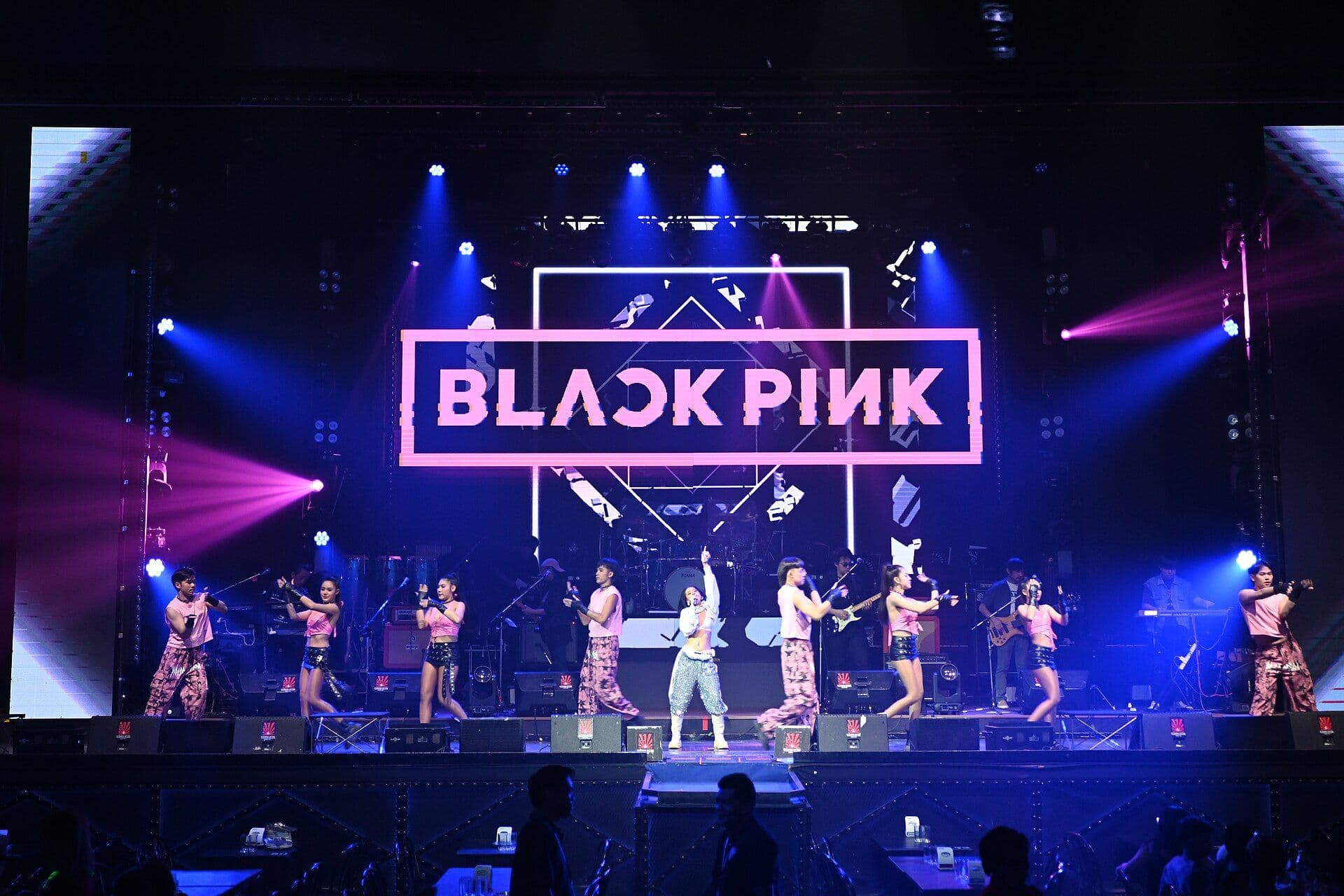
- BLACKPINK (2016-): YG's girl group that conquered the Western market with an aggressive "girl crush" sound and a luxury aesthetic, becoming the first K-pop artists to perform at Coachella (2019)
- EXO (straddling the 2nd and 3rd generations): dominance in Asia, Hallyu ambassadors in China
- TWICE (2015-): JYP's girl group that dominated Japan and Korea with a "cute" concept
- GOT7 (2014-): JYP's multicultural group with Thai, Hong Kong-born and American members
- Red Velvet (2014-): SM's dual-identity group ("Red" for fun / "Velvet" for sophistication)
The fandom as ecosystem#
The third generation perfected the organised fandom. Fans are no longer passive spectators: they fund advertisements in Times Square, coordinate streaming campaigns to drive up view counts, make charitable donations in the name of their idols, and produce a volume of content (fancams, edits, translations) that far exceeds the output of the agencies themselves.
Understanding the lyrics of your favourite groups, from 한류 (hallyu, the Korean Wave) to the 아이돌 (aidol, idols), starts with 한글 (hangeul, the Korean alphabet). With KoreanSRS and its spaced repetition, learn K-pop vocabulary step by step and move from fandom to real comprehension.
Fourth generation (2018-2022): diversification#
New sounds, new stories#
The fourth generation stands out for a diversification of concepts and an unprecedented level of choreographic virtuosity. Groups no longer settle for singing and dancing: they build with complex mythologies, characters, cinematic teasers and comic books.
- Stray Kids (2018-): JYP's self-producing group, known for its experimental sound and intense performances
- ATEEZ (2018-): the pirate-themed group from KQ Entertainment, an explosive live act
- ITZY (2019-): TWICE's successors at JYP, with an energetic "girl crush" concept
- (G)I-DLE (2018-): the singer-songwriter girl group, led by Soyeon
- aespa (2020-): SM's metaverse girl group, featuring digital avatars (ae)
- ENHYPEN (2020-): born from a reality show, a bridge between the 3rd and 4th generations
- TXT/Tomorrow X Together (2019-): BTS's juniors at HYBE, with an emotional concept and polished aesthetic
Webtoons and K-pop share a common ecosystem. Several 4th-generation groups have official webtoons that expand their narrative universes, and webtoon platforms sponsor concerts and collaborations.
Fifth generation (2022-): the era of fluidity#
NewJeans and the revolution of simplicity#
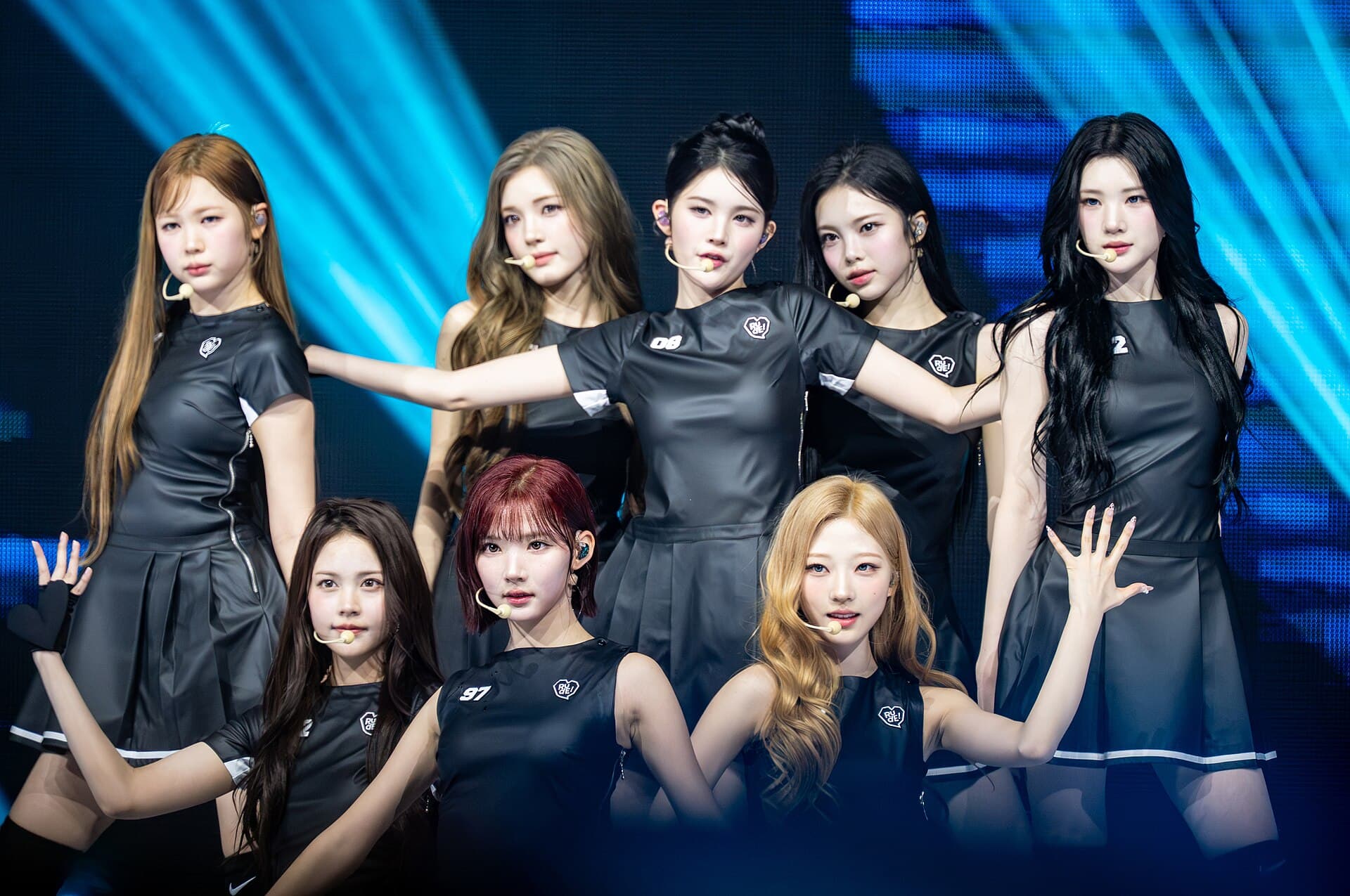
The fifth generation is still taking shape, but its founding act is clear: the arrival of , the girl group produced by Min Hee-jin at ADOR/HYBE. NewJeans broke with K-pop's maximalist aesthetic (overproduced choreographies, complex concepts, narrative universes) to offer something radically simple: soft melodies, a retro Y2K aesthetic, music videos that look like home videos, and a deliberate absence of the usual heavy artillery.
The success was immediate: "Hype Boy" and "Ditto" became global hits, and the NewJeans model influenced the entire industry. The fifth generation is characterised by:
- Genre fluidity: the boundaries between K-pop, R&B, hyperpop, jersey club and UK garage are dissolving
- Authenticity (or the appearance of it): less plastic perfection, more carefully constructed "realness"
- Native globalisation: groups debut with a worldwide strategy from day one
- Ethical debates: controversies over artist welfare, exploitative contracts and the treatment of minors have become public issues
Fifth-generation groups also include LE SSERAFIM (2022), NMIXX (2022), RIIZE (2023), BABYMONSTER (2023) and ILLIT (2024).
The system behind the music#
Behind every generation lies the : teenagers recruited as young as 12 or 13, trained for 3 to 7 years in singing, dancing, rapping, languages and image, before an uncertain debut. Most will never debut at all. The system is as admired as it is criticised: it produces artists of a staggering technical level, but at the cost of immense psychological pressure and a sacrificed youth.
The three historic "Big Three" agencies (SM, YG, JYP) have been joined by HYBE (formerly Big Hit, parent company of BTS) to form the "Big 4." But dozens of smaller agencies produce competitive groups, and the system remains open to anyone willing to pay the price.
FAQ#
How many generations of K-pop are there? Five generations are generally recognised: 1st (1992-2003), 2nd (2003-2012), 3rd (2012-2017), 4th (2018-2022) and 5th (2022-). The boundaries are approximate and are debated within fandoms.
What is the most popular K-pop group? BTS is generally considered the most popular K-pop group in history in terms of sales, streams and global cultural impact. BLACKPINK is the most popular girl group internationally.
What is the trainee system? A recruitment and training system in which teenagers are trained for several years (singing, dancing, languages, image) before debuting in a group. It is the backbone of the K-pop industry.
Is K-pop a musical genre? Not exactly. K-pop is a production system that encompasses multiple musical genres (pop, hip-hop, R&B, EDM, rock, ballads). What defines it is the model of creation and marketing, not a single sound.
Photo credits: the images used in this article are from Wikimedia Commons under a Creative Commons licence.
In this article
The cultural terms covered here, each with a short definition.
K-pop's fifth generation: the rookies rewriting the rules
Hearts2Hearts, KiiiKiii, ALLDAY PROJECT, AHOF: what the 2025-2026 rookie class really says about K-pop's fifth generation and its new methods.
Cover image: PattayaPatrol · PattayaPatrol, via Wikimedia Commons · CC BY-SA 4.0