DiDi and ride-hailing in China: the app that beat Uber
DiDi Chuxing, Caocao, T3, Gaode aggregators, Wuhan robotaxis: how ordering a car works in China and what the word wangyueche actually covers.
La rédaction Kotoba Interactive
Studio éditorial
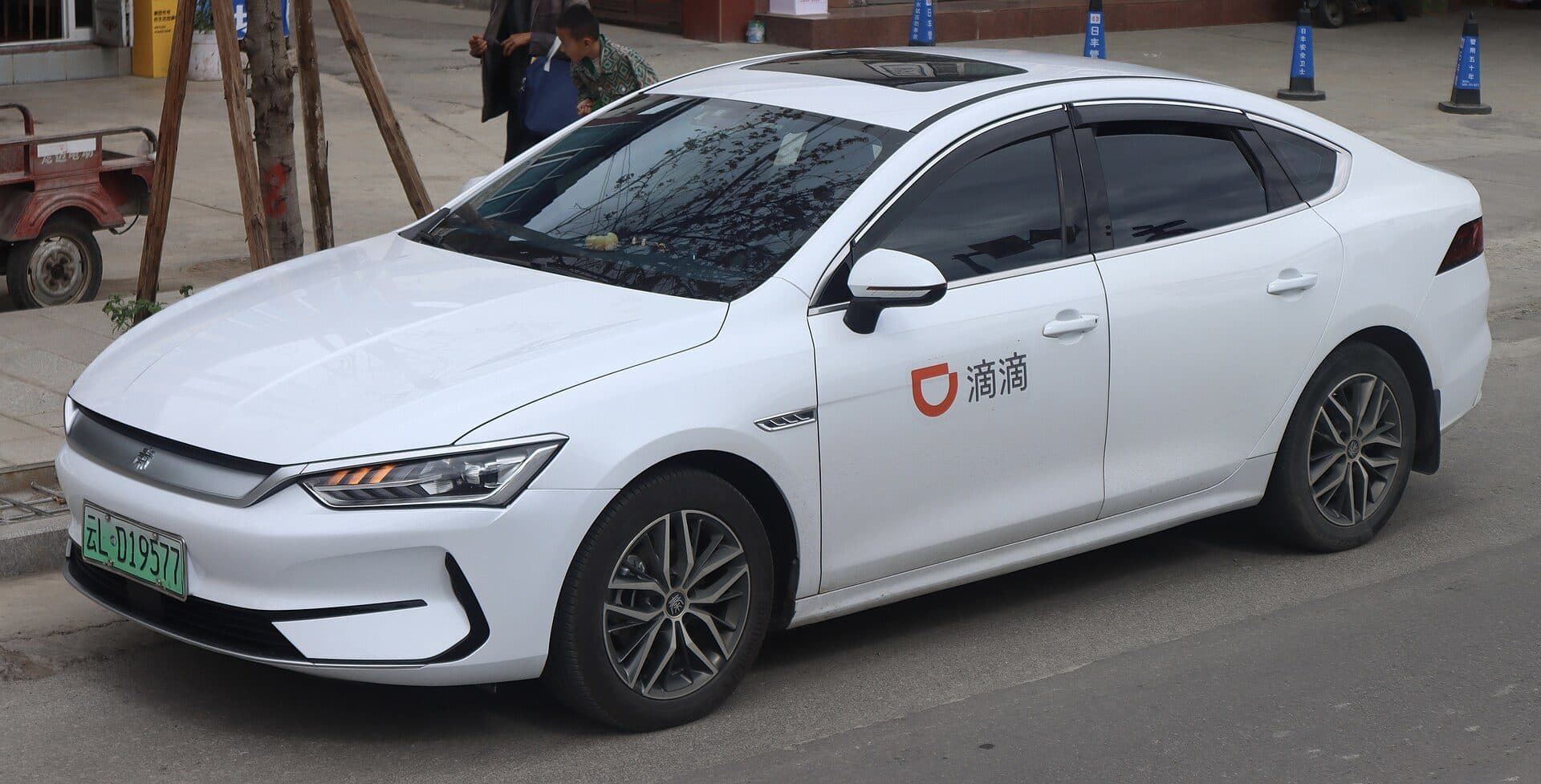
In August 2016, Uber did something it had done nowhere else: it sold its Chinese operations to its local rival and took a stake in it. After two years of a subsidy war in which both companies paid for their own customers' rides to win market share, was the only one left standing. It is one of the rare frontal defeats of an American platform on an open market.
Ten years on, DiDi is no longer alone, and the Chinese word for the sector, 网约车 (wǎngyuēchē), the "online-booked car", has become a regulatory category in its own right, with its permits, its quotas and its saturation alerts.
滴滴 (dīdī) is an onomatopoeia: the sound of a car horn. 出行 (chūxíng) means "to travel, to go out". The full name, adopted in 2015, therefore reads roughly as "beep beep, off we go". The company was previously called 嘀嘀打车 (Dīdī Dǎchē), "beep beep, hail a car", using a different character for the same sound.
How one app swallowed its rivals#
The company was founded in 2012 by , a former Alibaba manager, with a simple idea: let people hail an existing taxi from their phone. The market quickly split into two camps backed by the two giants of the Chinese internet: DiDi on the Tencent side, on the Alibaba side.
In February 2015, the two merged. The new entity hired , a former Goldman Sachs banker and daughter of Lenovo's founder, as president. Only one adversary remained, Uber, burning hundreds of millions of dollars a year in China. The confrontation ended eighteen months later with the purchase of Uber China.
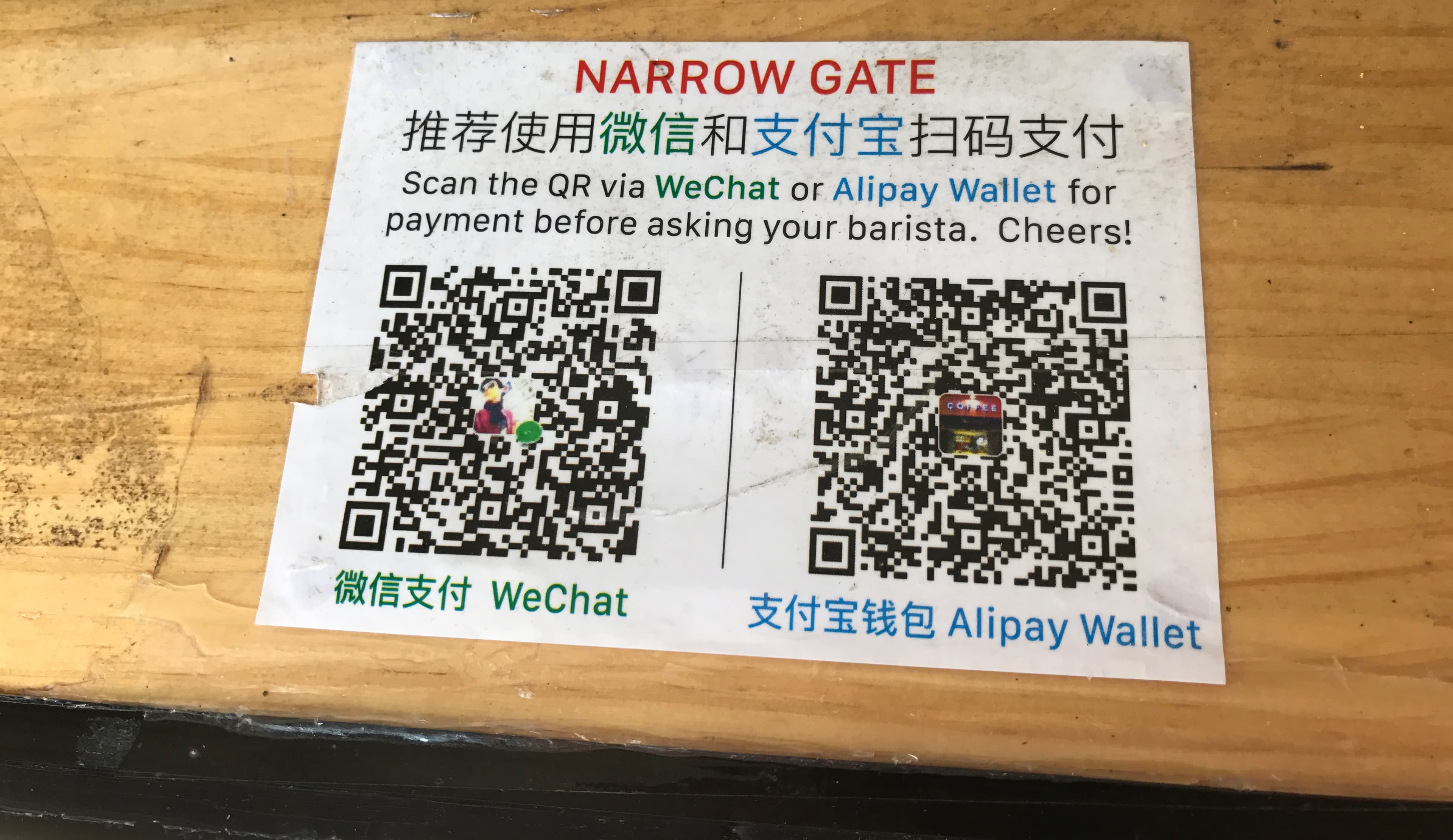
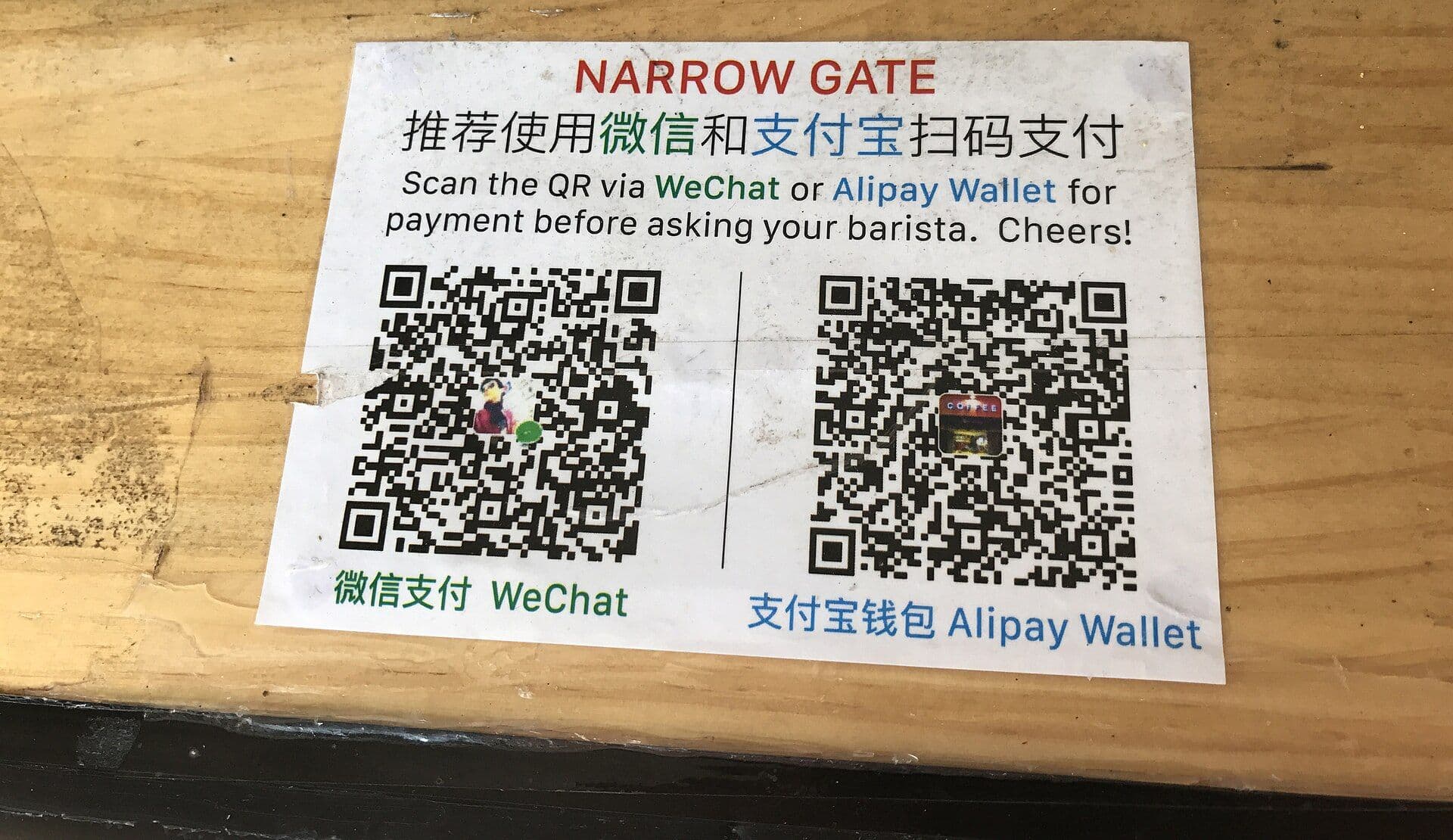
That consolidation was made possible by a Chinese market peculiarity: subsidies were paid in yuan directly into users' WeChat Pay and Alipay wallets, which turned the ride-hailing war into a decisive moment in the adoption of mobile payment.
The ride categories, worth knowing before you order#
The app distinguishes services that differ in price and in legal status.
| Service | Chinese | What it is |
|---|---|---|
| Taxi | 出租车 (chūzūchē) | A real taxi with a meter, hailed via the app |
| Economy ride | 快车 (kuàichē) | Private car with driver, the standard offer |
| Premium ride | 专车 (zhuānchē) | Higher tier, better vehicle and service |
| Shared ride | 拼车 (pīnchē) | Journey shared with another passenger |
| Hitch | 顺风车 (shùnfēngchē) | A driver already making the trip, cost-sharing fare |
The distinction between kuaiche and shunfengche is not cosmetic. The second is legally not a paid transport service but cost-sharing between private individuals, which long placed it outside the obligations imposed on professional drivers. That grey zone had serious consequences.
2018, the year that changed everything#
In May and then in August 2018, two women passengers were murdered by drivers on the Hitch carpooling service. Investigations revealed failures in driver vetting and in the handling of complaints. The company suspended the service nationwide, dismissed executives, then relaunched it only in November 2019, with reinforced identity checks, audio recording of journeys and time restrictions.
The shock permanently changed the regulations. The national framework had existed since July 2016, when China became one of the first large countries to explicitly legalise ride-hailing; it then tightened, with a specific licence for drivers, standards for vehicles and, in the big cities, local residence requirements that exclude a share of migrant drivers.
In China, ride-hailing was legalised before it was regulated, then regulated after a tragedy.
Three words are enough to order a car: 打车 (dǎchē, to hail a car), 司机 (sījī, the driver) and 拼车 (pīnchē, to share the ride). ChineseSRS, our spaced repetition app, installs that vocabulary and the everyday Chinese that goes with it.
The shortest IPO in recent memory#
In June 2021, DiDi listed on the New York Stock Exchange and raised more than four billion dollars. Two days later, the Cyberspace Administration of China opened a data security review and had the app removed from Chinese app stores. The group could not register new users for eighteen months.
In July 2022, the fine landed: more than eight billion yuan for breaches of personal data and network security law. The company had already withdrawn from the New York Stock Exchange the previous month. The app was only allowed to take on new customers again in January 2023.
The episode became a case study: it marked the start of a tightening grip on China's large platforms and durably cooled plans for Chinese technology listings in the United States.
The market today: aggregators and carmakers#
DiDi remains the leading player, but the landscape has fragmented along two lines.
Carmakers launched their own services to put their electric fleets to work: backed by Geely, carried by three state groups with Tencent and Alibaba on the cap table, Xiangdao by SAIC, OnTime by GAC.
Aggregators changed things differently. , Alibaba's mapping app, owns no cars: it compares and books across dozens of platforms at once. That model, called 聚合平台 (jùhé píngtái), captures a growing share of rides and makes loyalty to a single app pointless.
The sector suffers from oversupply. China's Ministry of Transport publishes the number of ride-hailing driver licences in circulation every month, and several cities, from Sanya to Jinan, issued official saturation alerts from 2023 onwards, discouraging new drivers from entering a market where hourly earnings are falling.
In Wuhan, the Apollo Go robotaxi service (萝卜快跑, literally "the radish that runs fast"), operated by Baidu, has deployed several hundred driverless vehicles. In 2024, its very low fares and its unexpected stops set off a national debate, widely covered in the Chinese press, about the future of taxi drivers in a city that counts tens of thousands of them.
What awaits a foreign visitor#
Three practical obstacles come up every time. Payment goes through WeChat Pay or Alipay, two apps that now accept foreign bank cards but require identity verification first. DiDi's interface offers an English version, but exchanges with the driver happen in Chinese messages, often using preset phrases.
Finally, Chinese geolocation uses a coordinate system offset from the international standard, which produces a visible gap between your actual position and the one shown on some foreign maps. The simplest approach is to enter a named meeting point rather than a spot on the map.
Read alsoAlipay, WeChat Pay: How China Abolished CashThe payment layer without which none of these apps works.
The app inside which a good share of these services are embedded.
FAQ#
Does Uber work in China? No. Uber sold its Chinese operations to DiDi in 2016 and no longer runs a service on the mainland. In Hong Kong the legal situation is different and separate.
Can DiDi be used without a Chinese phone number? An international version exists and accepts foreign numbers, but registration and payment usually go through WeChat Pay or Alipay, which require identity verification. Doing that before you travel makes things much simpler.
What is the difference between kuaiche and zhuanche? Kuaiche is the standard offer, comparable to an economy ride. Zhuanche is a premium tier, with stricter requirements on vehicle and driver, and a markedly higher fare.
Have ordinary taxis disappeared? No. They are still numerous and can also be hailed through the apps, including DiDi's. In some cities, a street taxi is still faster at rush hour, when ride-hailing cars are scarce.
Are robotaxis open to the public? In several Chinese cities, yes, within defined zones and through dedicated apps. Wuhan and Beijing are the most advanced. Access for foreigners depends on the service and its registration process.
Photo credits: the images in this article come from Wikimedia Commons and are under free licences.
Alipay, WeChat Pay: How China Abolished Cash
QR-code duopoly, technological leapfrogging, the red-envelope war and the digital yuan: the mobile payment rail that erased cash in China.
Cover image: User3204 · User3204, via Wikimedia Commons · CC BY-SA 4.0