JR Pass: when it is still worth buying in 2026
Price, coverage, Nozomi, regional passes: the full calculation to know whether the Japan Rail Pass is worth its 50,000 yen, and the routes where it no longer is.
La rédaction Kotoba Interactive
Studio éditorial
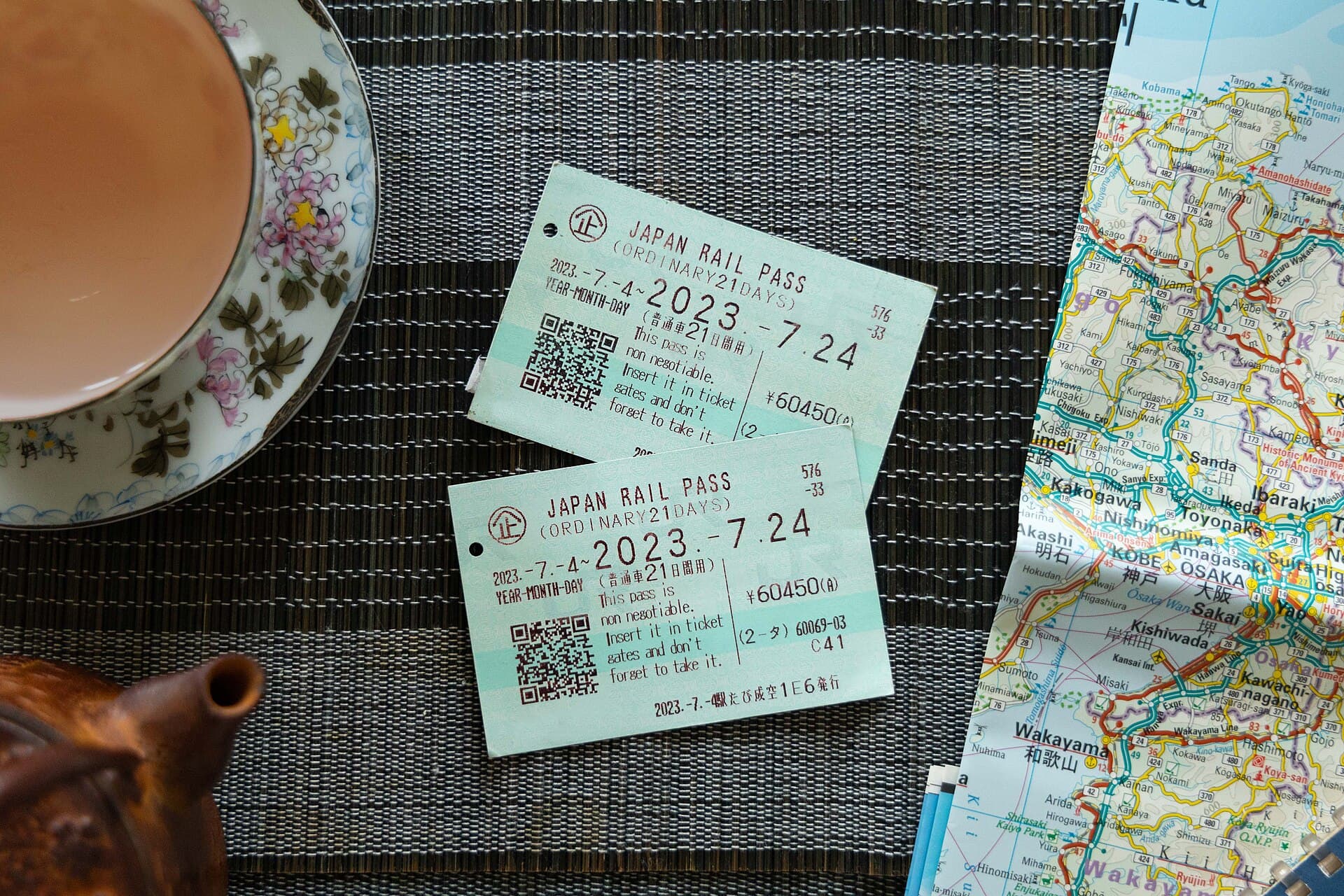
On 1 October 2023, the seven-day Japan Rail Pass jumped from 29,650 to 50,000 yen. A rise of nearly 70 % overnight, the steepest since the pass was created in 1981. From one day to the next, the answer to "should I get the JR Pass?" stopped being automatically yes.
The reasoning still circulating in guidebooks predates that date. It held that a Tokyo to Kyoto round trip already paid for the pass, which was true at 29,650 yen and no longer is. The pass remains excellent for certain journeys and has become a poor calculation for most ten-day trips built around the Tokyo, Kyoto and Osaka triangle. Working out which case you are in takes ten minutes.
What the pass covers, and the three gaps that cost money#
The JR Pass grants access to almost the entire network of the six JR group companies, roughly 20,000 kilometres of line, plus a few JR buses, the JR ferry to Miyajima and the Tokyo Monorail. It works without limits for 7, 14 or 21 consecutive days.
Three exclusions account for most unpleasant surprises.
The and , the fastest shinkansen on the Tōkaidō, San'yō and Kyūshū lines, remain outside the deal. Since October 2023 you can board them by paying a supplement, which was impossible before, but that supplement comes on top of the pass. The Hikari and Sakura, covered at no extra cost, take about twenty minutes longer between Tokyo and Kyoto.
Private railways are not JR companies, and Japan has dozens of them. Kintetsu for Nara and Ise, Odakyū for Hakone, Hankyū and Keihan in the Kansai, Nankai for Osaka airport: none of it is included. Kyoto is the textbook case, since its two subway lines and most of its city buses, the very services you need to move between temples, belong to the municipality.
The subways of Tokyo, Osaka, Nagoya, Fukuoka and Sapporo are excluded too. In Tokyo, the Yamanote line is a JR line and covers a large part of the city, but the moment you need Ginza, Roppongi or Asakusa, you pay.
The official Japanese name, ジャパンレールパス (Japan Rail Pass), appears in stations alongside the phrase 短期滞在 (tanki taizai, "short stay"). Immigration status is what governs eligibility: the pass is reserved for foreign visitors admitted under the Temporary Visitor stamp, and the check is done passport in hand at the exchange counter.
The break-even calculation, in one table#
The ordinary seven-day pass has cost 50,000 yen since October 2023. Break-even therefore sits at roughly three one-way Tokyo to Kyoto trips, a journey priced around 14,000 yen in a reserved seat depending on train and season.
| Seven-day itinerary | Pay-as-you-go (order of magnitude) | Verdict |
|---|---|---|
| Tokyo → Kyoto → Tokyo | ≈ ¥28,000 | Pass not worth it |
| Tokyo → Kyoto → Osaka → Tokyo | ≈ ¥30,000 | Pass not worth it |
| Tokyo → Kyoto → Hiroshima → Tokyo | ≈ ¥45,000 | Borderline, watch closely |
| Tokyo → Kyoto → Hiroshima → Fukuoka → Tokyo | ≈ ¥60,000 | Pass worth it |
| Tokyo → Sendai → Aomori → Sapporo → Tokyo | ≈ ¥75,000 | Pass clearly worth it |
Official fares change, notably during the JR companies' annual revisions, so it pays to redo this calculation with current prices when booking. The logic does not move: the pass becomes attractive the moment you leave the Tokyo, Kyoto and Osaka triangle for the north, the far west or Kyūshū.
Two parameters are regularly forgotten. The pass runs on consecutive days, so three days spent in Kyoto without boarding a train are three days paid for nothing. And there is a Green Car version at 70,000 yen for seven days, whose value is limited to travellers taking many long trains in high season, when ordinary carriages fill up.
A Japanese ticket window can be handled with three words: 指定席 (shiteiseki, the reserved seat), 自由席 (jiyūseki, the unreserved carriage) and 片道 (katamichi, the one-way trip). JapaneseSRS, our spaced repetition app, installs that travel vocabulary and the everyday Japanese that goes with it.
Regional passes, often the real bargain#
Each JR company sells its own regional deals, less familiar to foreign travellers and far better calibrated for a themed trip. They are sold under the same status conditions as the national pass.
- JR East, Tohoku Area Pass: any five days within fourteen, covering the whole north-east from Tokyo, Sendai and Aomori included.
- JR West, Kansai-Hiroshima Area Pass: five days across Osaka, Kyoto, Kobe, Okayama and Hiroshima, precisely the busiest corridor after Tokyo.
- JR Kyushu, All Kyushu Pass: three, five or seven days, tailored to a Fukuoka, Nagasaki, Kumamoto and Kagoshima loop.
- Hokuriku Arch Pass: seven days between Tokyo and Osaka the northern way, via Kanazawa, an alternative that avoids the saturated corridor.
What often makes them the better buy is flexibility: several of them work on non-consecutive days, which cancels the national pass's main defect. A traveller spending four nights in Kyoto and two in Kanazawa only pays for the days spent riding.
Buying, exchanging, reserving: what changed#
The pass once had to be bought before departure, as an exchange order to convert on arrival. That is no longer required: it is now also sold inside Japan, in major stations and airports, and the price gap with advance purchase has been removed.
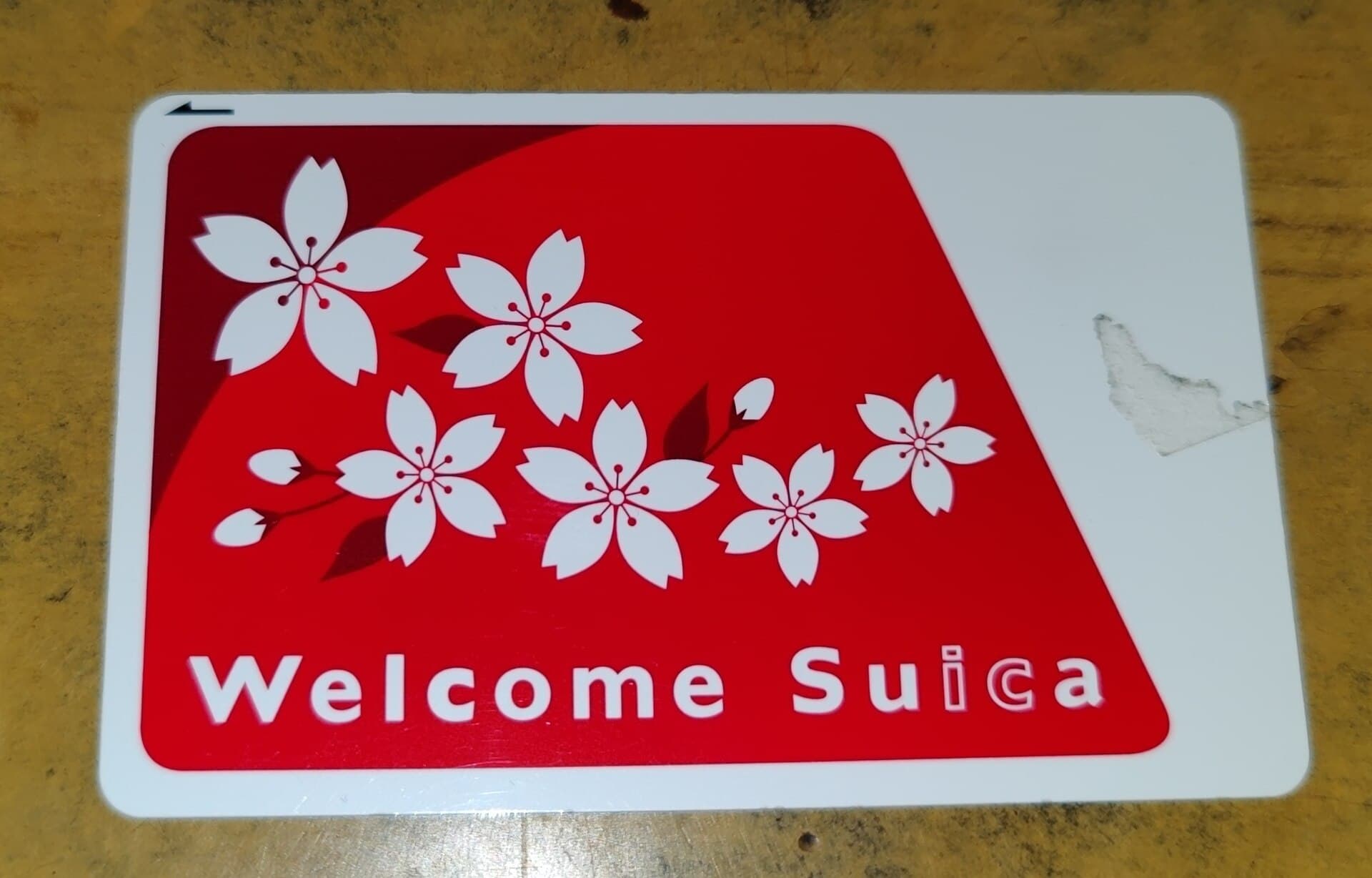
The exchange takes place at a or at dedicated machines, passport in hand. Since 2023 a good share of passes are issued as chip cards usable directly at the gates, whereas previously you had to walk past a staffed booth every time you entered a station.
Seat reservations are free and unlimited with the pass. They are made at counters, at the green machines, or online depending on the company. It is the most profitable step of the trip: in high season on the Tōkaidō line, an unreserved carriage can mean standing for two hours.
The Japan Rail Pass was created in 1981, six years before the national railways were privatised. It was originally designed to bring visitors to a country that received few of them, and was priced deliberately low. Japan welcomed 3.3 million foreign visitors in 1981; it passed 36 million in 2024, which largely explains why the original subsidy logic was abandoned.
Where the pass remains unbeatable#
Three travel profiles still justify the national pass without argument.
The grand tour first: Hokkaidō and Kyūshū in the same trip, or a full descent from Tokyo to Kagoshima. Japanese distances are expensive per kilometre and the pass caps the bill.
The unplanned trip next. The value of the pass is not only monetary: no longer having to decide whether a day return to Nikkō is worth 5,500 yen changes how you travel. You board, change your mind, get off two stations later.
The off-season trip up north, finally, where alternatives are thin. The night buses and low-cost airlines that make the pass debatable on Tokyo to Osaka are far less present on Aomori, Akita or Kōchi.
Read alsoThe apps you actually need to travel in JapanJapanese routing apps can filter itineraries covered by the pass, which stops you from boarding a Nozomi by mistake.
The JR Pass did not stop being useful in 2023, it stopped being automatic. That is probably good news for travellers: the ten-minute calculation it now demands forces you to draw your itinerary before leaving, and a drawn itinerary beats a pass bought by reflex.
Read alsoTokyo: the district guide that makes the city legibleOnce in the capital the pass is barely useful: the Yamanote covers the essentials, the rest runs on paid subways.
FAQ#
Is the JR Pass worth it for a Tokyo to Kyoto round trip? No, not since October 2023. The round trip costs around 28,000 yen in a reserved seat, against 50,000 yen for the seven-day pass. You need at least a third major leg, such as Hiroshima or Kanazawa, to approach break-even.
Can you ride the Nozomi with a JR Pass? Yes since October 2023, but by paying a supplement on top of the pass price. Without it you fall back on the Hikari and Kodama, which serve the same main stations with twenty to forty minutes of extra travel.
Who is allowed to buy a JR Pass? Foreign visitors admitted to Japan under Temporary Visitor status, that is a short stay of fifteen or ninety days. Foreign residents in Japan and Japanese nationals are not eligible, and passports are checked at the exchange.
Should you buy it before leaving? No longer mandatory since 2023, and the price difference has disappeared. Buying in advance still saves queuing on arrival, especially at Narita and Haneda in busy periods.
Does the pass cover subways and city buses? No. Only JR lines, a few long-distance JR buses, the JR ferry to Miyajima and the Tokyo Monorail are included. The subways of Tokyo, Kyoto and Osaka, and private railways such as Kintetsu or Hankyū, are paid separately.
Photo credits: the images in this article come from Wikimedia Commons and are under free licences.
The apps you actually need to travel in Japan
Earthquake alerts, train times, Suica on your phone, translation, Tabelog: the apps that genuinely change a trip to Japan, and the ones that will not work for you.
Cover image: Emile Donzel · Emile Donzel, via Wikimedia Commons · CC BY-SA 4.0