Nattō, kimchi, doubanjiang: three schools of Asian fermentation
Bacteria, moulds, salt and time: what really separates Japanese nattō, Korean kimchi and Sichuan doubanjiang, and the common ancestor that links them.
La rédaction Kotoba Interactive
Studio éditorial
Three jars, three countries, three different micro-organisms. In the first, a soil bacterium, Bacillus subtilis, turns cooked soybeans into a stringy mass that smells of ammonia. In the second, lactic bacteria acidify salted cabbage until it fizzes. In the third, moulds and yeasts work broad beans and chillies for three years in a jar left out in the sun.
Nattō, kimchi and doubanjiang pass for three regional curiosities. They are in fact three branches of the same tree, and the gap between them comes down to a single parameter: what you allow into the pot.
The common ancestor is written with a single character#
The documented starting point is Chinese and goes by the name , a word that first covered salted pastes of meat or fish before applying to legumes. The Rites of Zhou, compiled under the Han, already list a considerable variety of them at the court table.
The character travelled without changing shape. It reads hishio, then shō, in Japan, where it produces and . It reads in Korea, where it still structures three staples: , and . One ideogram, three national cuisines.
The divergence lies in the starter. China developed , a mixed-mould starter usually built on grain. Japan extracted and domesticated a single species from it, Aspergillus oryzae, known as , selected over centuries until it no longer produced toxins: the Brewing Society of Japan designated it the "national fungus" (国菌, kokkin) in 2006. Korea long left the job to the ambient air, hanging blocks of soybean, the , under the eaves so that local micro-organisms would seed them.
The word for fermentation is 発酵 (hakkō) in Japanese, 발효 (balhyo) in Korean and 发酵 (fājiào) in Chinese: all three share the same pair of characters, literally "to rise, to take effect" and "leaven". The technical vocabulary of Asian fermentation has stayed sinographic from one end of the region to the other.
Nattō: the bacterium that needs neither salt nor time#
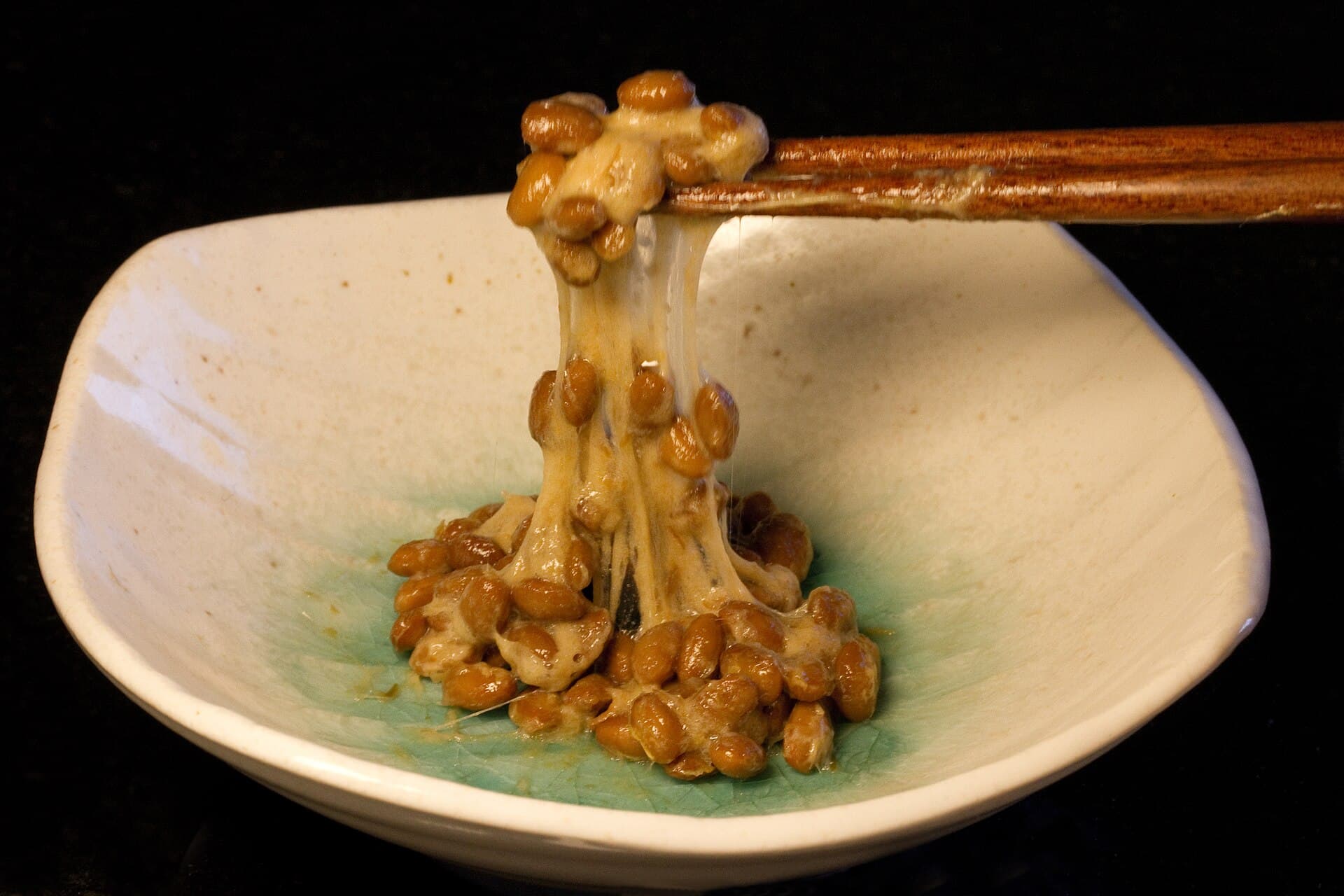
is the family exception. Where almost every East Asian fermented preparation relies on salt as a selection filter, nattō contains none. It does not need any: Bacillus subtilis var. natto is vigorous enough to take the ground before anything else.
The traditional method fitted inside a bundle of rice straw. Straw naturally hosts the bacterium; cooked soybeans go in while still hot and the bundle spends a night somewhere warm. Industrial production replaced straw with an isolated strain and a 40-degree incubator, for a fermentation that lasts under twenty-four hours. It is the fastest of the three.
Two characteristics follow. The threads first: the long filaments nattō produces, called , are a polymer of glutamic acid, a chemical cousin of the glutamate that carries umami. Then the ammoniacal smell, which comes from protein breakdown and explains a regional fault line in Japan, the product being eaten far more in Kantō and Tōhoku than in Kansai.
Kimchi: salt first, acidity second#
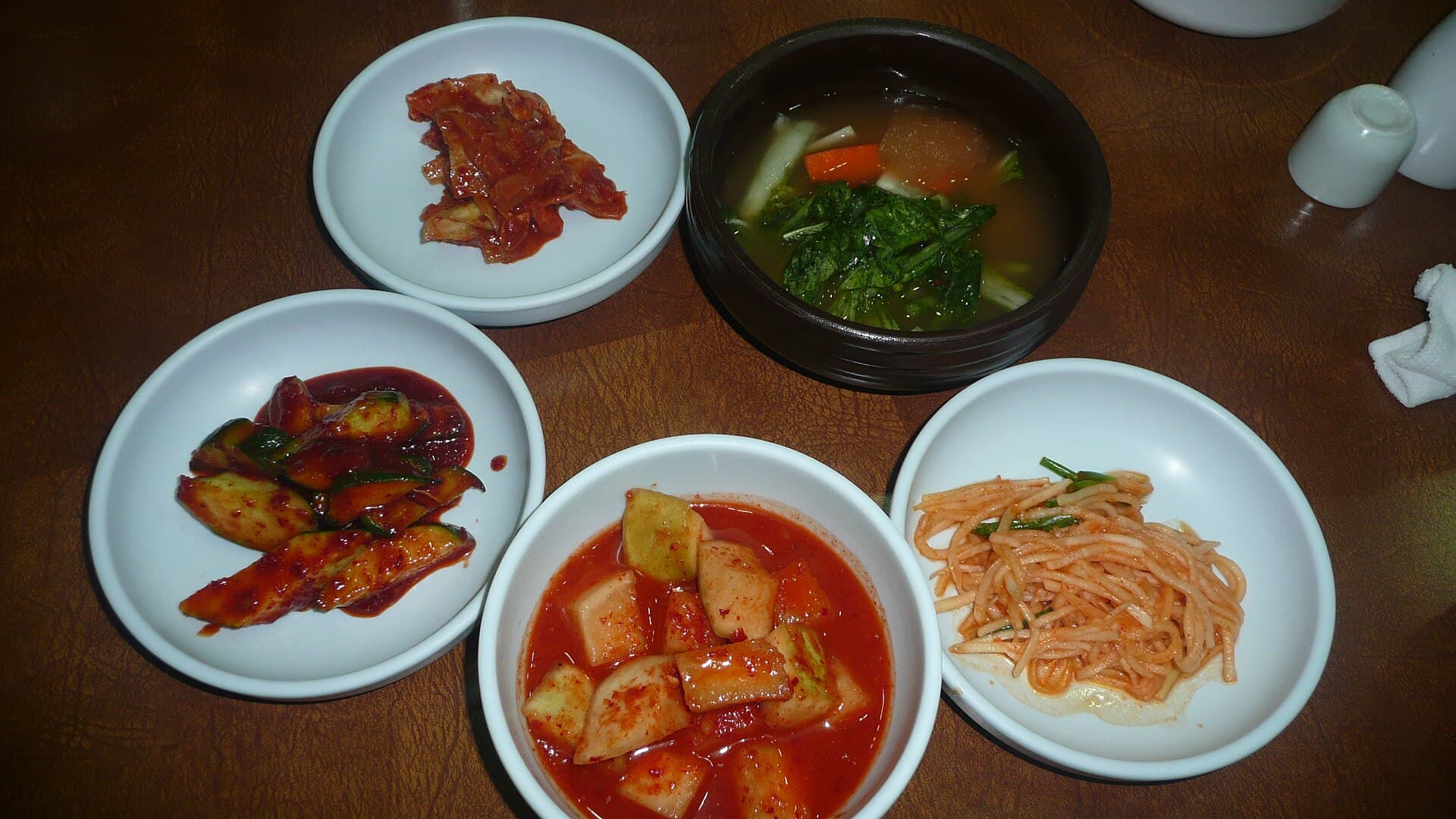
involves no mould at all. It is a lacto-fermentation, the same family of processes as sauerkraut, driven by lactic bacteria already present on the vegetable, foremost among them Leuconostoc mesenteroides.
Salting the cabbage beforehand does all the selection work: it dehydrates the plant cells, eliminates competing flora and leaves the field to lactobacilli, which acidify the medium and stabilise it. Chilli, rice paste, fermented seafood and garlic carry flavour, they are not fermentation agents.
Red kimchi is in fact recent on the scale of Korean history. Chilli only reaches the peninsula at the end of the sixteenth or the start of the seventeenth century, through trade routes opened by the Portuguese, and it takes another century and a half to establish itself in recipes. Earlier kimchi was white, salted and scented with aromatics, a form that survives under the name .
Read alsoKimjang: Korea's great collective winter kimchi riteThe collective winter preparation, , was inscribed in 2013 on the UNESCO representative list of intangible cultural heritage. What was distinguished was not the recipe but the act of making it together.
Kimjang still mobilises whole families over two days, for quantities counted in hundreds of cabbages.
Doubanjiang: three years in an open jar#
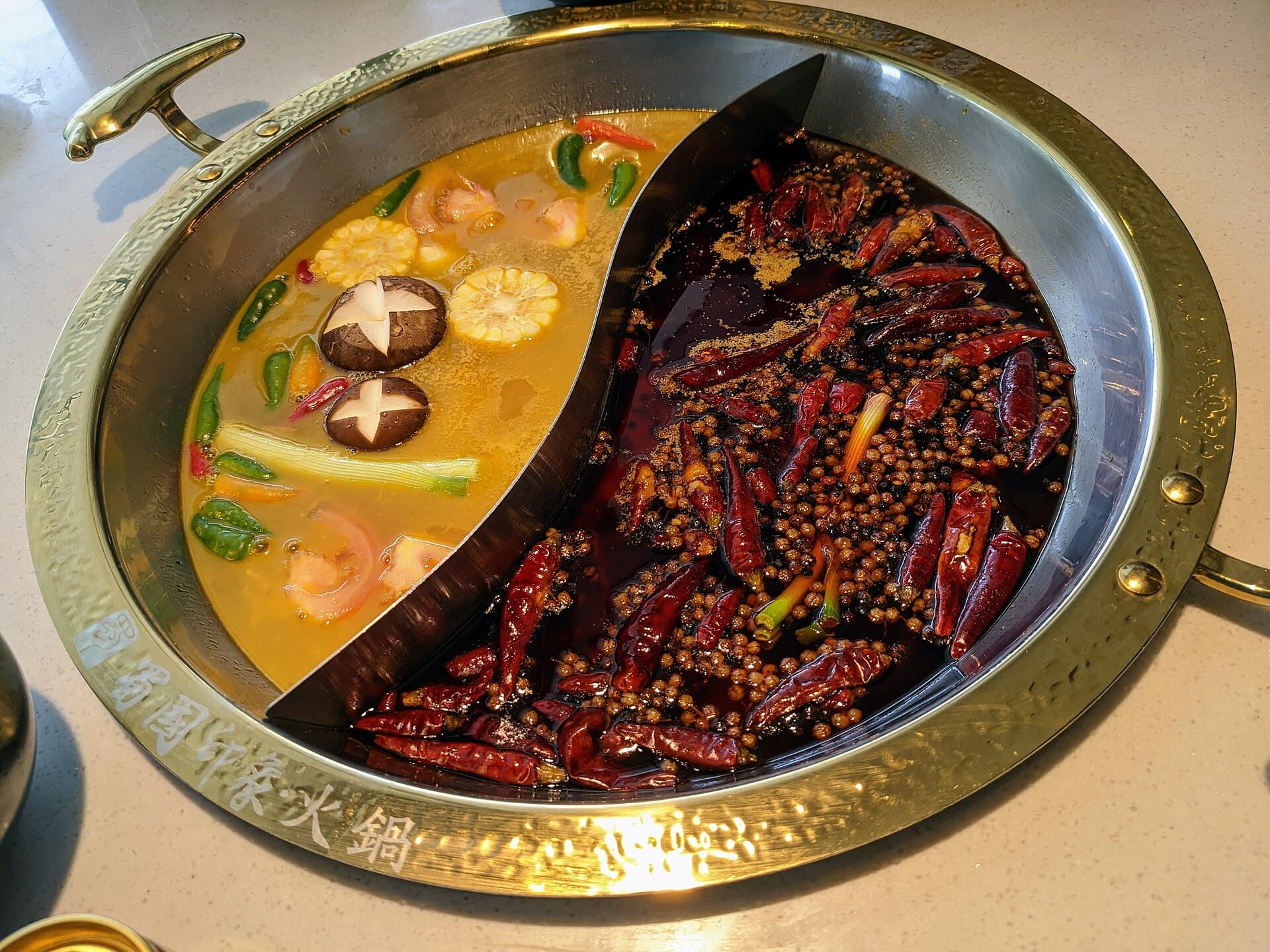
Sichuan's is the slowest of the three and the most exposed. Its base is not soybean but the broad bean, , inoculated with a qū and then mixed with salted chillies.
Fermentation then takes place in earthenware jars left in the open air, in dedicated courtyards. Workers uncover them by day and cover them at night, stir them daily, and let sun and dew alternate for months. The standard product ages a year, higher grades three years, and some reserves exceed a decade. The paste shifts from bright red to dark brown as sugars react with amino acids.
The emblematic production is that of , a district on the edge of Chengdu, whose appellation is protected in China by a geographical indication. Without it there is no mapo tofu and no Sichuan chilli oil: doubanjiang is the salty foundation on which chilli and Sichuan pepper rest.
Chinese fermented paste labels are read with three characters: 醬 (jiàng, the fermented paste), 麴 (qū, the starter) and 陳 (chén, "aged"). ChineseSRS, our spaced repetition app, installs that kitchen vocabulary and the everyday Mandarin that goes with it.
The three schools in one table#
| Nattō (Japan) | Kimchi (Korea) | Doubanjiang (China) | |
|---|---|---|---|
| Base | Cooked yellow soybean | Salted napa cabbage | Broad bean and chilli |
| Agent | Bacillus subtilis | Lactic bacteria | qū moulds, yeasts |
| Salt | None | High, in a pre-salting stage | High, throughout the mass |
| Duration | Under 24 hours | Days to several months | 1 to 3 years, sometimes more |
| Vessel | Straw bundle, tray | Buried jar, onggi | Open earthenware jar |
| Role at the table | Breakfast dish, over rice | Permanent side dish | Sauce base ingredient |
The table reveals the real reading grid: these are not three recipes but three strategies facing the same problem, namely preserving protein and vegetables without refrigeration. Japan bet on speed and a single strain, Korea on salt and the rhythm of the seasons, China on duration and aromatic accumulation.
Traditional Korean jars, the , are porous: their unglazed earthenware lets minute amounts of air through, which regulates gas exchange during fermentation. The kimchi refrigerators sold in Korea today reproduce that slowness electronically, with separate programmes for each type of kimchi.
Why these three products are back in 2026#
Asian fermentation now interests two audiences that used not to meet. Cooks see in it a reserve of additive-free umami, which explains the presence of kimchi, miso and doubanjiang on menus that are not remotely Asian. Nutritionists look at the living micro-organisms and the compounds produced by fermentation, nattō's vitamin K2 being the most studied example.
Caution remains warranted on health claims, often extrapolated from observational studies of populations whose diets differ in many other respects. What is not disputable is the role of these products in building flavour: three major cuisines built their aromatic profile on micro-organisms rather than on spices, and that is a regional singularity.
Read alsoKimchi Varieties: Korea's Edible AtlasKimchi is not a product but a family: every vegetable, every season and every province has its own.
A pot of nattō, a jar of kimchi and a jar of doubanjiang tell the same old intuition, formulated long before anyone could name a bacterium: time, properly framed, is an ingredient.
FAQ#
What is the difference between kimchi and sauerkraut? The process is the same, a lacto-fermentation of salted vegetable, but kimchi is seasoned before fermenting, with chilli, garlic, ginger and often fermented seafood, whereas sauerkraut ferments plain. Kimchi is also eaten at every stage of acidity, from fresh to the very sour version destined for stews.
Does nattō contain alcohol or salt? Neither. It is one of the rare East Asian fermented preparations that does without salt entirely, the vigour of Bacillus subtilis being enough to keep competing micro-organisms out. Salt and soy sauce are added when eating.
Can gochujang replace doubanjiang? Not without changing the dish. Gochujang is sweet, based on glutinous rice and chilli, while doubanjiang is salty, based on broad beans, and aged far longer. A mapo tofu made with gochujang becomes a different, Korean-tasting dish.
Has kimchi always been red? No. Chilli only reaches Korea around the turn of the sixteenth and seventeenth centuries and takes over a century more to establish itself in recipes. White kimchi, baek-kimchi, is the closest form to the earlier state and is still made.
How long does an opened fermented paste keep? Very salty pastes such as doubanjiang, miso and doenjang keep for months in the fridge, their salt content protecting them. Nattō, being unsalted, is a fresh product to be eaten within days or frozen.
Photo credits: the images in this article come from Wikimedia Commons and are under free licences.
In this article
The cultural terms covered here, each with a short definition.
- Kimchi
- Korean fermented vegetables, most often spiced cabbage, a staple of the Korean table.
Why Sichuan eats so much chilli
Chilli has only existed in China since the 16th century. How Sichuan, already famous for its taste for pungency, made it the pillar of its cuisine: migration, climate, economics.
Cover image: Kinchan1 · Kinchan1, via Wikimedia Commons · CC BY 2.0