Pop Mart and Labubu: The Chinese Empire of Global Collectibles
From Wang Ning in Beijing to the worldwide Labubu craze, Pop Mart is reinventing adult collectibles with its blind boxes and becoming China's pop empire.
La rédaction Kotoba Interactive
Studio éditorial
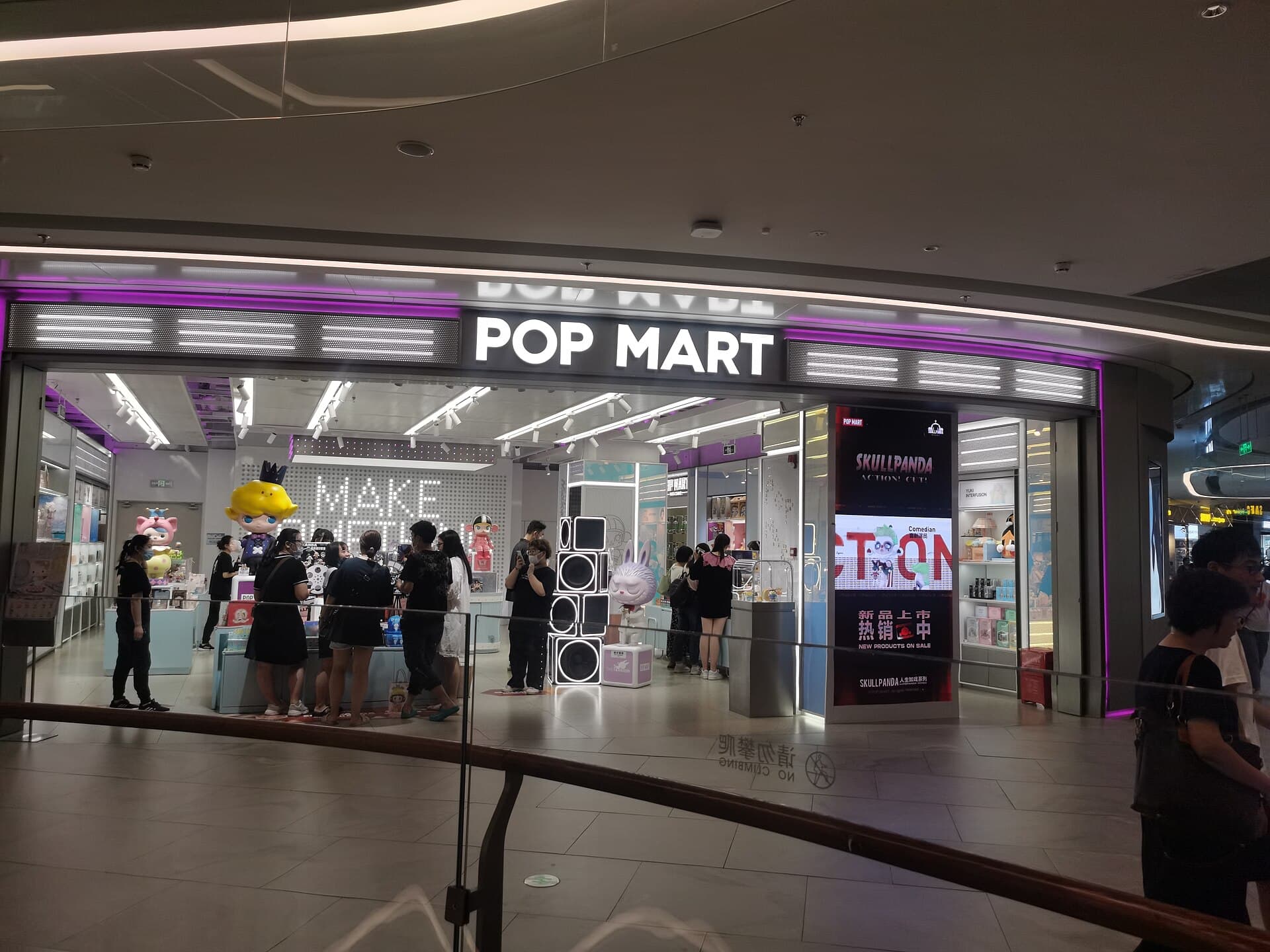
In October 2024, outside a store in Beijing's Sanlitun, a line stretches hundreds of meters. Young women aged 18 to 35 wait, some more than ten hours, for the latest collection, a pointy-eared creature by Kasing Lung. Each box, at about 79 yuan (11 dollars), holds a random figurine from a series of twelve to fifteen models; the rarest, pulled at one in 144, trade for thousands. The same scene repeats in Shanghai, Hong Kong, Bangkok, Seoul, London, Paris and New York. Pop Mart, founded in 2010 by , then 23, has become in five years the fastest commercial phenomenon in Asia. In 2024 it crossed the 10 billion yuan revenue mark (about $1.4 billion), set up in 30 countries and popularized a concept from Japan: the .
Wang Ning: The 23-Year-Old Entrepreneur#
A Youth in Beijing#
was born in 1987 in Xinxiang, Henan province, to an engineer father and a civil-servant mother. He earned a degree in communication and marketing at Zhengzhou Forestry University. As a student, he grew passionate about Japanese gashapon figurines (ガシャポン, surprise capsules from Tokyo vending machines) and Hong Kong collectible figures, notably those by Michael Lau, pioneer of the Asian designer toy.
In 2010, at 23, he left Zhengzhou for Beijing and opened a shop for trendy small objects imported from Japan and Southeast Asia, . The first store, 80 square meters, opened in Beijing's Zhongguancun mall in August 2010: stationery, decoration, Japanese snacks and gadgets.
The Hard Years and the Revelation#
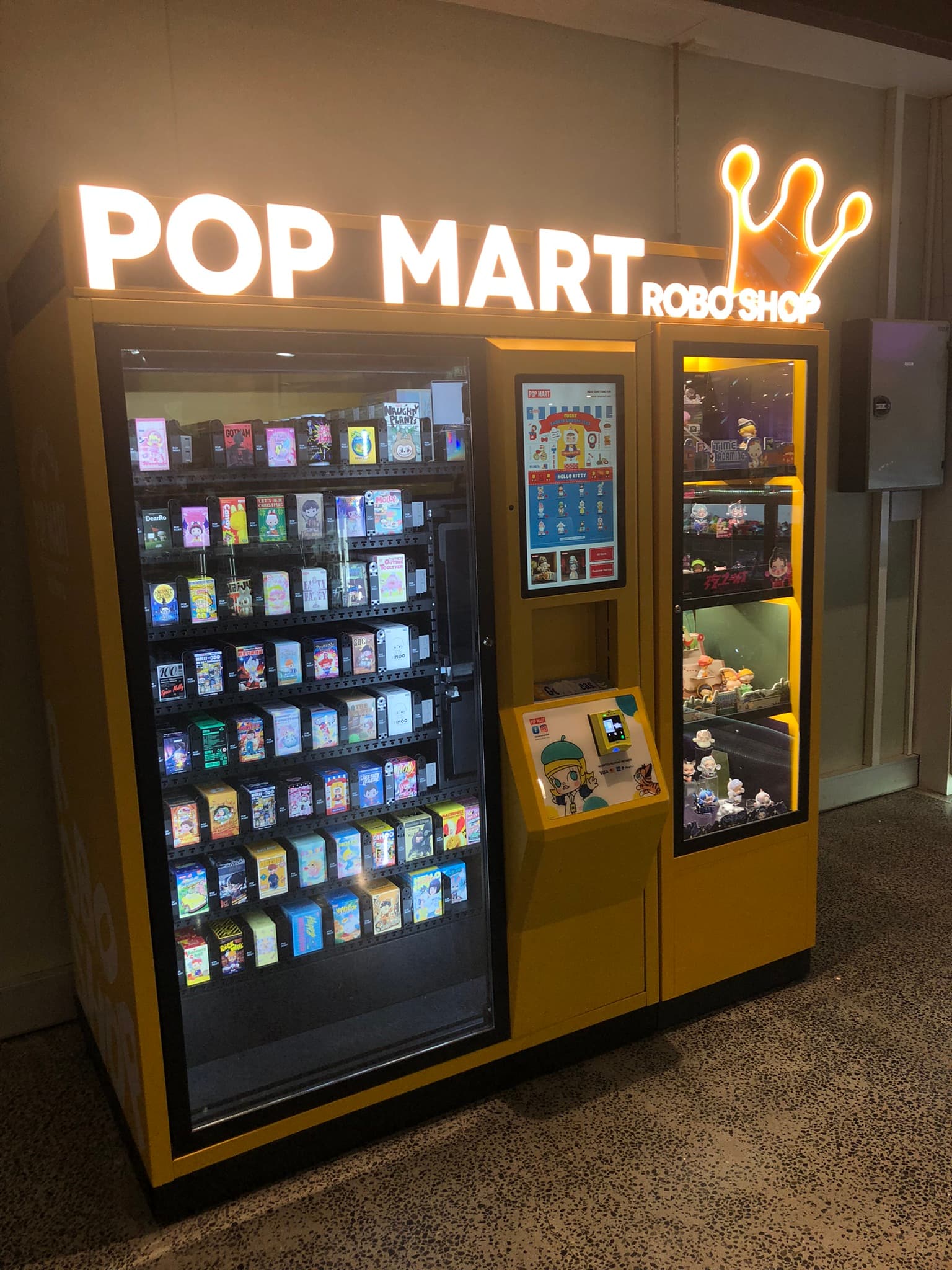
The company nearly closed several times between 2011 and 2014. The turning point came in 2015, when Wang, in Tokyo, discovered gashapon machines and the figurines of Sonny Angel, made by the Japanese company Dreams Inc. and sold in blind boxes since 2004. Each box is identical outside but holds a different figurine drawn at random; the collector buys several to complete the set and hope to hit the rarer secret figurine.
Wang negotiated exclusive distribution of Sonny Angel in China; in 2016, Pop Mart sold more than a million in less than a year. Revenue exploded, and Wang launched his own characters.
2016 to 2020: A Lightning Rise#
Molly: The First Phenomenon#
In 2016, Pop Mart signed an exclusivity deal with Hong Kong artist , creator of , a sulky-eyed little girl inspired by his daughter. Molly is a vinyl figurine in a blind box at about 59 yuan (8 dollars); each series has 12 characters plus a secret figurine pulled at 1 in 144. In 2019, Pop Mart sold 4.5 million Molly figurines, more than 450 million yuan for that brand alone.
Molly's success let Pop Mart sign other Asian artists: Pucky (Dou Xiaodou), Dimoo (Ayan), Skullpanda (Xiong Miao), Baby Three, Crybaby (Molly Yllom), and above all Labubu.
IPO and Internationalization#
On December 11, 2020, Pop Mart debuted on the Hong Kong Stock Exchange: the shares tripled on day one, valuing the company at more than $15 billion. Wang Ning, 33, became a billionaire. International expansion accelerated: Seoul, Tokyo, Singapore, Bangkok, then London (2022), Paris (2023) and New York (2024).
In 2022, Pop Mart opened its first theme park, Pop Mart Land in Beijing. The 40,000-square-meter park drew one million visitors a year, a tourist destination for Chinese Gen Z.
Fascinated by the Pop Mart frenzy and its lines outside Beijing stores? Learn to read 盲盒 (mánghé, blind box), 玩具 (wánjù, toy) and 收藏 (shōucáng, collection) with ChineseSRS and its spaced repetition, so you can decode the original Chinese packaging and hashtags.
Labubu: The Global Phenomenon of 2024#
Kasing Lung and the Birth of Labubu#
, a Hong Kong artist born in 1972 and raised in the Netherlands, created in 2015 for an illustration book, The Monsters. Labubu draws on Nordic folklore and Scandinavian elves: European fairy tales, Arthur Rackham's elves, Maurice Sendak's characters.
In 2019, Pop Mart signed an exclusive deal with him for Labubu blind-box figurines. The first series (2019-2020) met modest success, among designer-toy enthusiasts.
The Global Explosion of 2023 to 2024#
The turning point came in 2023, with to hang on handbags. The concept, borrowed from Japan where are traditional, appealed to young Chinese women, then Korean and Thai women.
The snowball effect was triggered in April 2024, when Thai singer Lisa of BLACKPINK posted on Instagram a photo with a Louis Vuitton bag decorated with several Labubus. The #Labubu hashtag hit 2 billion views on TikTok in under three months. Rihanna, Dua Lipa, Kim Kardashian, Bella Hadid, Selena Gomez and Emma Watson appeared with Labubus hanging from their Hermès, Chanel or Prada bags.
The phenomenon went viral in the United States, Europe, Latin America, the Middle East. By summer 2024, queues topped eight hours outside the Pop Mart on Carnaby Street in London. Plushies, sold between $16 and $40, moved several million units a month; rare models like the Labubu Secret (pulled at 1 in 72) traded for thousands on StockX, eBay and Xianyu.
Dizzying 2024 Numbers#
In 2024, Labubu alone generated more than 30 billion yuan (about $4 billion), nearly half total revenue. France became the second European market after the UK, the US overtook Japan in volume, and Pop Mart opened in Saudi Arabia, the UAE, Australia, Mexico, Brazil. The stock rose ten-fold between January 2023 and December 2024, making Wang Ning, at 37, one of China's youngest billionaires with a fortune estimated at $22 billion.
The Blind-Box Phenomenon: Psychology and Sociology#
The Mechanism of Controlled Chance#
The rests on the uncertainty of the reward: you do not know what you are buying until you open the box. Each series typically includes:
- 12 characters or variants visible
- 1 or 2 secret figurines not illustrated on the packaging, pulled at 1 in 144 or 1 in 288
- sometimes chase figures (special versions of a standard character)
This system, derived from Japanese gashapon of the 1980s, activates the same circuits as gambling: dopamine, quest for completion, frustration of repetition, euphoria of rarity. A 2023 study by Professor Li Wei of Peking University showed that 68 percent of regular buyers buy more than one box at a time, and 23 percent display compulsive behaviors close to those of pathological gamblers.
Criticism and Regulation#
In August 2022, the Chinese government, through the State Administration for Market Regulation, published Blind Box Guidelines banning sales to minors under 8, requiring transparency on pull probabilities, and limiting surprise editions. Pop Mart had to disclose the probabilities of each series. Abroad, legislation has not yet caught up.
Why It Works: The Sociological Analysis#
Several factors combine:
- Accessible price: between 59 and 89 yuan in China, roughly a restaurant meal.
- Social dimension: collectors meet on WeChat, Xiaohongshu, Instagram and TikTok to share unboxings, trade duplicates, display their collection.
- Aesthetic dimension: the designed, colorful figurines become Instagrammable fashion accessories.
- Identifiable anti-luxury: unlike Louis Vuitton bags or Rolex watches, Labubus are affordable and signal belonging to a community rather than a social class.
- Collectible culture: under Japanese and Korean influence, China has developed since the 2010s a strong adult collectibles culture (Lego, sneakers, Pokémon cards, K-pop cards).
Pop Mart in the Global Pop Ecosystem#
The Comparison with Sanrio#
Pop Mart is often compared to Sanrio, creator of Hello Kitty. Sanrio bets on a few characters (Hello Kitty, Kuromi, Cinnamoroll) extended into thousands of products and targets the whole family at low prices and high volume; Pop Mart bets on a rotating gallery of collectible figurines, targets urban 18-35-year-olds, and relies on controlled scarcity and mid-range prices.
| Criterion | Pop Mart (泡泡玛特, pàopào mǎtè) | Sanrio (三丽鸥, sānlì'ōu) |
|---|---|---|
| Sales model | Blind box (盲盒, mánghé), controlled scarcity | Mass licensing, high volume |
| Target audience | Urban adults 18-35 | Whole family, children included |
| Characters | Rotating gallery (Molly, Labubu, Dimoo) | Stable core (Hello Kitty, Kuromi) |
| 2024 growth | +106 percent revenue | +25 percent revenue |
In 2024, both have similar market caps (around $15 billion), but Pop Mart grows far faster: +106 percent annual revenue versus +25 percent.
Influence on Other Brands#
Pop Mart's success has inspired a wave of me-too ventures: Miniso in 2022, Top Toy (ByteDance) in 2023, Loopy (Korean) in 2024, Funko in the US in 2023; in Japan, Bandai uses the concept in some Gundam and One Piece lines.
Pop Mart and Chinese Culture#
Pop Mart is one of the first Chinese cultural exports successful with a global public. Unlike Chinese cinema (still little exported), Chinese music (niche abroad) or manhua (less known than manga), it has gotten its characters adopted by non-Chinese audiences, who buy Labubus without necessarily knowing the brand is Chinese. It is a Chinese cultural soft power that is non-political, aesthetic, consumerist.
Pop Mart Communities and Fan Culture#
Xiaohongshu: The Collectors' Social Network#
In China, is the epicenter of Pop Mart culture. With more than 300 million users in 2024, this Chinese Instagram sees the hashtags #泡泡玛特 (Pop Mart) and #Labubu rack up billions of views. Users share unboxings, trade tips, resell duplicates.
Conventions and Pop-up Stores#
Pop Mart organizes Pop Mart Fan Conventions each year in Beijing, Shanghai, Shenzhen, Hong Kong, Seoul and Bangkok. Its pop-up stores (temporary shops) appear in luxury malls (Harrods in London, Galeries Lafayette in Paris, Dubai Mall, SoHo in New York).
The Secondary Market#
The secondary market is large. On StockX (US resale), Xianyu (Chinese equivalent), Mercari (Japanese) and eBay, certain rare figurines trade for thousands of dollars. The Labubu Secret Space, pulled at 1 in 864 in 2023, sold for $19,000 on StockX in 2024.
Pop Mart understood that, in a global economy where everything is accessible and immediate, controlled scarcity and controlled unexpectedness are worth more than abundance and predictability.
Stakes and Criticism#
The Environmental Question#
The production of figurines in PVC (polyvinyl chloride) and synthetic resin raises environmental questions: Pop Mart produces more than 100 million figurines a year in its factories in Dongguan and Shenzhen. It announced in 2023 a transition plan to bio-based materials, but progress remains slow, and NGOs like Greenpeace China and the Plastic Pollution Coalition criticize its impact.
The Psychological Question#
The Beijing Youth Daily ran a 2023 feature on "blind-box addicts," some spending several months' salary to complete a series. On Zhihu (Chinese Quora) abound testimonies from users who accumulated hundreds of figurines at the expense of their food budget or studies. In 2024, Pop Mart set up purchase caps (10 units per buyer) on certain premium series.
The Cultural Question#
Sociologist Xiang Biao (Max Planck Institute) sees in Pop Mart an infantile regression and consumerist fetishism that could weaken young people's engagement in society, politics, family. Tricia Wang, a Chinese anthropologist based in the US, sees instead an emancipation: young Chinese women offer themselves a playful pleasure, outside traditional expectations about marriage, motherhood and career.
The Future of Pop Mart: 2026 and Beyond#
The 2025 bet paid off. Over the year, Pop Mart multiplied store openings, accelerated its expansion outside China, and confirmed a second Pop Mart Land in Shanghai, extending the Beijing theme park. Fashion collaborations (bags, accessories, ready-to-wear capsules) lifted Labubu beyond the toy aisle and into the window of accessible luxury. The question now is about 2026: how do you turn a global craze into a durable franchise?
The answer is taking shape on three fronts. The first is narrative: a Labubu animated film is expected to carry the character from the display shelf to the screen, much as Sanrio gave Hello Kitty a life through storytelling. The second is widening the catalog: Pop Mart keeps its series rotating (around 200 new characters a year) so as not to depend on a single creature, since every mania eventually cools. The third is geographic: after Asia, North America, and Western Europe, the company is eyeing new markets (India, Eastern Europe, Africa) where the urban middle class is adopting the codes of collectibles.
is the sealed box whose contents stay hidden until you open it. It is Pop Mart's psychological engine: uncertainty turns a purchase into a gamble, and the rare "secret" figurine into a collector's grail.
The blind-box thrill was not born in China: it extends half a century of Japanese capsule toys and their gamble on chance.
In fourteen years, Wang Ning has built an empire that outpaces Lego in annual growth and rivals Sanrio in cultural influence. That may be the Chinese soft power seen from 2026: not politics, not economics, but a little Chinese monster with pointy ears, gone universal.
Photo credits: images used in this article come from Pexels and Unsplash and are royalty-free.
In this article
The cultural terms covered here, each with a short definition.
After Labubu: Pop Mart's next wave
Crybaby, Skullpanda, Hirono: the characters Pop Mart is pushing so it no longer depends on Labubu, the artists behind them, and what this IP portfolio reveals.
Cover image: Jack4576 · Wikimedia Commons · CC BY-SA 4.0