Wagashi: Japan's Traditional Confectionery, Explained
History, ingredients and types of wagashi, Japan's tea confections. Nerikiri, yokan, daifuku, dorayaki: a complete, sensory guide to Japanese sweets.
La rédaction Kotoba Interactive
Studio éditorial
On a small plate of black lacquer sits a single piece: a translucent paste tinted rose and green, shaped into a cherry-blossom petal, so delicate you hesitate to cut it with the tiny bamboo knife set beside it. It looks like no Western pastry. It is not there to fill you, but to prepare your mouth for the bitterness of the tea to come, and to remind you, in an instant, that spring does not last.
form a family of traditional sweets conceived as an art in their own right, inseparable from tea, the seasons, and an aesthetic of restraint. Where Western pastry chases richness and contrast, wagashi aim for nuance: a measured sweetness, a silky texture, a shape that evokes a landscape or a particular month of the year. To understand wagashi is to understand a Japanese way of putting nature, the passage of time, and the five senses into a single mouthful.
Wagashi versus yōgashi: a line drawn in taste#
The word was coined by contrast, and that is the key to its meaning. The prefix means "Japanese," and gashi comes from : literally, "Japanese sweets." The term only took on its current sense after the Meiji era (1868-1912), when it became necessary to distinguish native confections from the novelties arriving from the West, the : butter cakes, chocolates, biscuits and creams.
The difference is not merely one of origin. Wagashi rest on a plant-based palette of ingredients: beans, rice, sugar, agar, very little fat, almost never dairy or eggs. Yōgashi, by contrast, are built on butter, cream, chocolate and wheat flour. Two grammars of sweetness thus coexist in contemporary Japan, one inherited from temples and tea houses, the other imported from European patisseries.
Wagashi do not try to saturate the palate but to awaken it: their sweetness is a whisper, never a shout.
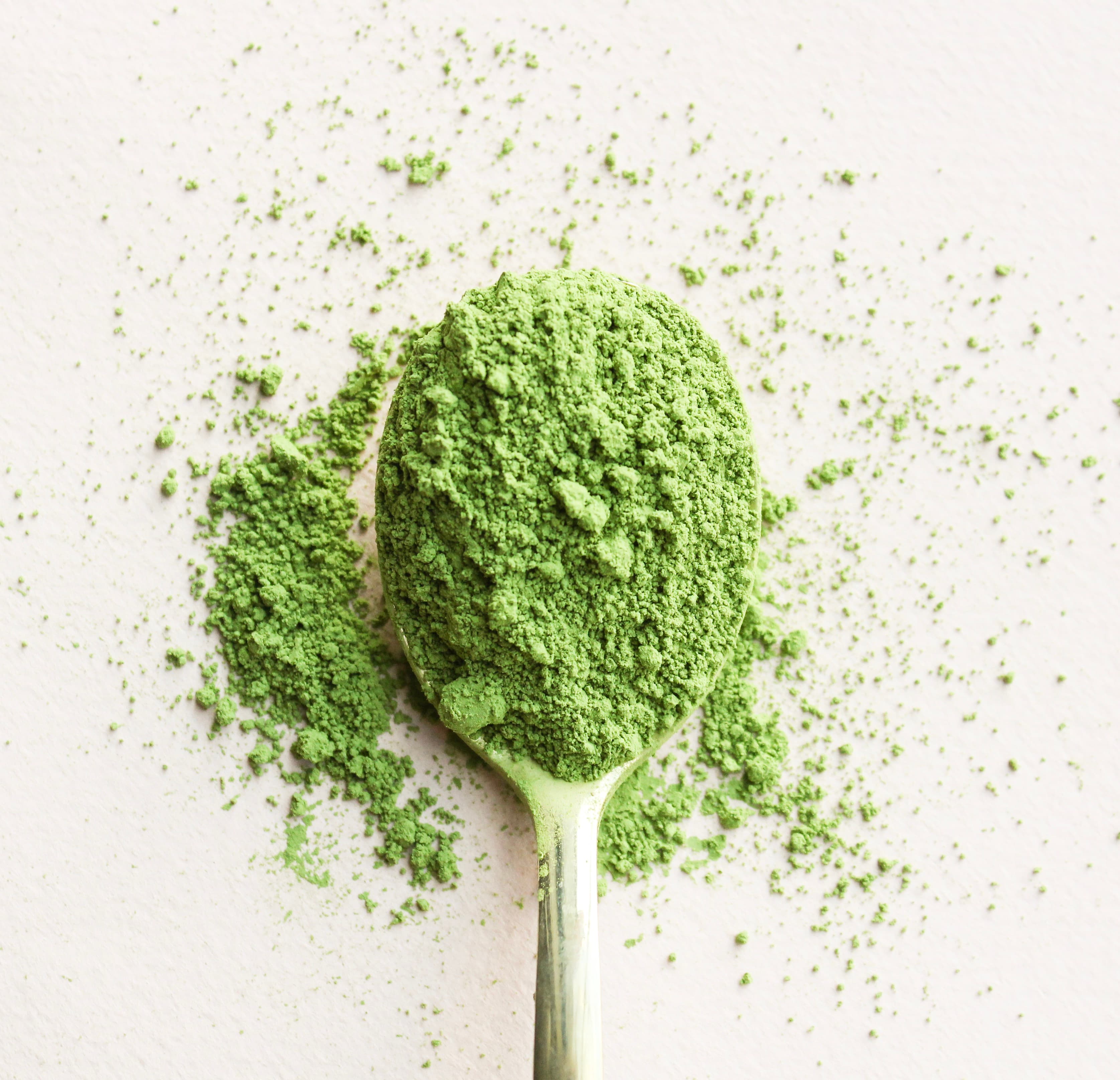
This sobriety has a precise purpose. The most refined wagashi is made to accompany , the whisked powdered green tea whose frank bitterness calls for a sweetness that tempers it without masking it. Confection and tea form a couple, and neither is understood without the other.
From ancient mochi to Portuguese sugar#
The history of wagashi begins long before sugar, with rice. From Japanese antiquity, people ate , pounded glutinous rice paste, offered to the deities: sacred rice, turned into an elastic paste, is the distant ancestor of all Japanese confectionery. Over the centuries, influences from the continent were added to this base.
The first great wave is Chinese. Under the Tang dynasty (唐, 618-907), the Japanese embassies sent to China, the , brought back : flour cakes fried in oil, often shaped into rings or flowers, reserved for the court and the temples. The court of , then that of , developed an aristocratic culture of sweetness, in which dried fruits and preparations sweetened with , a syrup drawn from a vine, stood in for candy, sugar remaining a rare and medicinal product.
The decisive turn comes in the sixteenth century, with sugar. It arrives in quantity through the trade, the name given to the Portuguese and Spanish merchants who landed from the 1540s. With them enter Japan not only cane sugar but entire recipes: , a sponge cake of Portuguese origin born in Nagasaki, and , a small spiky candy derived from the Portuguese confeito, come directly from this contact. Sugar, until then confidential, would make possible the creative explosion of the centuries that followed.
literally means "southern barbarians," the term by which the Japanese designated the Europeans arriving from the south aboard Portuguese and Spanish ships. It gave its name to a whole aesthetic and a "nanban" cuisine born of this first sixteenth-century contact.
The golden age arrives under the Edo period (江戸, 1603-1868). The Tokugawa peace, the rise of the cities, the spread of sugar produced in southern provinces such as Sanuki and Amami, and above all the rooting of the tea ceremony transformed confectionery into a true art. It is in Edo and in that the great houses are founded, that the forms are codified, and that wagashi reach the degree of refinement we know today. Some Kyōto confectioners now claim a continuous existence spanning more than four centuries.
The bond with chanoyu, the mold of wagashi#
The noblest wagashi was born in the tea house, and it keeps that imprint even in its form. The tea ceremony, , codified in the sixteenth century by the master , requires serving a sweet before the bowl of matcha: the sweetness of the confection prepares the palate to receive the dense bitterness of the whisked tea.
This ritual function explains almost everything about the aesthetic of wagashi. Since it is eaten just before the tea, in the silence and attention of a tatami room, it must be beautiful to look at, pleasant to the touch of the , and of a sweetness that does not overwhelm the tea. The tea confection, called , thus became a vehicle for poetry: each piece evokes a flower, a leaf, a snowflake, a landscape tied to the precise moment of its tasting.
A tea master never serves the same confection two weeks running: each wagashi is dated, like a page of an almanac that you eat.
Wagashi thus inherit from chanoyu their seasonal intransigence. Serving a snow-colored confection in high summer would be a lapse of taste as grave as a mistranslation. It is this demand that turned the confectioners around the tea houses of Kyōto into true poets of sweet matter.
Namagashi, han-namagashi, higashi: classification by moisture#
Wagashi are classified above all by their water content, a technical criterion that governs their texture, their keeping and their use at once. This taxonomy, dry in appearance, structures the whole profession: a confectioner does not work an ephemeral fresh paste and a dry biscuit meant to last for weeks in the same way.
| Category | Water content | Example sweets | Keeping time |
|---|---|---|---|
| 30% and above | nerikiri, jōnamagashi, daifuku, dorayaki, fresh manjū | 1 to 2 days, eat very quickly | |
| about 10 to 30% | yōkan, monaka, some filled manjū | a few days to 1 or 2 weeks | |
| under 10% | rakugan, pressed wasanbon, sweet senbei | several weeks to several months |
Namagashi, the ephemeral confection#
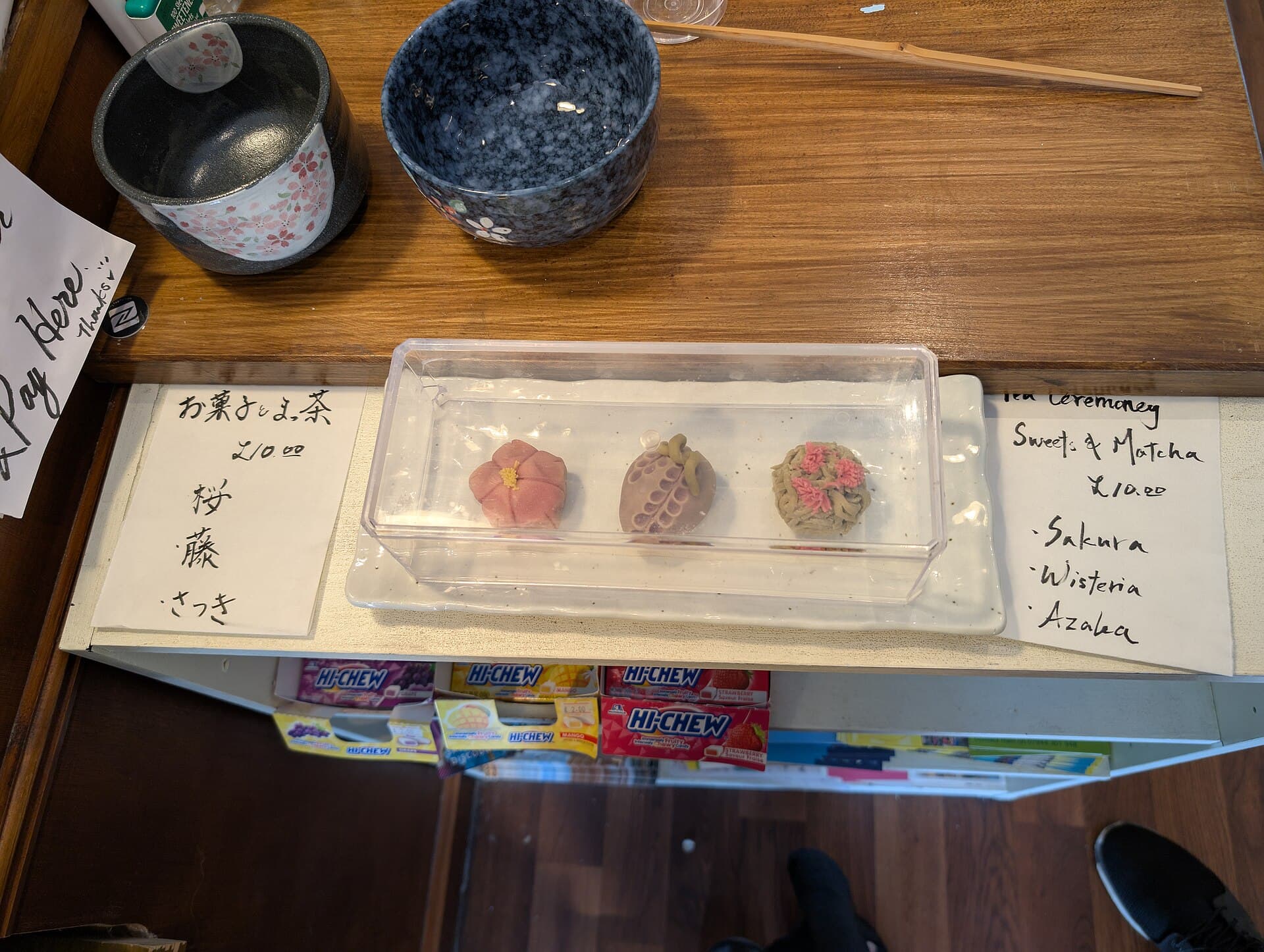
contain at least 30% water and are eaten within hours of being made. This is the most prestigious category, that of the of the tea ceremony, shaped by hand into delicate plant forms. Their beauty has a price: their fragility. A nerikiri that is perfect in the morning will be dried out the next day, which forbids any keeping and makes each piece an object of the present.
Han-namagashi, the balance#
, around 10 to 30% water, occupy a middle ground: moist enough to stay tender, dry enough to keep for several days. Dense and with their crisp wafers belong here. These are often the wagashi given as gifts, since they travel and keep better than namagashi.
Higashi, the dry confection#
contain less than 10% water and can keep for weeks. The most emblematic is , sugar pressed in carved wooden molds, which dissolves slowly on the tongue. Compact, often tinted in pastel colors and shaped into flowers or leaves, higashi accompany and keep well enough to be shipped far.
The sense of the seasons, soul of jōnamagashi#
Quality wagashi express above all , and this sensitivity to the seasons is their deepest signature. A Japanese confectioner does not make a fixed catalogue: he composes an edible calendar, in which each piece announces a precise moment of the year, sometimes to within a few days.
In spring, the take on the color and shape of the : pink petals, tender green shoots, the famous wrapped in a salted cherry leaf. Summer calls for translucent confections, often based on , evoking clear water, dew and cool rivers, such as the more liquid or the limpid jellies of . Autumn summons , and persimmons; winter, the white of snow and camellias.
This seasonal poetry meets the Japanese way of dividing the year into very fine sequences, down to the seventy-two micro-seasons of the traditional calendar. The confectioner works at this scale: he does not make an "autumn" cake but a cake of the brief instant when the maples turn red.
Read alsoJapan's 72 Micro-Seasons: Nature's Hidden CalendarThe kisetsukan of wagashi mirrors the Japanese calendar of micro-seasons: seventy-two windows of a few days each that pace the year.
The vocabulary of wagashi is a lovely gateway into Japanese: 和菓子 (wagashi, Japanese confection), 餡 (an, the bean paste) and 季節 (kisetsu, the season) bring kanji and culture together in a few strokes. With JapaneseSRS and its spaced repetition, you will soon learn to read these terms in their original writing, one bite of culture at a time.
The bestiary of wagashi: the major types#
Behind the word wagashi lies a very broad family, a few types of which turn up everywhere in Japan, from the Kyōto tea salon to the neighborhood convenience store. To know them is already to be able to read a confectioner's window.
Nerikiri, the edible sculpture#
is the king of jōnamagashi: a sweetened white bean paste, bound with , that the artisan tints and shapes by hand and spatula into flowers, leaves or fruits of astonishing precision. It is the wagashi of the high ceremony, the one where art almost wins out over taste.
Yōkan, the block of jelly#
is a bean-paste jelly set with , sliced into dense, translucent bars. Of ancient origin, derived from a Chinese soup, it comes in a firm version or as the more liquid, summer-fresh . Its long keeping makes it a classic gift.
Manjū, the filled bun#
is a mouthful of steamed or baked dough filled with bean paste. Imported from China in the fourteenth century, it lends itself to every regional variation, from sakemanjū scented with sake to the hot-spring manjū sold steaming at the roadside in the mountains.
Daifuku, the tender mochi#
is a ball of soft wrapping a heart of bean paste. Its best-loved version, , slips a whole strawberry into the bean paste, a tart marriage that has become a spring classic.
Dorayaki, the pancake sandwich#
joins two small, soft, golden and lightly sweet pancakes around a generous layer of red-bean paste. Popular and comforting, it is famous beyond Japan as the favorite treat of the robot cat .
Dango, the skewered dumplings#
are small rice-flour dumplings threaded onto a skewer. is glazed with a sweet-salty soy-sauce syrup, while the tricolor pink-white-green accompanies picnics under the cherry trees.
Monaka, the crisp wafer#
encloses bean paste between two thin wafers of puffed, crisp mochi. The contrast between the crunchy shell and the tender heart makes it one of the most recognizable wagashi.
Higashi and rakugan, the pressed sugar#
Dry higashi culminate in , fine sugar, often wasanbon, pressed in wooden molds carved with flowers, fish or leaves. Light and melting, they are the discreet companion of the light tea.
Anko, kanten, wasanbon: the anatomy of a wagashi#
Almost all wagashi come down to a handful of simple ingredients, whose mastery makes all the difference between a mediocre confection and a masterpiece. At the heart of this palette sits a bean paste.
Anko or is the soul of wagashi: a purée of long simmered and sweetened, whose preparation demands hours of care. It comes in two main forms: , sieved, smooth and velvety, stripped of every skin, and , which keeps the beans whole for a more rustic texture. A pale variant, of white beans, serves as a neutral base for the nerikiri that can be tinted at will.
, a gelling agent drawn from red seaweed, gives yōkan and summer jellies their firm set and their transparency: more stable than gelatin and plant-based, it holds at room temperature and evokes, in the light, the limpidity of water.
is an exceptional sugar, made by hand in Shikoku, in the prefectures of Tokushima and Kagawa, from a local cane. Almost powdery in fineness and subtly sweet with vegetal notes, it is reserved for higashi and high-rank confections, where its melting texture is its whole value.
Finally, rice, in all its forms: and , glutinous rice flours, give mochi and daifuku their elasticity, while , mochi softened with sugar, stays tender for several days and serves as a binder for nerikiri.
Kyōto, kyōgashi and the confectioner's art#
Kyōto is the spiritual capital of wagashi, and its embody the summit of refinement. Former imperial capital and cradle of the tea ceremony, the city concentrated for centuries the court, the great temples and the tea masters, that is, all the demanding clientele that could sustain so meticulous an art.
The of Kyōto are among the oldest businesses in the world. Some houses, historic suppliers to the imperial court and the great tea schools, claim continuous activity since the Muromachi or Edo era, handed down over dozens of generations. The confectioner there is a long-trained artisan, able to shape with a spatula, in a few gestures, a camellia or a wave whose every curve counts.
Some Kyōto confectioners rank among the oldest businesses still operating in the world, with lineages of artisans who have supplied the imperial court and the tea schools for more than four centuries, each generation passing down to the next its wooden molds and its recipes.
It is also in Kyōto that the idea matured that wagashi engage the five senses. Taste and smell, of course, but also sight through form and color, touch through texture under the wooden pick, and hearing through the , the poetic name given to each piece, often drawn from a classical poem, which the tea master announces before serving it. To eat a jōnamagashi is to taste a season, a poem and an artisan's gesture all at once.
Read alsoChanoyu: The Sacred Art of Japanese TeaWagashi is fully understood only alongside the tea it precedes: discover chanoyu, the ceremony that made confectionery an art of the season.
Wagashi today: revival and global rise#
Wagashi have seen a clear revival of interest in recent years, in Japan as abroad, after decades of competition from Western pastry. Long perceived as a sweet for the elderly, austere against creamy cakes, it is regaining a young clientele won over by its aesthetics, its lightness and its low sweetness, in step with contemporary dietary concerns.
Its plant-based nature helps: low in fat, in many cases free of dairy and eggs, wagashi naturally ticks the boxes of veganism and moderate sweetness that a share of today's food lovers seek. Young artisans are reinventing the classic forms, and , with its spectacular motifs, circulates abundantly on social media, carrying wagashi beyond its traditional audience.
Internationally, the rise of has served as a Trojan horse. Fans of whisked green tea discover the confection that accompanies it, and wagashi-making workshops are blooming from Paris to New York. Daifuku, dorayaki and mochi ice cream have settled into shelves the world over, ambassadors of an art vaster than they let on.
To take a wagashi between your fingers is to hold a season in the palm of your hand: a flower that will fade tomorrow, a snowflake that will melt, a poem you swallow. In this measured sweetness, shaped for a single day and a single tea, Japan has placed its whole way of watching the passage of time.
FAQ#
What is the difference between wagashi and yōgashi? are the traditional Japanese confections, based on beans, rice, sugar and agar, almost without fat or dairy. are pastries of Western origin, made with butter, cream and chocolate, which arrived in Japan after the Meiji era.
What is anko in wagashi? Anko or is the bean paste that forms the heart of most wagashi. Made of cooked and sweetened , it exists in a smooth, sieved version, , or with the beans whole, .
Why do wagashi change with the seasons? Because they express , the feeling of the season. Born in the tea ceremony, they evoke a precise moment of the year through their form and color: cherry petals in spring, translucent jellies in summer, maple leaves in autumn. Serving an out-of-season confection would be a lapse of taste.
What are the best-known wagashi? Among the most widespread are , , , , and the of the tea ceremony.
Is wagashi vegan? Often, yes. Many wagashi contain no butter, cream or eggs, only plant ingredients: beans, rice, sugar, agar. This is one reason for their renewed popularity among health-conscious eaters. Do check, though, since some modern recipes now include dairy.
Photo credits: the images in this article come from Wikimedia Commons and are under a free license.
In this article
The cultural terms covered here, each with a short definition.
- Tea ceremony
- The Japanese way of tea (chanoyu), a ritual of hospitality around a bowl of matcha.
Izakaya: how the Japanese small-plates bar actually works
Otōshi, nomihōdai, toriaezu nama: how an izakaya runs, where it came from in Edo's sake shops, and what to order without getting it wrong.
Cover image: Andy Li · Andy Li, via Wikimedia Commons · CC0