Aegyo: The Korean Art of Performed Cuteness
Baby voice, finger heart, buing buing: aegyo is a Korean relational language. Origins, repertoire, the gender debate, and its Asian cousins decoded.
La rédaction Kotoba Interactive
Studio éditorial
On the set of a variety show, a masculine idol with broad shoulders and a deep voice is ordered by the host to "do some aegyo." He hesitates, blushes, then presses both fists against his puffed cheeks, tilts his head, and lets out in a voice raised an octave: . The audience screams, his bandmates hide their faces, and the clip racks up millions of views overnight. This little number of unabashed cuteness, performed on command, has a precise name, and it shapes an entire slice of Korean relationships.
is the performance of cute, endearing charm through the voice, facial expressions, and gestures, meant to draw affection or win a favor. Far from mere childish silliness, a common misreading among newcomers, it is a codified social language: learned, and calibrated to the listener and the hierarchy, as revealing of how Korean relationships work as itself. To understand aegyo is to understand how Korea turned a facial expression into a tool for connection, then an export the idol industry spread across Asia.
What exactly is aegyo?#
Aegyo refers to deliberately cute charming behavior meant to appear adorable and build affective closeness. The word comes from the hanja , where means "love, affection" and means "charming, graceful, alluring": literally a "lovable charm." It does not describe a feature of beauty but an action, a way of behaving that one switches on and lets go.
comes from the hanja 愛嬌: and . The term names not a physical quality but a conduct: performing cuteness to move the other person and bring hearts closer.
What sets aegyo apart from plain kindness is its performed, relational dimension. You do not "do aegyo" into thin air: you do it at someone, to earn a reaction, a pardon, a favor, a fond smile. It therefore requires a fine reading of the situation, a direct cousin of nunchi: knowing when a little cuteness will read as charming and when it will read as out of place. Too much aegyo at the wrong moment, and the charm tips into discomfort, something young Koreans now sum up with a borrowed English word, cringe.
Aegyo is not a state, it is a gesture: you do not have it, you do it. And like every Korean social gesture, it is calibrated by eye, depending on who stands opposite.
The repertoire: baby voice, hearts, and puffed cheeks#
Aegyo rests on a repertoire of recognizable set pieces every Korean can identify, and that variety shows have turned into acts in their own right. The first and most constant marker is vocal: the pitch rises a notch, softer, higher, almost childlike, and words are drawn out. This is aegyo-seokkeoreo, the way of stretching final syllables and softening sounds to make them more tender, adding trailing vowels where standard speech would be crisp.
Around this voice unfold gestures that have become absolute classics. The most famous is the , the "finger heart": thumb and index finger crossed to form a tiny heart, a gesture that became a global emblem of K-pop. Then comes , an untranslatable onomatopoeia where you rotate your fists against your cheeks as if to make yourself irresistible, often the first task demanded in an aegyo demonstration.
One notch more elaborate, the refers to a viral jingle from the early 2010s, the "Gwiyomi Player Song," in which you count from one to ten while pairing each number with a codified cute gesture. The track launched a genuine worldwide challenge picked up by countless idols and everyday people. Add to this briefer figures: cheeks puffed with air, the and other sulky faces, the tilted head, small clenched fists, the pout.
| Aegyo figure | Korean term | Description |
|---|---|---|
| Finger heart | 손하트 (son hateu) | Thumb and index crossed into a tiny heart, a K-pop emblem |
| Buing buing | 뿌잉뿌잉 (buing buing) | Fists rotated against the cheeks, raised voice, a bid for affection |
| Gwiyomi jingle | 귀요미 (gwiyomi) | Counting 1 to 10 with a cute gesture per number, a viral challenge |
| Puffed cheeks | 볼 (bol) puffed | Air held in the cheeks for a childlike pout |
| Drawn-out voice | 애교 섞어 (aegyo-seokkeoreo) | Stretched endings, softened sounds, higher and gentler tone |
This repertoire renews itself to the rhythm of shows and social media, each season bringing its viral bit of cuteness. But its core, high voice, finger heart, puffed cheeks, stays stable and instantly legible.
Where aegyo happens: couples, family, friends, and the stage#
Aegyo unfolds first in the intimacy of relationships, before it conquers screens. The most obvious ground is the couple. A partner mobilizes aegyo to ask a favor, defuse an argument, or earn forgiveness: the voice turns tender, the pout appears, and the request lands better. In many Korean relationships, this negotiated cuteness is part of the daily language of love, a way to keep tenderness alive as much as to get one's way.
Family is another natural space for aegyo. The youngest sibling, often nicknamed the , readily uses it with parents and elders to melt hearts, wheedle, or draw attention. Among close friends, aegyo is practiced too, in a more playful and often parodic mode: people do it "for the joke," deliberately exaggerating the cuteness to the point of absurdity.
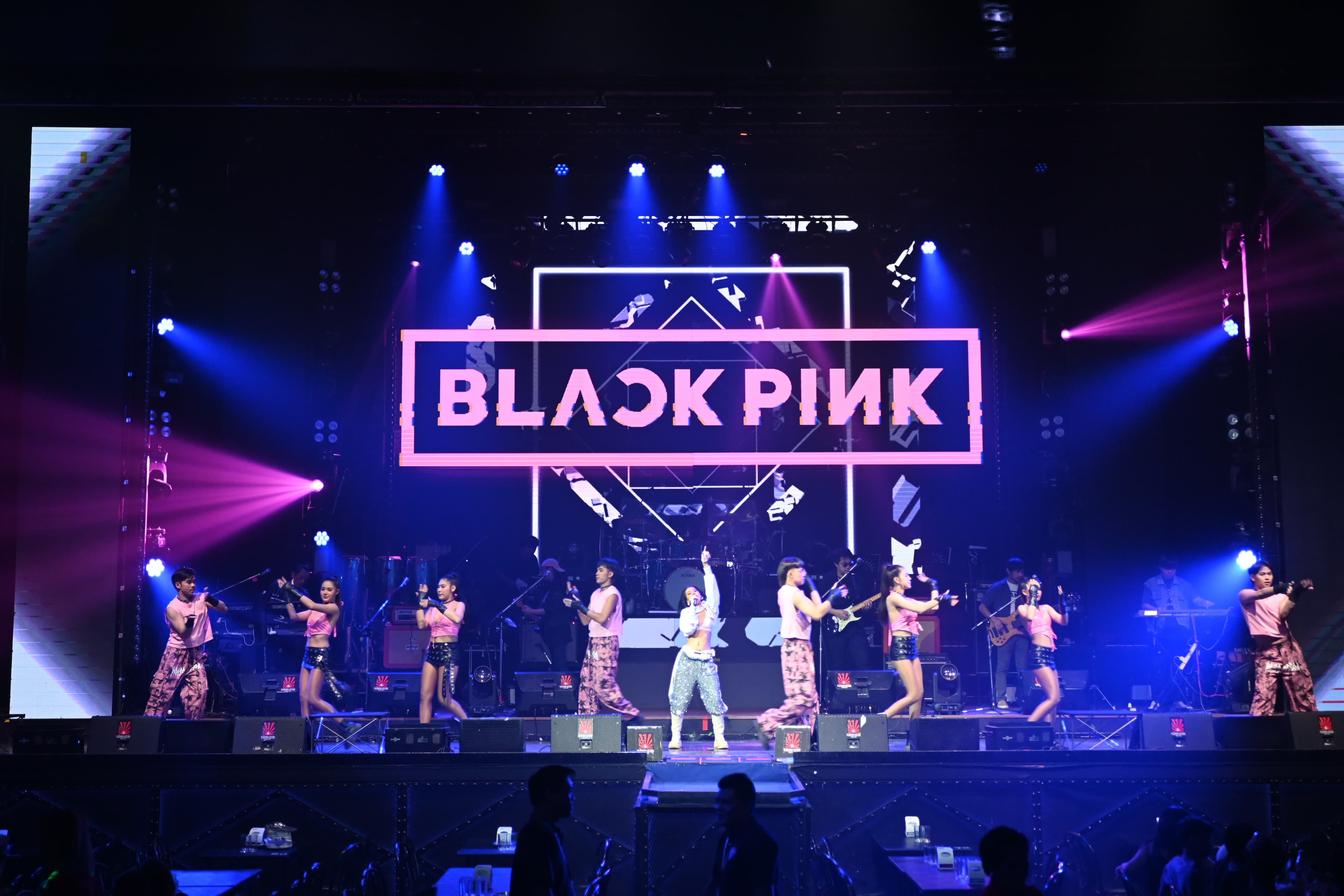
It is in K-pop and variety shows, however, that aegyo found its most spectacular stage. There it becomes pure fan service: the idol performs aegyo to delight admirers, who expect and demand it. The famous aegyo battles, those duels of cuteness where two idols compete in endearing figures amid the laughter of the set, have become a fixture of Korean entertainment. The idol who refuses or fumbles their aegyo is teased with affection; the one who masters it gains popularity.
Aegyo lands once you hear what it is really saying: 애교 (aegyo, cute charm), 귀여워 (gwiyeowo, "so cute!"), 사랑해 (saranghae, "I love you"). Learn to read hangul and these words of the Korean heart with KoreanSRS and its spaced repetition, coming soon: join the waitlist to be notified at launch.
A short history, a recent codification#
Cute charm has long existed in Korean culture, but aegyo as we know it, codified and named as a genre of its own, is a recent phenomenon. The idea of endearing behavior has always pleased in family and romantic ties; what changed was its transformation into an identifiable, exportable, commercialized repertoire.
That shift took place from the 2000s on, with the rise of , the global export of South Korean pop culture, and above all with the idol industry. Agencies grasped that aegyo was a powerful lever of attachment between artists and their audience: an idol capable of irresistible aegyo forges a direct affective bond with fans. Variety shows, hungry for viral moments, systematized it, until it became a near-expected skill for performers.
The "Gwiyomi Player Song," a cute jingle in which you count to ten with a gesture per number, launched in the early 2010s a challenge taken up by dozens of idols and countless everyday people across Asia. A single ditty was enough to turn aegyo into a worldwide viral phenomenon.
What codification produced is an aegyo turned common language: gestures everyone recognizes, words to name them, an assigned place in shows and concerts. Aegyo moved from the spontaneous register of intimacy to the performed register of the stage, without losing its primary function of building connection.
Read alsoThe Korean Idol System: Trainees, Agencies, and the Star FactoryAegyo is also manufactured in training: discover how Korean agencies shape their idols, from recruiting trainees to the stage.
The gender debate: feminine, infantilizing, contested#
Aegyo runs through a lively debate about gender, because it was long coded as feminine. Expected of women more than of men, it has been criticized as infantilizing: playing the fragile, adorable little girl would reinforce social expectations pressing on Korean women, called upon to appear soft, docile, and charming. To its critics, feminine aegyo is the playful side of a very real pressure toward cuteness.
The reality is more nuanced, because male idols do just as much of it. On sets, it is often men who deliver the most memorable aegyo demonstrations, precisely because the contrast between their masculine image and the required cuteness produces a sought-after comic and endearing effect. Male aegyo has become a spectacle device in its own right, and part of the audience awaits it as much as its feminine version.
The younger generation, for its part, keeps an ambivalent relationship with aegyo. Many find it dated, artificial, even embarrassing, and readily speak of aegyo cringe to describe forced cuteness that makes people uneasy. Some refuse to do it on principle, others use it selectively, among close friends and tongue in cheek. This ambivalence joins the broader movement of a Korean youth renegotiating inherited codes without necessarily abolishing them: aegyo is no longer a given, it has become a choice.
The debate over aegyo does not pit those who practice it against those who reject it: it pits aegyo endured, imposed as a gender expectation, against aegyo chosen, performed when you decide and for whom you please.
Aegyo, sajiao, burikko: an Asian family resemblance#
Aegyo is not an isolated case: it belongs to a family of East Asian concepts of performed cuteness, and comparing it to its cousins clarifies what is specific to it. The closest is Chinese , literally "acting like a spoiled child": a coquettish, coaxing way of playing cute, often by a woman toward a partner or a child toward a parent, to obtain tenderness or a favor. The kinship is striking, right down to the rising voice and the endearing pout.
In Japan, the related concept is , "feigned cuteness": pretending childlike innocence and candor, with a more critical shade, since the term can pejoratively label someone who plays adorable in a calculated way. Aegyo and sajiao are more neutral, even valued; burikko carries more of the suspicion of artifice. In the background unfolds the Japanese aesthetic of , which turned cuteness into a genuine visual and cultural style, from object design to characters, far beyond interpersonal behavior alone.
| Concept | Culture | Literal meaning | Nuance / context |
|---|---|---|---|
| Korea | "lovable charm" | Performed, relational cuteness, calibrated to hierarchy and nunchi | |
| China | "acting spoiled" | Coquettish, coaxing play for tenderness or favor, very close to aegyo | |
| Japan | "one who feigns childishness" | Feigned cuteness, often pejorative shade of calculation and artifice | |
| Japan | "cute" | Visual and cultural aesthetic of cuteness, beyond behavior |
What sets aegyo apart in this family is how deeply relational it is and how dependent on hierarchical context. Where kawaii is first an aesthetic and burikko a judgment on authenticity, aegyo is an addressed act, one that requires reading the other person, their rank and their mood, before risking the cuteness. It is inseparable from nunchi, the social reading without which the charm misfires.
Read alsoNunchi: The Korean Art of Reading the RoomSuccessful aegyo requires a sharp nunchi: discover this Korean art of reading the invisible that governs the right dose of cuteness.
FAQ#
What does aegyo mean? Aegyo (애교) is the performance of cute, endearing charm through voice, facial expressions, and gestures, meant to draw affection or win a favor. The word comes from the hanja 愛嬌, "lovable charm." It is not a feature of beauty but a conduct one switches on according to the situation.
Is aegyo only for women? No. Long coded as feminine and criticized as infantilizing, aegyo is also performed heavily by male idols, especially on variety shows where the contrast with a masculine image produces a sought-after comic effect. The younger generation uses it more selectively and sometimes parodically.
What is the difference between Korean aegyo and Chinese sajiao? Both name a performed, coaxing cuteness, very close down to the rising voice. Sajiao (撒娇) means "acting like a spoiled child." Aegyo's specificity lies in its relational, hierarchical anchoring, inseparable from nunchi, the social reading that governs its right dose.
What is "buing buing"? Buing buing (뿌잉뿌잉) is one of the most classic aegyo set pieces: you rotate your clenched fists against your puffed cheeks, voice raised an octave, to make yourself irresistible. It is often the first task requested during an aegyo demonstration on a television set.
From a child's pout toward a parent to an idol's finger heart before fans, aegyo tells a Korean way of weaving connection: through played charm, addressed cuteness, staged tenderness. You may find it artificial, you may refuse it, but you only understand it fully once you stop seeing it as mere silliness. Aegyo is a language, with its grammar of gestures and its syntax of voices, and like any language it takes on meaning only in the relationship it opens. That may be its finest lesson: in Korea, even cuteness is read, calibrated, and addressed.
Photo credits: the images in this article come from Wikimedia Commons and are under a free license.
In this article
The cultural terms covered here, each with a short definition.
Mukbang: the Korean origin of a global phenomenon
Mukbang, those videos of people eating on camera, was born in South Korea around 2009. The story of a portmanteau, a shared distant meal and a worldwide hit.
Cover image: 덴오빠 (denoppa) · 덴오빠 (denoppa), via Wikimedia Commons · CC BY 4.0