Japan's 72 Micro-Seasons: Nature's Hidden Calendar
Discover Japan's 72 kō, a poetic calendar dividing the year into five-day micro-seasons that shaped Japanese culture, food, and art for centuries.
La rédaction Kotoba Interactive
Studio éditorial
Early February, in the Kyoto countryside, "the east wind melts the ice." This is not a personal observation. It is the name of a micro-season, the first of the year in a calendar Japan has cultivated for over a thousand years.
Where the West divides the year into four seasons, traditional Japan knew an infinitely finer rhythm: not four seasons, or even twenty-four (as in the Chinese sekki system), but seventy-two micro-seasons of roughly five days each, every one bearing a poetic name describing a precise natural phenomenon: the moment peach trees bloom, the night fireflies appear, the instant frost descends on the fields. This system, the , does not measure time: it watches it.
From Twenty-Four Sekki to Seventy-Two Kō#
The origins trace back to ancient China. Astronomers of the Han dynasty (206 BCE to 220 CE) divided the solar year into twenty-four periods called in Japanese, or in Chinese. This system, the , was formalized around the second century BCE. It rested on the sun's position along the ecliptic: each sekki covered roughly fifteen days.
The twenty-four sekki marked the great turning points of the agricultural year: , , , , , . But the Chinese did not stop there.
Each sekki was further divided into three periods of roughly five days, creating a mesh of seventy-two units called , each describing a phenomenon observable at that precise time. The three kō within each sekki carried names indicating their position: the , the , and the .
The Japanese Adaptation#
The system reached Japan during the Nara (710-794) and Heian (794-1185) periods, alongside Chinese writing and Buddhism. But a problem quickly emerged: the Chinese kō had been designed for the climate of the Yellow River and Yangtze basins. Japan, a volcanic archipelago stretching more than three thousand kilometers from north to south, had a radically different climate. A kō specific to the Henan plains sometimes made no sense in the mountains of Yamato.
The Japanese therefore set about adapting the kō names to their own environment. The most refined version, still in use today, dates from the Edo period. In 1685, the astronomer , having demonstrated that the Chinese calendar then in use contained astronomical alignment errors, published the , the first calendar entirely conceived in Japan. The seventy-two kō were revised to reflect Japanese nature: cherry blossoms, fireflies, typhoons, first snows on Honshū.
Where the Chinese kō sometimes remained technical, the Japanese kō are true poetic miniatures: they invite a form of presence in the world that the Japanese call .
Spring: The World Awakens#
The Japanese spring begins well before the senses might suggest: with , the "start of spring," around February 4, in the depths of what we would still consider winter. The sekki calendar does not describe the world's state, it anticipates its movement.
Each season opens with a "beginning" sekki and carries its own aesthetic mood, summarized below.
| Season | Opening sekki | Approximate date | Mood |
|---|---|---|---|
| Spring | February 4 | The world awakens, blossoms | |
| Summer | May 5 | Intensity of light, rains | |
| Autumn | August 7 | , golden melancholy | |
| Winter | November 7 | Retreat, silent maturation |
Risshun: Spring Begins (Around February 4-18)#
The three kō of Risshun are among the most celebrated. The shokō, , is the very first kō of the year. The "east wind," in Japanese , has symbolized nascent spring in poetry for centuries, down to the famous poem by for the plum trees of his Kyoto residence: "When the east wind blows, send me your fragrance, plum blossoms."
The jikō, , refers to the , the Japanese bush warbler, nicknamed . Its call rings through the plum groves from mid-February.
The makkō, : the mountain ice cracks and fish rise toward the light.
From Thaw to Cherry Blossoms#
After Risshun comes : snow gives way to rain. Its three kō describe this transformation: "Rain moistens the earth" (土脉潤起, Tsuchi no shō uruoi okoru), "Mist begins to linger" (霞始靆, Kasumi hajimete tanabiku), "Grasses sprout and trees bud" (草木萌動, Sōmoku mebae izuru).
marks a turning point: "Hibernating insects open their doors and emerge" (蟄虫啓戸, Sugomori mushito wo hiraku), peach trees bloom (桃始笑, Momo hajimete saku, "peach trees begin to smile"), and caterpillars transform into butterflies (菜虫化蝶, Namushi chō to naru).
is the moment of balance between day and night. It is also the time of , a Buddhist observance during which the Japanese visit their ancestors' graves. Its kō describe sparrows nesting, cherry trees blooming in the mountains, and the year's first thunder.
Then comes : swallows return from the south (玄鳥至, Tsubame kitaru), wild geese depart for the north, the first rainbows appear. Finally, closes the spring: peonies blooming, reeds growing along riverbanks, rice seedlings planted in flooded paddies.
Summer: The Intensity of Light#
The Japanese summer begins with , well before the crushing heat of July and August. Like Risshun, Rikka announces a movement: light gains ground, vegetation explodes.
Rikka and the First Heat#
The kō of Rikka are luminous. The first announces: "Frogs begin to sing" (蛙始鳴, Kawazu hajimete naku); in the flooded paddies of Kantō and Kansai, their chorus rings out at dusk. The second sees earthworms emerge from the soil (蚯蚓出, Mimizu izuru), a sign the ground has warmed. The third notes that bamboo shoots sprout (竹笋生, Takenoko shōzu); is one of the most prized ingredients of May.
describes the moment when crops ripen without yet being ready for harvest. Its kō evoke silkworms eating mulberry leaves (蚕起食桑, Kaiko okite kuwa wo hamu), safflowers blooming, and wheat ears ripening.
marks the onset of the rainy season and the planting of rice. The first kō announces praying mantises being born (蟷螂生, Kamakiri shōzu), the second fireflies appearing (腐草為蛍, Kusaretaru kusa hotaru to naru, "rotting grass becomes fireflies"), the third plums ripening yellow (梅子黄, Ume no mi kibamu).
The Season of Rain and Fireflies#
The heart of summer is dominated by the , the rainy season descending from mid-June to mid-July.
is the longest day of the year. Its kō observe that winter grasses wither (乃東枯, Natsukarekusa karuru), that ayame irises bloom in the marshes, and that half-summer plants, the , germinate.
announces true heat. Hot winds blow (温風至, Atsukaze itaru), the first cicadas sing, and lotus flowers open in temple ponds. This is the season of , of fireworks, of , and of .
is the peak of summer. The heat is crushing, and cicadas produce a deafening roar. Its kō note that paulownia trees bear fruit (桐始結花, Kiri hajimete hana wo musubu), that the earth is damp and the heat stifling (土潤溽暑, Tsuchi uruōte mushi atsushi), and that heavy rains sometimes fall suddenly (大雨時行, Taiu tokidoki furu).
Reading the names of the kō in the original text is already a step into the language: 東風 (kochi, "east wind"), 蛍 (hotaru, "firefly"), 霜 (shimo, "frost"). With JapaneseSRS and its spaced repetition, you will learn to decode these seasonal kanji and read Japan's poetic calendar in the language that gave it life.
Autumn: The Golden Melancholy#
The Japanese autumn is the season of , that melancholic sensitivity to the fleeting beauty of things, a foundational aesthetic concept in Japanese civilization.
Risshū and the First Shivers#
arrives in the midst of summer heat. The first kō announces: "A cool breeze arrives" (涼風至, Suzukaze itaru), the first sign that summer is declining. The second notes the song of evening cicadas (寒蝉鳴, Higurashi naku), the , one of the most evocative sounds of late summer. The third observes thick morning fog rising (蒙霧升降, Fukaki kiri matō).
marks the retreat of summer warmth. Cotton ripens, rice stalks bow, and , the small brown flowers of Japanese meadows, bloom. Autumn often begins under skies troubled by typhoons.
is one of the most poetic sekki. Its kō describe grasses covered in white dew (草露白, Kusa no tsuyu shiroshi), wagtails singing (鶺鴒鳴, Sekirei naku), and swallows departing for the south (玄鳥去, Tsubame saru), mirroring their arrival at Seimei.
Maples and the Autumn Moon#
is the year's second point of balance, and the time of the autumn higan. Its kō note that thunder ceases to rumble (雷乃収声, Kaminari sunawachi koe wo osamu), that insects seal the entrances to their nests (蟄虫坏戸, Mushi kakurete to wo fusagu), and that paddyfield waters dry up (水始涸, Mizu hajimete karuru), a sign the harvest is near.
signals colder air. Wild geese return from the north (鴻雁来, Kōgan kitaru), chrysanthemums bloom (菊花開, Kiku no hana hiraku), and crickets sing beneath the veranda (蟋蟀在戸, Kirigirisu to ni ari). This is the season of , admiring the full autumn moon while savoring beside .
When the wild geese return and the chrysanthemums open, Japan enters the most literary season of the year. Each maple leaf turning red is a poem that nature writes for those who know how to read it.
is autumn's last sekki. Light rains sometimes fall (霎時施, Kosame tokidoki furu), and maples and Virginia creeper turn red (楓蔦黄, Momiji tsuta kibamu). This marks the start of , which sees millions of Japanese travel to admire the maples of Nikkō, Arashiyama, or Tōfukuji. Like hanami in spring, it is an aesthetic pilgrimage.
Winter: The Fertile Silence#
Winter, in the kō system, is not a dead season but one of retreat and underground preparation.
Rittō and the Retreat#
opens the cold season. The first kō announces camellias blooming (山茶始開, Tsubaki hajimete hiraku); the is one of the rare flowers that defies winter. The second notes the ground beginning to freeze (地始凍, Chi hajimete kōru), and the third narcissus blooming (金盞香, Kinsenka saku, "golden cups perfume the air").
is the sekki of the first snow, falling on distant peaks but not yet settling. Rainbows hide (虹蔵不見, Niji kakurete miezu), the north wind strips the leaves (朔風払葉, Kitakaze konoha wo harau), and mandarins turn yellow (橘始黄, Tachibana hajimete kibamu). The mandarin is one of the fruits most closely associated with this season.
heralds the first serious snowfalls. Salmon swim upstream (鮭魚群, Sake no uo muragaru), bears retreat into their dens (熊蟄穴, Kuma ana ni komoru), and the first kō describes the sky growing heavy with snow (閉塞成冬, Sora samuku fuyu to naru, "the sky closes and winter settles in"). In the Sea of Japan regions, such as Niigata or Tōhoku, snow can reach several meters, and life slows down around the and the .
Frost, Snow, and Renewal#
is the shortest day of the year, yet also a moment of celebration, because the days begin to lengthen. Tradition calls for a bath with and eating pumpkin. Its kō observe that winter grasses sprout (乃東生, Natsukarekusa shōzu), that deer shed their antlers (麋角解, Sawashika no tsuno otsuru), and that winter wheat grows beneath the snow (雪下出麦, Yuki watarite mugi nobiru): under the white blanket, invisible, the wheat keeps growing.
marks the start of the year's coldest stretch, the . Water parsley (芹, seri) grows in frozen marshes (芹乃栄, Seri sunawachi sakau), mountain springs release steam (水泉動, Shimizu atataka wo fukumu), and pheasants begin to call (雉始雊, Kiji hajimete naku).
is the final sekki of the year, the culmination of winter cold. Its kō describe hens beginning to lay (鶏始乳, Niwatori hajimete toya ni tsuku), rivers and lakes freezing deep (水沢腹堅, Sawamizu kōri tsumeru), and winter butterbur sprouting beneath the snow (款冬華, Fukinotō hanasaku). The is one of the first edible signs of spring: picked barely emerged from the frozen earth, its subtle bitterness is the very taste of renewal.
And then the cycle begins again. The calendar of seventy-two kō has neither beginning nor end: it is a circle, the reflection of a time that does not flow in a straight line but turns upon itself, similar and different every year.
Living by the Rhythm of the Kō Today#
The system of seventy-two kō might seem a folkloric relic. It is anything but: in contemporary Japan, seasonal sensitivity remains fundamental, and the kō are experiencing a remarkable resurgence of interest.
Cuisine and the Shun#
The most tangible influence of the kō passes through the plate. The concept of lies at the heart of Japanese gastronomy: every ingredient has a window of a few days or weeks during which its flavor reaches its apex. Takenoko (bamboo shoot) is a shun of late April, a shun of October, reaches its fullness in January. The finest chefs, from a to a sushi counter, evolve their menus every two to three weeks.
Markets reflect this rhythm: at Kyoto's or Tokyo's Tsukiji market, January's strawberries give way to April's bamboo shoots, then June's cherries, September's chestnuts, December's mandarins.
Poetry: Haiku and Kigo#
The bond between the kō and poetry is ancient. The , a seventeen-syllable poem (five, seven, five), must contain a that anchors it in a precise moment of the year. Kigo are catalogued in dictionaries called , which list several thousand entries. When wrote "Old pond, a frog jumps in, the sound of water" (古池や蛙飛びこむ水の音), the frog is the kigo: it places the poem in spring.
Haiku composition remains a living practice: millions of Japanese compose them, programs like NHK's haiku show draw millions of viewers, and competitions attract hundreds of thousands of participants. All of them use kigo, those season words that extend the spirit of the seventy-two kō into the living language.
Wagashi: The Season in a Single Bite#
are another manifestation of seasonal sensitivity. Confectioners, the , change their creations roughly every two weeks: plum blossoms in February, cherry petals in April (the sakura mochi, 桜餅), jellies evoking hydrangeas in June, maple leaves from red bean paste in October, snow-covered pines in January. Each wagashi bears a poetic name, often borrowed from the kō: "cold dew on chrysanthemums," "cool evening breeze."
The Contemporary Revival#
Since the 2010s, the seventy-two kō have experienced a genuine revival. The most popular book, Nihon no shichijūni kō wo tanoshimu (日本の七十二候を楽しむ, "Enjoying Japan's 72 Micro-Seasons"), published in 2012 by Tōhō Shuppan, has sold several hundred thousand copies. Smartphone apps flag the current kō every five days, and social media accounts publish photographs of each micro-season.
This revival is part of a broader rediscovery of natural rhythms. Against the artificial seasons of air conditioning and supermarkets, the kō remind us that time is not an abstract line but a living fabric, and that the world is constantly changing for those who know how to look.
The French philosopher and sinologist François Jullien wrote that Chinese thought, and by extension Japanese thought, conceives of time not as a succession of instants but as a "silent maturation." The seventy-two kō are its purest expression: they do not divide time, they inhabit it. To live by their rhythm is to accept that everything transforms, and that this very transformation is the beauty of the world. It is, seventy-two times a year, beginning again to look.
In this article
The cultural terms covered here, each with a short definition.
- 72 micro-seasons
- Japanese poetic division of the year into seventy-two periods of about five days each.
- Sekki
- The twenty-four divisions of the year in the East Asian calendar, marking seasonal shifts.
Matsuri: a guide to Japan's great festivals
Gion, Tenjin, Kanda, Awa Odori, Kanto: what a matsuri really is, what the mikoshi is for, when the big festivals happen and how to attend.
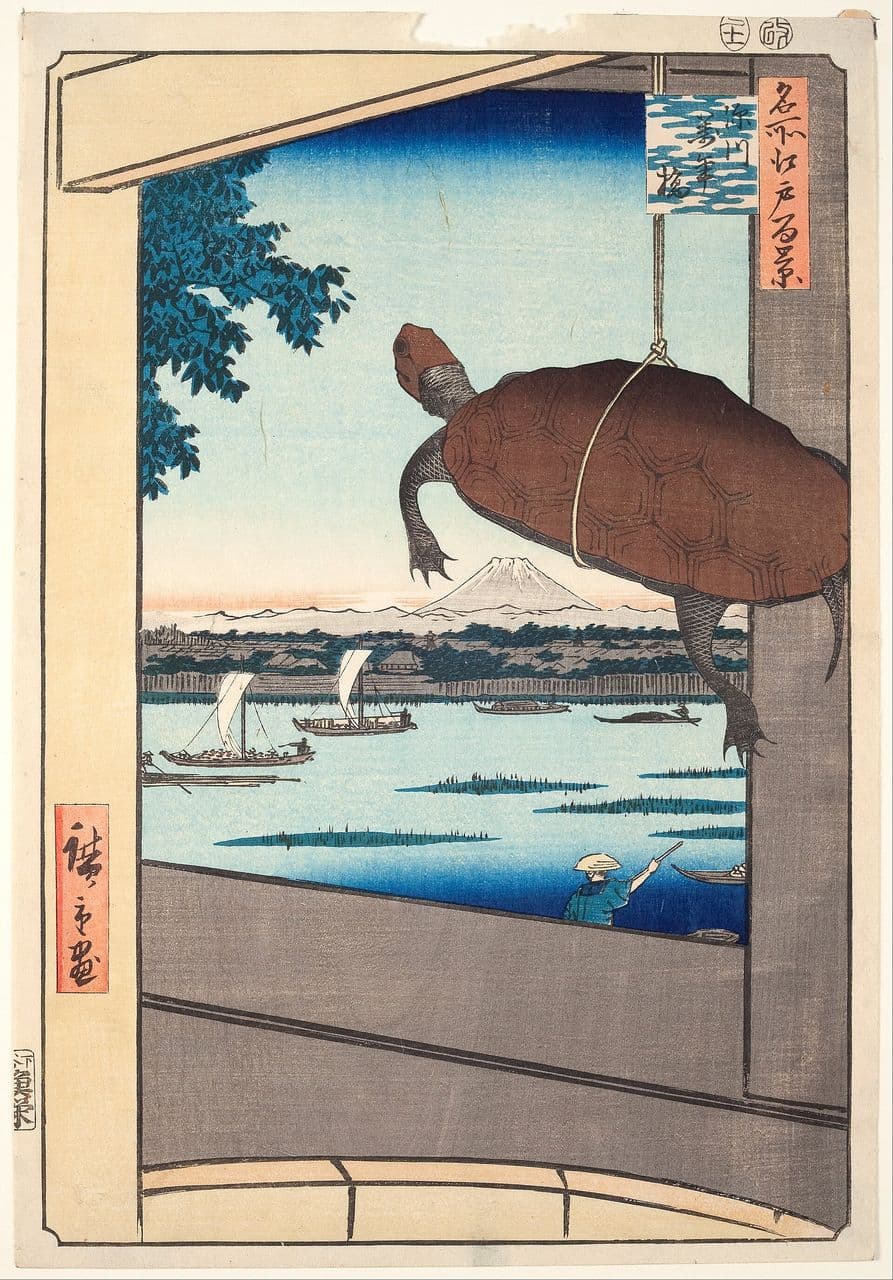
Cover image: Utagawa Hiroshige · Utagawa Hiroshige, via Wikimedia Commons · Domaine public