PS Vita: Why Sony's Handheld Failed in the West
The PS Vita conquered Japan but failed in Europe and the US. A deep dive into the technical, strategic, and cultural reasons behind Sony's handheld demise.
La rédaction Kotoba Interactive
Studio éditorial
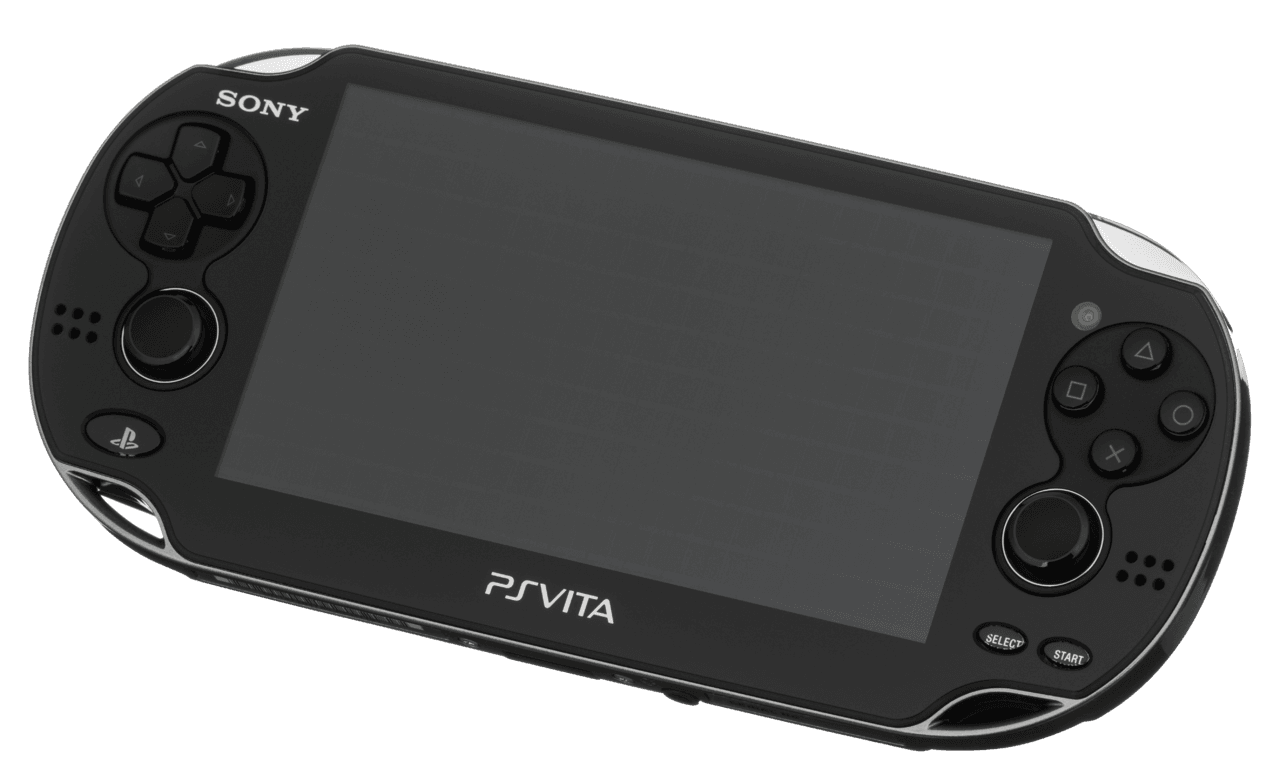
Tokyo, September 2011, the Tokyo Game Show. On the main hall stage, , then president of Sony Computer Entertainment, holds up a sleek black object whose OLED screen casts a deep blue glow across the room. The PlayStation Vita. The specs are staggering: a five-inch OLED screen, a quad-core processor, two analog sticks, a touchscreen, a rear touch panel. Sony promises a full console experience in your pocket.
Fast-forward three years. In any game store in Paris, London, or New York, the PS Vita section is reduced to a handful of scattered cases with prices slashed in red marker, wedged between clearance PS3 accessories. Across the aisle, the Nintendo 3DS section overflows with Pokemon boxes and Animal Crossing displays. The verdict is in.
How did a console this promising and technically superior sink so quickly in the West while keeping a devoted fanbase in Japan? This is the story of strategic blunders, unforeseen technological disruption, and a cultural gap that neither the engineers in Tokyo nor the marketers in San Mateo ever managed to bridge.
The Birth of a Portable Dream#
From the PSP to the Next Generation Portable#
To understand the PS Vita, you have to go back to its older sibling. The PlayStation Portable (PSP) hit Japan on December 12, 2004, North America in March 2005, and Europe that September. Sony, then ruling the living room with the PlayStation 2 (the best-selling console in history, over 155 million units), challenged the handheld market that Nintendo had dominated since the Game Boy in 1989.
The PSP was a quintessentially Sony product: a wide 4.3-inch screen, movie playback on the proprietary UMD format, a glossy black design. It sold roughly 80 million units, respectable but overshadowed by the Nintendo DS and its 154 million. It found its audience in Japan but struggled in the West, hurt by a catalog skewed toward Japanese tastes and rampant piracy that discouraged third-party publishers.
In January 2011, at the PlayStation Meeting in Tokyo, Sony unveiled the PSP's successor, codenamed NGP (Next Generation Portable). Hirai Kazuo led the presentation, flanked by , head of Sony's Worldwide Studios. The demos were jaw-dropping: Uncharted at near-PS3 quality, WipEout at a blistering frame rate, a new LittleBigPlanet using the rear touch panel. When the price was announced, $249 for Wi-Fi and $299 for 3G, a murmur of disbelief rippled through the audience: the same price as the Nintendo 3DS at launch, for an incomparably more powerful machine.
The final name came a few months later: PlayStation Vita, from the Latin for "life." Sony wanted a life companion, always connected, capable of anything.
A Spec Sheet to Die For#
On paper, the PS Vita was a marvel of engineering: an ARM Cortex-A9 quad-core processor at 2 GHz, paired with a PowerVR SGX543MP4+ quad-core GPU from the same family as the one in Apple's iPad 3, sold at three times the price. RAM reached 512 MB, plus 128 MB of dedicated video memory.
| Feature | PS Vita (2011) | Nintendo 3DS (2011) |
|---|---|---|
| Processor | ARM Cortex-A9 quad-core, 2 GHz | ARM11 dual-core |
| RAM | 512 MB (+ 128 MB video) | 128 MB |
| Screen | 5-inch OLED, 960 x 544 | Autostereoscopic 3D LCD, 400 x 240 |
| Launch price | $249 (Wi-Fi) | $250, then $170 |
| Trump card | Raw technical power | Exclusive franchises (Mario, Pokemon) |
But the screen stole the show: a five-inch OLED panel at 960 x 544 pixels, rare and expensive in 2011, reserved for flagship smartphones. Absolute blacks, vivid colors, striking contrast. Launching Gravity Rush or Persona 4 Golden for the first time produced an immediate effect: nothing like this had been seen on a handheld.
The control interface was equally ambitious: two analog sticks (a first for Sony, since the PSP had only one), a capacitive touchscreen, a rear touch panel (barely used), two cameras, a six-axis gyroscope, an accelerometer, a compass, and GPS on the 3G model.
Across the ring, the Nintendo 3DS of February 2011 looked modest: an ARM11 dual-core processor, 128 MB of RAM, an autostereoscopic 3D screen at 400 x 240 pixels. But Nintendo had an asset Sony could never buy: Mario, Zelda, Pokemon, Animal Crossing. And the experience of failure: after a botched launch at $250, the 3DS dropped to $170 in August 2011, reigniting sales well before the Vita even launched.
The Launch: Triumph in Japan, Silence in the West#
The PS Vita launched in Japan on December 17, 2011, in the heart of the holiday season. In the first week, Sony moved 321,000 units, driven by a lineup including Uncharted: Golden Abyss, Hot Shots Golf: World Invitational, and Shinobido 2. The OLED screen drew universal praise from Japanese gamers used to crowded trains and lunch breaks.
But warning signs appeared by week two. Sales plummeted: 72,000 units, then 42,000, then 36,000. The reason was simple: the launch catalog lacked must-have titles. It would take Persona 4 Golden in June 2012 and Soul Sacrifice in March 2013 before the Vita truly found its breath.
In the West, things were worse. The console launched on February 22, 2012, in North America and Europe, far from the holidays. The lineup had twenty-five titles but no system seller. Uncharted: Golden Abyss was good but no more, WipEout 2048 gorgeous but niche, Rayman Origins already on home consoles. No Halo, no Grand Theft Auto, no Call of Duty worthy of the name for the mainstream gamer.
The sales figures, which Sony would stop reporting (a telling admission), were brutal. By March 2013, a year after launch, analysts placed worldwide sales around five to six million, against over 30 million for the 3DS. By the end of its life, the PS Vita would barely scrape to 15.9 million units in total, against 75.9 million for the 3DS family, 2DS included. Less than a fifth of PSP sales, a historic collapse for Sony in the handheld space.
The Vita's catalog overflowed with Japanese treasures that were often never translated, so why not learn to read those titles in the original? With JapaneseSRS (spaced repetition), get to grips with the 携帯ゲーム機 (keitai gēmuki, handheld console), the 物語 (monogatari, stories) of its visual novels, and the vocabulary of 遊戯 (yūgi, games) that kept the console alive.
Proprietary Memory Cards: The Original Sin#
If a single factor sums up the PS Vita's failure in the West, this is it: the memory cards. Sony imposed a fully proprietary format, abandoning the SD and microSD cards that equipped virtually every other device on the market.
The prices were outrageous. At launch, a 4 GB card cost around $20, an 8 GB card around $30, a 16 GB card around $50, and the 32 GB card, the largest available in the West, retailed at roughly $80. In Japan, a 64 GB card sold for around $100, never officially distributed in the West. At the time, a name-brand 32 GB microSD card cost between $10 and $15. The markup was scandalous.
Worse, the card was essentially mandatory. The PS Vita had just one gigabyte of internal storage (the 2014 "Slim" model would add another), not enough for digital titles that regularly weighed between one and four gigabytes. Buying a Vita without a card was like buying a car without a gas tank. The advertised $249 price was misleading: with a 16 GB card (the bare minimum), the real cost landed between $280 and $300, and reached $330 with a 32 GB card, the price of a home console.
This decision was no accident. Sony has a long history of proprietary formats: Betamax, MiniDisc, the PSP's Memory Stick, UMD. The logic: control the format to control the ecosystem, collect royalties, and lock users in. Sometimes it worked (Blu-ray triumphed over HD DVD), but here it backfired spectacularly. The Memory Stick at least accepted microSD adapters; for the Vita, nothing. The format was airtight.
There is something tragic about this stubbornness. Sony, the company that had revolutionized gaming by betting on the CD-ROM for the original PlayStation (an open, affordable format that shattered Nintendo's cartridge monopoly) chose, fifteen years later, to punish its own customers with a closed, overpriced format.
The psychological damage was devastating. On forums, on Reddit, memory card pricing became the number-one grievance among owners and the first reason cited by those on the fence. Even the most enthusiastic outlets mentioned the flaw in every review. Sony had turned a console's most mundane accessory into its most glaring weakness.
The Screen Wars: Smartphones Versus Handheld Consoles#
The memory cards don't explain everything. The PS Vita was born at the very moment the smartphone completed its conquest of the world and devoured the portable gaming market.
Set the scene: 2011. The iPhone 4S launches with Siri; Android explodes with the Galaxy S II; in 2012 come the iPhone 5 and the Galaxy S III. App stores overflow with games costing between zero and a few dollars. Angry Birds (2009) hits one billion downloads, Temple Run (2011) becomes a phenomenon, Candy Crush Saga (2012) turns mobile gaming into a slot machine, Clash of Clans (2012) invents mass-market free-to-play strategy, and Puzzle & Dragons (2012) dominates Japan with a gacha model raking in millions per day.
The Western gamer of 2012 already has a touchscreen in their pocket. Why spend $250 (plus $50 for a memory card, plus $30 to $40 per game) on a second portable device? For the casual gamer, the silent majority of the market, the distinction doesn't matter: they want to play for five minutes while waiting for the bus, not commit to a forty-hour adventure.
The phenomenon hit hardest in the West, where handheld gaming never carried the cultural legitimacy it has in Japan. The American or European gamer plays at home, on a TV or a PC. When the smartphone offered a free, ubiquitous alternative, the dedicated handheld lost its reason to exist for a huge swath of the audience.
Third-party publishers drew the same conclusions. Why invest millions in a Vita game selling a few hundred thousand copies when a mobile game, made for a fraction of the cost, could reach tens of millions? Between 2012 and 2014, Western studio announcements for Vita titles dried up. Electronic Arts, Activision, Ubisoft: the major publishers turned away one after another.
The 3DS, meanwhile, weathered the storm. Not unscathed (its sales fell short of the DS), but Nintendo had a shield Sony didn't: exclusive franchises that transcended market trends. Pokemon X and Y (2013) sold over 16 million copies, Animal Crossing: New Leaf (2013) more than 13 million, Mario Kart 7 (2011) over 18 million. No Vita game could rival those numbers. The 3DS didn't beat the smartphone; it coexisted with it by offering what a smartphone couldn't: Nintendo games.
The Catalog: Japanese Paradise, Western Desert#
The Japanese Gems#
The PS Vita was a commercial failure but not a qualitative one. Its catalog, primarily Japanese, hides treasures that justify the purchase all on their own.
The crown jewel is Persona 4 Golden (2012). This enhanced port of Atlus' cult RPG (released on PS2 in 2008), developed under , added characters, scenes, a new final dungeon, and an interface built for the OLED. Universally regarded as the definitive version of one of the greatest JRPGs ever made, it became the Vita's standard-bearer, nicknamed "the Persona machine" in gaming circles: a compliment that says everything about the console's dependence on a single title.
Gravity Rush (2012), created by , the creator of Silent Hill and Siren, is an original Sony IP. The player controls , an amnesiac young woman who manipulates gravity and falls in any direction. The floating world of Hekseville, inspired by European architecture and Franco-Belgian comics, brilliantly exploits the motion sensors. Beautiful, inventive, poetic. Its sequel, Gravity Rush 2, would launch in 2017 on PS4: Sony believed in the franchise but no longer in the Vita.
Soul Sacrifice (2013), designed by , the creator of Mega Man, was Sony's answer to Capcom's juggernaut Monster Hunter, then exclusive to Nintendo platforms. A dark, gothic universe where every battle demanded a moral choice: save or sacrifice. Excellent, even better in its Soul Sacrifice Delta version, but never able to challenge Monster Hunter's grip in Japan.
The Vita also became a haven for visual novels and niche JRPGs. Danganronpa: Trigger Happy Havoc (2014 in the West), the murder-mystery from Spike Chunsoft where gifted high schoolers kill each other to escape a rigged academy, found its most devoted audience there. Toukiden: The Age of Demons (2013), Freedom Wars (2014), Oreshika: Tainted Bloodlines (2014), Muramasa Rebirth (2013), Ys: Memories of Celceta (2012): a paradise for fans of Japanese gaming culture. Rhythm games like Hatsune Miku: Project Diva f (2012), tactical RPGs like Disgaea 3 and 4, PSP remasters: an entire slice of Japanese game development found a home on the Vita.
The Absence of Western Blockbusters#
These gems share a problem for the Western market: they were too Japanese, in a commercial sense. The average American gamer of 2012 had never heard of Persona, Danganronpa, or Gravity Rush. They wanted Call of Duty, FIFA, Assassin's Creed, Grand Theft Auto. And that's where the Vita collapsed.
Call of Duty: Black Ops Declassified (2012), developed by Nihilistic Software (renamed nStidia after this debacle), was supposed to bring the masses. The result was a disaster: mediocre graphics, barebones multiplayer, a forty-five-minute solo campaign. It earned 33 out of 100 on Metacritic, one of the worst scores in franchise history, and dealt a fatal blow to the Vita's credibility.
Uncharted: Golden Abyss (2012), developed by Bend Studio rather than Naughty Dog, was good but lacked the spark of the mainline entries. Killzone: Mercenary (2013), from Guerrilla Cambridge, is regarded as the best FPS ever made on a handheld, but it launched in September 2013, one month before the PS4, and went unnoticed.
Assassin's Creed III: Liberation (2012) was an honorable Ubisoft effort with an original heroine (Aveline de Grandpre), but modest sales discouraged any sequel. FIFA Football (2012) was a stripped-down version EA simply resold with roster updates for two years. No GTA, no Madden after year one, no Battlefield, no Red Dead. The major publishers had voted with their feet: the install base was too small.
The vicious cycle locked in: no major Western games, so no reason to buy; no sales, so no investment; no investment, so no games. Nobody at Sony found a way to break the spiral.
The PS Vita may have been the best handheld console ever built for a market that no longer existed. Sony built the most beautiful sailboat in the world at the exact moment humanity invented the airplane.
Remote Play and Indies: Too Little, Too Late#
Facing collapsing sales, Sony tried to reinvent the Vita's value proposition around two pillars: Remote Play and indie games.
Remote Play let gamers play PS4 games on the Vita's screen via Wi-Fi: the PS4 ran the game and streamed the image, the Vita sent inputs back. The Vita became a secondary screen to keep playing Dark Souls II or Destiny while someone else used the TV. In November 2013, the PS4 launch featured Remote Play as native: "Buy a Vita, the perfect PS4 companion."
But the limitations frustrated. Quality depended entirely on the Wi-Fi: the slightest instability caused artifacts, input lag, and disconnections. Games designed for a DualShock 4 had to be remapped to a Vita lacking L2/R2 triggers and clickable L3/R3 sticks, with the rear panel as an uncomfortable substitute. Worst of all, Remote Play didn't work on the go without strong Wi-Fi, defeating the purpose of a handheld. Sound idea, fragile execution.
The indie scene, on the other hand, gave the Vita a second wind. Between 2013 and 2016, it became the platform of choice for indie developers seeking a less saturated ecosystem than Steam. Spelunky, Hotline Miami, Rogue Legacy, Fez, Shovel Knight, The Binding of Isaac: Rebirth, OlliOlli, Guacamelee!, Velocity 2X, Axiom Verge, Severed: the list is long and the quality remarkable. With its OLED screen, the Vita was the ideal machine for pixel art and 2D games.
The PlayStation Plus program kept the flame alive: each month, subscribers received Vita games included with the subscription. The Cross-Buy system, which let you buy a game once and own it on PS3, PS4, and Vita, rewarded multi-console Sony owners. But these measures delayed the inevitable without preventing it.
Sony gradually discontinued production in March 2019, having ceased first-party development years earlier. The final blow seemed to come in March 2021, when Sony announced the closure of the PlayStation Store for PS3, PSP, and PS Vita, condemning thousands of digital games. The fan reaction was furious: a protest campaign erupted, amplified by the gaming press. Sony partially reversed course in April 2021, with the PS3 and Vita stores staying open (the PSP store closing as planned). A fan victory, but a bitter one.
A Paradoxical Legacy#
The Collector's Console#
A cruel irony: by failing, the Vita became rare, then desirable, then a cult object. In 2025, a PS Vita in good condition with its original box sells for $150 to $250 on the secondhand market, more for Japanese limited editions. Physical games, whose print runs were already modest, have reached absurd prices: a sealed Persona 4 Golden can exceed $100, Danganronpa and Gravity Rush hover between $60 and $80, and certain Japanese limited-edition visual novels top $200.
The modding and homebrew community is the other pillar of this second life. A modded Vita becomes a formidable emulation machine, capable of running NES, Super Nintendo, Game Boy Advance, PS1, and PSP games. The HENkaku exploit, released in 2016 by Team molecule, opened the homebrew floodgates. Unofficial ports of PC games like Grand Theft Auto: San Andreas, Max Payne, and Bully gave the Vita the Western games Sony never managed to deliver.
The Shadow Cast Over the Nintendo Switch#
When Nintendo revealed the Switch in October 2016 and launched it in March 2017, the family resemblance was striking: a portable console with a touchscreen and two analog sticks, capable of console-quality games, that docked to a TV. This was the PS Vita's promise six years earlier. Nintendo succeeded where Sony had failed: the Switch surpassed 140 million units sold, one of the most popular consoles in history.
The PS Vita had proven that a market existed for the "console in your pocket" experience, with real physical controls. It laid the groundwork, but Nintendo reaped the rewards by understanding three things: a portable needs marquee exclusive franchises; it must be affordable as a complete package (no $80 memory cards); it needs to dock to a TV.
The Cultural Divide: Why Portable Gaming Works in Japan#
To grasp the failure in the West and the relative success in Japan, you have to examine deeply rooted cultural habits.
In Japan, portable gaming is the default mode for a significant portion of the population. The average Japanese person spends one to two hours a day commuting, often standing in a crowded car on the Yamanote-sen or the Chuo-sen. Urban apartments are small: a 200-square-foot studio in Tokyo doesn't always leave room for a 55-inch TV. Portable gaming fits into the cracks of everyday life.
There's also a social dimension. In Japan, playing a handheld in public is as unremarkable as reading a manga or checking your phone. In the West, particularly in Europe, portable gaming still carried a stigma in the early 2010s: a kid's thing. The Western adult who gamed in public did so on their smartphone, a "serious," multipurpose device, not a dedicated console.
The genres that thrived on the Vita reflect this divide: long-form JRPGs, sprawling visual novels, short-session rhythm games, simulations. All of this fit the Japanese gamer who chips away at games in fifteen-to-thirty-minute bursts between subway stops. The Western gamer preferred twitchy shooters, open-world action, online experiences on a big screen. Genres for which the Vita, with its limited controls and five-inch screen, was merely a compromise.
The Posthumous Vindication#
Then the unexpected happened. In February 2022, Valve launched the Steam Deck, a handheld PC capable of running nearly the entire Steam library. In 2023, ASUS fired back with the ROG Ally, followed by Lenovo (Legion Go) and MSI (Claw). In 2024 and 2025, the "handheld gaming PC" market exploded. The concept Sony had championed with the Vita, console-quality games in a portable device with real controls, became viable and desirable again.
The difference: these devices don't depend on a dedicated catalog, they draw from Steam, the Epic Games Store, Xbox Game Pass. The games already exist. That's the solution to the vicious cycle that strangled the Vita, and proof that the problem was never the concept, but its execution within a closed ecosystem.
The PS Vita was a console ahead of its time, sabotaged by its own parent company and crushed by market forces Sony never saw coming. It gave those who embraced it some of the finest experiences of the 2010s, a catalog of Japanese gems, many never ported elsewhere. It demonstrated that technology alone isn't enough: without the games, the right price, and an understanding of the audience's cultural habits, even the most beautiful machine is just an object gathering dust.
In collectors' display cases, in the pockets of gamers running HENkaku, in the memories of those who explored Hekseville upside down, the PS Vita lives on. A small OLED light in a world of LCD screens, it remains the symbol of a paradox: the best consoles don't always win, and commercial failures aren't always failures at all.
In this article
The cultural terms covered here, each with a short definition.
- PS Vita
- Sony handheld console released in 2011, a hit in Japan but a commercial flop in the West.
K-beauty, J-beauty, C-beauty: three schools of skincare compared
Routines, hero products, ingredients and business models: what really separates Korean, Japanese and Chinese cosmetics, without the marketing shortcuts.
Cover image: Evan-Amos · Wikimedia Commons · Public domain