Why Vietnam has a cat where China has a rabbit
The same twelve-animal zodiac, three countries, three lists that do not match: the Vietnamese cat, the Japanese boar, and the linguistic explanation for the gap.
La rédaction Kotoba Interactive
Studio éditorial
As the Lunar New Year approaches, the shop windows of Hanoi fill with porcelain cats, mouths split in a grin, one paw raised, while a few hundred kilometers to the north the same windows in Guangzhou display rabbits. Further east, in Kyoto, a temple sells votive plaques bearing, for that very same year, a boar bristling with brown hair. Three countries, a single calendar inherited from ancient China, and yet three different animals to name one and the same year. A traveler comparing New Year cards from one end of East Asia to the other ends up wondering which of these peoples got the animal wrong.
None of them got it wrong. The twelve-animal zodiac, born in China, spread across East Asia by wedding itself each time to local sounds, familiar beasts, and beliefs. The foundation is identical everywhere, a cycle of twelve signs hooked onto an ancient calendrical system, but the branches diverge. To understand why the becomes a Cat in Vietnam and the a Boar in Japan is to follow the journey of a Chinese idea across languages and borders.
The Chinese Foundation: 生肖 and the Sexagenary Cycle#
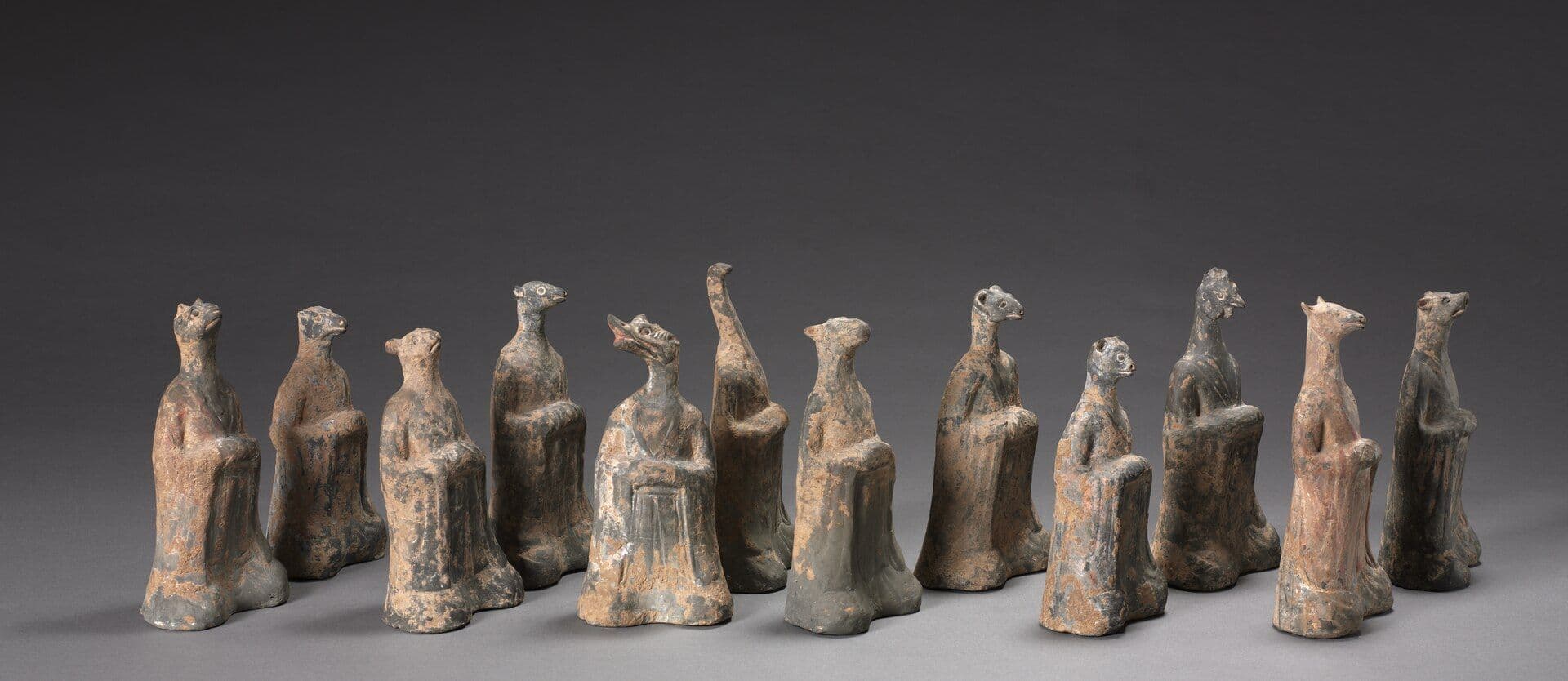
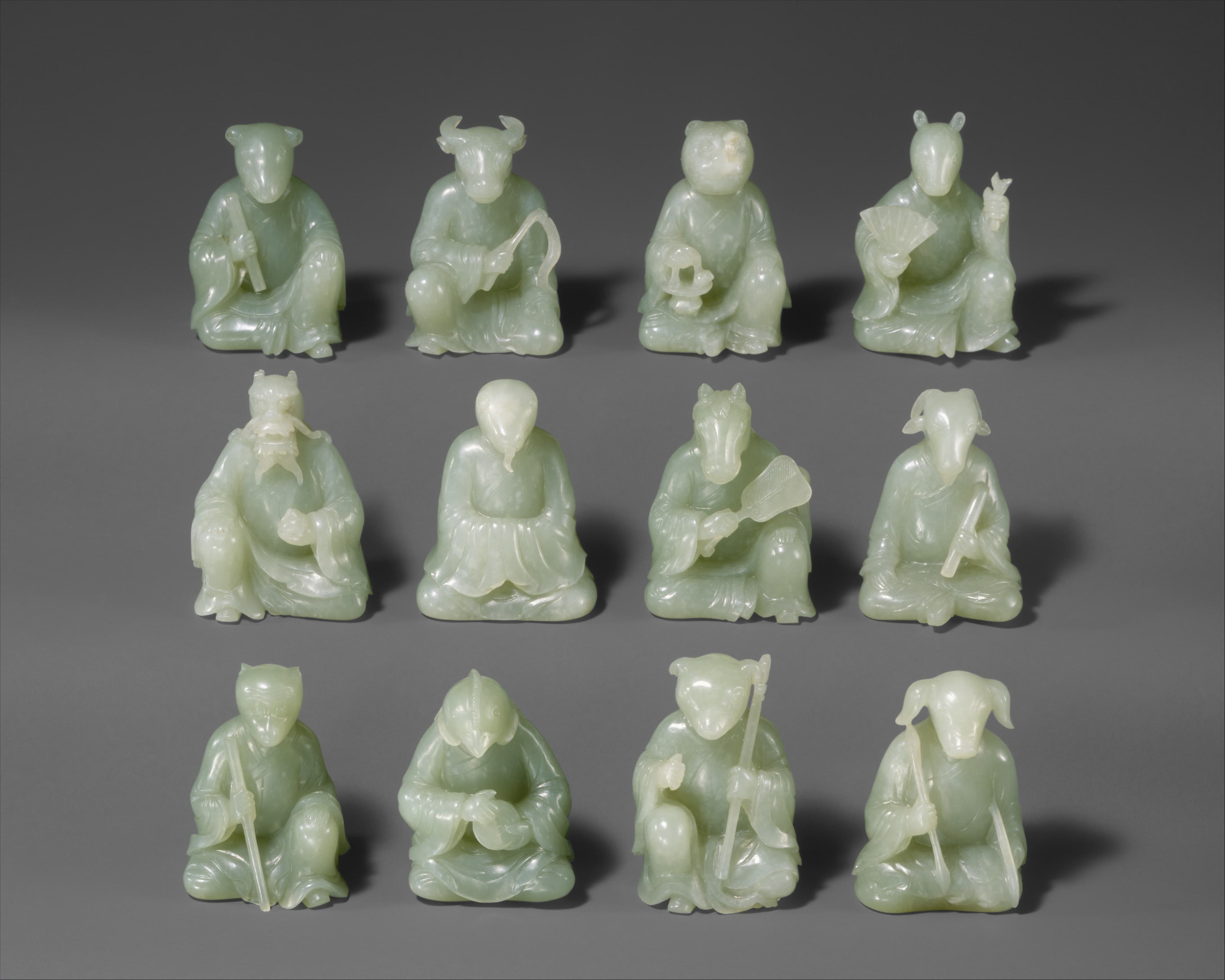
In China, the zodiac is called , sometimes colloquially . Twelve animals follow one another in a fixed order: Rat, Ox, Tiger, Rabbit, Dragon, Snake, Horse, Goat, Monkey, Rooster, Dog, Pig. Each lunar year falls under the patronage of one of them, and a person is said to "belong" to their animal, revealing at the same stroke their age to anyone who knows how to count.
joins shēng (生, "to be born, life") and xiào (肖, "to resemble, to be in the image of"). The term designates the animal that "resembles" the year of birth, the one whose mark you bear. The word makes clear that this is no mere emblem, but a supposed kinship between a being and its beast.
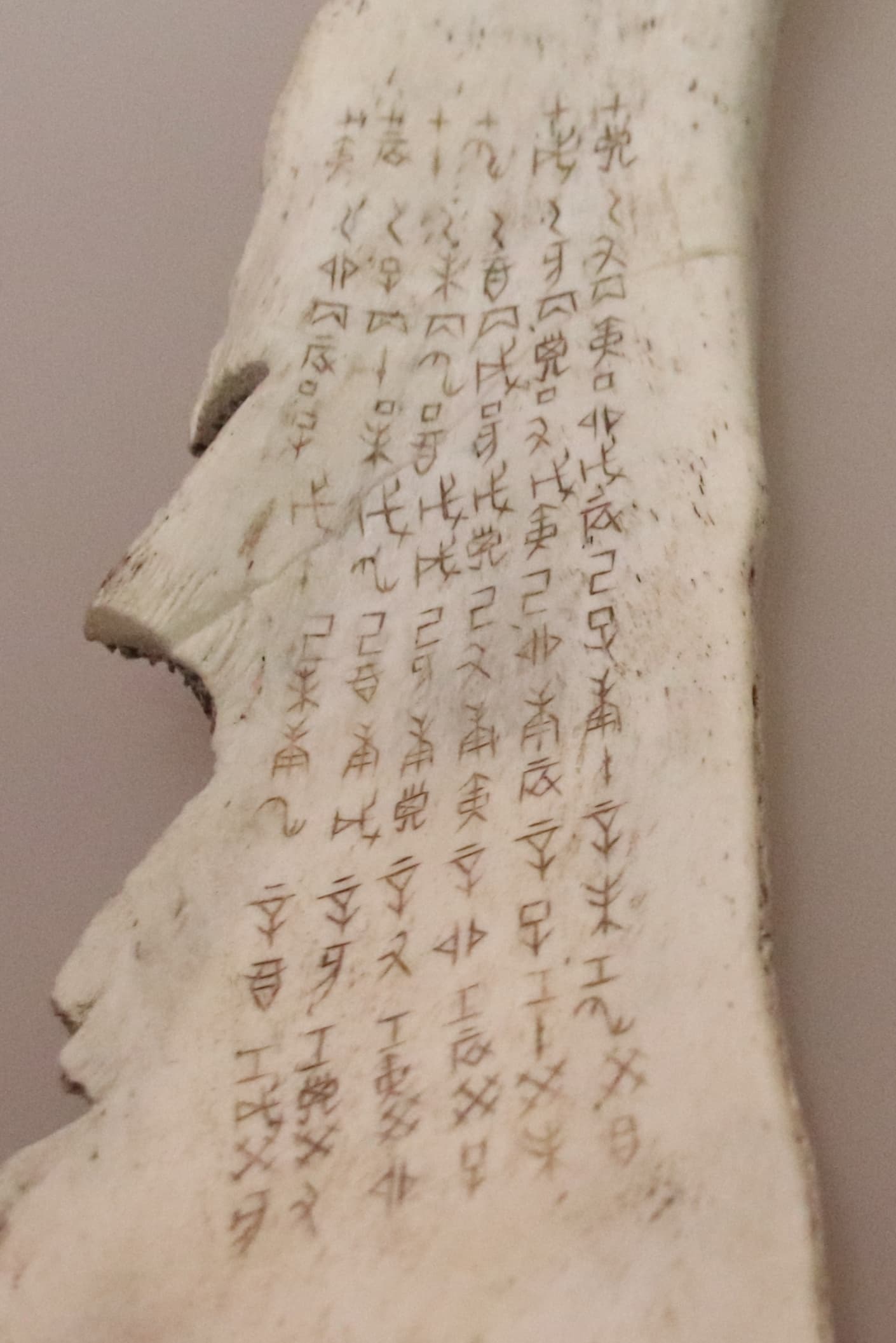
But the twelve animals are only the visible part of a vaster system. The traditional Chinese calendar combines ten and twelve . It is the Earthly Branches that carry the twelve animals: 子 (Rat), 丑 (Ox), 寅 (Tiger), 卯 (Rabbit), and so on. By pairing each stem with each branch, one obtains a cycle of sixty combinations, the , which takes sixty years to return to its starting point. It is this cycle of sixty, and not the mere return of the animal every twelve years, that once structured the dating of dynasties, reigns, and contracts.
The zodiac the West reduces to twelve cute animals is, in China, the façade of a cosmic clock with sixty notches, where time is counted by the coupling of stems and branches.
Each animal does not merely govern a year. It also rules a , the Chinese having once divided the day into twelve two-hour slices: the hour of the Rat covers the heart of the night (11 p.m. to 1 a.m.), that of the Horse the middle of the day (11 a.m. to 1 p.m.). It also commands a cardinal direction and a season, making the cycle a complete grid of space and time, far beyond the horoscope.
Vietnam and Its Cat: A Matter of Sounds#
The most famous divergence of the Asian zodiac is found in Vietnam. There, the fourth sign is not the Rabbit but the Cat (Mèo). A Vietnamese born in a Chinese Rabbit year is born, at home, in a Cat year, and no one sees any inconsistency in it: the Vietnamese Cat fully occupies the Rabbit's slot.
The most solid explanation is linguistic. The name of the fourth Earthly Branch, 卯, reads mǎo in Mandarin Chinese. Now this sound mao is very close to the word for cat in several languages of southern China and in Vietnam: Vietnamese mèo means "cat." According to the most widespread hypothesis, in borrowing the Chinese cycle, the Vietnamese would have interpreted the branch 卯 (mǎo) according to the familiar sound mèo, sliding from Rabbit to Cat by simple phonetic proximity. The Rabbit, an animal less present in the daily imagination of the Red River delta, would have given way to the cat of houses and rice paddies.
Vietnam stands out not only for its cat. In several traditional lists, the second sign is not the Ox but the Water Buffalo (Trâu), the plowing animal of the rice paddies, and the Goat sometimes replaces the Sheep, rarer at these latitudes. The zodiac thus "tropicalized" itself, substituting for the beasts of northern China those of everyday Vietnamese life.
This phonetic hypothesis remains a reconstruction, and other traditions prefer to see in it a deliberate choice, the cat being a beloved and useful animal in a rice-growing civilization where it protects the harvests from rodents. The two readings are not mutually exclusive: a shift in sound may have been reinforced by a cultural preference. The result, in any case, is a zodiac that, while scrupulously respecting the Chinese order and number, puts a feline where the rest of Asia places a hare.
Japan and Its Boar: 十二支 and the Forgotten Pig#
In Japan, the zodiac is called , or more broadly , a term that designates, as in China, the pairing of the stems and branches. The Japanese list faithfully follows the Chinese order, with one nuance, but a nuance that surprises every attentive traveler: the twelfth sign.
In China, the twelfth animal is the , and the character 猪 there ordinarily designates the pig, the domestic farm animal. In Japan, the same branch 亥 reads i, and the associated animal is not the pig but the , the wild beast of the forests. The kanji 猪, which means "pig" in Chinese, took on in Japan the primary sense of "boar." To designate the domestic pig, Japanese uses another character, 豚 (buta). Thus, the year China places under the sign of the plump pig, Japan places under that of the fiery boar, reputed to charge straight ahead without deviating, hence the expression inoshishi musha for an impetuous temperament.
The character 猪 means "pig" in Chinese (zhū) but "boar" (inoshishi) in Japanese, where the domestic pig is called 豚 (buta). One and the same written sign, two animals: China sees in it the beast of the pigsty, Japan the beast of the woods. The shift says much about two relationships to the animal world.
The Japanese use of the zodiac also differs in its function. Where China developed a rich astrology, with romantic compatibilities, auspicious years, and the choosing of dates, Japan chiefly retained the cycle as a calendrical and iconographic marker. Each new year, the corresponding animal floods the that the Japanese exchange by the hundreds of millions, as well as the decorations, stamps, and shrine figurines. People readily ask someone "what is your eto?" to guess their age, but the divinatory dimension, so present in China, is more discreet.
In Japan, the zodiac is less an oracle than an illustrated calendar: every New Year's Day, the whole country draws the same animal on its greeting cards, from the boar to the dragon.
Korea Faithful to China#
Korea offers the perfect counter-example to the Vietnamese and Japanese divergences: it has kept the Chinese list almost unchanged. The Korean zodiac, ttichi (띠), lines up the same twelve animals in the same order, and its fourth sign is indeed the , not the Cat, while the twelfth remains the Pig (돼지, dwaeji) and not the boar.
Korea also inherited the full apparatus that surrounds the cycle in China: the double hours, the cardinal directions, and above all a lively divinatory use. People still consult the zodiac to assess the romantic compatibility of future spouses, to choose an auspicious date, or to judge a child's character. The Korean New Year, Seollal, is one of the moments when the animal of the year regains its full presence, in the games, the decorations, and the good wishes. Korea thus illustrates the path of faithfulness, while Vietnam and Japan illustrate that of adaptation.
A Comparative Table of the Signs That Differ#
Of the twelve animals, most are identical from one country to another. It is only a few slots that betray the history of the journey. Here are the signs where the traditions diverge, with the Earthly Branch to back them up.
| Branch | China (生肖) | Vietnam | Japan (十二支) | Korea |
|---|---|---|---|---|
| 丑 | Ox (牛) | Water Buffalo (Trâu) | Ox (牛, ushi) | Ox (소) |
| 卯 | Rabbit (兔) | Cat (Mèo) | Rabbit (兎, usagi) | Rabbit (토끼) |
| 未 | Goat / Sheep (羊) | Goat (Dê) | Sheep (羊, hitsuji) | Sheep (양) |
| 亥 | Pig (猪 = pig) | Pig (Lợn) | Boar (猪, inoshishi) | Pig (돼지) |
The other eight animals, from Rat to Dog, recur identically in the four countries, only their pronunciation changing. The lesson of the table is clear: the Asian zodiac is not a fixed block exported untouched, but a common mold that each culture filled with its own beasts, according to its sounds and its landscapes.
What the Zodiac Still Governs#
To reduce the zodiac to a sign of the year would be to miss its real grip on daily life, in China above all. Each of the twelve animals commands, as we have seen, a double hour and a direction, but it also structures a whole web of practical beliefs that the Lunar New Year revives every year.
The most tenacious is that of the , the year in which one's own birth animal returns, every twelve years. Contrary to what intuition suggests, this year "of one's own" passes in China for the most hazardous of the cycle, reputed to attract obstacles and bad luck. One traditionally protects oneself from it by wearing red, the propitious color par excellence: a belt, underwear, or a red thread knotted at the wrist, given preferably by an elder. A person of twenty-four, thirty-six, or forty-eight thus passes, in China, through a year of redoubled caution.
The zodiac also feeds a rich grammar of compatibility, between romantic partners as between business associates. Certain pairs of animals are reputed to harmonize, others to clash, and these beliefs still weigh, discreetly, on very real decisions, down to the choice of the year in which to conceive a child. Dragon years, the most prestigious sign, thus regularly see birth-rate peaks in several Asian countries.
The vocabulary of the zodiac is easier to decipher once you can read the characters: 生肖 (shēngxiào, "sign of birth"), 本命年 (běnmíngnián, "natal year"), and the twelve branches, from 子 (Rat) to 亥 (Pig), recur throughout Chinese culture. Learn to recognize them with ChineseSRS and its spaced repetition.
FAQ#
Why does Vietnam have a cat instead of the rabbit? The most accepted explanation is phonetic: the name of the fourth Earthly Branch, 卯, reads mǎo in Chinese, a sound very close to Vietnamese mèo, "cat." In borrowing the Chinese cycle, the Vietnamese would have linked this branch to the familiar cat rather than to the hare. A cultural preference for this animal, useful in the rice paddies, may have reinforced the shift.
Do the Japanese boar and the Chinese pig designate the same year? Yes. It is the same Earthly Branch, the twelfth (亥), and therefore the same year in the cycle. China associates it with the domestic pig (猪 = pig in Chinese), Japan with the wild boar (猪 = inoshishi in Japanese), the domestic pig being called there 豚 (buta). One sign, two animals depending on the country.
Does Korea have a different zodiac from China? No, or barely. Korea has kept the Chinese list unchanged, with the Rabbit in fourth position and the Pig in twelfth. It has also kept the full apparatus of the cycle: double hours, directions, and above all divinatory use, notably for romantic compatibility and the choosing of dates.
What is the year of one's own birth, and why is it feared? It is the běnmíngnián (本命年), the year in which one's birth animal returns, every twelve years. In China, it passes for the most hazardous of the cycle, reputed to attract obstacles. One protects oneself from it by wearing red, the propitious color, often given by an elder.
Do all the zodiac animals change from country to country? No. Of the twelve, eight are identical everywhere, from Rat to Dog, only their pronunciation varying. The divergences concentrate on a few slots: the Vietnamese Cat (instead of the Rabbit), the Japanese Boar (instead of the Pig), and a few waverings between Ox and Water Buffalo, Sheep and Goat.
Read alsoChinese Zodiac: The Twelve Animals and Their Legend
The full list of the twelve animals, their order, the legend of the celestial race, and the character they lend to those born under their sign.
The zodiac switches over each year at the Lunar New Year: discover the Spring Festival, its rites, and the animal it enthrones.
The red of the běnmíngnián is but one thread in a vast weave of luck: dive into the auspicious and inauspicious numbers of East Asia.
In Korea, the animal of the year comes back to life at Seollal: traditions, games, and good wishes of the Korean New Year.
Photo credits: images in this article come from Wikimedia Commons and are under free licenses.
In this article
The cultural terms covered here, each with a short definition.
- Chinese zodiac
- Cycle of twelve animals tied to years, the basis of Chinese astrology.
- Shēngxiào
- Chinese name for the zodiac: the twelve animal signs that structure the calendar.
Chinese Zodiac: The Twelve Animals and Their Legend
From twelve animals to five elements, the Chinese zodiac hides a fascinating cosmology. The great race legend, the betrayed cat, and Fruits Basket.
Cover image: The Metropolitan Museum of Art · The Metropolitan Museum of Art, via Wikimedia Commons · CC0