Nunchi: The Korean Art of Reading the Room
Nunchi, Korea's subtle art of sensing emotions and unspoken cues in any group, rooted in Confucian philosophy, modern social code and a global success tool.
La rédaction Kotoba Interactive
Studio éditorial
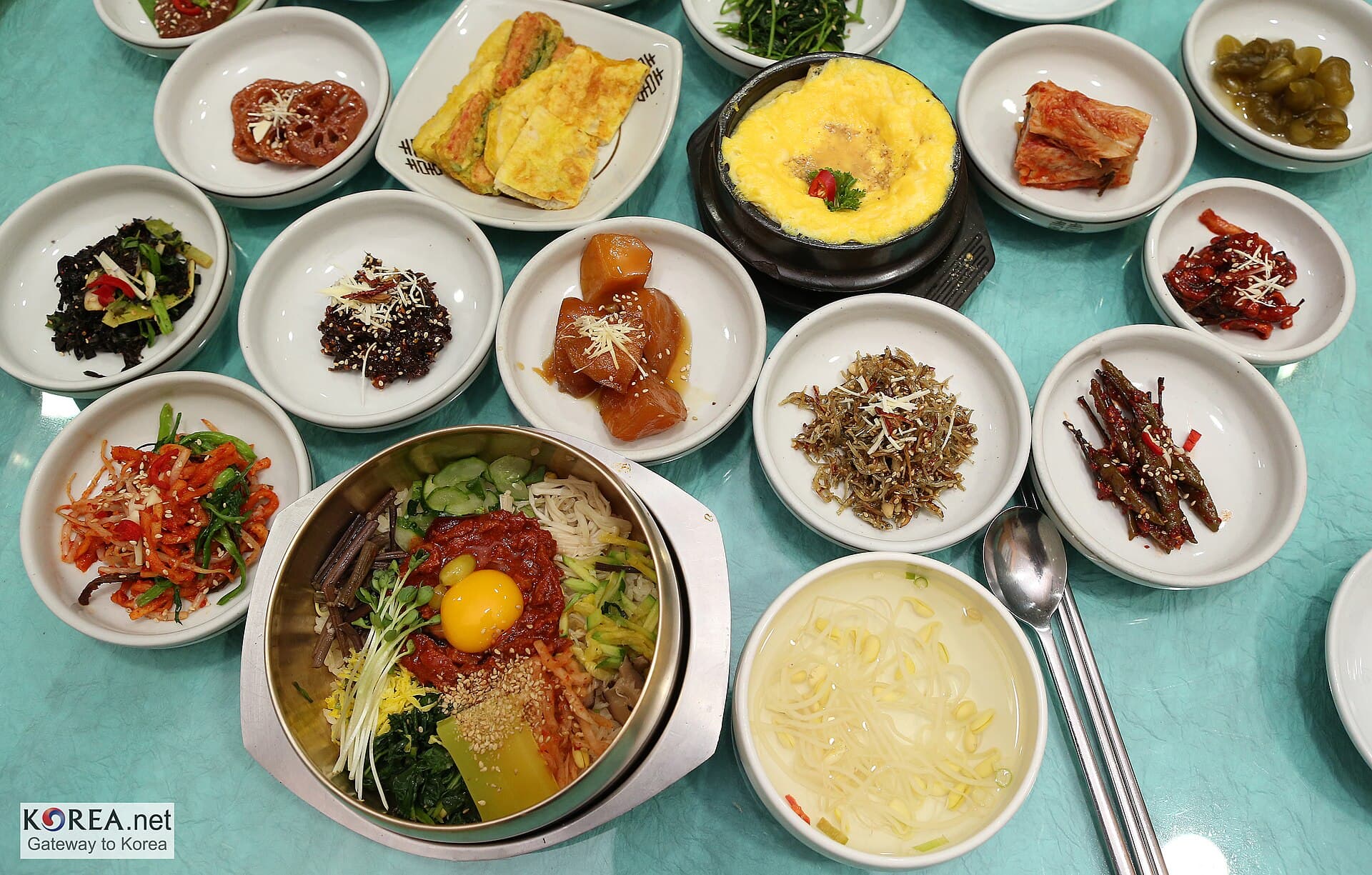
Around the low table of a Seoul apartment, four generations gather for the Lunar New Year. The grandmother, , places a bowl of before her guests; the father serves the elders first; the children wait for a signal. No instruction is given, yet every gesture flows. A daughter-in-law senses her father-in-law's cup of needs refilling; a teenager catches his uncle's faint frown and puts his phone away. This is not mere politeness: it is a social intelligence of rare precision, cultivated since childhood until it becomes second nature. Koreans call it , literally "the measure of the eye." Behind that two-syllable word lies an ancient philosophy, a collective survival code, and, more recently, a self-help concept gaining worldwide traction.
The Roots of Nunchi: From Confucianism to Modern Korea#
The word nunchi combines and . Literally, it is the ability to "gauge through the eye," to read a situation without being told. But nunchi is not just observation: it involves interpretation, anticipation and action, seeing accurately and acting accordingly.
Its roots sink deep into the Confucian heritage that shaped the peninsula for more than five centuries, under the Joseon dynasty (조선, 1392 to 1897). Neo-Confucianism, adopted as state doctrine by the dynasty's founder , organized society around the : ruler and subject, parent and child, husband and wife, elder and younger, friend and friend. Each carried a precise hierarchy, codified duties and an etiquette where silence counted as much as speech. Adjusting to your interlocutor was not a refinement but a moral obligation: anyone who could not read their place threatened , harmony, the supreme good.
Nunchi was born from this demand. In a society where people spoke little and the slightest shift in tone or silence could say more than a speech, Koreans learned, generation after generation, to decode the unsaid. Children were initiated by observing adults. A proverb captures this wordless pedagogy: , "one learns by watching out of the corner of one's eye."
Twentieth-century Korea, battered by Japanese colonization (1910 to 1945), the Korean War (1950 to 1953) and rapid industrialization, did not abolish nunchi: it became a survival tool. Under the military dictatorship of , amid surveillance, reading a superior's intentions could save a family. During the South Korean economic miracle, it became the lubricant of a hierarchical, urbanized society.
Today, nunchi remains pervasive, even among a more individualist youth: smartphone use before elders, introducing a couple to parents, employees leaving before their boss (nunchi bogi, 눈치 보기, "watching the eye"). Far from a relic, it remains the invisible operating system of an entire culture.
Definition and Mechanics: How the Social Eye Works#
Nunchi is a multi-stage cognitive and social process Koreans often perform without conscious awareness. Euny Hong, a Korean-American journalist and author of the bestseller The Power of Nunchi (2019), broke it into eight rules that faithfully reflect this instinctive mechanic.
The Four Beats of Nunchi#
The first beat is silent observation: entering a room and resisting the urge to speak, taking the group's emotional temperature, noticing who is quiet, who seems tense. You cannot adjust to a situation you have not understood.
The second beat is signal interpretation: tone of voice, choice of words, posture, silences. A superior lingering on his phone may signal displeasure; a colleague who does not pour your drink first, a grudge.
The third beat is anticipation: predicting what will happen. Will the boss ask for a report? Is the grandfather waiting for a refill? You do not merely react, you get ahead.
The fourth beat is behavioral adjustment: the right action, at the right moment, in the right tone. Filling the cup before anyone asks, changing the subject before the sad friend requests it, leaving a meeting when the boss wants to wrap up. A perfectly executed adjustment looks like effortless harmony, when it stems from constant mental gymnastics.
Euny Hong's Eight Rules#
In The Power of Nunchi, Euny Hong formulates eight principles:
- Empty your mind when entering a room, so you can receive signals without prejudice.
- Remember that others have nunchi too, reading your signals as you read theirs.
- If you walk into a room where someone is already present, you are in their room, not yours.
- Manners are not nunchi: politeness is a norm, nunchi a contextual reading.
- Read the context, not the words, the least informative part of an exchange.
- Act at the speed of lightning: nunchi that arrives too late is useless hindsight.
- Patience completes nunchi: when in doubt, observe a little longer.
- Never shift responsibility onto others: it is your job to adjust.
Abstract as they may sound to Western readers, these rules translate a practice Koreans consider as natural as breathing.
Reading the social eye starts with understanding the language that carries it: the registers jondaenmal (jondaenmal, respectful speech) and banmal (banmal, casual speech), or the word nunchi (nunchi, the measure of the eye) itself. With KoreanSRS and its spaced repetition, you can learn Korean word by word and grasp the nuances that nunchi lets you sense.
Nunchi in Daily Life#
Follow an ordinary day in the life of a Seoul or Busan city dweller: almost every interaction mobilizes this skill.
In the Family#
The family is the first training ground. The Sunday meal of three generations is a coded ballet: the order of dishes, the seating, the way of pouring drinks (two hands for elders, never your own glass first) all carry meaning.
Daughters-in-law, , experience this most intensely. Traditionally she had to maintain constant nunchi toward her mother-in-law, , guessing her moods and implicit criticism. Korean family dramas, , mine this endlessly: the daughter-in-law whose nunchi lets her manipulate the whole household, or the one whose failure leads to unforgivable missteps.
But family nunchi is not limited to them. Children sense when their father comes home tired and avoid questions; spouses feel when a partner needs silence; grandchildren defuse an impending reproach from grandma with well-placed attention.
At Work#
In professional life nunchi reaches its highest, harshest intensity. Korean corporate culture, deeply hierarchical, rests on subordinates' ability to divine their superiors' expectations. The word becomes , "watching the eye," the art of monitoring your boss in real time to calibrate your behavior.
The most cited example concerns leaving times. Officially the workday ends at six, but no one leaves before the superior, the , has gone or signaled that others may. An employee packing up at six sharp would be seen as lacking nunchi. This pressure fed the phenomenon of , the unpaid overtime weighing on white-collar lives.
Team dinners, , are another arena. Drinking with your boss means monitoring his intake, filling his glass before it empties, never visibly refusing an offer, toasting in order of seniority. New hires master the choreography within months, or watch their careers slow.
Meetings, finally, are a theater where real positions are read in silences rather than words. A boss who stays quiet during a pitch may be signaling approval or total disagreement: nunchi sometimes tells you which.
Between Friends and in Love#
Even among friends, nunchi stays active: deciding who pays the bill, sensing a friend's rough patch before they say anything. Korean friendships are seen as intense and loyal precisely because they presuppose this constant attention.
In love, nunchi is both a tool of seduction and an instrument of measurement: each reads the other's signals, which term of address he uses, when she replies to a message. Korean dramas have built their bread and butter on it, with plots hinging on a character who "should have understood" without being told.
Nunchi and Hierarchy: A Social Compass#
Nunchi does not exist outside hierarchy. In a society where age, status, seniority and lineage structure every interaction, it is the compass for locating yourself.
The Weight of Titles and Language#
Korean has an elaborate system of politeness levels, against . Choosing the right register is the first decision nunchi must guide: banmal with someone who deserves jondaenmal is a profound offense; jondaenmal with a close friend creates cold distance. Nunchi indicates which register is expected, and when to shift.
Titles act as social coordinates. for a senior at school or work, for a junior, for a boss, for a teacher or anyone you wish to honor: each instantly places your interlocutor in a web of power. Misusing one exposes you to a micro-humiliation that good nunchi prevents.
Nunchi as a Lever of Mobility#
Far from a mere tool of submission, nunchi is also a lever of mobility and influence. Those who master it best rise fastest: they identify allies, sidestep conflicts, pitch ideas when the boss is most receptive. A subordinate who anticipates his supervisor's needs becomes indispensable.
In the , the best leaders are said to have exceptional nunchi. , former chairman of Samsung, was renowned for how precisely he read people: he could reportedly sense an executive about to resign, or a project about to fail.
Nunchi and Collectivism#
Nunchi is inseparable from the collectivist model of Korean society. Where individualist cultures value direct expression, Korean culture prizes group harmony, , and discretion: nunchi allows each individual to pursue their interests, as long as collective harmony is preserved.
In a schoolyard, a child without nunchi is quickly spotted: the one who interrupts, who rambles without noticing no one is listening, who misses the group's departure signal. Peers call them , "without nunchi," mere awkwardness or real social maladjustment depending on context.
Nunchi is not silence. It is the music between silences. Koreans listen not only to what is said but to what the words, by hollowing their place, allow one to hear.
From Seoul to the World: Nunchi Goes Bestseller#
For centuries, nunchi remained an almost untranslatable concept, confined to the peninsula and its diasporas. It began to travel only at the dawn of the 2020s, carried by the global reach of Korean culture (the Hallyu, 한류, "Korean wave") and the West's appetite for wisdoms countering small talk and self-assertion.
Euny Hong and The Power of Nunchi#
The pivotal book was published in November 2019 by Penguin: The Power of Nunchi: The Korean Secret to Happiness and Success, by Euny Hong. Born in Chicago to Korean immigrant parents, raised as a child in Gangnam (Seoul) before returning to the United States, she embodies a bicultural generation.
Her book was an immediate success. Translated into more than twenty languages, recommended by the Guardian and the New York Times, it sold several hundred thousand copies in 2020. Her thesis: nunchi is a universally applicable emotional intelligence anyone can cultivate to improve their life. Against the Western culture of direct expression and assertiveness, Hong promotes an intelligence of discretion and observation.
The argument was clever: as Anglo-Saxon societies questioned their own codes, nunchi appeared as an Asian remedy, joining the shelves alongside Danish hygge or Japanese ikigai, in the booming category of "world wisdoms."
Nunchi in Success Schools#
In its wake, business schools, career coaches and HR consultancies seized on the concept. "Nunchi and leadership" workshops sprouted in New York, London and Paris, billing it as a key skill for managers of multicultural teams.
Psychologists have studied nunchi as a culturally coded form of emotional intelligence. Recent work, notably in the Asian Journal of Social Psychology, attempts to measure it through standardized scales. Preliminary results suggest that high nunchi correlates with better social adaptation, but also, in some conditions, with heightened stress linked to hypervigilance.
A Concept That Resists Translation#
Despite its success, nunchi can only truly be grasped by living in Korea. The offered translations, "social intelligence," "reading the room," "strategic empathy," "tact," each capture a facet, not the whole. Like Portuguese saudade or Japanese mono no aware, nunchi resists universalization, and that resistance makes it universally fascinating.
The Limits and Dark Sides of Nunchi#
No social practice is exempt from its shadows. Behind its efficiency lie real costs, increasingly acknowledged by Korean society itself.
The Burden of Hypervigilance#
Practicing intense nunchi permanently is exhausting. Korean psychologists such as and teams at Seoul National University Hospital have documented since the early 2010s the link between nunchi pressure and certain forms of social anxiety, especially among young professionals: constantly scanning others' emotions produces a chronic vigilance state.
Korean psychiatric hospitals observe clinical patterns tied to nunchi burnout: sleep disorders, somatizations, exhaustion. The rise of the Sohwakhaeng movement (소확행, a contraction meaning "small but certain happiness"), inspired by the Japanese essayist , expresses a generation's wish to escape, in private, the tyranny of the social eye.
Conformism and Self-Censorship#
Taken to extremes, nunchi can slide into stifling conformism: dissenting voices fall silent, constructive criticism disappears. Analysts of Korean management, notably of Kookmin University, warn that overdeveloped nunchi harms innovation, employees preferring not to contradict bosses even when they are wrong.
This self-censorship also touches politics. In public debates, nunchi can encourage excessive restraint, prudence elevated to a virtue. For a democracy that needs open confrontation, this culture of silent reading carries real costs.
The New Generation Against Nunchi#
Since the mid-2010s, a pushback against nunchi has emerged among Korean youth. The Tal-nunchi movement (탈눈치), "leaving nunchi," gathers young people refusing to spend their lives guessing their superiors' moods. Social networks overflow with employees claiming the right to leave the office on time and refuse a hoesik without guilt.
The MZ generation phenomenon (MZ세대, the merged Millennial and Z generations), widely covered by Korean media, is largely defined by this more distant relationship to nunchi. These young workers reject some of their parents' codes without renouncing the Korean cultural fabric: their nunchi, when practiced, is more selective and negotiated.
A Balance to Reinvent#
What is at stake in Korea today is a renegotiation of nunchi: not its abandonment, but a redefinition of its domains, the right dosage between the relational finesse it enables and the individual freedom it threatens. Sociologists describe a transition from a total nunchi, exerted permanently, to a contextual nunchi, activated at key moments.
This shift runs through debates on work, parenting and education. Educators question how much nunchi is a precious gift and when it becomes a burden; companies try to reduce its toxic aspects without losing its virtuous ones.
Nunchi is a mirror each person carries in their eyes. It reflects others, yes, but it also reflects what you are ready to see. To practice it fairly is to preserve both lucidity and freedom.
Learning Nunchi Without Being Korean#
For a foreigner living or working in Korea, nunchi can be learned, even if it is never acquired with a native's fluency. A few orientations stand out.
The first is humility. Walking into a group meaning to "bring" your view is the very negation of nunchi. Observe first, speak later: in meetings, wait, listen, notice who has not spoken, who was interrupted. That habit alone transforms interactions.
The second is slowness. In a culture where quick answers signal intelligence, nunchi imposes a staggered rhythm: accept silence, turn it into an ally, let others fill the space first. The best negotiators in Korea are often those who speak the least.
The third is attention to the body, an embodied skill. A Westerner arriving in Seoul will notice how fast their tempo is, how wide their gestures, how loud their voice. Slowing down, softening, recentering, already enters the space of nunchi.
The fourth is tolerance of ambiguity. Westerners want to clarify; Korean culture prefers to leave things hanging. Accepting that a "maybe" can be richer than a "yes" or "no" is to enter nunchi's symbolic economy.
The fifth is prolonged exposure. You only fully understand nunchi by living it. Watching K-dramas, reading Korean novels (those of Han Kang, 한강, born 1970, 2024 Nobel laureate in literature, are full of nunchi scenes), even a few months in Seoul, are the best schools. The films of and assume a viewer endowed with nunchi, able to catch what characters do not say.
Nunchi and Other Asian Wisdoms: A Comparative Landscape#
Nunchi belongs to a family of Asian concepts valuing indirect reading of the social world; comparing it to its cousins illuminates its specificity.
| Concept | Culture | Literal meaning | Main emphasis |
|---|---|---|---|
| nunchi (nunchi) | Korea | "the measure of the eye" | Interpersonal dynamics and immediate action |
| kūki wo yomu (kuki wo yomu) | Japan | "reading the air" | Tacit group expectation, an almost mandatory code |
| mianzi (mianzi) | China | "face" | Public status and honor |
| yǎnsè (yanse) | Taiwan, Hong Kong | "the color of the eye" | Reading the gaze, close to nunchi bogi |
In Japan, the closest concept is : sensing a group's tacit expectations. The difference is the degree of institutionalization: in Japan it is an almost mandatory code; in Korea, nunchi is more fluid. Koreans often call their nunchi more "aggressive" than Japanese air-reading, since it requires active intervention, where reading the air may only require not disturbing.
In China, overlaps with nunchi: saving, giving or making someone lose face all require intense social reading. But mianzi centers on public status and honor, while nunchi focuses on immediate interpersonal dynamics.
In Taiwan, Hong Kong and the Chinese diaspora, people also speak of , a nearly identical concept. The expression means exactly the same as nunchi bogi, a kinship that recalls the common Confucian substrate.
In Chan and Zen Buddhism, the silent attention English speakers call mindfulness shares with nunchi the emphasis on observation. But the difference is deep: mindfulness frees the meditator from social illusion; nunchi navigates the social world efficiently. One withdraws, the other dives in.
Nunchi, in the end, exceeds the sum of its techniques. Born in the hierarchy of Joseon Korea, forged by twentieth-century trials, reinvented by twenty-first-century youth, it still structures the Korean experience of reality. Practiced to excess, it confines; practiced with balance, it opens. That may be its deepest lesson: no skill is ever granted once and for all, it must be recalibrated endlessly, like an eye scanning the horizon that, by blinking now and then, rests to see better.
Photo credits: images used in this article come from Pexels and Unsplash and are royalty-free.
In this article
The cultural terms covered here, each with a short definition.
- Confucianism
- Moral and social thought stemming from Confucius, shaping hierarchy and duty across East Asia.
- Nunchi
- Korean art of subtly reading the moods and unspoken cues of a social situation.
Jeong: understanding Korean affective attachment
Jeong (정), the Korean affective bond said to be untranslatable: definition, miun jeong, uri and the culture of we. Understanding the feeling that weaves society.
Cover image: Bgag · Wikimedia Commons · CC0