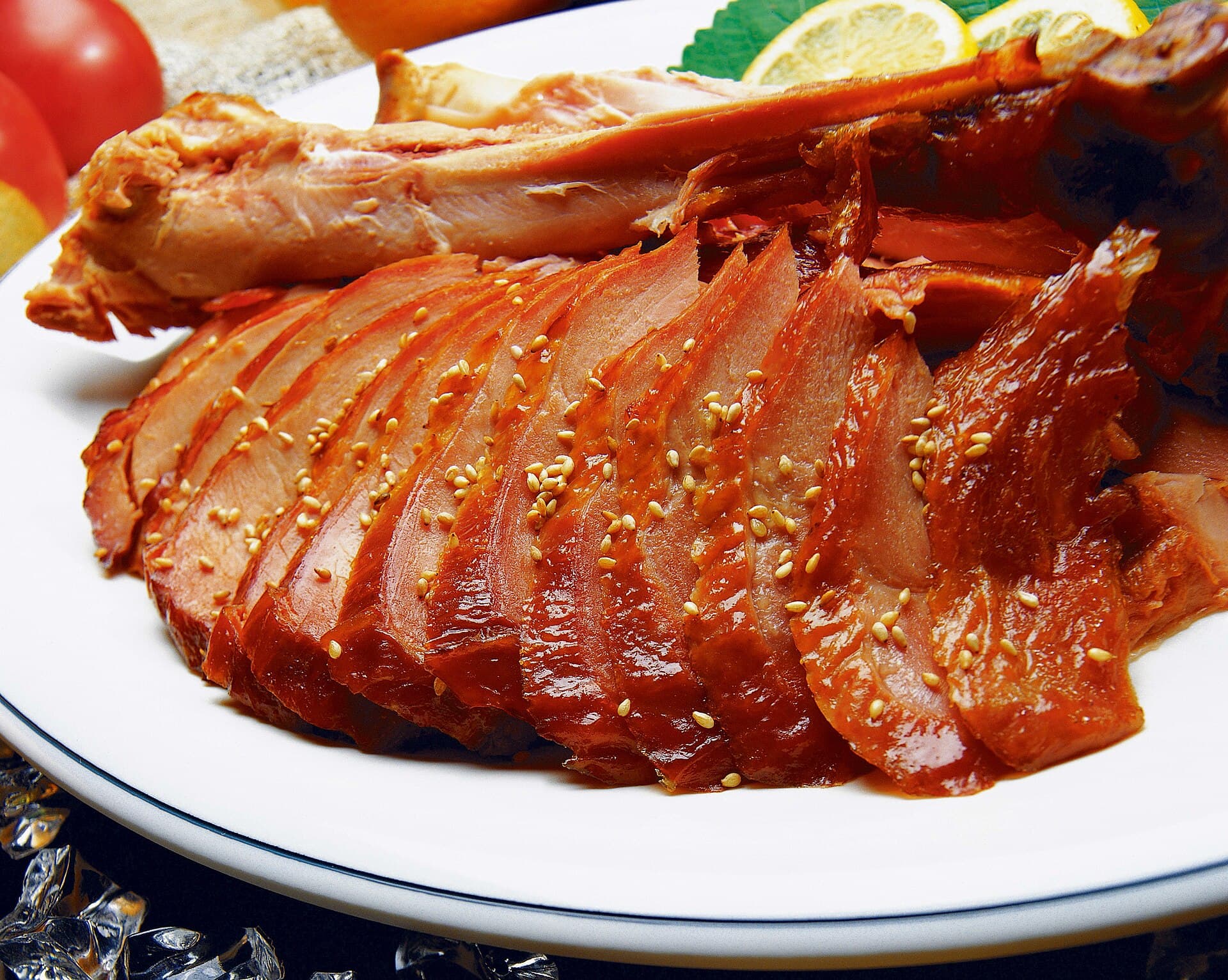
Mukbang: the Korean origin of a global phenomenon
Mukbang, those videos of people eating on camera, was born in South Korea around 2009. The story of a portmanteau, a shared distant meal and a worldwide hit.
La rédaction Kotoba
Studio éditorial
A young woman settles in front of her webcam, sets her microphone close to her plate and unpacks, one by one, a dozen containers of food. Facing her, a screen scrolls with messages: hundreds of strangers watching her take a first bite, commenting, cheering her on, sending her small virtual rewards. She eats, at length, talking between mouthfuls, and the crisp sound of chopsticks and lips is amplified until it becomes the real show. No one, at the other end, is dining beside her. And yet, they are all eating together.
This spectacle bears a Korean name that has gone global: . Born in South Korea in the late 2000s on live-streaming platforms, it refers to a broadcast in which a person eats, alone in front of the camera, while interacting with an audience watching in real time. Behind the concept's apparent triviality lies a precise social history: that of a country where people increasingly eat alone, where the shared table has shifted onto the screen, and where a niche practice became, in a single decade, a global cultural phenomenon. To understand mukbang is to follow a word, a platform, a loneliness and a worldwide contagion.
What exactly is mukbang?#
is a genre of online content in which a person eats, usually a large quantity of food, in front of a camera, while addressing an audience. The word itself says it plainly: it is a portmanteau, the contraction of two Korean terms joined to form a third, livelier and more familiar one.
contracts and . Literally, a "meal broadcast" or a "program in which one eats." The most faithful transcription is meokbang; the spelling mukbang, which came through English, prevailed internationally. The word does not name a dish but a format: the act of eating turned into a shared spectacle.
The original format rests on three simple ingredients. First, a single person on screen, eating in front of their webcam. Next, a live broadcast, with a chat room where the audience comments in real time and talks with whoever is eating. Finally, a strong auditory dimension: microphones capture and amplify the sounds of chewing, crunching and slurping, making listening an essential part of the experience. What the viewer consumes is not just an image of food, but a presence, a voice and a sound.
AfreecaTV, the birthplace of mukbang#
Mukbang was born around 2009-2010 on AfreecaTV, a Korean live-streaming platform. By then, South Korea already had one of the fastest and most widely available internet infrastructures in the world, and a personal streaming culture developed there well before it went global. AfreecaTV allowed anyone to launch their own live show from their computer and to earn money through donations from their audience.
On this platform, the hosts are called , for Broadcast Jockey, modeled on DJs or VJs: "broadcast jockeys" who run their own program. Very quickly, some BJs realized that a very simple kind of content, filming themselves eating a real meal in front of their community, struck an unexpected chord. Viewers, often alone at home at dinnertime, would log in to eat "in the company" of someone.
The business model rests on a system of virtual donations, the famous . The viewer buys these digital objects and gives them to the BJ during the broadcast, each balloon then converting into real income. A popular mukbang, hosted several hours a day, can thus become a genuine job. The gesture seems trivial, but it founds an entire attention economy: someone is paid to eat in front of you and to talk to you.
On AfreecaTV, donations take the form of , virtual "star balloons" that viewers buy and then give to BJs during the broadcast. Each balloon has a monetary value, and the most-followed mukbang hosts have earned monthly incomes comparable to a real salary. The simple act of eating live has thus become, for some, a full-fledged profession.
Eating alone, together: mukbang as a social answer#
If mukbang took root in Korea, it is no accident: it answers a deep transformation of Korean society. In a few decades, the country has seen an explosion in the number of single-person households, intense urbanization and a work culture that leaves little room for long family meals. More and more Koreans eat alone, so much so that a word emerged for the practice.
That word is , a contraction of and . To eat honbap is to eat alone, a reality long tinged with unease in a culture where the meal is traditionally a collective act, even a moment of hierarchy and social bonding. In this context, tuning into a mukbang means recovering a form of commensality, the conviviality of the shared meal, but at a distance and through a screen.
Mukbang does not replace the family table: it offers an electronic substitute, a virtual commensality in which one shares no longer the food, but the presence of the person eating.
The lonely viewer thus recovers, for the length of a meal, the comforting illusion of company. The person eating on screen talks, reacts to messages, thanks the audience, jokes: they keep you company. For an expatriate student, a bachelor home late, an isolated elderly person, this one-way accompanied dinner meets a very concrete need for connection. Mukbang was born less of gluttony than of loneliness, and that is surely what explains its power.
The vocabulary of mukbang first reveals itself in its writing: 먹방 (meokbang, the meal broadcast), 먹다 (meokda, to eat), 혼밥 (honbap, the solitary meal) and 맛있다 (masitda, "it's delicious"). KoreanSRS, our spaced-repetition app for learning Korean, is coming soon: join the waiting list to decipher hangul and these everyday words from day one.
Sound above all: the ASMR dimension#
An essential part of mukbang lies in what you hear more than in what you see. Many broadcasts rely on careful sound capture, close microphones, clean editing, silence around the mouth sounds, which aligns with the ASMR sensibility (autonomous sensory meridian response). This English acronym describes the pleasant tingle, the relaxation that some people feel when listening to soft, repetitive sounds: whispers, rustling and, precisely, chewing.
In an ASMR mukbang, you hear the crisp crack of something fried, the snap of a slurped noodle, the crunch of a pickled radish, the slide of a sauce. The food is chosen as much for its taste as for its sound: crunchy, sticky, fibrous dishes, anything that produces a marked and satisfying sound. The viewer does not eat, but experiences by proxy, through the ear, a form of sensory pleasure. This sonic branch did much to send mukbang traveling beyond Korean borders, because a crunching sound needs no translation.
From Korea to the world: the YouTube explosion#
Confined at first to Korean live platforms, mukbang reached a new scale by migrating to YouTube, which offered it worldwide reach and a pre-recorded format. On AfreecaTV, the broadcast lived in the moment of the live stream; on YouTube, it becomes a permanent video, subtitled, recommended by the algorithm to viewers around the world. The change of platform changes everything: mukbang stops being a local practice and becomes an international genre.
Korean creators became the first recognized figures of the genre abroad. , known for gigantic portions swallowed without gaining weight, and , a specialist in large quantities of spicy food and polished sounds, are among the pioneers who exported the format. Their videos, watched by millions of people outside Korea, made the very word "mukbang" known, adopted as is into the vocabulary of many languages.
Then the genre multiplied on a planetary scale. Creators appeared everywhere, each with their own cuisine and style: giant seafood, mountains of fast food, regional dishes, quantity challenges. Mukbang became a universal format, a recognizable slot in the YouTube ecosystem, while keeping its name and its Korean origin visible in every video title. Few Korean words have traveled so far, so fast, keeping their original spelling.
Read alsoChimaek: Fried Chicken and Beer, Korea's National ReligionFried chicken and beer, another star of the Korean table, is a quintessential mukbang dish: discover chimaek, its ritual and its role in the hallyu wave.
The mukbang lexicon#
Around the phenomenon a small vocabulary has formed, a mix of Korean and loanwords, recurring from one video to the next. Here are the key words, in hangul and romanization.
| Term (hangul + romanization) | Meaning |
|---|---|
| 먹방 (meokbang) | The "meal broadcast," mukbang itself |
| 먹다 (meokda) | To eat, the verb that gives the first syllable |
| 방송 (bangsong) | Broadcast, program, the second syllable |
| BJ (비제이, Broadcast Jockey) | The host who eats live |
| 별풍선 (byeolpungseon) | The "star balloons," virtual donations from the audience |
| 혼밥 (honbap) | The meal eaten alone, contraction of "alone" and "meal" |
| 맛있다 (masitda) | "It's delicious," the mukbangers' signature phrase |
The downsides: health, waste and regulation#
Mukbang's success quickly raised concerns, in Korea and elsewhere. The most obvious concerns health. Ingesting, several hours a day and often in public, quantities of food far exceeding the needs of a normal meal is not harmless: the most extreme hosts expose themselves to real risks, and the spectacle of overeating can blur some viewers' relationship with their own diet, by normalizing excess or feeding disordered eating.
The second criticism concerns food waste. Some mukbangs stage oversized tables, designed more for visual effect than for actual consumption, which clashes with a growing sensitivity to wasted food. The excess that makes the show comes into tension with an increasingly shared ecological and ethical imperative.
These debates led to attempts at regulation. In South Korea, health authorities at one point considered framing mukbang content deemed problematic as part of anti-obesity policies, sparking a lively controversy over freedom of expression and the control of online content. Without resulting in a ban, these initiatives durably installed the question: how far can the excess of eating be turned into a show?
A phenomenon adopted, adapted, globalized#
What is striking, in hindsight, is how mukbang was not only exported but adopted and reappropriated. In each country, the format acclimatized: people eat local dishes, graft on their own codes, turn it now into pure entertainment, now into a gastronomic vehicle, now into an exercise in intimate closeness with the audience. The Korean word remained, but the practice spread into as many variants as there are food cultures.
Mukbang thus illustrates a remarkable trait of contemporary Korean culture: its capacity to turn a local social answer, here urban loneliness and the shared meal, into a universally legible format, carried by technology and by the hallyu wave (한류), the worldwide export of Korean popular culture. Like K-pop, drama or fried chicken, mukbang is a Korean object that became common property of the global internet.
Read alsoHallyu: How the Korean Wave Conquered the WorldMukbang belongs to the same wave of cultural export as dramas and K-pop: explore the hallyu phenomenon and the way Korea is conquering the world's screens.
From the lonely webcam of an AfreecaTV BJ to the millions of subscribers of global YouTube channels, mukbang traveled an astonishing path in a single decade. It was born of a lack, that of a table to sit at with others, and it ended up creating, in its own way, an immense virtual gathering where strangers come together for the length of a meal. That is perhaps its true secret: beneath the clatter of chopsticks and the abundance of dishes, it never speaks of anything but one very simple and very old thing, the wish not to eat alone.
FAQ#
What exactly does "mukbang" mean? It is a Korean portmanteau, a contraction of and . It refers to a broadcast, usually online, in which a person eats in front of a camera while interacting with their audience. The spelling mukbang is the form that came through English; the faithful transcription is meokbang.
Where and when was mukbang born? In South Korea, around 2009-2010, on the live-streaming platform AfreecaTV. The hosts, called BJ (Broadcast Jockey), ate live in front of their webcam and were paid through virtual donations from their audience, the .
Why is mukbang so popular? It answers the rise of solitary meals, , in a Korean society where single-person households are multiplying. It offers a form of virtual commensality: eating "in the company" of someone at a distance. Its sonic dimension, close to ASMR, also contributed to its universal appeal.
What is the ASMR aspect of mukbang? Many mukbangs carefully capture the sounds of chewing, crunching and slurping, which give some viewers a pleasant sensation of relaxation, ASMR. The food is sometimes chosen as much for its sound as for its taste, which helped the format cross language barriers.
Does mukbang raise problems? Yes, several criticisms exist: health risks linked to overeating, food waste linked to oversized portions, and possible effects on viewers' relationship with food. In South Korea, attempts at regulation were considered, without resulting in a ban.
Crédits photographiques : les images de cet article proviennent de Wikimedia Commons et sont sous licence libre.
In this article
The cultural terms covered here, each with a short definition.
- Hallyu
- The "Korean Wave": the global spread of South Korean pop culture (k-pop, k-dramas, film).
Aegyo: The Korean Art of Performed Cuteness
Baby voice, finger heart, buing buing: aegyo is a Korean relational language. Origins, repertoire, the gender debate, and its Asian cousins decoded.
Cover image: wizdata · wizdata, via Wikimedia Commons · CC0