4 and 8 across Asia: the map of lucky and unlucky numbers
China, Japan, Korea: three languages, three sets of homophones, the same fourth floor missing from the lifts. A comparative table of the digits.
La rédaction Kotoba Interactive
Studio éditorial
On August 8, 2008, at exactly 8:08 p.m., the opening ceremony of the Beijing Olympic Games launched before the eyes of the world. The choice of date was no accident: four times the number 8, one of the most powerful good-luck charms in Chinese culture. Conversely, step into many an elevator in Shanghai, Seoul or Tokyo and look for the 4th floor button: it has sometimes vanished, replaced by a "3A" or an "F." Behind these details hides a whole cultural grammar of numbers.
In East Asia, certain numbers attract fortune, others are avoided like the plague. This is not a matter of mathematics, but of sounds: in languages rich with homophones, a number can ring like a happy word or like a threat. To understand this numerology is to enter a way of thinking where language, destiny and daily life intertwine.
The 8: the sound of prosperity#
The number is the most prized in the Chinese world, and the reason lies in a near-homophone: bā sounds like fā (发), the first character of fācái (发财), "to make a fortune, to prosper." To own an 8 is to surround oneself with an echo of wealth to come.
This belief is anything but anecdotal: it is monetized. Phone numbers, license plates, addresses and floors studded with 8s sell for gold. A phone number lined with 8s has reached dizzying sums at auction in China, and property developers gladly set prices ending in 8.
In China, a number is not just a quantity: it is an omen that one pronounces. To choose one's digits is to choose the destiny one allows oneself to hope for.
The 4: the number people erase#
At the other extreme reigns the 4, the great cursed one. In Chinese, sì (四) is the near-homophone of sǐ (死), "death." The fear of 4 even bears a scholarly name: tetraphobia. And it does not stop at China's borders.
For the homophony crosses the Sinicized languages. In Korean, 四 is read sa, like the Sino-Korean character for death (死, sa). In Japanese, 四 is said shi, identical to a word for death (死, shi); the Japanese often prefer the other reading, yon, to avoid it. In all three countries, the 4 drags a funereal aura.
The word tetraphobia comes from the Greek tetra ("four") and phobos ("fear"): the fear of the number four. It is the East Asian equivalent of Western triskaidekaphobia, the fear of 13. But where the 13 is mostly folklore, the 4 concretely shapes architecture and commerce.
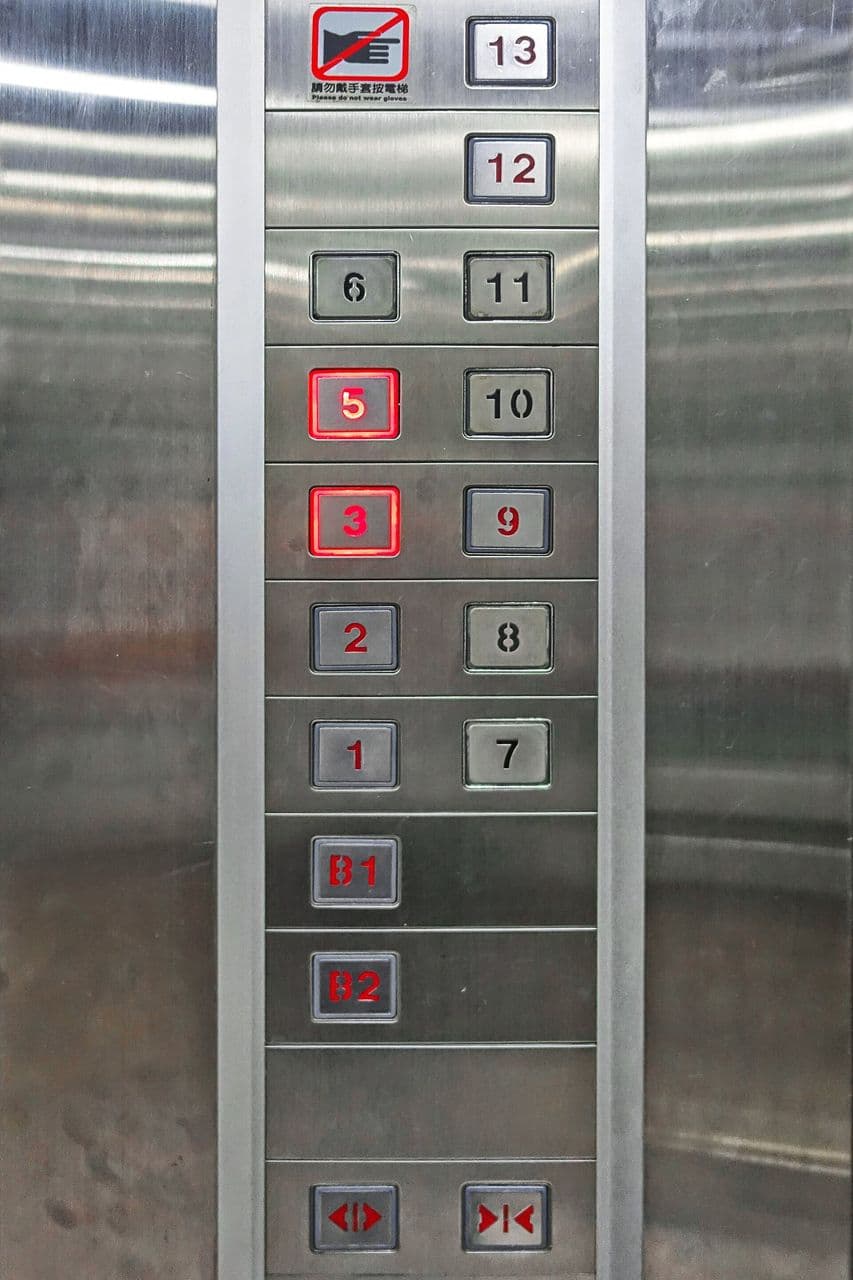
A very concrete consequence: in countless hospitals, hotels and residential buildings in China, Korea, Japan, Taiwan and Hong Kong, the 4th floor is skipped. The elevator jumps from 3 to 5, or displays "3A." Floors 14, 24, 34 sometimes disappear too. Room numbers, plates, product models avoid the 4 when the stakes are sensitive: a hospital does not care to lodge its patients on the "floor of death."
Do these sound echoes intrigue you? Chinese luck hides inside homophony: learn to read 八 (bā, eight), 发 (fā, to prosper) and 四 (sì, four) to hear why a number brings luck or misfortune, with ChineseSRS and its spaced repetition.
The other numbers of destiny#
Beyond the duo of 8 and 4, each digit carries its symbolic charge, sometimes varying from one country to another.
| Number | Sound (pinyin) | Homophone | Status |
|---|---|---|---|
| 8 (八, bā) | bā | 发 (fā, to prosper) | Auspicious, highly sought |
| 4 (四, sì) | sì | 死 (sǐ, death) | Inauspicious, often avoided |
| 9 (九, jiǔ) | jiǔ | 久 (jiǔ, enduring) | Auspicious in China, dreaded in Japan |
| 7 (七, qī) | qī | Seven Gods of Fortune | Rather favorable |
| 6 (六, liù) | liù | 流 (liú, flowing) | Auspicious, "everything goes smoothly" |
The 9, the ambivalent#
The is auspicious in China: it sounds like jiǔ (久), "long-lasting, enduring," hence its association with the emperor and longevity: the Forbidden City is said, by tradition, to have a number of rooms built around the 9. But in Japan, the 9 is read ku, a homophone of ku (苦), "suffering, pain." The same number, blessed on one side of the strait, dreaded on the other.
The 7, between East and West#
The 7 is nuanced. In Japan, it is rather favorable, tied to Buddhism (the forty-nine days of mourning, or seven times seven) and to the Seven Gods of Fortune. In China, its status is more mixed depending on context, but the Western influence of "lucky seven" has reinforced its positive reputation across the region.
Pairs and the color red#
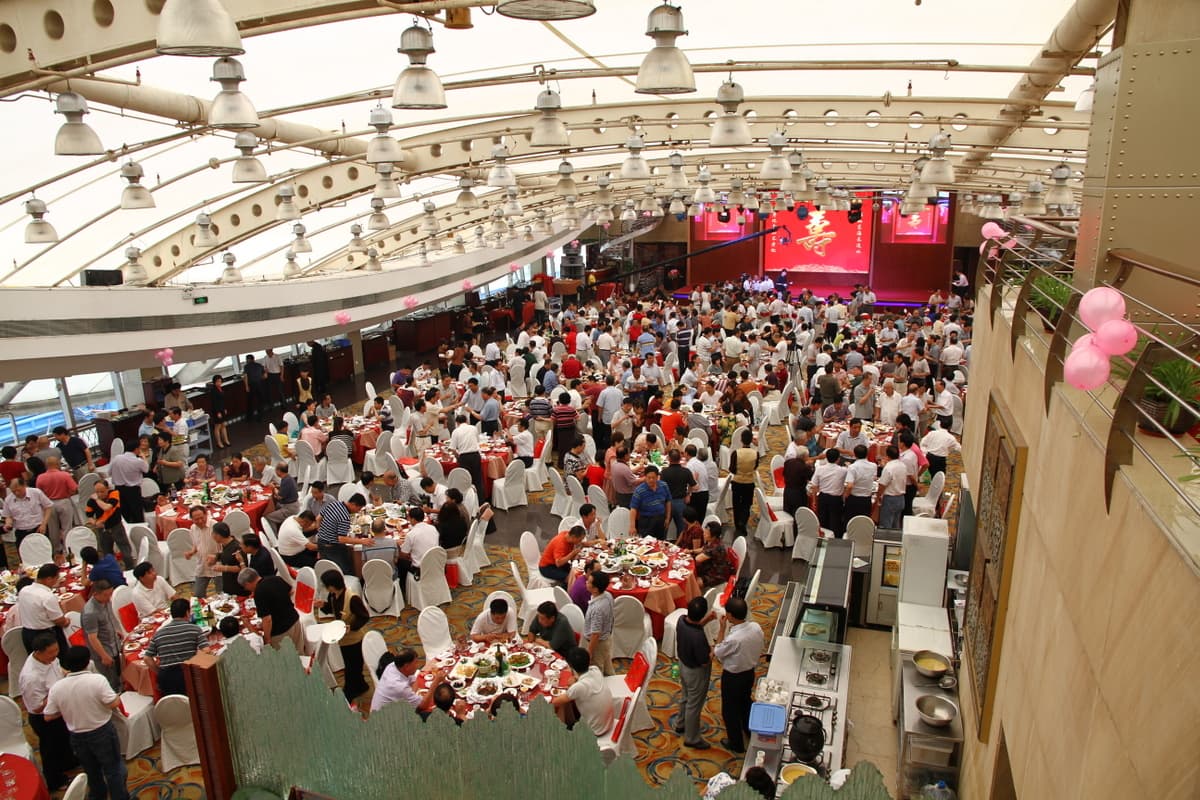
Beyond isolated digits, Chinese culture loves even numbers, guarantees of balance and harmony, hence gifts and sums offered in twos, and the famous shuāngxǐ (双喜), the "double happiness" of weddings. The color red, for its part, doubles luck: red envelopes (hóngbāo) filled with bills, ideally in auspicious amounts.
In 2003, a Chinese airline paid the equivalent of several hundred thousand dollars for the phone number 8888 8888: eight 8s in a row. The 8 does not merely bring luck: it becomes an asset people fight over.
A superstition? Rather a language#
One could dismiss all this as folklore. That would miss the essential: these beliefs rest on the very structure of the East Asian languages, where a limited number of syllables generates swarms of homophones. Mandarin Chinese has relatively few distinct sounds for thousands of characters: every word calls up others, and numbers, omnipresent, become messengers.
Hence a tangible economic reality: phone carriers classify "auspicious" numbers in premium price tiers, registration services auction off plates loaded with 8s, and real-estate agents know that an apartment on the 4th floor will sell for less than on the 8th. Superstition has a market price.
Read alsoFeng shui: the Chinese art of harmonizing space and qiFrom numbers to feng shui, China made the harmony of sounds, orientations and energies an art of attracting luck and warding off misfortune.
Reading numbers, reading cultures#
Whether or not one subscribes to these beliefs, they offer a lesson: in East Asia, to speak is to summon echoes. The 8 and the 4 are not mere isolated superstitions, but the visible peaks of a poetic and pragmatic relationship to language, where every word, every number, can bring luck or misfortune depending on how it sounds.
To learn Chinese, Korean or Japanese is to learn to hear these resonances: why one gives 8, why one avoids 4, why one same 9 blesses Beijing and worries Tokyo. Behind the numbers hides, as always, a civilization that thinks in sounds.
FAQ#
Why is the number 8 lucky in China? Because bā (八, eight) sounds like fā (发), "to make a fortune, to prosper." The 8 is associated with wealth to come, which makes numbers, plates and addresses with 8s highly sought-after and expensive.
Why is the number 4 avoided in Asia? Because in Chinese (sì), Korean (sa) and Japanese (shi), the 4 is a near-homophone of the word "death" (死). This tetraphobia leads to skipping the 4th floor in many buildings.
What is tetraphobia? It is the fear of the number 4, very widespread in East Asia because of its homophony with "death." It shows in the absence of a 4th floor in elevators and the avoidance of 4 in numbers.
Is the number 9 lucky in Asia? It depends on the country: in China, the 9 (jiǔ) evokes duration and longevity, hence luck; in Japan, it is read ku, a homophone of "suffering," and it is rather avoided.
Photo credits: the images used in this article come from Pexels and Unsplash and are royalty-free.
Chinese numbers: why 4 frightens and 8 sells
The 4 that sounds like death, the 8 that sounds like wealth: how homophony governs floors, licence plates, gifts and prices in China.
Cover image: KKPCW · KKPCW, via Wikimedia Commons · CC BY-SA 4.0