Hayao Miyazaki: Biography and Work of a Master
Hayao Miyazaki's life and work: from Nausicaä to founding Studio Ghibli, from Spirited Away to The Boy and the Heron, his two Oscars and his great themes.
La rédaction Kotoba
Studio éditorial
In March 2024, a man of eighty-three who had sworn half a dozen times that he was done with cinema won his second Oscar for Best Animated Feature, for a film that had taken him ten years to finish. He was not even at the ceremony. once again let the Academy honor a work while he stayed at his drawing table, pencil in hand, busy with the only thing he had ever truly known how to do: imagine worlds.
This Japanese filmmaker, born in 1941, has spent more than sixty years drawing girls who fly, forests that think and machines that dream. Co-founder of , he is one of the few animation authors whose every film is awaited as a global event. This biography traces his path, from wartime Tōkyō to his double Hollywood triumph, and unfolds the obsessions, nature, pacifism, heroines, flight, that make a Miyazaki shot recognizable among a thousand others.
A child of war and airplanes#
Miyazaki was born on 5 January 1941 in Tōkyō, the second of four sons, into a family whose business, Miyazaki Airplane, made parts for the Imperial Army's fighter planes. This double origin marks his entire body of work: a love of flying machines on one side, the guilt of war on the other. A frail child, he grew up in the Japan of the bombings, then of the 1945 defeat and the occupation. His mother, stricken with spinal tuberculosis, was bedridden for years, a memory that runs through several of his films, from My Neighbor Totoro to The Boy and the Heron.
As a teenager he devoured manga and considered becoming a comics artist. It was seeing, in 1958, Japan's first color animated feature, The Tale of the White Serpent (白蛇伝, Hakujaden), that settled his calling. He nonetheless studied political science and economics at Gakushūin University before joining, diploma in hand, the very studio that had produced that foundational film.
The word アニメ (anime) is the Japanese abbreviation of the English animation. In Japan it refers to all animation, whatever its origin; it is in the West that the term narrowed to mean Japanese animation. Miyazaki himself is wary of the word and of the industry it covers: he defines himself first as a craftsman-illustrator, not as a content supplier.
Toei Animation: the learning years#
In 1963, Miyazaki joined , today , then the largest animation studio in Japan. He started at the very bottom, as an in-between artist, drawing the intermediate frames between key poses. He quickly proved prodigious and tireless, climbing the ranks while actively organizing the union, of which he became secretary-general. There he met the man who would matter most in his career: , a director five years his senior, intellectual and meticulous.
The two first collaborated on the feature Horus, Prince of the Sun (太陽の王子 ホルスの大冒険, Taiyō no Ōji: Horusu no Daibōken, 1968), directed by Takahata, where Miyazaki already made his mark. He then worked on many television series, including Heidi, Girl of the Alps (アルプスの少女ハイジ, Arupusu no Shōjo Haiji, 1974), and in 1979 directed his first feature, The Castle of Cagliostro (ルパン三世 カリオストロの城, Rupan Sansei: Kariosutoro no Shiro), a breathless adventure drawn from the Lupin III franchise. The film was no box-office triumph, but it revealed a complete director, a virtuoso of movement and rhythm.
Nausicaä, 1984: the film that changed everything#
The turning point came with Nausicaä of the Valley of the Wind (風の谷のナウシカ, Kaze no Tani no Naushika), released in March 1984. Miyazaki had first published the story as a manga, unable to find a producer for a film not based on any existing series. The magazine's success convinced the publisher Tokuma Shoten to fund the adaptation. The film, an ecological epic in which a young princess tries to reconcile humans with a toxic nature and a world of giant insects, drew more than nine hundred thousand viewers and established an animation that was adult, ambitious and political.
Nausicaä was not yet a Ghibli film, as the studio did not exist, but it already held the whole blueprint: the active heroine, the rejection of war, the forest seen as a living organism, the obsession with flight. The film's triumph gave Miyazaki, Takahata and producer the legitimacy and the means to create their own house.

1985: the founding of Studio Ghibli#
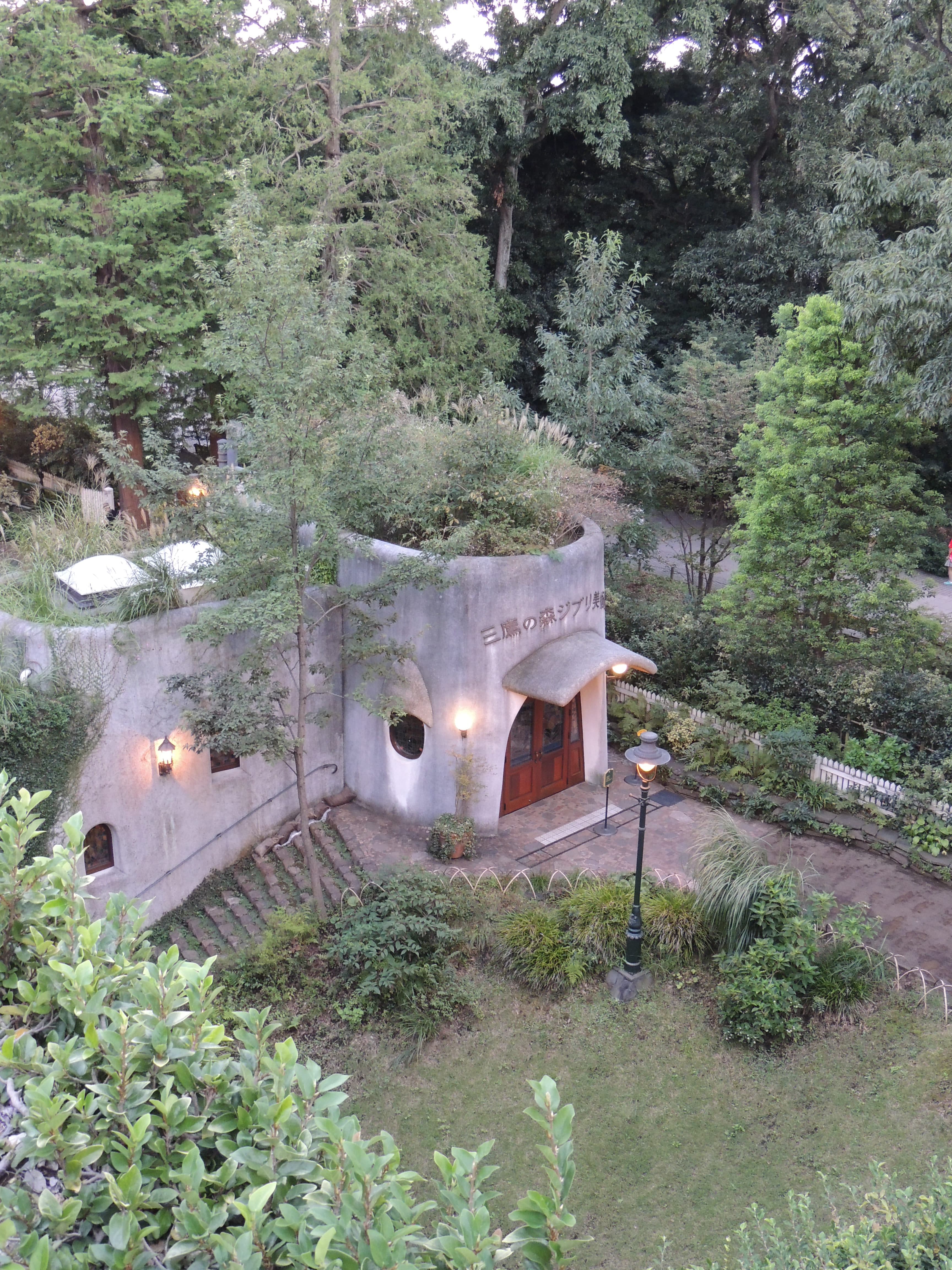
Studio Ghibli was born on 15 June 1985 in Kichijōji, a suburb of Tōkyō, founded by Miyazaki, Takahata and Suzuki with the backing of Tokuma Shoten. The idea was simple and radical: to create a studio devoted to high-quality, hand-drawn animated features, free of the pressure of assembly-line television series. Miyazaki would be the main author, Takahata the realist counterpoint, Suzuki the strategist who made it all viable.
The name comes from the Italian Ghibli, the nickname of an Italian reconnaissance plane of the Second World War, itself borrowed from a Libyan Arabic word for a hot wind of the Sahara. An aviation enthusiast, Miyazaki wanted the studio to "blow a new wind" through Japanese animation. A delicious detail: the correct Italian pronunciation would be closer to "gibli," but Japanese usage fixed the "ji."
The first film stamped Ghibli was Castle in the Sky (天空の城ラピュタ, Tenkū no Shiro Rapyuta, 1986), an adventure epic in which two children search for a floating island coveted by pirates and the army. All of Miyazaki is already there: flying machines, ruins reclaimed by vegetation, distrust of military power, and the orchestral score of composer , who would write nearly all his music and become inseparable from the Ghibli feeling.
The classic age: Totoro, Kiki, Porco Rosso#
It was in the late 1980s and the 1990s that Miyazaki built the foundation of his legend. In 1988 came My Neighbor Totoro (となりのトトロ, Tonari no Totoro), the luminous encounter of two little girls with a plump forest spirit, in the Japanese countryside of the 1950s. A commercial failure on release, the film became, through merchandising and television, the very emblem of the studio: Totoro's silhouette is today the Ghibli logo.
The following year, Kiki's Delivery Service (魔女の宅急便, Majo no Takkyūbin, 1989) followed a thirteen-year-old apprentice witch who moves out on her own and delivers parcels on her broom. The studio's first big commercial success, it is a fable about independence and creative doubt: Kiki temporarily loses her powers, a clear metaphor for artistic block. Then came Porco Rosso (紅の豚, Kurenai no Buta, 1992), a deeply personal film in which an Italian flying ace, turned into a pig, hunts bounties over the interwar Adriatic. Anti-fascist, melancholic, in love with seaplanes, it sums up the director's spirit in a famous line: better to be a pig than a fascist.
Watching Miyazaki in the original means grasping words like 飛行機 (hikōki, "airplane"), 森 (mori, "forest") and 魔女 (majo, "witch"), at the heart of his imagination. JapaneseSRS, our spaced-repetition app for learning Japanese, is coming soon: join the waitlist to start decoding these words from day one.
Mononoke and Chihiro: global recognition#
Princess Mononoke (もののけ姫, Mononoke Hime, 1997) marked an earthquake in Miyazaki's career. In a mythical medieval Japan, Prince Ashitaka tries to arbitrate the war between the forest gods and the humans of an ironworking town. Dark, violent, with no clearly good or clearly evil side, the film shattered the Japanese box-office record and made Miyazaki a national phenomenon. In it he deployed his most mature vision of ecology: nature is neither idealized nor sacrificed, but held in tragic tension with human progress.
Then came the summit. Spirited Away (千と千尋の神隠し, Sen to Chihiro no Kamikakushi, 2001) tells the story of a ten-year-old girl whose parents are turned into pigs and who must work in a spirit-filled bathhouse to save them. The film became the biggest success in the history of Japanese cinema, a record it would hold for twenty years, won the Golden Bear in Berlin, and above all the Oscar for Best Animated Feature in 2003. Ghibli was no longer a Japanese treasure: it was a global institution, and Miyazaki a name cited alongside Kurosawa.
Read alsoStudio Ghibli: A Guide to Every Film"Chihiro is not beautiful, she is not especially brave. She is an ordinary child. That is exactly why children can believe in her."
To walk through the studio's entire filmography, film by film, from Nausicaä to the latest works, including the contributions of Takahata and the younger directors.
The successive retirements and the master's return#
After Spirited Away, Miyazaki produced one major work after another, while announcing, film after film, that each might be his last. Howl's Moving Castle (ハウルの動く城, Hauru no Ugoku Shiro, 2004), adapted from a novel by the British writer Diana Wynne Jones, is a pacifist manifesto openly aimed at war, at the time of the Iraq conflict. Ponyo (崖の上のポニョ, Gake no Ue no Ponyo, 2008) returned to fully hand-drawn animation, one hundred and seventy thousand drawings, for a seaside tale meant for the very young, inspired by The Little Mermaid.
Then came The Wind Rises (風立ちぬ, Kaze Tachinu, 2013), a fictionalized biography of , the engineer who designed the Mitsubishi "Zero" fighter. A twilight, ambiguous work, torn between the love of a machine's beauty and the horror of its warlike purpose, the film was then announced as Miyazaki's very last, and he officially declared his retirement. It was not the first time: the master had already announced the end of his career after several films, only to return each time to his drawing table, unable to stop.
Miyazaki is a declared opponent of computer animation when it comes to the human and the emotional. In 2016, at a demonstration of animation generated by artificial intelligence, he told the engineers that their work seemed to him "an insult to life itself." The studio champions, film after film, the primacy of hand drawing, down to hundreds of thousands of shots traced one by one.
The Boy and the Heron: the second Oscar#
The most spectacular return was The Boy and the Heron (君たちはどう生きるか, Kimitachi wa Dō Ikiru ka, literally "How Do You Live?", 2023), a testament film of dizzying richness. Mahito, a boy grieving his mother's death in wartime Tōkyō, is drawn by a talking heron into a fantastic world where the living and the dead coexist. The fruit of nearly ten years of work, released in Japan without a single trailer, a radical marketing gamble by Suzuki, the film won the Oscar for Best Animated Feature in 2024, as well as the Golden Globe.
Miyazaki thus became the only filmmaker to have won this statuette twice for entirely hand-drawn films, at over eighty years old. The largely autobiographical film condenses his lifelong themes: maternal grief, war, flight, the passage out of childhood, and the question that serves as its title, addressed as much to its hero as to its audience.
Miyazaki's major films at a glance#
Here are the features directed by Miyazaki that mark out his career, with their original titles and a notable fact.
| Film | Year | Japanese title | Notable fact |
|---|---|---|---|
| Nausicaä of the Valley of the Wind | 1984 | 風の谷のナウシカ | The trigger that led to Ghibli's founding |
| Castle in the Sky | 1986 | 天空の城ラピュタ | First official Studio Ghibli film |
| My Neighbor Totoro | 1988 | となりのトトロ | Totoro becomes the studio's logo |
| Kiki's Delivery Service | 1989 | 魔女の宅急便 | Ghibli's first big commercial success |
| Porco Rosso | 1992 | 紅の豚 | An anti-fascist, deeply personal film |
| Princess Mononoke | 1997 | もののけ姫 | Japanese box-office record on release |
| Spirited Away | 2001 | 千と千尋の神隠し | Oscar for Best Animated Feature 2003 |
| Howl's Moving Castle | 2004 | ハウルの動く城 | Pacifist manifesto, over 15 million admissions |
| Ponyo | 2008 | 崖の上のポニョ | Return to fully hand-drawn animation |
| The Wind Rises | 2013 | 風立ちぬ | Announced as his final work |
| The Boy and the Heron | 2023 | 君たちはどう生きるか | Oscar for Best Animated Feature 2024 |
The obsessions of a body of work#
Behind the diversity of the films runs a cluster of themes that make a Miyazaki recognizable in a few shots. Nature and ecology first: the forest of Mononoke, the sea of Ponyo, the pollution of Nausicaä all pose the question of the right relationship between humans and the living, without ever tipping into sermon. Then pacifism, a conviction born in a man who as a child lived through the 1945 defeat: for him war is never glorious, only absurd or tragic, even as he loves to draw the planes that wage it.
Then come the heroines, an absolute trademark. Nausicaä, Kiki, San, Chihiro, Sophie, girls and women who are active and brave, never reduced to a love interest, at a time when world animation was sorely lacking them. And everywhere, flight: brooms, planes, gliders, winged creatures, the expression of a freedom that this son of an airplane-parts maker has pursued since childhood. And running underneath, the end of childhood, that bittersweet passage each of his heroes crosses on the threshold of adulthood.
Read alsoAnisong: When Anime Music Conquered the WorldMusic is part of the Miyazaki emotion, carried at Ghibli by Jō Hisaishi; explore more broadly the sound world of Japanese animation.
FAQ#
Who is Hayao Miyazaki? Hayao Miyazaki (宮崎駿), born 5 January 1941 in Tōkyō, is a Japanese animation director, screenwriter and illustrator. Co-founder of Studio Ghibli in 1985, he is the author of films such as My Neighbor Totoro, Princess Mononoke, Spirited Away and The Boy and the Heron, and has won two Oscars for Best Animated Feature.
How many Oscars has Miyazaki won? Two, both for Best Animated Feature: Spirited Away in 2003 and The Boy and the Heron in 2024. He is the only filmmaker to have won this statuette twice for entirely hand-drawn films.
What is Miyazaki's first Studio Ghibli film? Castle in the Sky (天空の城ラピュタ, 1986) is the studio's first official feature. Nausicaä of the Valley of the Wind (1984), often associated with Ghibli, actually predates its founding and served as the trigger for it.
Did Miyazaki really retire? He announced his retirement several times, notably after The Wind Rises in 2013, before returning each time to directing. His most recent film to date, The Boy and the Heron (2023), was born of one of these returns.
What are the great themes of his work? Nature and ecology, pacifism, strong and active heroines, flight and freedom, and the end of childhood. Present from Nausicaä onward, these motifs run through his entire filmography and give his films their recognizable unity.
Photo credits: the images in this article come from Wikimedia Commons and are under a free license.
In this article
The cultural terms covered here, each with a short definition.
- Hayao Miyazaki
- Co-founder of Studio Ghibli and director of its most beloved films.
- Spirited Away
- Miyazaki's Oscar-winning 2001 film about a girl trapped in a spirit world.
- Studio Ghibli
- Acclaimed Japanese animation studio behind Spirited Away and My Neighbor Totoro.
Studio Ghibli: A Guide to Every Film
A complete guide to every Studio Ghibli film, from Nausicaä to The Boy and the Heron. History, directors, timeline, themes and a recommended viewing order.
Cover image: Oliver Ayala · Oliver Ayala, via Wikimedia Commons · CC BY 2.0