Seoul metro: T-money, transfers and the rules of the carriage
T-money card, free transfers, numbered exits, Climate Card: everything to understand about the Seoul subway before you go underground.
La rédaction Kotoba Interactive
Studio éditorial
The first line of the Seoul subway opened on 15 August 1974, Liberation Day. Nine kilometres, nine stations. Half a century later the network runs to more than twenty lines counting the suburban extensions, carries over seven million passengers a day and serves an urban area of twenty-five million people.
For a visitor the difficulty is not the size of the network: it is understanding a fare system that counts kilometres, requires you to tap out, and rewards transfers. Once that mechanism is grasped, Seoul becomes one of the easiest cities in the world to move around.
The T-money card, how it works#
is a rechargeable contactless card launched in July 2004. It is bought in any convenience store for a few thousand won, then topped up with cash at the counter or at station machines. Its rival, Cashbee, works in exactly the same way.
It is useful far beyond transport: taxis, vending machines, convenience stores, some shops. The Korean logic is that of an electronic purse for which transit is only one use among several.
The decisive point lies elsewhere. Fares are calculated by distance, with a base fare around fourteen hundred won revised periodically, and you must tap in and tap out. Forgetting to tap out triggers a penalty on your next journey. In exchange, transfers between subway and bus are free within thirty minutes, which makes combined journeys very cheap.
The name T-money plays on three readings claimed by the operator: transport, touch and technology. In Korean the card is simply 티머니 (timeoni), and the verb that goes with it is 찍다 (jjikda), "to stamp", the same word used for pressing a seal.
The passes that change the maths#
Since January 2024 the city has offered the , a monthly pass costing a little over sixty thousand won for unlimited use of Seoul's subway and buses, with an option including public bicycles. It was launched as a climate measure, to cut car use.
A national scheme, the K-Pass, works differently: it refunds part of your transport spending above a monthly number of journeys. For a tourist stay, the Climate Card becomes worthwhile from around forty journeys in a month, so rarely below two weeks in the city.
| Option | For whom | Principle |
|---|---|---|
| Pay-as-you-go T-money | Short stay | Distance-based fare, free transfers |
| Climate Card | Long stay within Seoul | Unlimited monthly pass, municipal area |
| K-Pass | Residents | Partial refund above a threshold |
| Contactless bank card | Emergency | Accepted on part of the network, no combined fare |
Reading the network without speaking Korean#
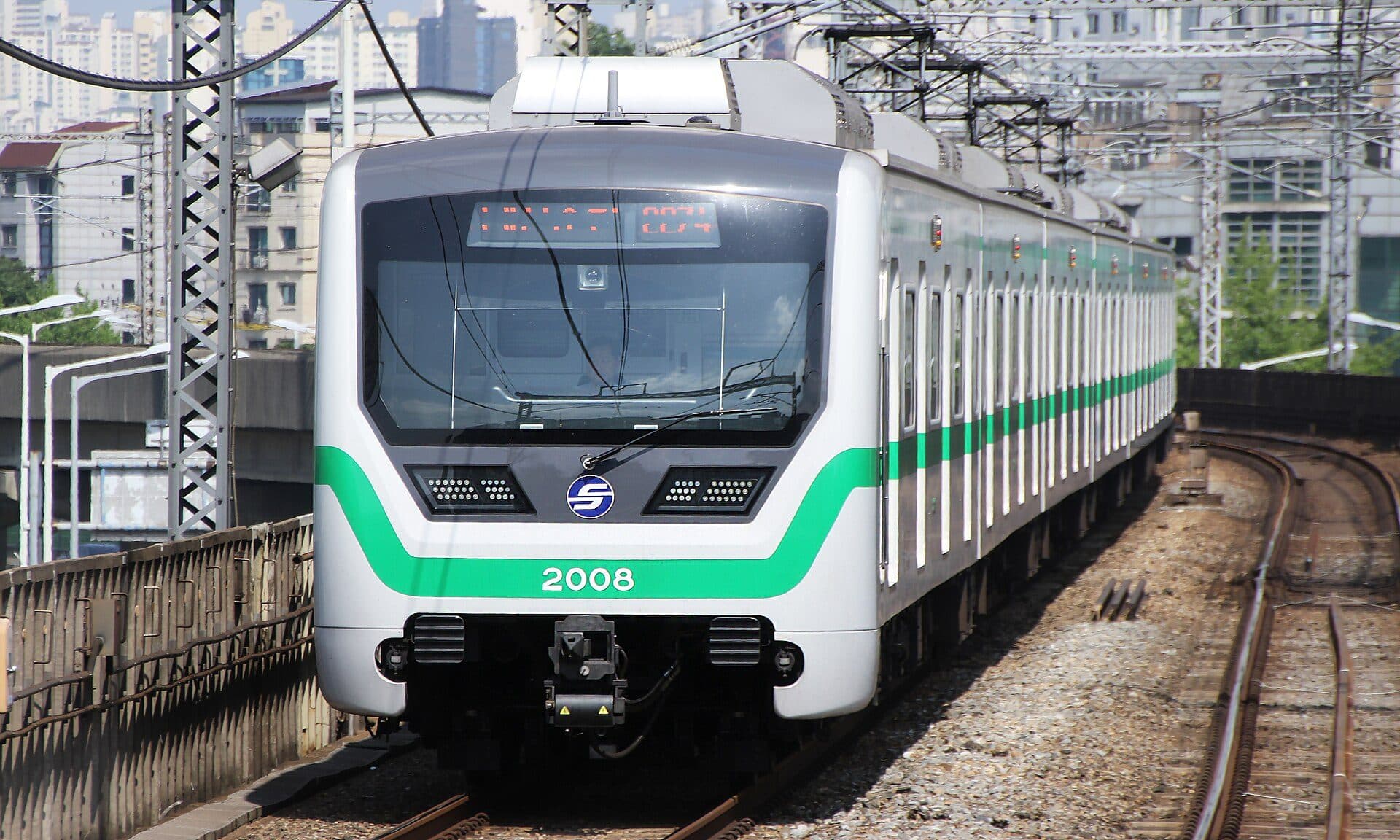
Each line has a colour and a number, each station a three or four digit code. Line 2, in green, is a loop of nearly fifty kilometres linking Gangnam, Hongdae, Sinchon and Jamsil: it is the busiest line on the network, and on its own it covers most visits.
Exits are numbered, and that number is part of an address in everyday life. "Meet me at exit 6" is a complete sentence in Seoul, and large stations sometimes have more than fifteen exits several hundred metres apart at street level.
One practical detail matters more than all the others: Google Maps does not give reliable walking directions in Korea, because of restrictions on exporting mapping data. The apps to use are Naver Map or KakaoMap, both available in English.
Three words are enough to get around: 지하철 (jihacheol, the subway), 환승 (hwanseung, the transfer) and 출구 (chulgu, the exit). KoreanSRS, our spaced repetition app, installs that vocabulary and the everyday Korean that goes with it.
What surprises a European#
Platform screen doors have been fitted at every station since the late 2000s, which keeps platforms quiet and removes the rush of air as a train arrives. The network has full mobile and wifi coverage, tunnels included, which is not a detail on a loop line that takes an hour.
In winter, some of the seats are heated. The priority seats at the ends of each carriage stay empty even in a packed train: leaving them free is not an occasional courtesy but a social rule followed without exception. A pink area marks seats reserved for pregnant passengers, with a free keyring handed out to make them identifiable.
Finally, some stations carry a company name in brackets, auctioned by the operator since 2016. Euljiro 3-ga station is announced with a financial firm's name attached, in the audio announcements as on the maps.
In Seoul the name of a station can be bought, but the priority seat is never taken.
Line 9 runs express trains (급행) that call at roughly one station in three, on the same track as the all-stops services. The time saved between Gimpo airport and the Yeouido business district is more than a quarter of an hour, provided you check the platform display: both services share the same platform and the same direction.
The rest of the network#
The Seoul subway is only part of a larger whole. The suburban lines run by KORAIL use the same card and the same integrated fare, so you can reach Incheon or Suwon without changing ticket.
Since March 2024, a new family of regional express lines, the GTX, has opened its first section between Suseo and Dongtan. Designed to link the outer suburbs to the centre at speeds close to a regional train, it changes the scale of daily travel in the capital region.
For the airport, AREX links Incheon to Seoul Station in about forty-five minutes on the express service, or a little over an hour on the all-stops service, which is considerably cheaper and accessible with T-money.
Read alsoSeoul: the district guide that makes the city legibleWhere to get off: Seoul's districts, station by station.
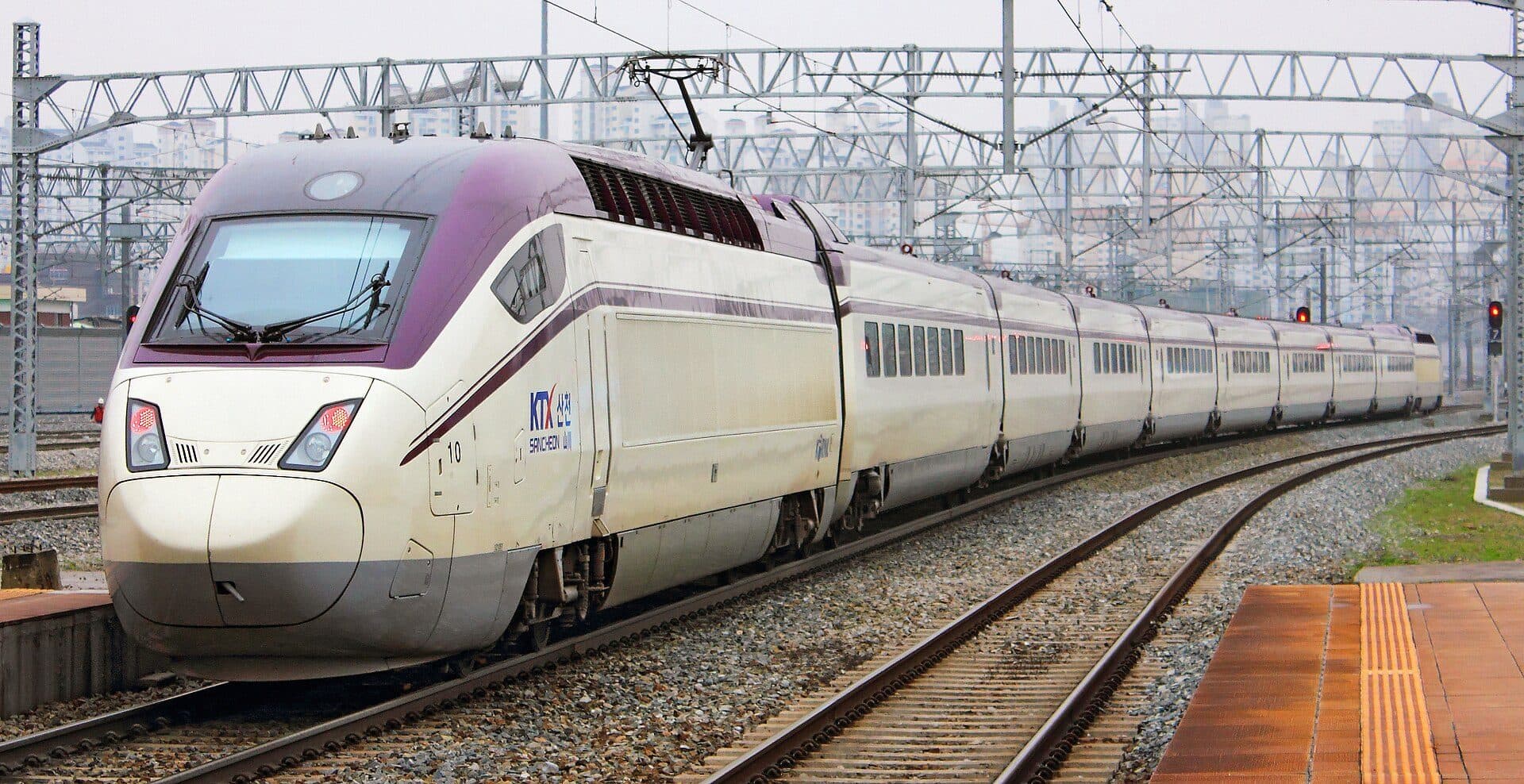
When you leave the city: Korea's high-speed train.
FAQ#
Where do you buy a T-money card? In any convenience store and at station machines. The card costs a few thousand won, non-refundable, and is topped up with cash. Illustrated versions double as souvenirs.
Do you have to tap out? Yes, always. The fare depends on the distance travelled, and failing to tap out triggers a penalty on your next journey. It is the main mistake visitors make.
Is the Climate Card worth it for a tourist? Only for a long stay centred on Seoul. Below about forty journeys in a month, pay-as-you-go with T-money is cheaper.
Can you pay with a foreign bank card? Some gates accept contactless, but without free transfers or combined fares. For a stay of more than two days, T-money remains clearly preferable.
Which navigation app should you use? Naver Map or KakaoMap. Google Maps is unreliable for walking directions in Korea because of restrictions on mapping data, which catches many visitors out on arrival.
Photo credits: the images in this article come from Wikimedia Commons and are under free licences.
KTX: how South Korea's high-speed train works
Seoul to Busan in 2h15, technology born from the TGV, the rival SRT, standing tickets: how the KTX works and how to travel on it without slipping up.
Cover image: Mtattrain · Mtattrain, via Wikimedia Commons · CC BY-SA 4.0