The ten-step Korean routine: the order and role of each product
Oil cleanser, foam, exfoliant, toner, essence, serum, mask, eye cream, moisturiser, sunscreen: what each step is for, and which ones can be skipped.
La rédaction Kotoba Interactive
Studio éditorial
In front of the mirror, a young Seoul woman goes through her routine: cleansing oil, then foaming cleanser, then a reviving toner, a milky essence, a serum, a cream, a sheet mask, a protective balm. Ten bottles, ten steps, a daily ritual as precise as a ceremony. The result: skin that seems to glow from within, smooth as glass. This is the promise of K-beauty.
K-beauty, short for Korean beauty, refers to the world of cosmetics and skincare routines from South Korea, which has become a global reference in less than twenty years. More than a trend, it's a philosophy: prioritizing prevention and skincare over heavy makeup. Understanding K-beauty means grasping an entire aspect of contemporary Korean culture and soft power.
A philosophy: nurture rather than conceal#
The founding principle of K-beauty lies in an inversion. Where Western beauty long relied on makeup that covers, the Korean approach focuses on care that prevents. The goal is not to hide the skin, but to make it so healthy that it hardly needs foundation.
This logic is rooted in a long-standing attention to a clear, even complexion, valued in East Asian culture. It emphasizes consistency, gestures repeated daily, and layered hydration, rather than aggressive products and immediate results. The skin is cultivated like a garden, patiently.
K-beauty doesn't ask "how can I hide this flaw today?" but "what will my skin look like in ten years?". It's the beauty of patience.
The famous ten-step routine#
Symbol of K-beauty, the ten-step routine has traveled the world. It's not mandatory (many Korean women do less), but it illustrates the layering logic central to this approach.
| Step | Korean term | Role |
|---|---|---|
| Cleansing | 세안 (sean) | Double cleanse, oil then water |
| Toner | 토너 (toneo) | Rebalance and hydrate the skin |
| Essence | 에센스 (esenseu) | Milky layer, heart of the routine |
| Serum | 세럼 (sereom) | Concentrated targeted actives |
| Cream | 크림 (keurim) | Seal in the hydration |
| Sun care | 선크림 (seonkeurim) | Daytime sunscreen |
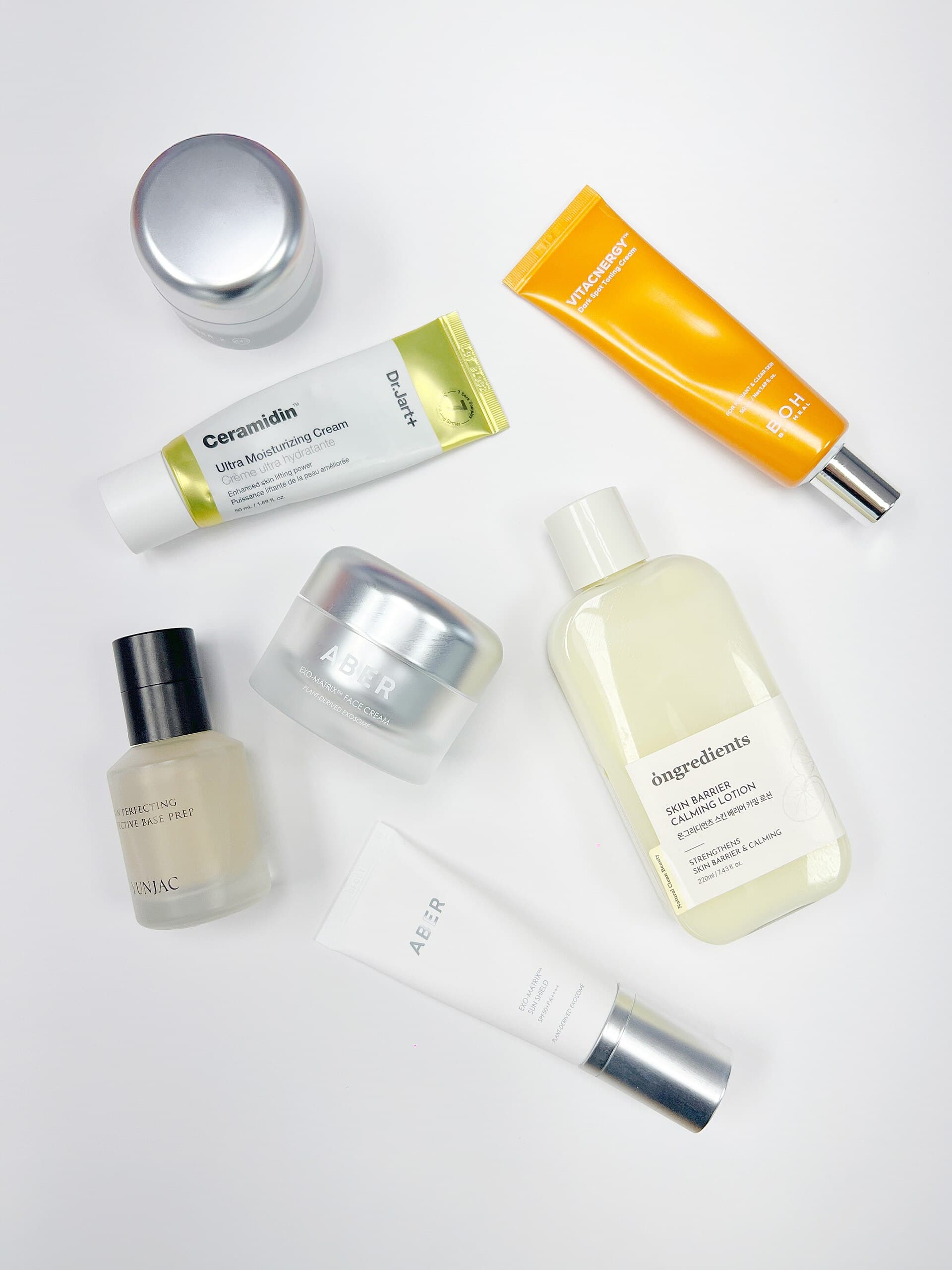
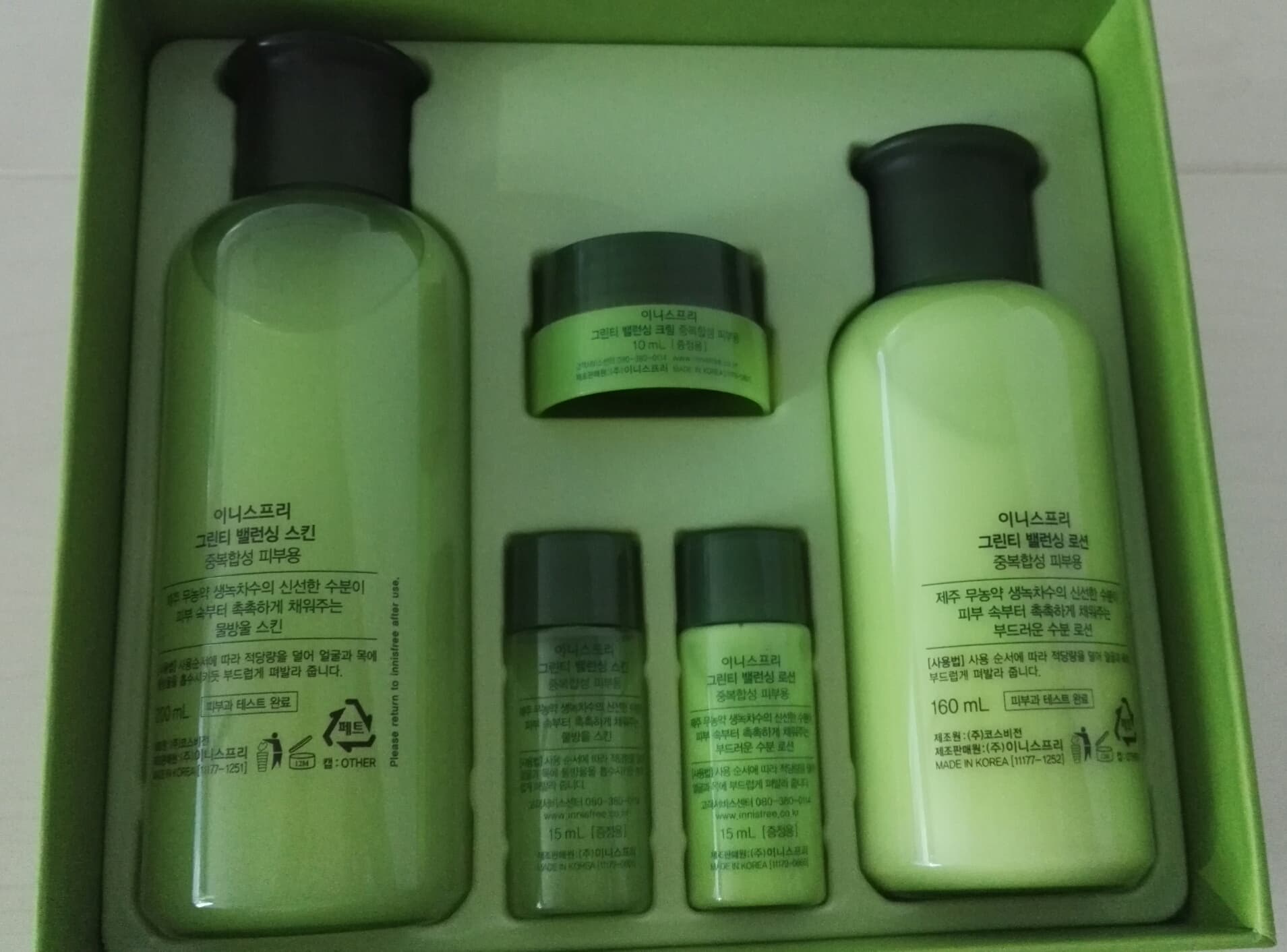
The classic steps follow this sequence: double cleansing (an oil to dissolve makeup and sebum, then a water-based cleanser), exfoliant (a few times a week), toner to rebalance the skin, essence, the heart of the Korean routine, serum or targeted ampoule, sheet mask, eye cream, moisturizer, and finally sun protection during the day, night cream in the evening. Each layer prepares the skin for the next.
Double cleansing is the cornerstone of the routine: first use an oil-based product (oil or balm) to dissolve makeup and pollution, then a water-based cleanser to remove sweat and impurities. Two cleansers, two functions, for clean skin without aggression.
Glass skin and other ideals#
K-beauty has popularized an aesthetic ideal that went viral: glass skin, smooth, luminous and translucent, as if polished. Other expressions describe nuances of this goal: honey skin, supple and bouncy, or mochi skin, soft and elastic like rice cake.
All these ideals share the same obsession: the glow of health rather than coverage. Korean makeup itself stays light: a BB cream (blemish balm) that's lightweight and hydrating, a natural veil, gradient lips, to let the quality of the skin show through.
Behind every bottle hides a word: 피부 (pibu, skin), 화장품 (hwajangpum, cosmetics), 관리 (gwalli, care or upkeep). With KoreanSRS and its spaced repetition, learn the vocabulary of Korean beauty step by step, so you can read the labels and understand the rituals in their original language.
Ingredients that make the difference#
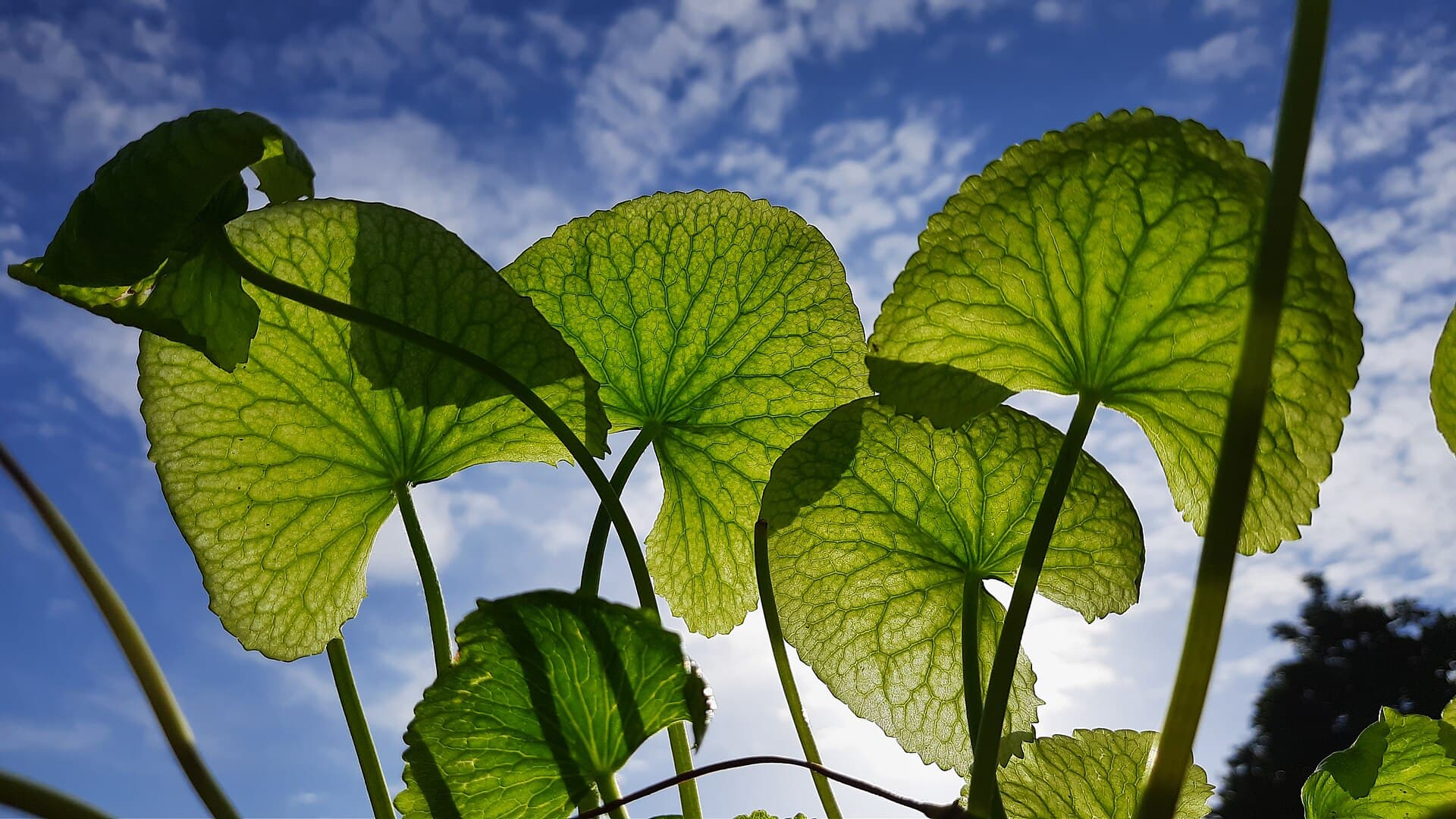
Much of K-beauty's success lies in its cosmetic innovation. Korean laboratories relentlessly explore often unexpected ingredients: snail mucin, reputed for regeneration, soothing centella asiatica (cica), ginseng, green tea, propolis or snail slime, active ingredients popularized well before the West.
The sheet mask, a cellulose sheet soaked in serum applied to the face for a few minutes, is another signature: practical, inexpensive, it has spread everywhere. Brands also compete with playful textures and packaging, making skincare a pleasure as much as a discipline.
Korea is credited with inventing the BB cream as globally popularized, as well as the cushion, a foundation soaked into a sponge in a compact case, launched by Amorepacific in the late 2000s, since copied by all major international brands.
K-beauty, economic and cultural giant#
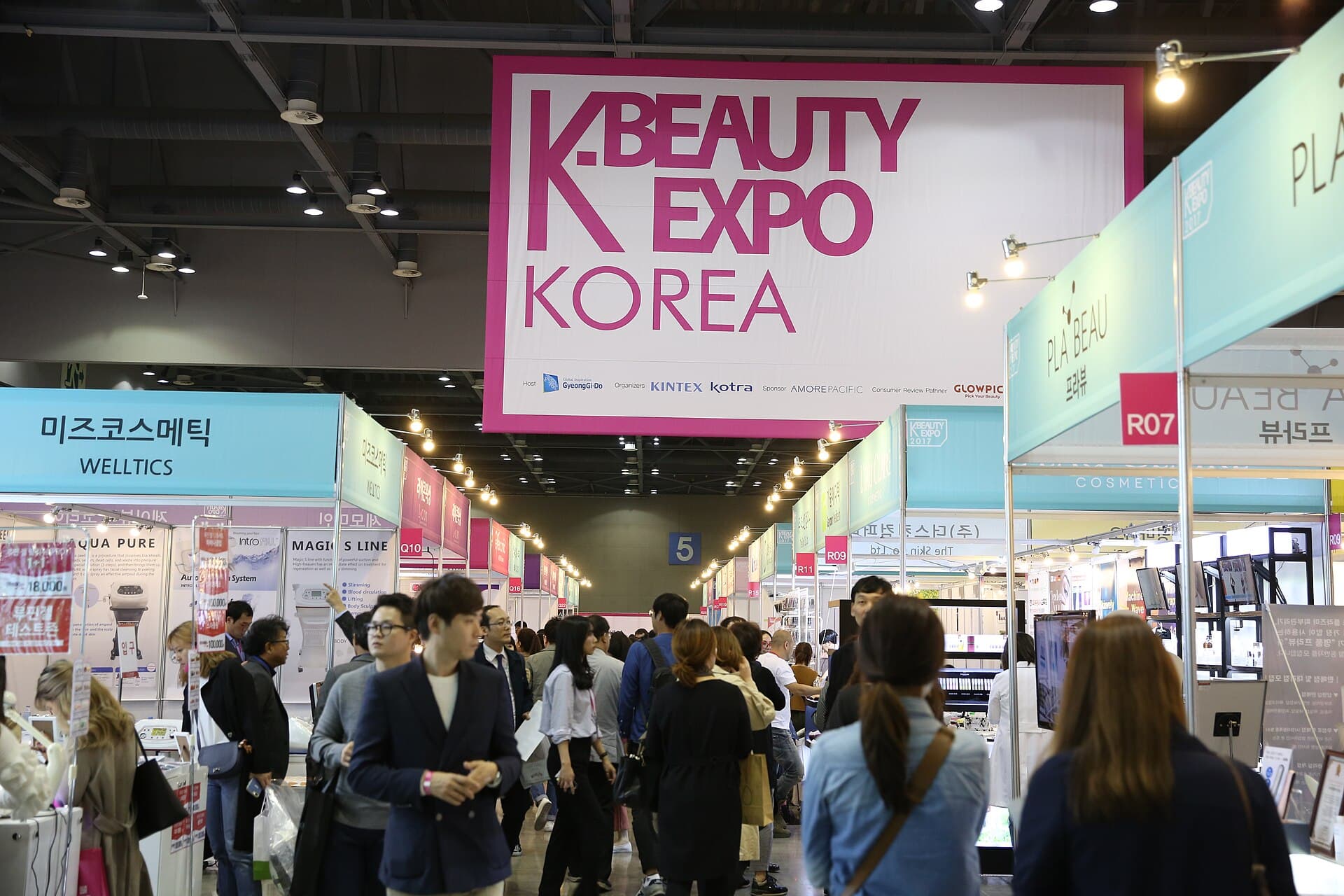
Far from trivial, K-beauty is a major industry. South Korea ranks among the world's top cosmetics exporters, driven by groups like Amorepacific and LG Household & Health Care, and a myriad of brands (Innisfree, Laneige, COSRX, and many others) flooding shelves in Asia, the United States and Europe.
This success is inseparable from the Korean wave, Hallyu: K-pop, K-dramas and idols with perfect skin have made the Korean "look" an object of global desire. Fans want their favorite idol's skin, and K-beauty sells them the promise.
Read alsoHallyu: How the Korean Wave Conquered the WorldK-beauty goes hand in hand with Hallyu: the Korean cultural wave that has exported K-pop, dramas and a certain art of living around the world.
Between skin worship and social pressure#
K-beauty is not without criticism. In Korea itself, the demand for perfect skin and appearance weighs heavily, especially on women, in a society very attentive to aesthetic standards. A movement like Escape the Corset, which emerged in the late 2010s, saw Korean women publicly reject makeup and constraining routines, denouncing the beauty dictatorship.
K-beauty thus lives in tension: at once the pleasure of care, pride in an exported national know-how, and reflection of very real social pressures. Understanding this ambivalence means avoiding the postcard view and seeing Korean culture in its complexity.
Discovering K-beauty means entering a unique relationship with body and time, where taking care of your skin becomes a daily ritual charged with meaning. Learning Korean also means deciphering this vocabulary, glass skin, essence, cushion, which tells how an entire society thinks about beauty and patience.
:::info Want to discover the major K-beauty brands? Check out our detailed guides on the 13 essential brands (Sulwhasoo, Laneige, COSRX, Dr. Jart+, Innisfree and more), with their hero products, K-pop ambassadors and Seoul stores:
Read alsoSkip-care: the Korean routine cut down to four stepsThe swing back: skip-care, four steps instead of ten.
FAQ#
What is K-beauty? K-beauty (Korean beauty) refers to cosmetics and skincare routines from South Korea, based on prevention, layered hydration and the cult of healthy skin rather than heavy makeup.
What is the Korean ten-step routine? A layering of treatments: double cleansing, exfoliation, toner, essence, serum, mask, eye cream, moisturizer, and sun protection or night cream. Each layer prepares the skin for the next.
What is "glass skin"? "Glass skin" is the aesthetic ideal of K-beauty: smooth, luminous and translucent skin, as if polished, achieved through intense hydration and regular care.
Why is K-beauty so successful? Thanks to its innovation (BB cream, cushion, sheet masks, original ingredients), its value for money, and the rise of Hallyu (K-pop, K-dramas) which has made the Korean look an object of global desire.
Photo credits: images used in this article are from Pexels and Unsplash and are royalty-free.
Skip-care: the Korean routine cut down to four steps
Skip-care versus the ten-step routine: what each camp removes, what it keeps, and how to choose according to your skin type.
Cover image: Kintexsw · Kintexsw, via Wikimedia Commons · CC BY-SA 4.0