Glass skin: the Korean method, what it does and what it cannot
Where the term comes from, the real protocol, what Seoul clinics add and the traps to avoid: what Korean glass skin actually requires, without empty promises.
La rédaction Kotoba Interactive
Studio éditorial
Korean has a family of words that English has to render with phrases. 광 (gwang), glow, comes in grades named after the material it imitates: 물광 (mulgwang), water glow, 꿀광 (kkulgwang), honey glow, 윤광 (yungwang), satin glow. When a fourth term was needed for a harder, sharper, more reflective finish, the image had to be borrowed from a material: glass.
reached Western media around 2017, popularised in particular by Korean-American aesthetician Alicia Yoon, founder of the brand Peach and Lily, who translated and explained the concept to the English-language press. Since then the phrase has served as the goal of millions of routines. Yet it describes a behaviour of light more than a state of the skin.
What the word actually says#
Glass skin is not pore-free skin, whatever retouched photographs suggest. It is skin whose surface is smooth and hydrated enough to reflect light evenly, in specular reflection, instead of scattering it. Dehydrated or flaking skin scatters light in every direction and looks dull: texture, not colour, decides the effect.
That precision changes everything in practice, because it moves the target. Pore diameter is largely set by genetics and sebum output; no cosmetic durably shrinks it. The state of the stratum corneum, its water content and the integrity of the lipid barrier, on the other hand, change within weeks.
The character 광 (gwang) corresponds to the Chinese graph 光, light. It appears in 광채 (gwangchae, radiance) and in the name of this aesthetic's flagship product, 물광 크림 (water glow cream). Korean therefore classifies complexions by the type of reflection, where English vaguely says "glowing skin".
The previous ideal was matte#
Korean beauty history explains why glass replaced porcelain. Through the 1990s and 2000s the target was 도자기 피부 (dojagi pibu), porcelain skin: even, pale, mattified with powders and high-coverage foundations. BB creams, which spread from the mid-2000s, served exactly that.
The tilt towards wetness happened around 2010, with the rise of essences and hydrating care, then with cushion foundations that lay down a flexible reflective film rather than an opaque coat. In one decade the ideal moved from powdered finish to wet finish, and the vocabulary followed.
The real protocol, in seven moves#
| Step | Function | What matters |
|---|---|---|
| Double cleansing | Oil then foam | Removing sunscreen and make-up without stripping |
| Layered toner | Rehydrating the stratum corneum | The seven-layer method, applied on damp hands |
| Essence | Light hydrating actives | Ferments, hyaluronic acid, panthenol |
| Targeted serum | Treating one issue | Niacinamide, vitamin C, peptides |
| Sheet mask | Temporary occlusion | Two or three times a week, not daily |
| Moisturiser | Restoring the barrier | Ceramides, cholesterol, fatty acids |
| Sunscreen | Protecting the result | The one step that counts over ten years |
The , which spread in Korea in the mid-2010s, means applying successive thin layers of hydrating toner onto still-damp skin, each sealed by the next. Its principle is simple: water alone evaporates, water held by humectants and then covered by a lipid stays.
At night two steps complete the set. A sleeping mask extends occlusion through the night. Slugging, a thin coat of an occlusive product over the final step, suits dry or damaged skin and much less acne-prone skin.
Glass skin is not obtained by adding products, but by no longer damaging the barrier between applications.
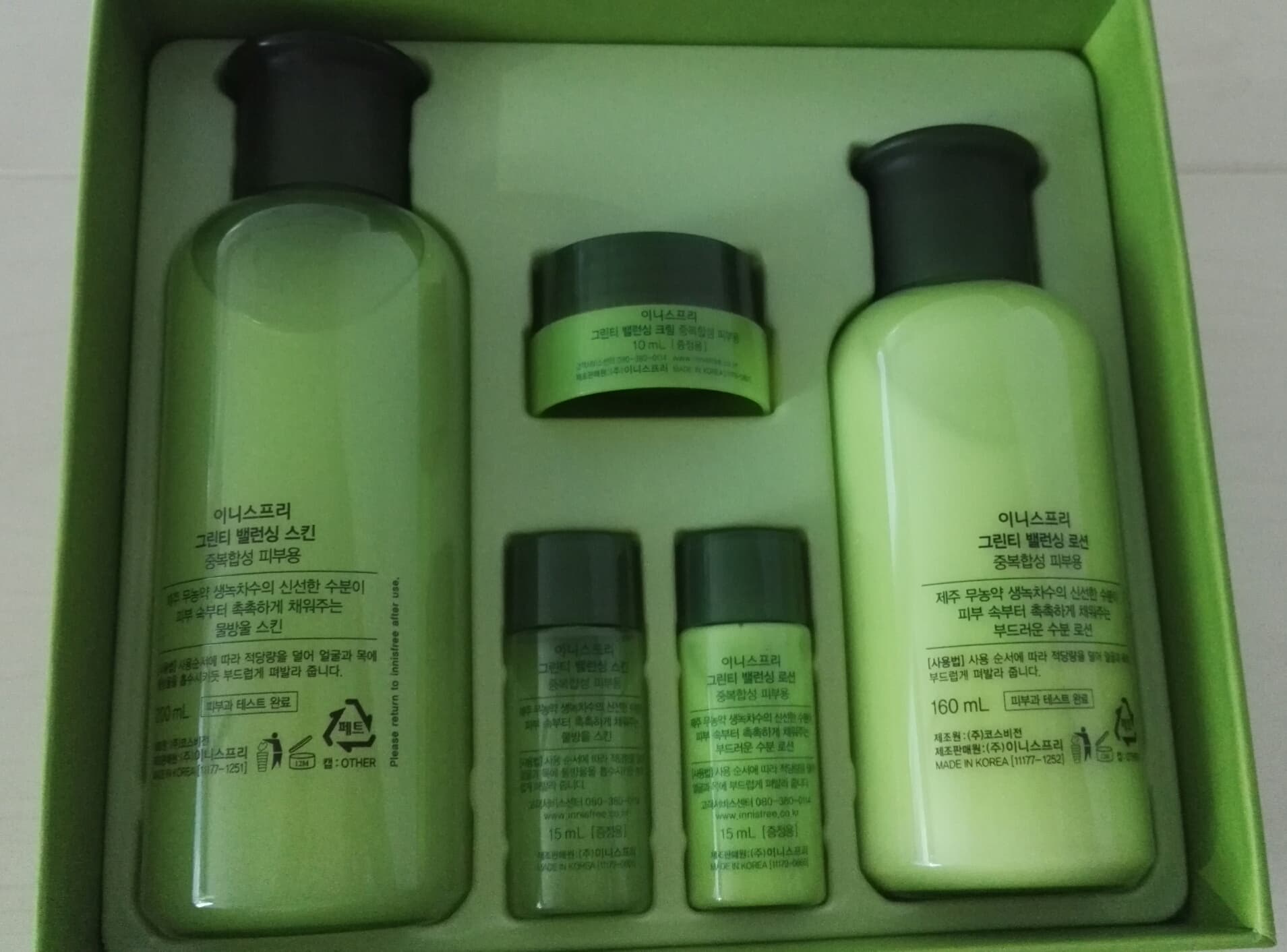
Korean labels are read in hangul: 수분 (subun, hydration), 진정 (jinjeong, soothing), 미백 (mibaek, brightening), 자외선 차단 (jaoeseon chadan, sun protection). KoreanSRS, our spaced repetition app for learning Korean, is coming soon: join the waiting list to pick a product without photographing the packaging.
What the clinic does and the cream will not#
Honesty requires saying where part of the glass skin visible on Korean social media comes from. Dermatology clinics in Seoul offer routine, fast procedures at prices well below their European equivalents.
The injection known as , literally "water glow injection", places very fluid hyaluronic acid in micro-points in the superficial dermis, what the medical literature calls a skin booster. , or microtoxin, disperses very low doses of botulinum toxin near the surface to reduce the appearance of pores and sweating, with a temporary effect. Non-ablative fractional lasers and supervised peels complete the list.
These are medical procedures with contraindications, and their effects reverse within months. Mentioning them is not promotion: it is the only way to compare a home routine honestly with a reference image obtained by other means.
The make-up that imitates the effect#
The Korean industry also engineered products that produce the result optically. Cushion foundation, launched in 2008 by the IOPE brand of the Amorepacific group, lays down a hydrating, reflective, buildable film, a long way from the mattifying Western foundations of the same period.
Three principles then suffice: prepare a hydrating base and let it set, apply little product by tapping, and reserve the glow for the high planes of the face, cheekbones, nose bridge, cupid's bow, without generalising shine to the central zone, which reads as greasy rather than glassy.
The cushion format was reportedly inspired, according to the account published by its maker, by the ink pads used to stamp parking tickets: an impregnated sponge that releases the same amount of product every time. The patent was then copied worldwide, until it became a product category in its own right.
The limits, and they are real#
The first risk is cosmetic and common: excess. Exfoliating acids, retinoids and harsh cleansers stacked in the name of smoothness produce the opposite, a damaged barrier that reddens, tightens and flakes. Korean dermatologists have seen a young clientele consulting for irritant dermatitis linked to overloaded routines.
The second is photographic. A share of the reference images is retouched, filtered, or shot under a ring light that itself produces the glass effect. Comparing your morning skin with a screenshot designed to shine is a methodological error.
The third is social. Apparent pressure is documented in Korea under the term 외모지상주의 (oemojisangjuui), the primacy of appearance, and it has provoked organised dissent: the 탈코르셋 movement (talkoreusen, "escape the corset"), which emerged in 2018, saw Korean women cut their hair, publicly destroy their cosmetics and refuse the obligation of aesthetic conformity. A conversation about glass skin that ignored that counter-movement would be incomplete.
Read alsoThe ten-step Korean routine: the order and role of each productThe full Korean routine, its ten steps and its philosophy of care, of which glass skin is the most discussed goal.
The social context that makes aesthetic demands so strong in Korea, and the pushback it has generated.
What remains once the promise is removed#
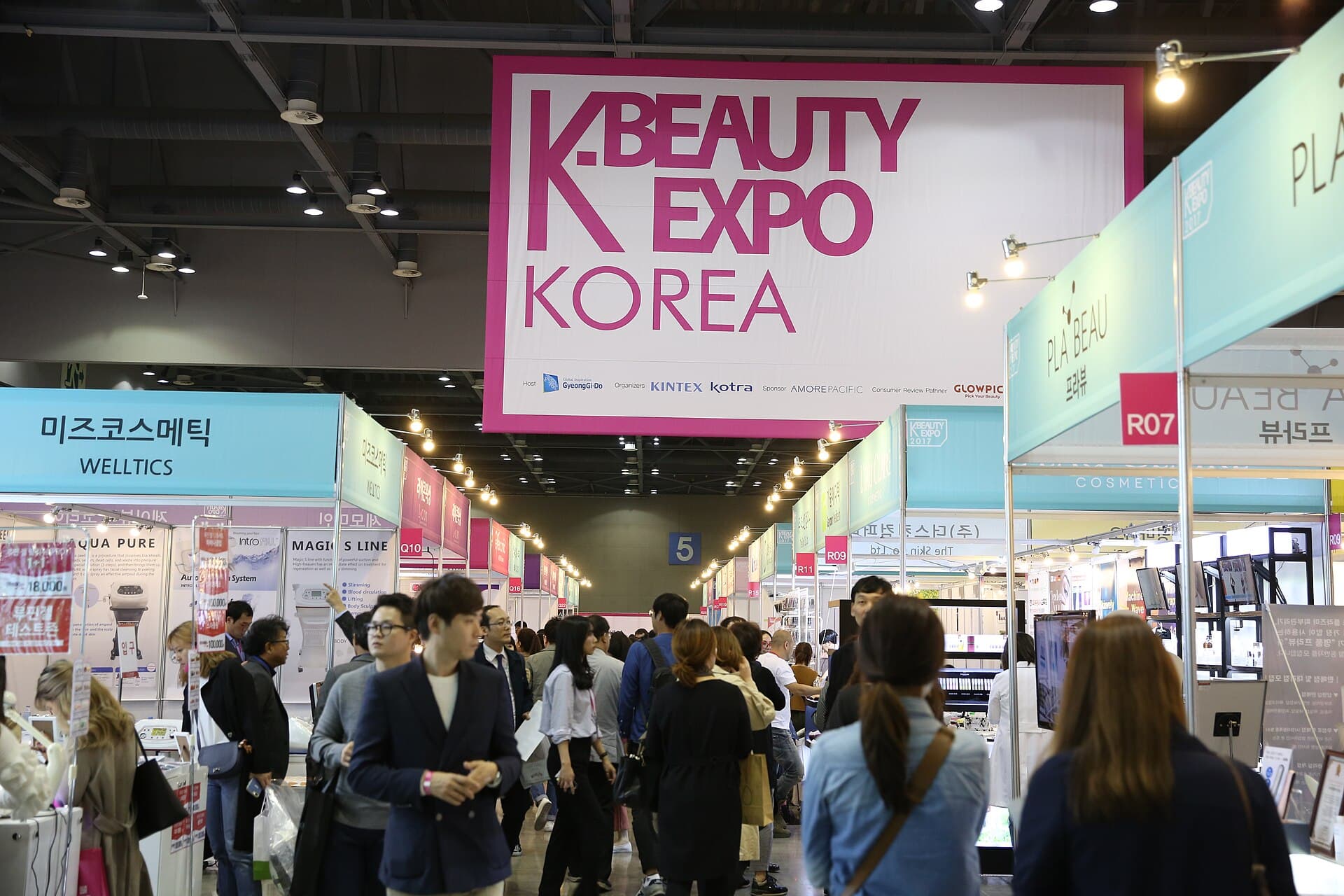
The country that invented this vocabulary is also a leading cosmetics exporter: Korean customs recorded a record beauty export figure above ten billion dollars in 2024, driven by independent brands and contract manufacturers. Glass skin is therefore a sales argument too, and should be read as one.
Still, stripped of its marketing, the protocol comes down to three moves any dermatology department would endorse: cleanse without stripping, hydrate in layers and seal, protect from the sun every day. The rest is pleasure, texture and personal choice. Smooth skin reflects light; no cream manufactures glass.
FAQ#
What exactly is glass skin? A complexion whose surface is smooth and hydrated enough to reflect light evenly, giving a translucent, wet appearance. The Korean term is 유리광 피부 (yurigwang pibu), literally glass-glow skin. It is not pore-free skin.
How long does it take to get the effect? The immediate look is achieved in one session through hydration and make-up. Real improvement in texture is measured in weeks: the stratum corneum renews in about a month in adults, and the benefits of regular sun protection show over years.
Is the seven-layer toner method necessary? No. It suits dehydrated skin that tolerates rich textures poorly, by splitting the water supply into steps. Oily, well hydrated skin gains nothing from it, and sensitive skin may react to the fragrance accumulated across seven applications.
What is the difference between glass skin and honey skin? 꿀광 (kkulgwang), honey glow, is a warmer, more golden, softer finish, often achieved with make-up. 유리광 aims at a colder, sharper reflection that depends more on the smoothness of the skin than on the product laid over it.
Are glow injections mandatory? No, but it helps to know that part of the results shown online include them. 물광주사 and microtoxin are medical procedures, with contraindications and temporary effects: comparing them with a cosmetic routine means comparing two different categories.
Photo credits: the images in this article come from Wikimedia Commons and are under a free license.
The ten-step Korean routine: the order and role of each product
Oil cleanser, foam, exfoliant, toner, essence, serum, mask, eye cream, moisturiser, sunscreen: what each step is for, and which ones can be skipped.
Cover image: Teemeah · Teemeah, via Wikimedia Commons · CC BY-SA 3.0