Snail, propolis, centella: the ingredients that built K-beauty
Snail mucin, propolis and centella asiatica: where these three Korean ingredients come from, what they actually contain, and how to read the percentages on the front.
La rédaction Kotoba Interactive
Studio éditorial
On the bottle, a number in large type: 96%. On the ingredient list at the back, a less appealing name: Snail Secretion Filtrate. Between the two lies a misunderstanding Korean cosmetics has maintained for fifteen years, and it explains part of the industry's success.
Three ingredients carried K-beauty out of Korea: snail mucin, propolis and centella asiatica. None was invented in Korea. All three have a pharmacological history predating their move into skincare. What Korea contributed was an industry able to formulate them fast, name them well and sell them everywhere.
Why Korea could move that fast#
The country has a rare piece of infrastructure: two contract manufacturers, Kolmar Korea and Cosmax, produce for thousands of brands, Korean and foreign. A brand therefore needs no factory, no formulation lab and no packaging line. It needs an idea, a marketing budget and an appointment. That model, known as ODM, compresses the gap between a trend and a product on the shelf to a few months where it takes years elsewhere.
Add a regulatory framework that separated ordinary skincare from claim-bearing skincare early. The Korean Ministry of Food and Drug Safety, the , oversees a category of whose claims must be documented: brightening, wrinkle improvement, sun protection, with others added later. A product carrying the label has been assessed on its specific claim, which an ordinary cream has not.
The result is a very fast cycle of trial and error, with a demanding domestic public acting as a test bench. Ingredients that survive that filter then go for export.
Snail: what mucin actually contains#
Name on the label: Snail Secretion Filtrate, in Korean 달팽이 점액 여과물. It is the mucus secreted by the snail, filtered and stabilised, most often from Cornu aspersum, the common garden snail.
Its composition explains the cosmetic interest. The mucus contains glycoproteins, natural hyaluronic acid, glycosaminoglycans, allantoin, glycolic acid in very small amounts, peptides and traces of zinc and copper. It is not a single active but a mixture, which makes scientific evaluation awkward: each batch varies with the species, the diet and the collection method.
The documented cosmetic use comes from Latin America. Research conducted from the 1980s on Chilean snail farms examined the wound-healing properties of the mucus, and dermatological formulations followed. Korea took it up around 2010 and made it a mass product: the 2014 release of an essence at 96% filtrate, by a Korean brand, became one of the decade's biggest export successes.
What the research says, carefully. Published work on mucus extracts reports effects on wound healing, hydration and the appearance of fine lines, often on small samples and with non-standardised extracts. No serious data makes it an equivalent of retinoids or exfoliating acids. Treat it as an effective moisturiser and soother, not as a treatment.
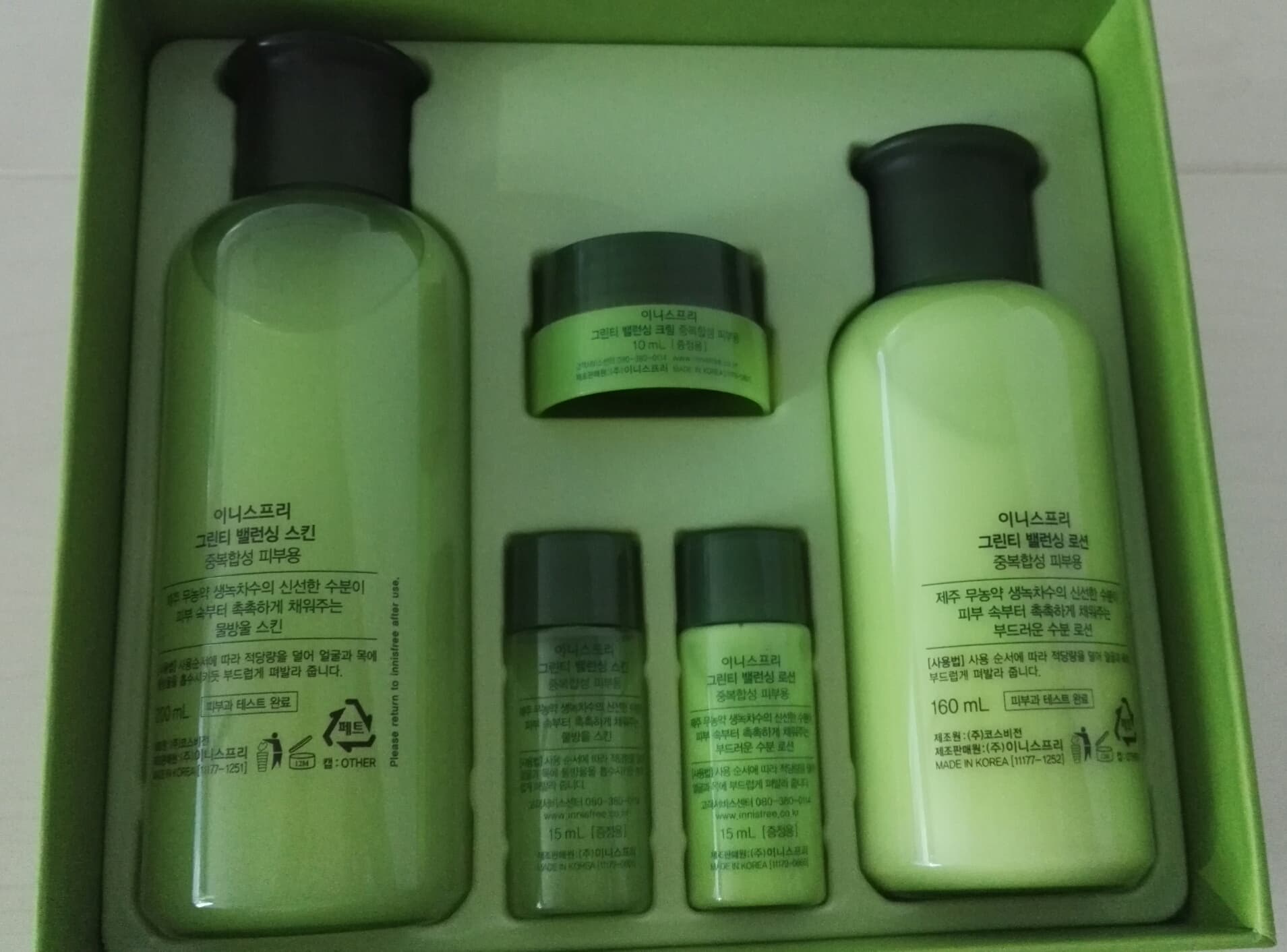
What the percentage means. A "96%" states the proportion of filtrate in the formula, not the concentration of an active. A filtrate is mostly water. A well-formulated product at 92% can beat a badly preserved one at 97%.
Mucin comes from the Latin mucus. In biology the term names a family of heavily hydrated glycoproteins, the ones that give mucus its stringy texture. Korean cosmetics uses the word loosely for the whole filtrate, which is convenient but imprecise.
Propolis: the bees' glue#
Name on the label: Propolis Extract, in Korean 프로폴리스. The word comes from the Greek pro, in front of, and polis, the city: the substance bees coat the hive entrance with to protect it.
Propolis is a resin bees collect from buds and bark, then mix with their wax and secretions. Its composition depends directly on the surrounding vegetation: European propolis, from poplars, is rich in flavonoids such as chrysin, galangin and pinocembrin, while Brazilian green propolis takes its profile from artepillin C. Two extracts carrying the same name can therefore be chemically very different.
In Korean cosmetics it appears in ampoules, so-called honey masks and products aimed at sensitised skin, for its antibacterial and soothing profile documented in vitro. It is often paired with honey and royal jelly, whose cosmetic properties are distinct.
The precaution that matters. Propolis is a recognised contact allergen. Anyone allergic to bee stings, hive products or composite pollens should avoid it, and everyone benefits from a two-day patch test on the inner elbow before applying a concentrated ampoule to the face. It is the only one of the three ingredients here with a well-identified allergy risk.
Centella: a medicine turned cream#
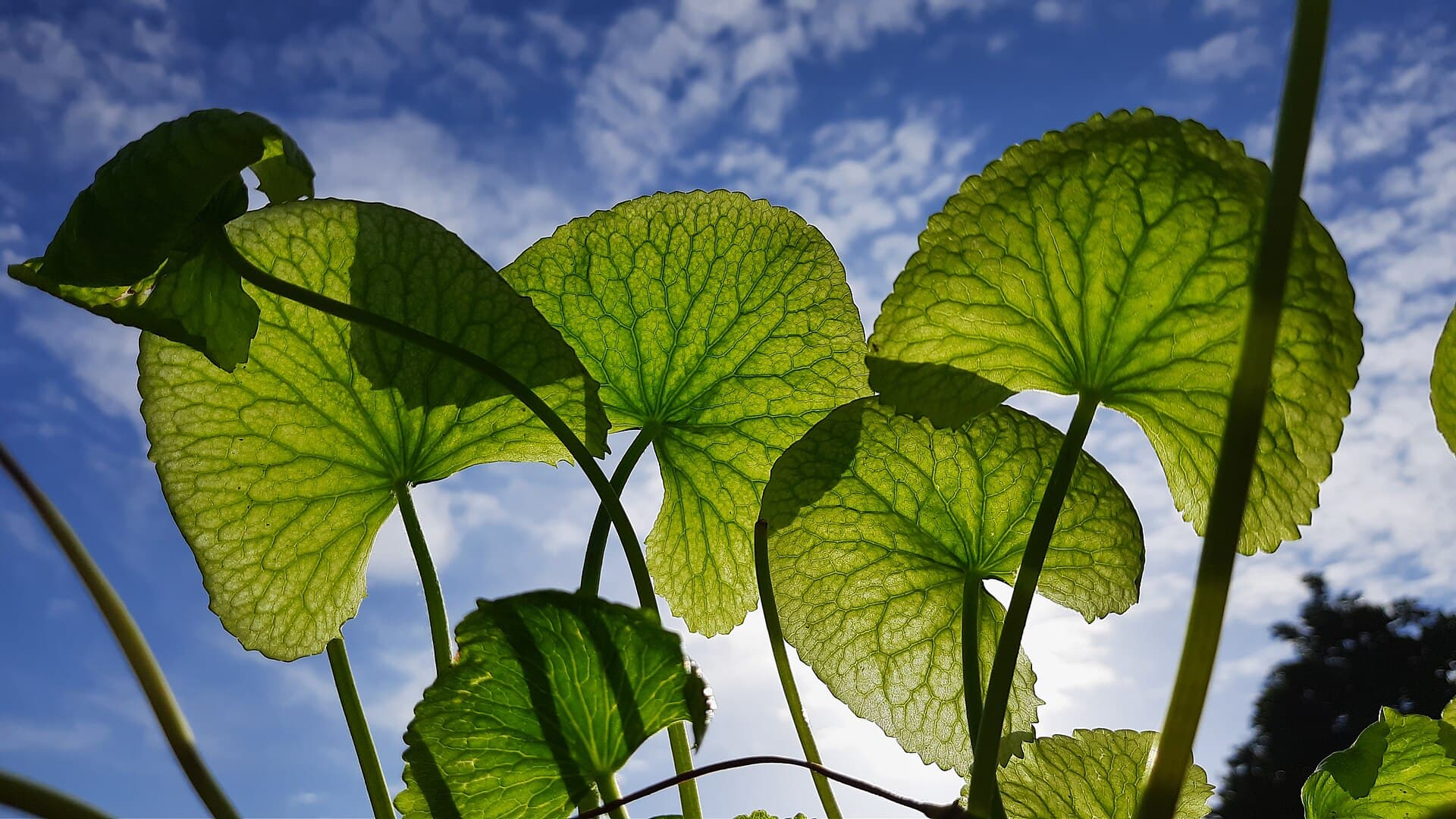
Name on the label: Centella Asiatica Extract, in Korean 병풀 (byeongpul), sometimes nicknamed 호랑이풀, "tiger herb", after a legend that wounded tigers roll in it.
It is the best documented of the three. The plant, an umbellifer from the wetlands of South Asia and Madagascar, contains four well-identified active compounds: asiaticoside, madecassoside, asiatic acid and madecassic acid. Their purified mixture carries a pharmaceutical name, TECA, and has been used since the 1970s in European preparations for wound healing and venous insufficiency. The research covers, among other things, stimulation of collagen synthesis and reduction of inflammation.
Korean cosmetics built an entire category on that base: cica, short for cicatrisant. A cica cream is aimed at irritated, reactive skin or skin weakened by aggressive actives, and serves as a recovery product after a retinoid or an acid.
The cica trap. The term is not protected. A product can be called cica while containing very little centella, or while placing it at the end of the ingredient list. Serious formulas state the extract percentage or name madecassoside directly in the list, rather than relying on a word on the front of the bottle.
| Ingredient | INCI name | Origin | What it is asked to do | Watch out for |
|---|---|---|---|---|
| Snail mucin | Snail Secretion Filtrate | Secretion of Cornu aspersum | Hydration, soothing, appearance of fine lines | Misleading percentage, farming conditions |
| Propolis | Propolis Extract | Resin gathered by bees | Soothing, antibacterial effect | Recognised allergen, variable composition |
| Centella | Centella Asiatica Extract | Plant of South Asia and Madagascar | Barrier repair, reactive skin | The word "cica" guarantees nothing |
Three words are enough to read a Korean label: 달팽이 (dalpaengi, snail), 병풀 (byeongpul, centella) and 성분 (seongbun, ingredient, composition). KoreanSRS, our spaced repetition app for learning Korean, is coming soon: join the waiting list and buy with your eyes open.
The other pillars of the Korean pharmacy#
The trio does not exhaust the repertoire. Four families of ingredients come back constantly in Korean formulas, each of them drawn from earlier medical or culinary use.
- . The central root of the Korean pharmacopoeia, used in premium ranges for its ginsenosides. It is the heritage ingredient par excellence, linking modern cosmetics to the medical treatises of the Joseon dynasty.
- . Fermented rice rinse water serves as the base for toners and essences. It brings amino acids, B vitamins and a characteristic milky texture.
- . Used in decoctions and traditional baths, it has become a common soothing active for reactive skin, often paired with centella.
- . A strongly scented plant, drunk as an infusion, valued for its anti-inflammatory profile in products for blemish-prone skin.
To these add the ferments, which form K-beauty's historical layer, and the latest generation of actives, of which PDRN and exosomes are the shop window.
Read alsoPDRN, exosomes and ferments: the actives of K-beauty in 2026What Korea has put behind the word "innovation" since the ferments: the generation of actives that followed.
Reading a Korean label without being fooled#
Four habits are enough to sort out what is worth the asking price.
Order in the list matters. Ingredients are listed by decreasing quantity down to 1%. An active named after the preservatives and fragrance is present in token amounts.
"Extract" and "filtrate" are not synonyms. An extract is a maceration in a solvent whose real concentration is rarely stated. A filtrate is the filtered material itself. The second is easier to read.
A percentage on the front describes a component, not an effect. It tells you how much raw material goes into the formula, which says nothing about the amount of active or its bioavailability.
The "functional cosmetic" label has a precise meaning. It signals a claim assessed by the MFDS. It does not make a product a good formula, but it separates a documented claim from a marketing line.
The ingredient list on the back of the bottle follows an international standard, INCI, written in Latin and English. That is why a Korean, French or Japanese cream reads exactly the same way: Aqua, Glycerin, Butylene Glycol. The brand name changes language, the ingredient list does not.
What these three ingredients will not do#
None of the three replaces a dermatological treatment, and none acts on an established scar, settled rosacea or inflammatory acne. Centella supports repair of the skin barrier, propolis soothes and cleanses, mucin hydrates and softens. They are support ingredients, formulated for long use without an immediate spectacular effect.
The question of animal origin also deserves asking. Mucin and propolis are farmed products, and collection conditions vary considerably between suppliers. The "cruelty-free" wording on packaging is not standardised and says nothing about the extraction process. Plant alternatives exist, and several Korean brands have offered substitute filtrates based on fermented polysaccharides for some years.
What the trio genuinely changed remains. Before it, the dominant cosmetic argument was the promised result. K-beauty shifted attention to the ingredient, its name, its origin and its percentage. That habit of reading the back of the bottle, more than the snail itself, is what got exported.
Read alsoK-beauty: the Korean skincare routine that conquered the worldWhere these ingredients sit in the Korean routine, step by step.
FAQ#
Does snail mucin suit oily skin? Generally yes. The filtrate is watery, light and non-comedogenic in most formulations. The rich textures that sometimes carry it, notably thick creams, suit oily skin less well: an essence or a serum is the better choice.
Can propolis be used if you are allergic to honey? No, it should be avoided. Propolis is a recognised contact allergen, and cross-reactions with other hive products and certain pollens are documented. If in doubt, patch test for forty-eight hours on a small area, or pick a centella-based formula instead.
Are centella and cica the same thing? Not exactly. Centella asiatica is a plant and an identifiable ingredient in the INCI list. "Cica" is an unprotected commercial category name for repair products. A cica product often contains centella, but nothing obliges it to.
Can the three be combined in one routine? Yes. All three are gentle and have no known chemical incompatibility. The logical order runs from thinnest to richest: mucin essence, propolis ampoule, centella cream. Introduce them one at a time, a few days apart, so you can identify any reaction.
Do you have to buy in Korea to get the real formulas? No. Export formulas are made by the same manufacturers and comply with local regulations, which can change some sunscreen filters or preservatives. Buying from an official distributor mainly protects you from counterfeits and badly stored products.
Photo credits: the images in this article come from Wikimedia Commons and are under a free license.
Glass skin: the Korean method, what it does and what it cannot
Where the term comes from, the real protocol, what Seoul clinics add and the traps to avoid: what Korean glass skin actually requires, without empty promises.
Cover image: Rejin Narayanan · Rejin Narayanan, via Wikimedia Commons · CC BY-SA 4.0