Chinese Livestreamers: The Live Selling That Changed Everything
Li Jiaqi, Viya, Taobao Live: inside 直播带货 (zhibo daihuo), the live selling worth nearly 5 trillion yuan across China.
La rédaction Kotoba Interactive
Studio éditorial
On 20 October 2021, a 29-year-old man seated in front of a wall of lipsticks sold, in a single evening, around 10.6 billion yuan worth of goods. Li Jiaqi (李佳琦), nicknamed the "Lipstick King", was that day running the dress rehearsal for Singles Day on Taobao Live. His direct rival, Viya, moved roughly as much. Between the two of them, in a few hours of video, they had beaten the annual revenue of many brick-and-mortar chains.
That scene sums up a shift the West took a long time to grasp. In China, you no longer buy simply by clicking on a product page: you watch a seller talk for hours, try things out, haggle live, drop promo codes by the second, and you tap "buy" before the stock runs out. This format, 直播带货 (zhibo daihuo), has turned unknowns into fortunes, redrawn the country's commercial calendar and eventually drawn the very concrete attention of the state. To understand this mechanism is to understand part of the global digital commerce of the coming decade.
Zhibo daihuo, or teleshopping on steroids#
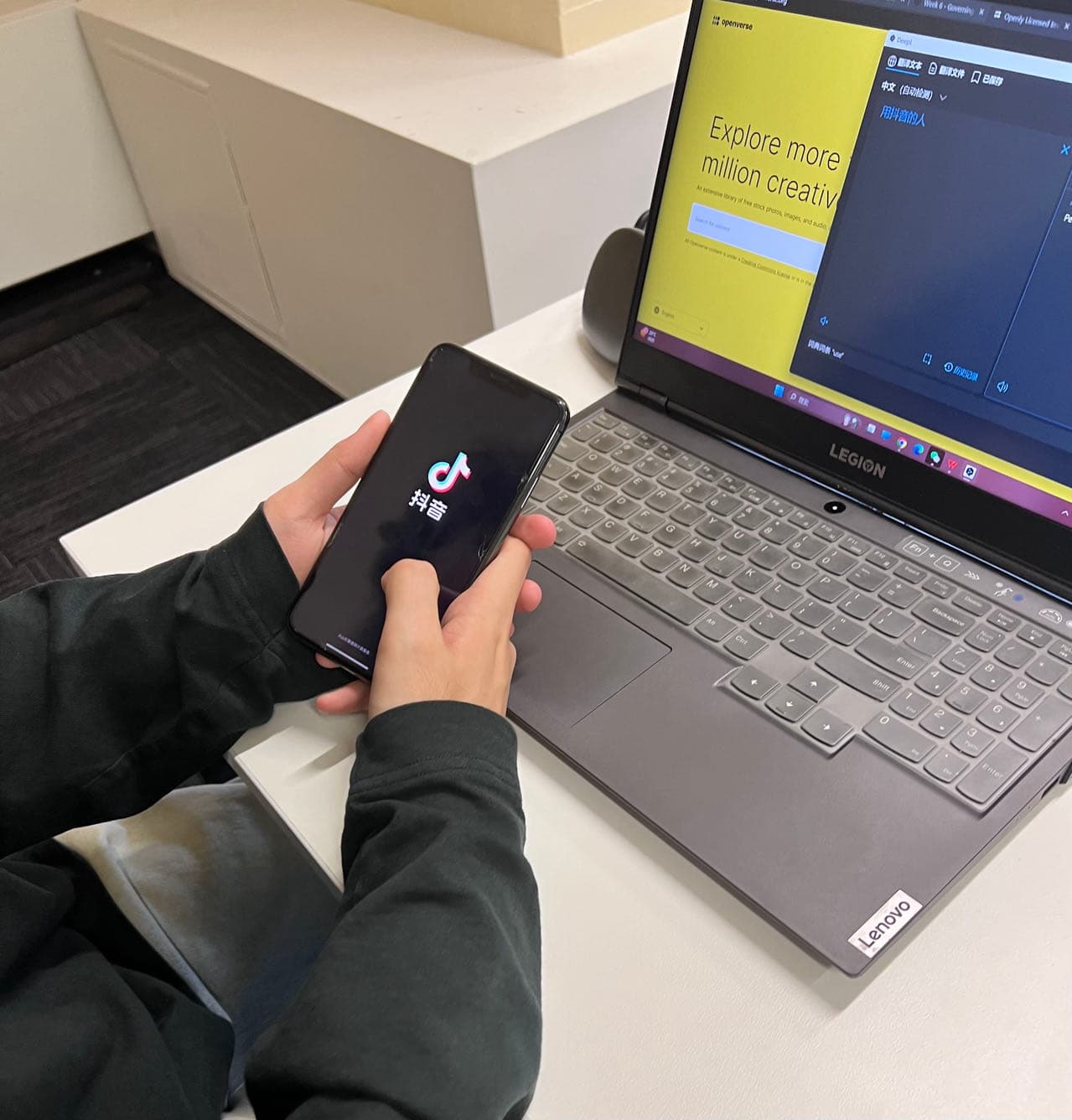
Chinese live selling refers to a video format in which a host presents and sells products in real time, with the purchase happening in a single tap without leaving the stream. The term 直播带货 (zhibo daihuo) literally pairs 直播 (zhibo, "live broadcast") with 带货 (daihuo, "carrying the goods", in the sense of getting them sold). Taobao Live, an Alibaba subsidiary, launched the format as early as May 2016; the short-video apps Douyin (the Chinese version of TikTok) and Kuaishou (快手, Kuaishou) then pushed it out on a national scale.
The principle fits into a few seconds of screen time. A host holds a foundation up to her camera, applies it to her hand, announces a struck-through price, notes that "3,000 pieces" remain, then triggers a countdown. Below the video, a clickable tile adds the item to the cart. Payment, backed by Alipay or WeChat Pay, is settled in two gestures. This combination of displayed scarcity, flash discount and human presence creates a buying pressure that classic e-commerce, with its static pages, never reaches.
直播带货 (zhibo daihuo) means, word for word, "broadcast live to get the goods sold". The word 货 (huo), the "goods", is the same one found in 百货 (baihuo), the "department store", which places this recent format within a long history of Chinese commerce.
The scale reached defies Western reference points. According to data relayed by Statista and by players in the sector, the Chinese live commerce market grew from around 420 billion yuan in 2019 to nearly 5 trillion yuan in 2023, roughly a third of all online purchases in the country. By mid-2023, more than 750 million Chinese people had already bought at least once through a livestream. No other market in the world has reached such density.
| Term | Pinyin | Meaning |
|---|---|---|
| 直播 | zhibo | live broadcast |
| 带货 | daihuo | "carrying the goods", in the sense of getting them sold |
| 直播带货 | zhibo daihuo | live video selling |
| 网红 | wanghong | web celebrity (网 "network" + 红 "red", meaning popular) |
| 双十一 | Shuang Shiyi | "double eleven", 11 November, the biggest shopping day in the world |
| 快手 | Kuaishou | short-video app, with Douyin one of the engines of the format |
| 京东 | Jingdong | JD.com, whose anniversary gave rise to the second annual peak, the 618 |
The faces that sell: wanghong, KOLs and MCN agencies#
Behind every high-performing stream stands a familiar figure: the 网红 (wanghong), the web celebrity. The word, formed from 网 (wang, "network, Internet") and 红 (hong, "red", in the sense of "popular, in the spotlight"), refers to these personalities born on the platforms. People also speak of KOLs, for "key opinion leaders", borrowing the English acronym that has become common in Chinese marketing.
Li Jiaqi (李佳琦) embodies the classic path. A former cosmetics salesman at the counter of a Nanchang department store, he built his fame by trying lipsticks live, eventually landing a Guinness World Record for the most lipstick applications in thirty seconds. In 2021, Time magazine placed him on its list of the hundred most influential people of the year. His signature, an "Oh my God!" shouted at the product, became a national meme.
In China, a good livestreamer does not sell a product: they sell the urgency of not missing it.
This ecosystem rests on so-called MCN agencies (multi-channel networks), which recruit, train and manage the talent. They negotiate commissions with brands, orchestrate logistics, prepare scripts and select products. A top-tier stream mobilizes a whole team: sourcing, technical control room, real-time customer service, returns management. The commission taken on each sale, often 20% to 40% depending on the category, feeds an industry where a few stars concentrate a huge share of the volume, while a mass of small hosts split the rest.
To decode these streams without subtitles, a few words come up over and over: 直播 (zhibo, the livestream), 网红 (wanghong, the web celebrity) and 带货 (daihuo, getting things sold). Learn the hanzi and pinyin of Chinese commerce with ChineseSRS, the spaced repetition that lets you read a Taobao Live feed in the original.
双十一, the engine of the commercial calendar#
The 11th of November, written 双十一 (Shuang Shiyi, literally "double eleven"), has become the biggest shopping day in the world. Originally dubbed "Singles' Day" by students in the 1990s, playing on the alignment of the four 1 digits in the date, it was turned by Alibaba into a commercial event starting in 2009. The livestream format gave it a second life.
During the 2021 pre-sale campaign, Li Jiaqi and Viya smashed the counters. According to Bloomberg, the "Lipstick Brother" pre-sale day topped 2 billion dollars in merchandise value, with a claimed audience of several hundred million viewers. These figures, hard to audit independently, should be handled with caution, but the order of magnitude is confirmed by several concurring sources.
双十一 is not alone. The 18th of June, written 618, forms a second annual peak, originally the anniversary of the JD.com platform (京东, Jingdong). Between these two dates come shorter operations, so that the livestreamer now works on an almost permanent promotional calendar. This pace has perverse effects: pressure on brands' margins, massive returns after the streams, exhausted teams. As early as 2023, several Chinese analysts began to question the sustainability of a model in which the permanent discount becomes the norm.
Li Jiaqi's lipstick-application record earned him his nickname, but his real media breakthrough dates from a selling duel against Jack Ma, cofounder of Alibaba: the salesman moved far more tubes than the billionaire, a scene replayed endlessly on Chinese social media.
The state takes back control#
On 20 December 2021, China's tax administration fined Huang Wei (黄薇), better known by her stage name Viya, a record roughly 1.34 billion yuan (nearly 210 million dollars) for tax fraud. According to the agency, she had evaded more than 640 million yuan in taxes between 2019 and 2020 by disguising her streaming commissions. Within hours, her accounts on Weibo, Douyin, Taobao Live, Kuaishou and Xiaohongshu vanished. The "queen of livestreaming", with tens of millions of followers, disappeared overnight.
The message sent to the sector was clear. Beijing, engaged since 2020 in a sweeping effort to rein in its digital economy, would no longer tolerate the tax opacity of a profession that had grown too rich and too visible. Other hosts were sanctioned in short order, and the platforms tightened their rules: identity verification, oversight of advertising claims, heightened responsibility for the quality of the products sold.
Li Jiaqi himself knew the fragility of this exposure. In June 2022, his stream was abruptly cut off and his account suspended for months, after a tank-shaped cake appeared on screen, on the eve of the anniversary of a politically sensitive event. The incident, never officially explained, was a reminder that a wanghong's career depends on a constant balance between commercial performance and political caution.
Paradoxically, this regulation both cleaned up and weakened the sector. With the big stars turned into points of vulnerability, brands and platforms began to spread their bets: the rise of streams hosted by avatars and virtual humans, the growth of brand accounts run in-house, the proliferation of small niche hosts less exposed to scrutiny. The "one star, billions of yuan" model is losing ground to a more fragmented architecture, more resilient but less spectacular.
What live commerce says about the Chinese consumer#
The success of zhibo daihuo rests on a particular relationship with trust and entertainment. In a market long undermined by counterfeits and dubious products, seeing a well-regarded host try an item live, answer questions and stake their reputation acts as a guarantee that the product page does not provide. The livestream is as much a teleshopping show as a preventive after-sales service.
The format also fits deep-rooted mobile habits. China largely skipped the desktop web stage and moved straight to the smartphone, with super-apps integrating payment, messaging, content and shop. Watching, chatting in the comments, paying and ordering without ever switching apps offers a fluidity that few Western ecosystems match. The livestream slots in naturally there, between two short videos.
Then there is the question of durability. The dizzying growth of the years 2019 to 2023 relied on an almost systematic discount and the novelty of the format. As permanent promotion eats into margins and fatigue sets in among some audiences, the sector is looking for a second wind: moving upmarket, higher-quality streams, a return to brand stores. Chinese live commerce is not about to disappear, but its golden age of excess seems to be behind it.
Read alsoWeChat: the super-app that does everythingPayment, messaging, mini-programs: discover the super-app that makes one-tap payment possible during a livestream.
Another consumer phenomenon made in China: how Pop Mart built a collectible-toy empire driven by desire and scarcity.
The Chinese brands that thrive on livestreams often ride the guochao, the national pride reshaping consumption.
FAQ#
What is 直播带货 (zhibo daihuo)? It is live video selling, Chinese style. A host presents products in real time on Taobao Live, Douyin or Kuaishou, with flash discounts and limited stock, and the viewer buys in a single tap without leaving the stream. The market was worth nearly 5 trillion yuan in 2023.
Who is Li Jiaqi (李佳琦)? A former cosmetics salesman who became the most famous livestreamer in China, nicknamed the "Lipstick King". He sold billions of yuan worth of goods in a single evening during Singles Day 2021 and appeared on the Time 100 list. His account was suspended for several months in 2022.
Why did Viya disappear from the platforms? Huang Wei, known as Viya, was fined in December 2021 a record roughly 1.34 billion yuan for tax fraud. Her accounts were deleted in the aftermath. It is the heaviest penalty ever imposed on a Chinese livestreamer, presented as a warning to the sector.
What is 双十一 (Shuang Shiyi)? The "double eleven", the 11th of November, is the biggest shopping day in the world. Originally a student Singles' Day, Alibaba turned it into a commercial event from 2009. The livestream format made it a colossal sales peak, matched by the 618 in June.
Does live commerce exist outside China? Yes, but on a much smaller scale. TikTok Shop, Amazon Live and some Korean players are trying to reproduce the model. None reaches the Chinese density, where the integration of payment, content and logistics, together with mobile habits, makes live buying fluid and massive.
From the camera of a former counter salesman to ten-figure fines, Chinese live selling tells, in fast-forward, how an entire country reinvented the act of buying, then learned to set its limits.
Photo credits: images in this article come from Wikimedia Commons under free licenses.
Taobao Villages: Whole Towns Living Off an Online Shop
Taobao villages (淘宝村): how Chinese villages specialised in online selling, the official definition, the case of Dongfeng, and the limits of the model.
Cover image: XIAOTINGWANG · XIAOTINGWANG, via Wikimedia Commons · CC BY-SA 4.0