China's Social Credit System: What Actually Exists
China's social credit system (社会信用体系): what the apparatus really contains, the court defaulter list, the municipal pilots, and why the single national score does not exist.
La rédaction Kotoba Interactive
Studio éditorial
China's is a set of administrative mechanisms designed to record whether companies and individuals meet their legal and contractual obligations. It was launched by a State Council plan published in June 2014, covering 2014 to 2020.
The point most often missing from foreign accounts: there is, to date, no single national score assigned to every Chinese citizen. What the country has built is more fragmented, more bureaucratic, and largely aimed at companies.
Four mechanisms, routinely conflated#
What goes by one name in fact covers four distinct things, with different legal bases and different effects.
| Mechanism | Who it targets | What it does |
|---|---|---|
| Corporate credit | Companies, associations | National registry, sector blacklists and redlists, fines and exclusion from public procurement |
| Central bank credit bureau | Individuals and companies | Conventional credit history, held by the People's Bank of China |
| Court defaulter list | People who fail to comply with a court judgment | Spending restrictions, including air travel and high-speed rail |
| Municipal pilots | Residents of a pilot city | Points added or deducted, local perks, generally voluntary participation |
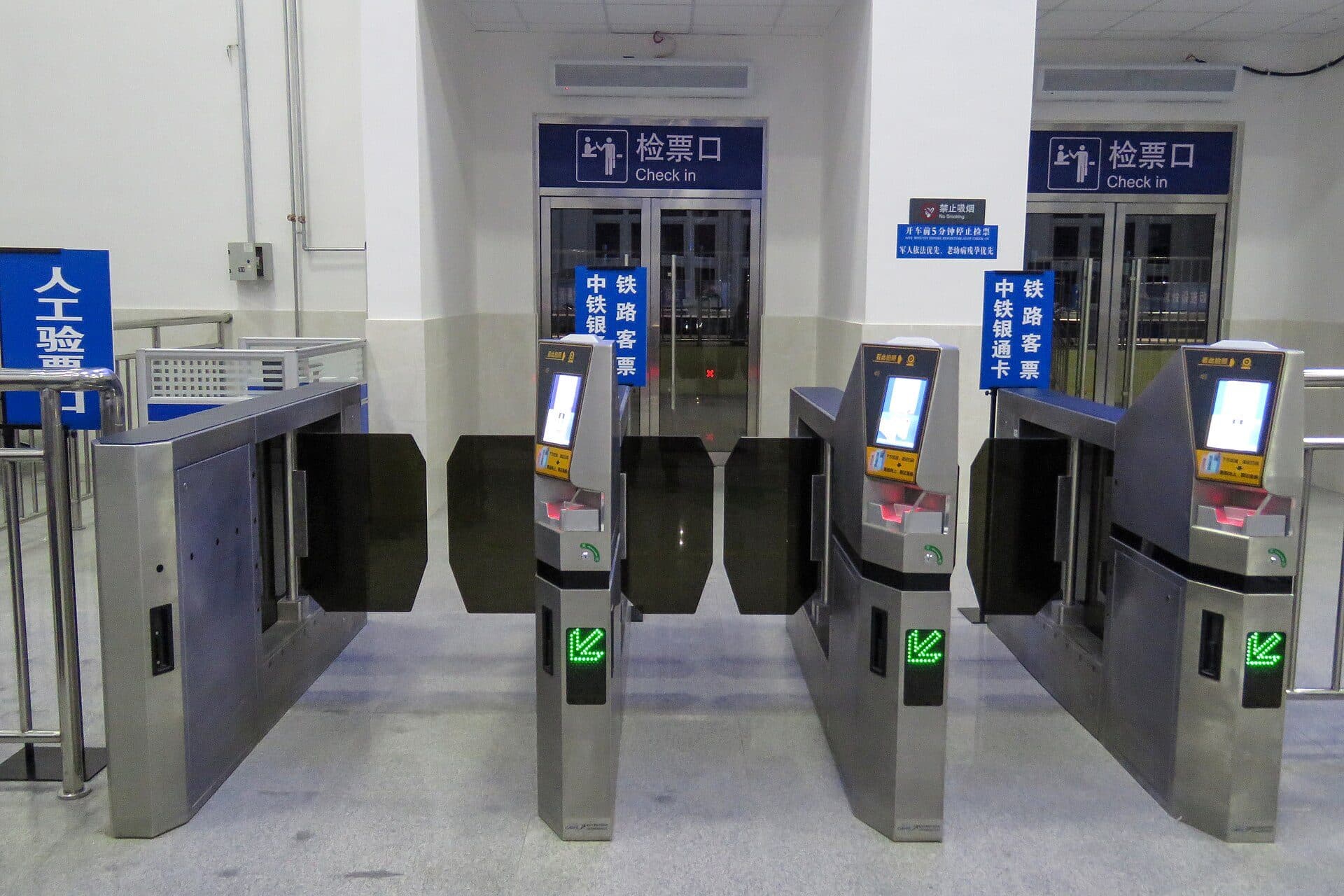
The third is the most visible abroad. Since 2013 the Supreme People's Court has maintained a public list of 失信被执行人, people who fail to comply with a final judgment, most often repayment of a debt. Being listed brings concrete restrictions: no plane or high-speed rail tickets, no enrolment of children in certain expensive private schools, no stays in luxury hotels.
The national public credit information centre reported at the end of 2018 a cumulative total of more than 17 million blocked air ticket purchases and several million rail tickets since the file was created. That figure, often quoted without its judicial context, fed the image of generalised scoring.
信用 (xìnyòng) means "credit" in both senses: financial solvency and the trust placed in someone. The first character, 信, joins the person radical (亻) and speech (言): one who keeps their word. The official term 社会信用 is therefore not about morality but about contractual reliability.
Sesame Credit is not the state#
The most widespread confusion concerns 芝麻信用 (Zhima Credit, usually rendered "Sesame Credit"), the score offered by Ant Group, Alibaba's financial arm. This score is private, optional, and calculated from platform data: payment history, repayment regularity, identity information.
Its uses are commercial: renting a scooter or a hotel room without a deposit, borrowing a power bank, speeding up a visa application at certain consulates. The People's Bank of China authorised eight private consumer scoring trials in 2015; it ultimately granted no licences, and in 2018 set up a mixed-capital body, Baihang, to centralise such data.
Screenshots of Sesame scores circulated widely in the West as evidence of the state system. They are the product of a private company.
The municipal pilots#
Around a hundred cities have trialled points systems applied to residents. The best documented is in 荣成 (Rongcheng), Shandong: each resident starts with 1,000 points, gains them for donating blood or volunteering, loses them for a traffic offence or an unpaid debt, and depending on their level gains administrative conveniences or reduced deposits.
These schemes are local, heterogeneous and often voluntary. Several were revised or dropped after municipalities tried to fold in behaviours with no legal basis, from failing to sort rubbish to signing a petition. A State Council directive of December 2020 required any penalty to rest on a legal text, to be proportionate, and to come with a route of appeal.
China's social credit system is not a single algorithm. It is a bureaucracy that has spent ten years trying to give itself one shared file, and has not managed it yet.
Chinese administrative vocabulary is very transparent once the characters are known: 信用 (xìnyòng, credit), 黑名单 (hēimíngdān, blacklist), 失信 (shīxìn, to break one's word). ChineseSRS teaches these words with their characters, their pinyin and their uses.
What the system really does to companies#
This is the most advanced strand and the least reported. Every company registered in China has an 18-character unified credit identifier, and its file is publicly searchable on the national enterprise credit information system.
Sector regulators feed their decisions into it: environmental penalties, late social contributions, food safety failures, tax disputes. A blacklisted company loses access to public contracts, subsidies and certain bank lending. A redlisted one gets its paperwork expedited.
For a foreign exporter or investor, this is the part of the system with immediate practical effects, long before any citizen point stories.
The 2014 plan set 2020 as the deadline for building a system "covering the whole of society". The deadline passed without any national individual score existing. A draft law on building the social credit system was opened for public consultation in November 2022, precisely to give a unified legal basis to a body made of scattered regulations.
How to read the stories in circulation#
Three checks sort most claims on the subject.
Ask who is scoring. A score awarded by a commercial platform does not commit the state, and vice versa.
Ask on what basis. The best-established restrictions, those affecting transport, follow an unexecuted court judgment, not everyday behaviour.
Ask where. A municipal points scheme says nothing about the neighbouring province, and fragmentation remains, ten years after the original plan, the system's most consistent feature.
FAQ#
Does every Chinese citizen have a score? No. There is no single national score assigned to all citizens. Individual scores come either from municipal pilots or from optional private services.
Can you be banned from trains for a bad score? Transport restrictions apply to people on the judicial list of debtors who fail to comply with a court judgment, and to certain offences committed on the transport network itself.
Is Sesame Credit part of the state system? No. It is a commercial product of Ant Group, distinct from the public apparatus, even though both use the vocabulary of credit.
Is the system finished? No. The 2014 plan aimed at 2020, the deadline passed, and a draft law opened for consultation in 2022 is still trying to unify a scattered set of texts.
Read alsoAlipay, WeChat Pay: How China Abolished CashChinese mobile payment, the infrastructure that generates a good share of the data at issue here.
Sources and further reading#
- State Council, plan for building the social credit system 2014-2020, June 2014
- Supreme People's Court, framework on 失信被执行人, in force since 2013
- State Council, December 2020 directive on regulating penalties for breach of trust
- Draft law on building the social credit system, opened for public consultation in November 2022
Hukou: the residence system that divides China
Understanding hukou, the household registration system that decides where Chinese citizens may live, work and access public services. Origins, mechanics and reforms.
Cover image: N509FZ · N509FZ, via Wikimedia Commons · CC BY-SA 4.0