Banjiha: Korea's Semi-Basement, Before and After Parasite
Banjiha (반지하), the Korean half-basement flat: its origin in a 1970 defence rule, its 1984 legalisation, Seoul's 200,000 households, and the plan launched after the 2022 floods.
La rédaction Kotoba Interactive
Studio éditorial
A is a Korean dwelling whose floor sits below street level and whose windows meet the pavement. The 2020 census counted about 327,000 households in them nationwide, almost all in the capital region and a little over 200,000 in Seoul, close to 5% of the city's households.
Bong Joon-ho's Parasite, Palme d'Or in 2019 and Best Picture Oscar in 2020, made this housing type known worldwide. Its origin is older and has nothing to do with housing policy.
A defence rule, not a housing rule#
In 1970, South Korea amended its building regulations to require low-rise buildings to include a basement usable as a shelter in the event of conflict. The context was sustained military tension with the North, two years after the North Korean raid on the presidential residence.
These basements were not meant to be lived in, and renting them as homes was illegal. In practice the housing shortage that came with rural migration and Seoul's growth did the rest: owners rented, tenants paid, the authorities looked away.
Regularisation came in 1984, when a revision of the building code authorised residential use of those levels. What had been tolerated became an official segment of the rental stock, and the banjiha entered the Korean urban landscape for forty years.
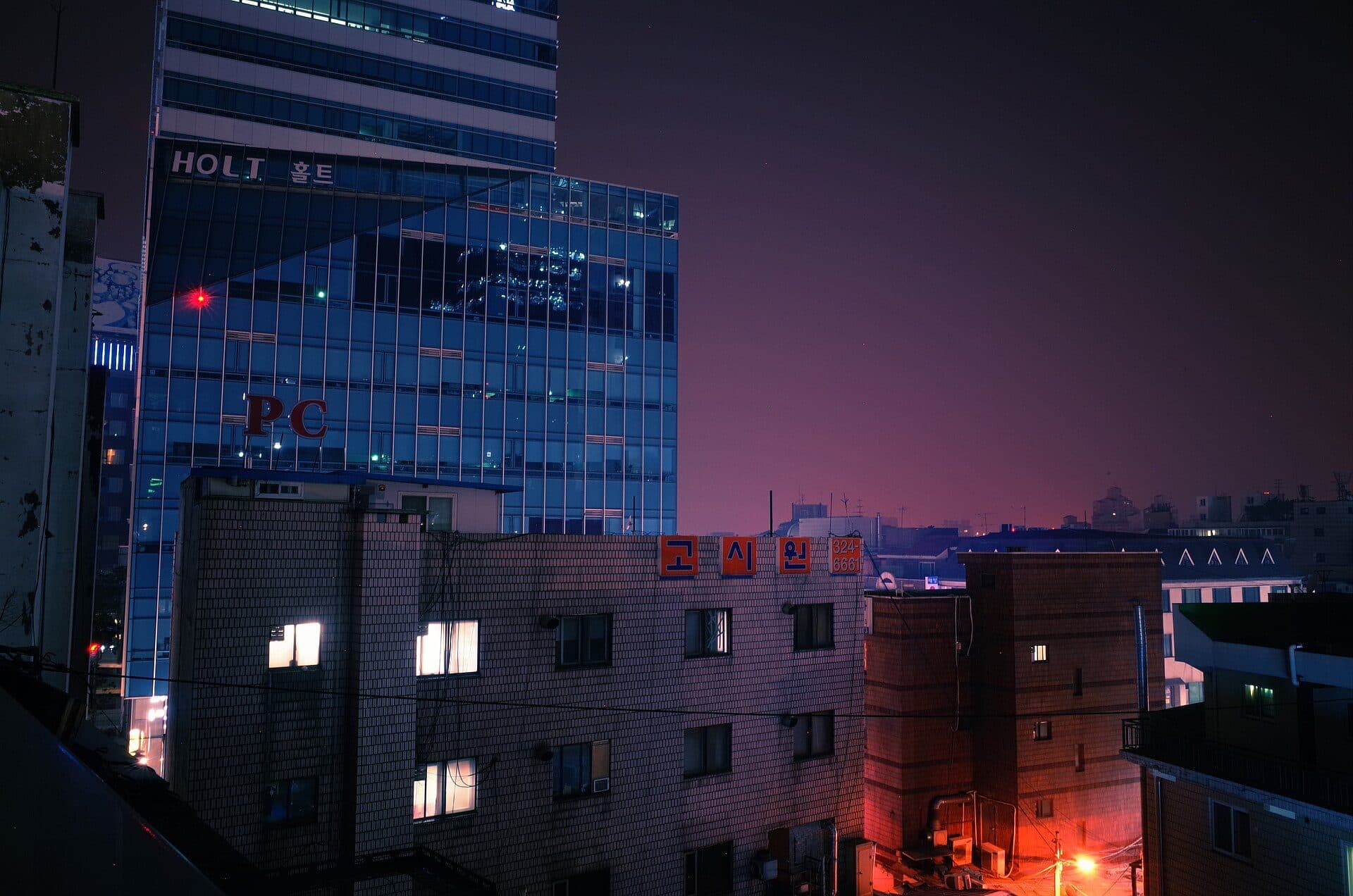
반지하 is written with the Chinese characters 半地下: 半 (half), 地 (earth), 下 (below). The word belongs to a trio Koreans sum up in the abbreviation 지옥고 (jiokgo), formed from 반지하, 옥탑방 (the rooftop room) and 고시원 (the tiny room), which also spells 지옥, "hell".
What it actually is#
A banjiha is not a cellar. It is a complete dwelling, with kitchen and bathroom, often 20 to 40 square metres, rented below the price of an above-ground flat.
| Feature | What it means |
|---|---|
| Windows at pavement level | Little light, a view of passing legs, a security question |
| Damp | Recurring mould, damage to walls and clothing |
| Ventilation | Stagnant air, heat hard to shift in summer |
| Rent | Distinctly below market, which makes it many people's first home |
| Drainage | Pipes lower than the street, so exposed to backflow in a storm |
Its occupants are mostly young workers, students, low-income older households and single-parent families, meaning the groups most exposed to rising rents in a city where the standard entry deposit runs into tens of millions of won.
August 2022#
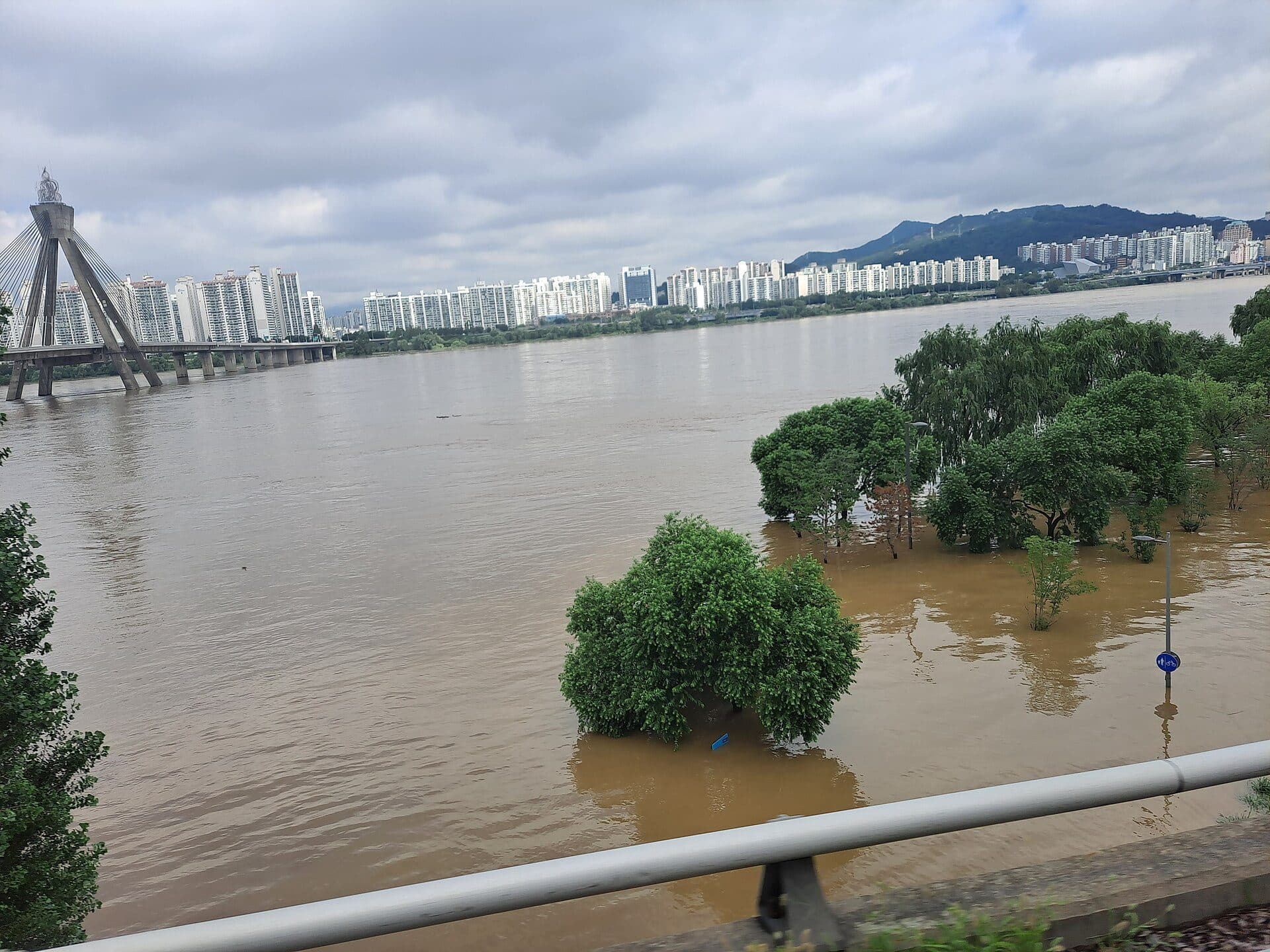
On 8 August 2022 an exceptional storm hit Seoul, with hourly rainfall intensities unmeasured for decades in some districts. Water backed up through the drains and filled below-ground dwellings faster than their occupants could get out.
Three members of one family died trapped in a banjiha in the Sillim neighbourhood of Gwanak district. The deaths triggered an immediate political response.
Within days the Seoul city government announced a halt to permits for new below-ground dwellings, a target of phasing out the existing stock over ten to twenty years, and relocation support, including a monthly allowance for households leaving a banjiha for an above-ground home.
Cheap housing below street level is a trade-off. The 2022 storm showed that the trade-off plays out in a few minutes.
Korean housing vocabulary is learned early and used constantly: 반지하 (banjiha, half-basement), 전세 (jeonse, the giant deposit), 월세 (wolse, monthly rent). KoreanSRS teaches these words with their hangul and the situations they belong to.
What the plan achieved#
Implementation proved harder than the announcement, for three reasons.
Relocation requires an equivalent offer in size and price, which is precisely what Seoul lacks. Buying up and sealing a dwelling means compensating an owner for whom that property is often the bulk of their wealth. And the tenant does not always have an interest in leaving, when the available alternative is in the outer suburbs, an hour from work.
The measures actually rolled out are therefore mostly technical: subsidised backflow valves on drains, emergency escape windows cut into basement grilles, flood sensors, and district-by-district mapping of the most exposed dwellings. The announced disappearance of the stock is advancing slowly.
The banjiha in Parasite does not exist. Bong Joon-ho had it built inside a water tank, outdoors, at a studio in Goyang, precisely so the set could be flooded on cue. The sloping street, on the other hand, reproduces a real Seoul neighbourhood.
FAQ#
Is the banjiha legal? Yes for existing stock, authorised since the 1984 revision. Seoul, however, stopped issuing permits for new dwellings of this type after the 2022 floods.
How much does a banjiha cost? Appreciably less than an equivalent above-ground flat, with the gap varying by district. That gap explains why it persists despite its drawbacks.
Who lives in one? Students, young workers, low-income older people and single-parent families. The stock filled up as rents in the capital rose.
Does it exist outside Seoul? The phenomenon is heavily concentrated in the capital region, which holds nearly all such dwellings recorded in the country.
Read alsoGosiwon: The Korean Room You Rent Without a DepositThe gosiwon, the other member of the trio Koreans call "hell", alongside the rooftop room.
Sources and further reading#
- Statistics Korea (통계청), population and housing census, 2020
- Seoul Metropolitan Government, measures announced after the floods of August 2022 and relocation support schemes
- Korean building code, the 1970 basement requirement and the 1984 revision authorising residential use
Jeonse: The Giant Deposit That Holds Up Korean Housing
Jeonse (전세): handing over 60% of a property's value and paying no rent. How this uniquely Korean system works, why it produced the deposit fraud crisis, and why it is retreating.
Cover image: YaMaDa · YaMaDa, via Wikimedia Commons · CC BY-SA 4.0