Hukou: the residence system that divides China
Understanding hukou, the household registration system that decides where Chinese citizens may live, work and access public services. Origins, mechanics and reforms.
La rédaction Kotoba Interactive
Studio éditorial
In a Shenzhen factory, Li Wei assembles smartphones twelve hours a day. She has lived here for eight years, pays her taxes here, and her children were born here. Yet in the eyes of the Chinese administration she remains a resident of Henan, her home province fifteen hundred kilometres away. Her children cannot enrol in Shenzhen's state schools. She has no access to local health insurance. For certain official documents she has to travel back to her home village. Welcome to the world of the hukou, the household registration system that structures, and fractures, Chinese society.
The is far more than an administrative register. It is a population control system that determines where each Chinese citizen has the right to live, to work, and to access public services. Inherited from the Maoist era, kept and adapted to the market economy, it creates a two-speed society in which hundreds of millions of "internal migrants" live like foreigners in their own country.
The word 户口 (hùkǒu) is made of 户 (hù, household) and 口 (kǒu, mouth, person). Literally: "the mouths of the household", meaning its registered members. The term names both the registration system and the document itself: a family booklet certifying a legal place of residence.
Origins: from Maoist control to the market economy#
The hukou has roots in ancient China, but its modern form dates from 1958. Mao Zedong, faced with the chaos of accelerated industrialisation and the famines striking the countryside, imposed strict control over population movement. The aim: to prevent a mass rural exodus into cities that could not absorb the influx.
| Criterion | Agricultural hukou (农业, nóngyè) | Non-agricultural hukou (非农业, fēi nóngyè) |
|---|---|---|
| Population covered | Rural, tied to village land | Urban, city residents |
| Employment | Collective farm work | State jobs, industry, services |
| Housing | A house in the village | Housing allocated in the city |
| Public services | Limited access (basic school and health) | Rations, care, privileged education |
The hukou splits the population into two categories:
- : for rural people, tied to their village's collective land.
- : for urban dwellers, giving access to state jobs, housing, food rations, healthcare and education in the city.
Under Mao, changing your hukou was almost impossible. Peasants were assigned to their village. City dwellers enjoyed considerable privileges. This system of internal castes outlived Mao.
Curious about the hukou? Learn to read the words that structure Chinese society: 户口 (hùkǒu, household register), 城市 (chéngshì, city) and 农村 (nóngcūn, countryside), with ChineseSRS and its spaced repetition.
The hukou in the reform era#
When Deng Xiaoping launched economic reform from 1978, a paradox appeared: China needed a mobile workforce to feed its coastal factories, but the hukou forbade that mobility.
The pragmatic solution was to tolerate migration without making it official. Hundreds of millions of rural people, the , left their villages for the special economic zones. They work in factories, on building sites, in restaurants, while keeping their rural hukou. They are present in the cities without legally existing there.
China's internal migrants are estimated at 300 million people, more than the population of the United States. This "floating population" (流动人口, liúdòng rénkǒu) builds the cities it has no official right to inhabit.
What the hukou determines#
Where your hukou is registered conditions access to the following.
Education#
Children can only enrol in state school in the city of their hukou. A migrant's child in Shanghai will have to return to their parents' home province to sit the gaokao, the university entrance exam, even if they have lived their whole life in Shanghai.
Health#
Public health insurance is tied to the hukou. A migrant hospitalised in Guangzhou is reimbursed less than a local resident. Quality care is concentrated in the big cities, out of reach for rural hukou holders.
Housing#
Property purchase is restricted by hukou in many metropolises. In Beijing or Shanghai, only local hukou holders, or those meeting strict criteria of residence years and tax contributions, may buy a flat.
Social benefits#
Pensions, unemployment benefit, welfare: everything is attached to the place of registration. A worker who paid contributions for twenty years in Shenzhen with a Hunan hukou will collect a pension in Hunan, at a far lower level.
Administrative paperwork#
Passports, driving licences, marriage certificates: many procedures require a return to the place of the hukou. The , the great Chinese New Year migration, is partly driven by that administrative necessity.
The children left behind#
The most painful consequence of the hukou concerns children. Unable to enrol them in the cities where they work, tens of millions of migrant parents leave their children in the village with the grandparents. These grow up without their parents, with the psychological and educational problems that follow.
Estimates range between 60 and 90 million children. The phenomenon has generated an abundant sociological literature and growing criticism of the system.
Read alsoThe Gaokao: the exam that decides the fate of eleven million Chinese studentsThe gaokao, the university entrance exam, is closely tied to the hukou. Admission quotas vary by province, creating glaring inequalities: a pupil from Beijing has a better chance of entering a prestigious university than a pupil from Henan with the same marks.
The reforms under way#
Since the 2010s the Chinese government has undertaken gradual reforms.
Unifying the categories. In 2014 the distinction between agricultural and non-agricultural hukou was officially abolished. In practice, differences in treatment persist.
Points systems. Metropolises such as Shanghai and Beijing introduced points systems allowing qualified migrants to obtain the local hukou after years of residence, under strict conditions: qualifications, income, clean record, housing.
Easing in mid-sized cities. Cities of fewer than three million inhabitants have relaxed the conditions for granting a local hukou. The aim is to redistribute demographic pressure away from the megacities.
Partial portability of rights. Some provinces are experimenting with portable social rights: a migrant could in theory keep their contributions when changing city.
Critics still consider these reforms insufficient. The hukou remains a tool of social control, regulating access to the big cities, keeping a cheap workforce in the factories, and perpetuating structural inequalities between city and countryside, between the developed coast and the interior.
The hukou and the urban question#
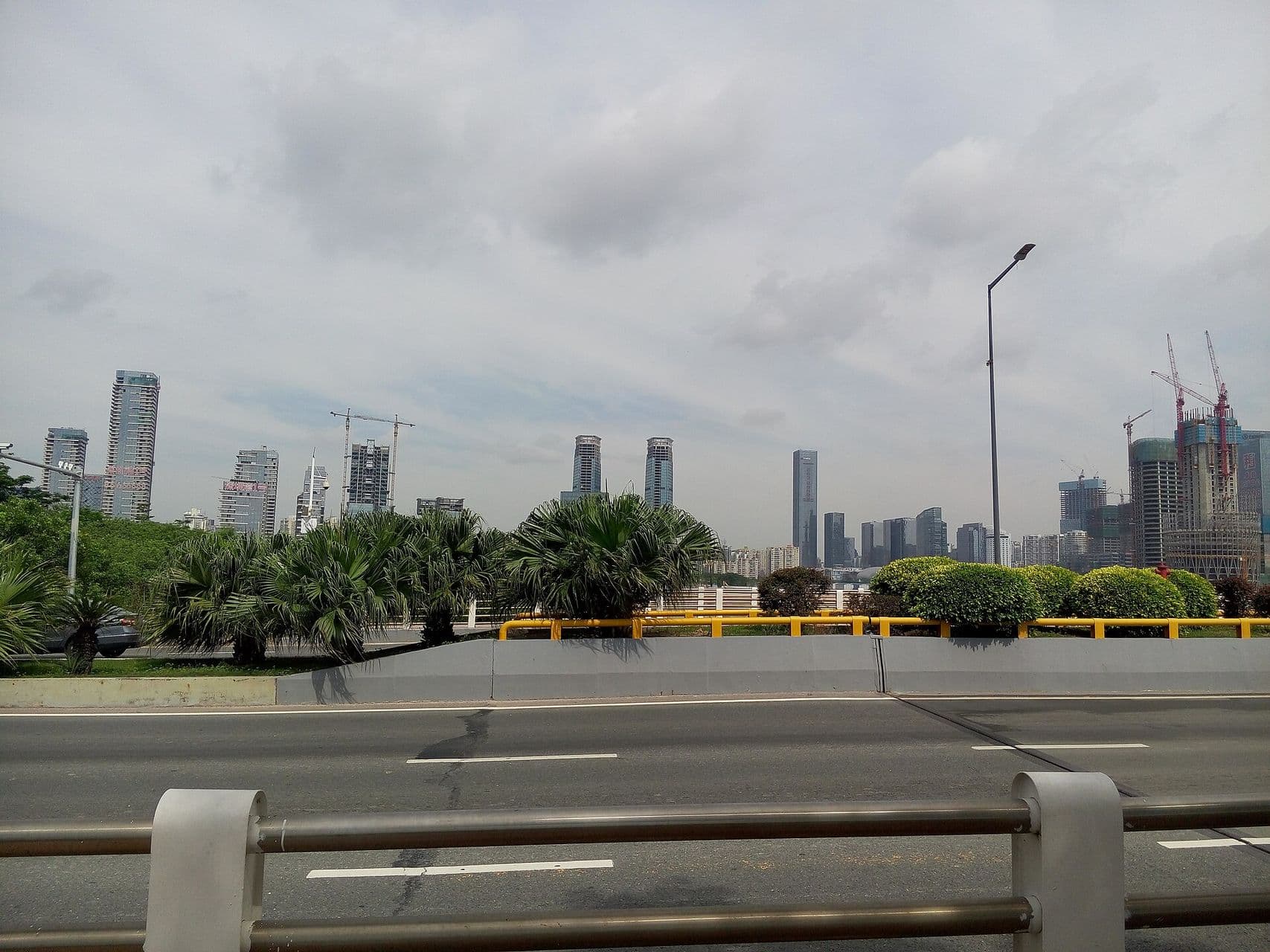
China is urbanising at an unprecedented pace: more than 65 % of the population now lives in cities. But living in a city does not mean being a citizen of it. The hukou creates two-storey metropolises: official residents, protected, and migrant workers, indispensable but invisible.
That duality raises fundamental questions. How do you build a consumer society when 300 million people have no access to credit, housing or education in the cities where they work? How do you speak of "common prosperity" (共同富裕, Xi Jinping's slogan) when the system institutionalises inequality?
FAQ#
Can you change your hukou? Yes, but it is hard. In small cities, buying a home or holding a stable job may be enough. In the megacities, Beijing and Shanghai, you have to accumulate points over years or even decades. Some people never manage it.
Does the hukou exist outside China? A similar system existed in the USSR, the propiska. North Korea keeps strict control over internal movement. In China the hukou is unique in its scale and its persistence within a market economy.
Why doesn't the government abolish the hukou? The hukou serves several functions: demographic control of the cities, maintaining a cheap workforce, managing social spending. Abolishing it abruptly would bring a massive influx into the megacities and an explosion in local social costs.
Are the wealthy also affected by the hukou? Less directly. Private schools, private hospitals and property bought through companies allow the restrictions to be bypassed. The hukou weighs above all on working and middle-class families.
Photo credits: freely licensed images, Wikimedia Commons.
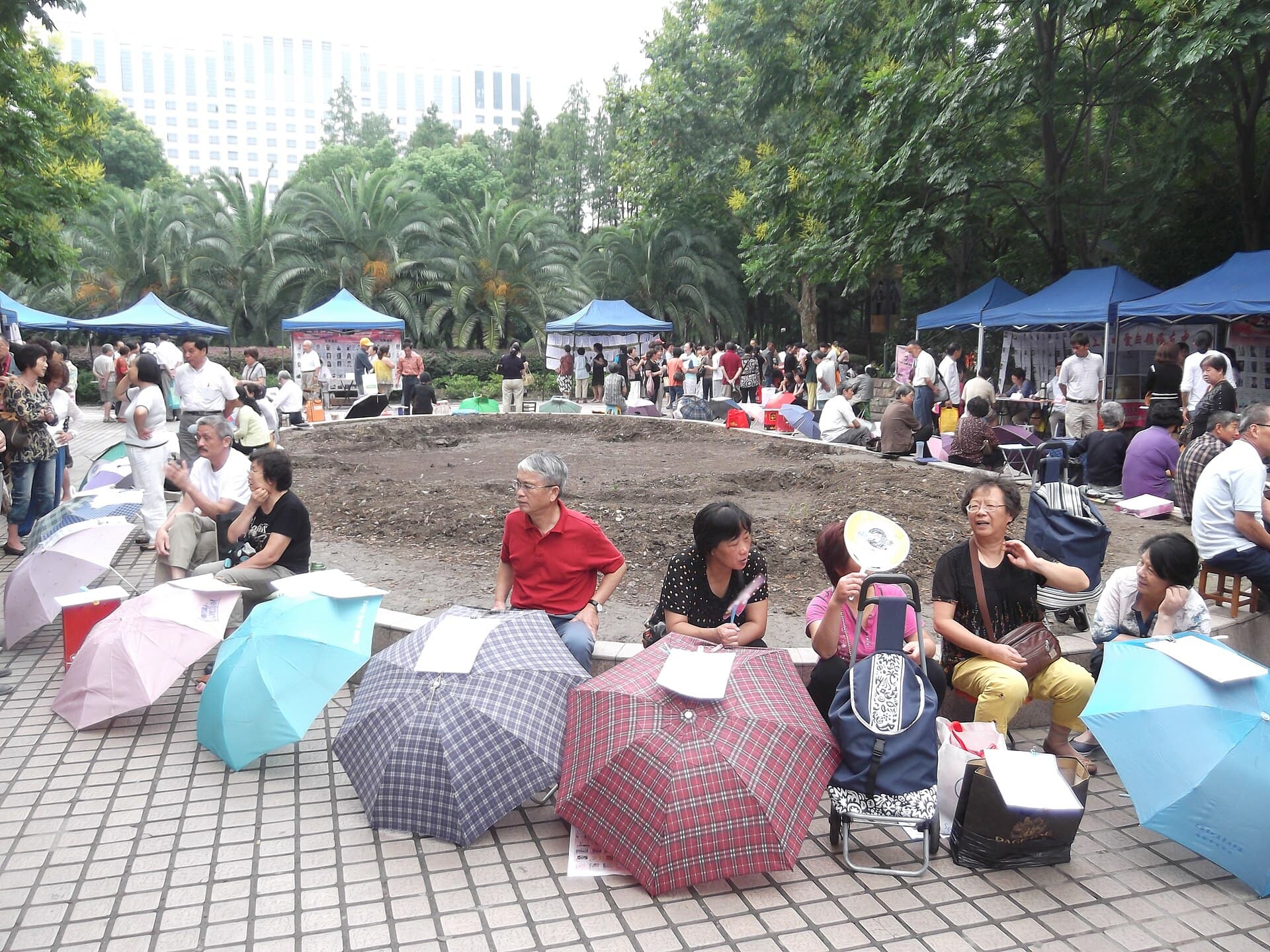
Shanghai's Parent Marriage Market (相亲角)
Every weekend, Chinese parents 'sell' their single children at Shanghai's People's Park. Inside the 相亲角, its résumé sheets and its unwritten rules.
Cover image: Dquai · Dquai, via Wikimedia Commons · CC BY-SA 4.0