Land of the Morning Calm: Why Korea Is Really the Morning Bright
'Land of the Morning Calm' is a mistranslation. Joseon, Korea's ancient name, actually means 'morning freshness.' A linguistic and historical investigation.
La rédaction Kotoba Interactive
Studio éditorial
Korea's most famous nickname is the "Land of the Morning Calm." Behind that poetic image lies an error nearly a century and a half old: Korea is not the Land of the Morning Calm, but the Land of the Morning Bright.
This mistake, repeated in travel guides, documentaries, and diplomatic speeches, rests on a bad translation of the Chinese characters that form Korea's ancient name. The story behind the confusion involves classical Chinese scholarship, imperial diplomacy, nineteenth-century Western travelers, and an American astronomer. To understand why "calm" has no place in this nickname, we need to go back to the origins of the word Joseon.
Joseon: What the Name Actually Means#
The name is written in Chinese characters as 朝鮮. The first, , means "morning" or "dawn." It is the same character found in the Chinese and the Japanese .
The second character is the key. does not mean "calm" or "tranquil," but "fresh," "vivid," "clear," "bright": means "fresh," "bright" or "vivid."
Together, the characters 朝鮮 form an unambiguous meaning: "morning freshness," "brightness of dawn." There is not a trace of calm in this etymology.
The earliest known Korean political entity, , was supposedly founded in 2333 BCE by the legendary king . While that date belongs to founding myth, Chinese sources mention a state called Joseon as early as the seventh century BCE. The Guanzi (管子) and the Shanhaijing (山海經, "Classic of Mountains and Seas") refer to a people and territory bearing this name, east of China, where the sun rises.
Seen from China, Korea is the land where morning is born, where daylight appears in all its freshness: a geographic poem designating the land of morning clarity, the place where dawn is brightest.
How "Calm" Replaced "Clear"#
For centuries, Korea remained closed to foreigners. Under the , the kingdom practiced an isolation that earned it the nickname "Hermit Kingdom." Only in the 1870s and 1880s, under pressure from foreign powers, did it gradually open to the world. The first Westerners to set foot on its soil (missionaries, diplomats, merchants) mostly had a superficial knowledge of classical Chinese and no command of Korean.
Percival Lowell and the Birth of a Myth#
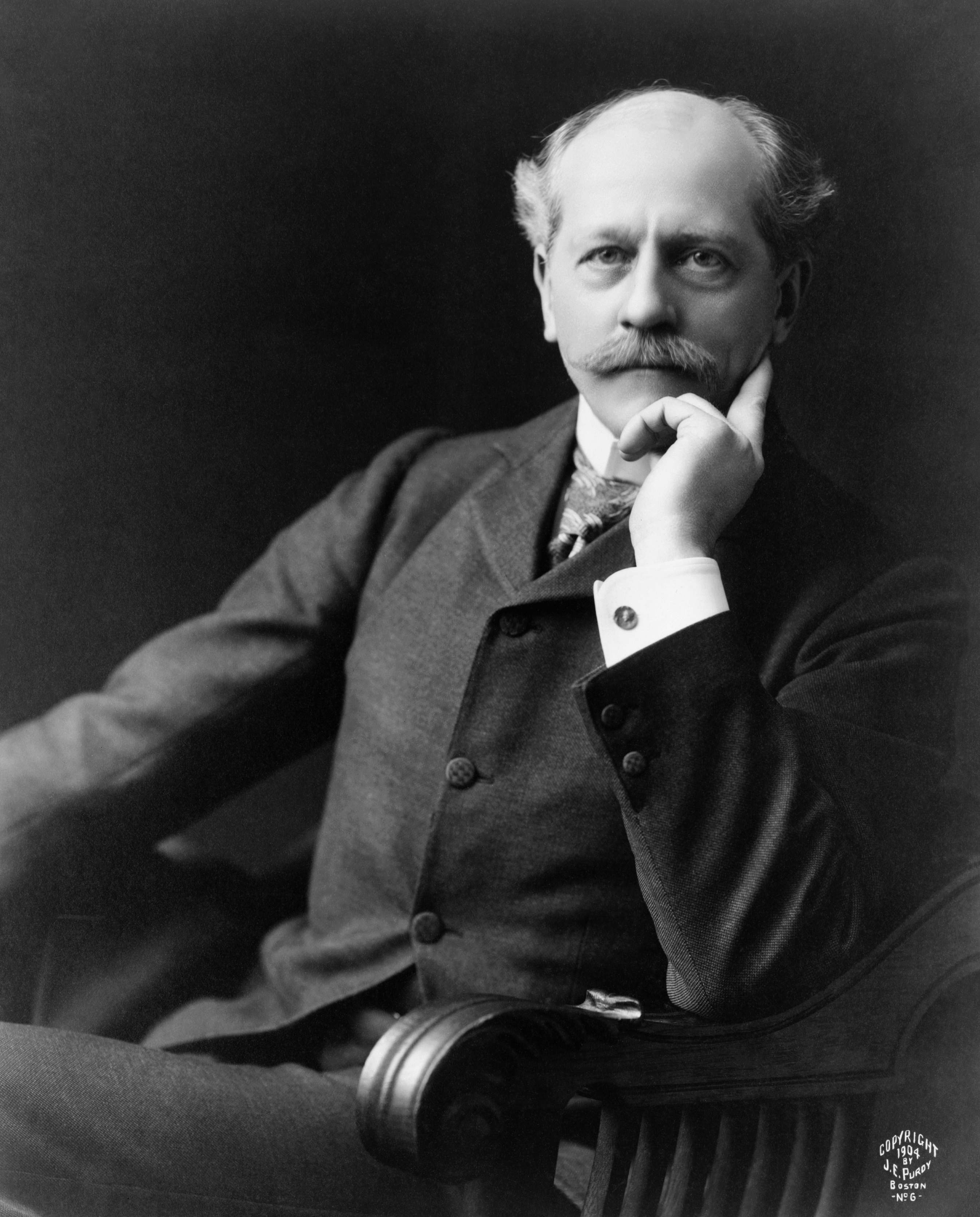
Percival Lowell (1855-1916), from a wealthy Boston family, was an amateur diplomat, travel writer, and future astronomer (he founded the Lowell Observatory in Arizona and was among the first to theorize the existence of a ninth planet beyond Neptune). In 1883, he accompanied the first Korean diplomatic mission to the United States, then traveled to Korea himself.
In 1885, he published Chosön, the Land of the Morning Calm, a travel narrative that became a considerable success in the English-speaking world. Newspapers and travel guides adopted it, and "Land of the Morning Calm" became inseparable from Korea.
But where did Lowell get that "calm"? Most likely he did not read classical Chinese with sufficient precision and relied on secondhand interpretations. Some sinologists translated 鮮 with vague or poetic terms, and Korea, perceived as peaceful and isolated, lent itself to the image of "calm." Lowell chose the word that sounded best in English: "Morning Calm" has a musicality that "Morning Freshness" could never match. The translation also fits nineteenth-century Orientalism, which associated Asia with serenity and stillness: a "calm" country matched the romantic projections of travelers seeking in the East an antidote to the industrial restlessness of their own societies.
How the Error Spread Across Europe#
Once printed in the title of a bestseller, the phrase went viral. The French translated "Morning Calm" as "Matin calme," the Spanish as "Calma Matutina," the Germans as "Morgenstille." Every European language adopted its own version without going back to the original Chinese characters, migrating from travel books to encyclopedias, then to school textbooks and official speeches.
The deepest irony is that "calm" corresponds to none of the meanings of the character 鮮. In no classical or modern dictionary can one find a definition of 鮮 approaching "calm," "tranquil," or "peaceful." This is not a nuance of translation: it is a pure mistranslation.
Want to read the characters of the name yourself rather than trust rough translations? With KoreanSRS and spaced repetition, you will learn 한글 (hangeul, the Korean alphabet), tell 선명 (seonmyeong, clear, sharp) apart from 고요 (goyo, tranquil), and grasp what Korean actually says.
鮮: A Character Rich With Light#
The character 鮮 combines the radical 魚 (yú, fish) on the left with the radical 羊 (yáng, sheep) on the right: two foods whose quality is measured by their freshness, forming a character meaning "fresh," "new," "vivid."
In classical Chinese, 鮮 carries several shades tied to vividness and brilliance:
- Freshness: describes something fresh, unaltered.
- Visual brilliance: describes a vivid color, a sharp contrast.
- Radiant beauty: evokes a dazzling, luminous beauty.
- Flavor: the character 鮮 is at the root of the Japanese concept of umami, that fifth taste of savoriness found in broth, aged cheese, or soy sauce. In Japanese, appears in cultural association with raw fish of impeccable freshness.
- Rarity: in an alternate reading , the character can mean "rare" or "uncommon," as in .
In Korean, the character 鮮 (선, seon) retains these nuances. means "fresh"; means "clear," "sharp," "distinct." In 朝鮮, the sense of "clarity" and "luminous freshness" prevails.
In Chinese, "calm" would be or ; in Korean, or . These characters have no connection to 鮮. It is as though someone translated "sun" as "rain": the opposite of the original intention.
Joseon Through Korean History#
The name Joseon was chosen, debated, abandoned, and reclaimed, mirroring the political upheavals of the Korean peninsula.
| Name | Characters | Period | Meaning |
|---|---|---|---|
| 古朝鮮 | c. 2333 BCE to 108 BCE | "Old Joseon," first kingdom | |
| 朝鮮 | 1392 to 1897 | "Morning freshness," founding dynasty | |
| 大韓帝國 | 1897 to 1910 | "Great Korean Empire" | |
| 朝鮮 | 1910 to 1945 | Colonial name imposed by Japan | |
| 韓國 | since 1948 (South) | "Land of the Han," South Korea |
Gojoseon: The First Kingdom#
Korean tradition traces the founding of to 2333 BCE, when , son of a heavenly god and a bear transformed into a woman, established his kingdom near present-day Pyongyang. This narrative, recorded in the thirteenth century in the Samguk Yusa (삼국유사, "Memorabilia of the Three Kingdoms") by the Buddhist monk , belongs to myth, but anchors the idea that the name Joseon is as old as Korean civilization.
Gojoseon did exist, however: Chinese sources mention it from the seventh century BCE, maintaining commercial and diplomatic relations with neighboring Chinese kingdoms. It was conquered by the emperor in 108 BCE, but the name Joseon survived in Korean collective memory.
The Joseon Dynasty: Choosing a Name#
After the Three Kingdoms (Goguryeo, Baekje, Silla), unification under Silla, and five centuries of the , a general named overthrew the last Goryeo king and founded a new dynasty in 1392. He took the reign name and needed to choose a name for his kingdom.
Two options were submitted to the imperial court of the Ming: , referencing ancient Gojoseon, and , Taejo's birthplace. Emperor chose Joseon, considering it "beautiful and ancient" (美且古).
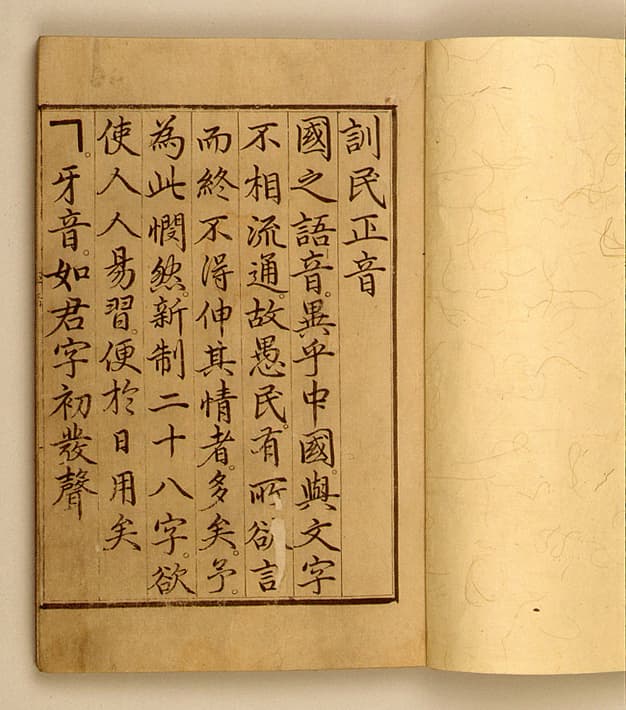
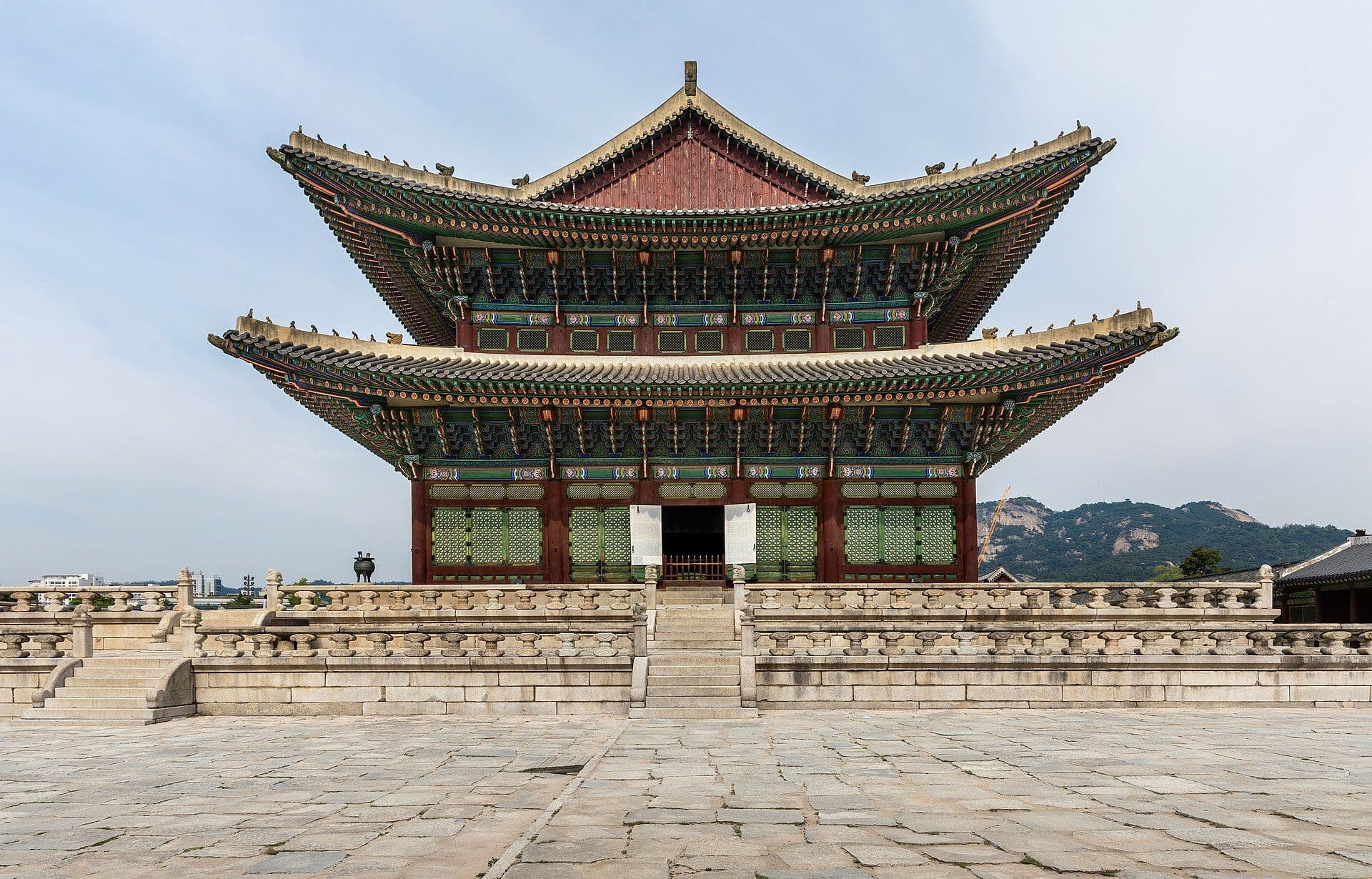
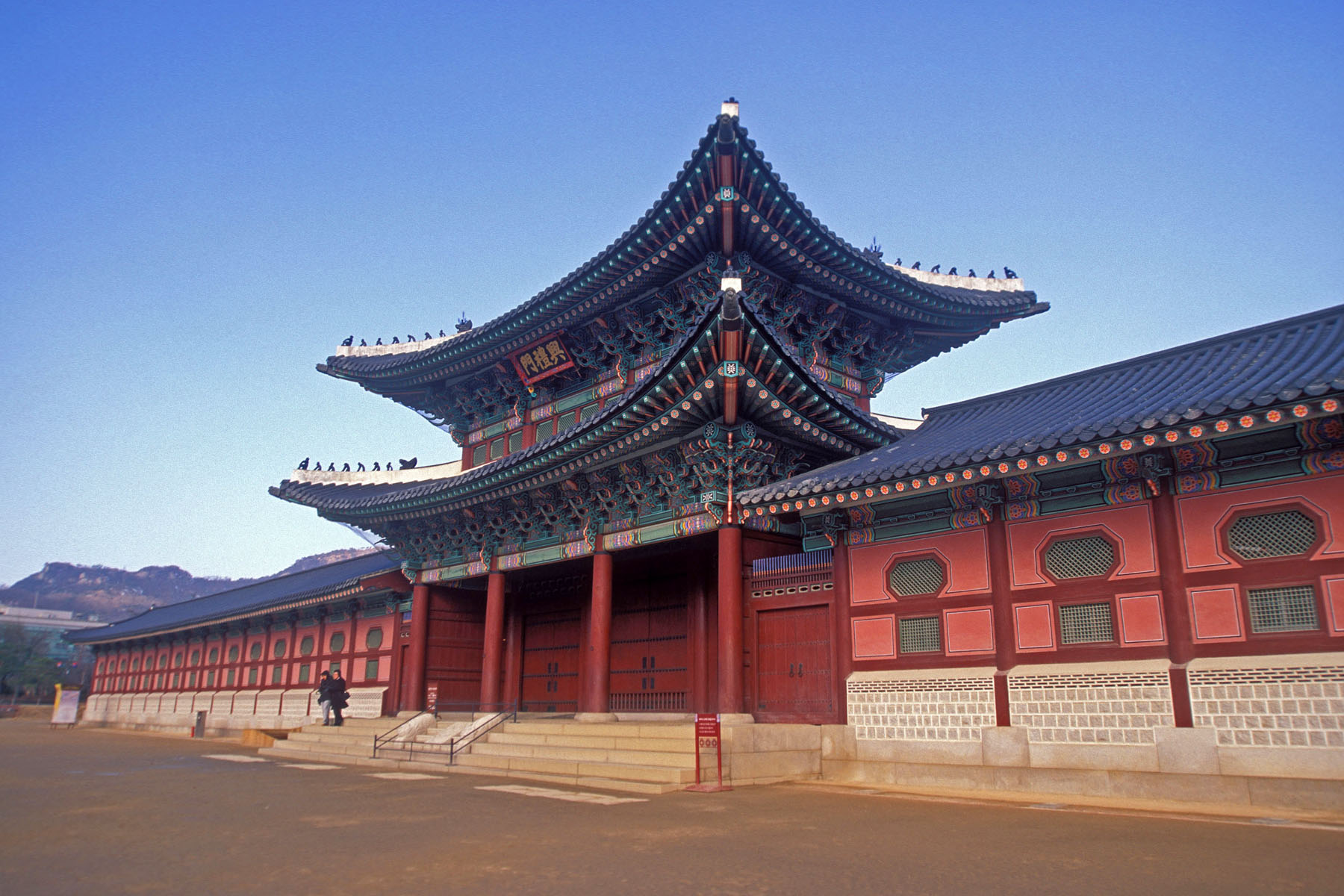
By reclaiming the name, Taejo inscribed his dynasty in a continuity stretching back over three millennia. The Joseon dynasty lasted five hundred and five years, from 1392 to 1897, one of the longest-reigning dynasties in world history. During this era Korea developed many of its cultural traits: , the Korean alphabet created in 1443 under King ; ceramics; court cuisine; and Neo-Confucianism as the state philosophy.
From Joseon to Daehan: The End of an Era#
In 1897, facing imperialist pressure from Japan and Western powers, King transformed the kingdom into an empire and renamed it . The word referred to the ancient , the "Three Han," tribal confederations that occupied the southern peninsula in antiquity. The change signaled a desire for modernization and sovereign assertion.
The empire was short-lived. In 1910, Japan annexed Korea and imposed the Japanese name , forcibly reviving the old name Joseon under colonial rule. For thirty-five years, until liberation in 1945, Korea bore the name its colonizer had chosen, a legacy that left deep marks on how Koreans perceive their own names.
Every name Korea has carried is either a scar or a promise. Joseon held the light of dawn; Daehan claimed greatness; Chōsen, imposed by the colonizer, turned a millennial heritage into an instrument of domination.
North and South: Two Koreas, Two Names#
The partition of the peninsula in 1945, followed by the Korean War (1950-1953), created a linguistic situation unique in the world: two halves of the same people refer to their country by different names.
North Korea kept the name Joseon. Its official name is . For North Koreans, their country is , and the language or . This places Pyongyang in continuity with the oldest name.
South Korea took a different path. Its official name is , shortened to . South Koreans call their language or . This name draws on the legacy of the brief Korean Empire of 1897, substituting "republic" for "empire."
This divergence reflects competing visions of identity. The North, by keeping Joseon, claims a lineage to the ancient greatness of the peninsula and rejects the imperial period; the South, by adopting Hanguk, connects to Gojong's modernization attempt.
A South Korean speaking about Korea will say Hanguk; a North Korean, Joseon. Korean communities in China and Japan often use , while those in the Americas, Europe, or Oceania tend to use Hanguk. In South Korea one says ; in North Korea, with different phonetic nuances, and certain terms abandoned by the South for English loanwords are still in use. Two countries, two names, but a single people and a single script, hangeul, invented nearly six centuries ago so that everyone could read and write, regardless of rank.
The Morning Bright in Korean Culture Today#
Do Koreans themselves know about the error embedded in the nickname "Land of the Morning Calm"?
Many South Koreans grew up with the expression 고요한 아침의 나라 (goyohan achimui nara, "land of the tranquil morning"), a Korean translation of the Western nickname, imported back into Korean culture. It appears in school textbooks, popular songs, and tourism slogans. Some find it poetic; others insist that the true meaning of Joseon is clarity, freshness, and the brilliance of morning, not its tranquility.
Korean linguists and historians are unanimous: 朝鮮 means "morning freshness," not "morning calm." Professor , one of the most distinguished Korean linguists of the twentieth century, demonstrated this in his work on the history of the Korean language. Standard etymological dictionaries of Korean and classical Chinese confirm it.
The nickname endures nonetheless: it adorns brochures from the Korean tourism office, documentary titles, and book covers. "Morning Calm" conjures a soothing image that appeals to the Western imagination; "Morning Bright" or "Morning Fresh," though faithful to the original characters, lack that evocative power.
A Misunderstanding Turned Identity#
This translation error became part of Korea's international identity. Some intellectuals have tried to set the record straight, publishing articles, challenging foreign media, proposing alternative translations. But habit is formidable, and "Land of the Morning Calm" continues to dominate in every European language.
The next time you hear it, remember that Korea never claimed calm: its name speaks of light, freshness, a morning that blazes in all its vividness. Korea is the Land of the Morning Bright. And that may be even more beautiful.
In this article
The cultural terms covered here, each with a short definition.
- Hangul
- Korean alphabet created in the 15th century, designed to be easy for everyone to learn.
- Joseon
- Korea's last royal dynasty (1392-1897), which shaped its language and culture.
- Land of the Morning Calm
- Poetic nickname for Korea, drawn from the translation of the Joseon dynasty's name.
Gojoseon, Silla, Goryeo, Joseon: Korea's dynasties made clear
Two thousand years in five names: the founding kingdom, the Three Kingdoms, unified Silla, Goryeo which gave the country its name, and Joseon which lasted five centuries.
Cover image: Basile Morin · Basile Morin, via Wikimedia Commons · CC BY-SA 4.0