BTS: the rise of a group that moved the lines
From the small Big Hit agency to stadiums and the United Nations: the story of BTS, the stages of its global breakthrough, the role of ARMY and what it changed for K-pop.
La rédaction Kotoba Interactive
Studio éditorial
On 13 June 2013, seven young men debuted in a modest Seoul venue for an agency nobody in the business considered a heavyweight. Big Hit Entertainment was then a small, indebted company, far from the "big three" that dominated the Korean industry. Nine years later, two of those young men were received at the White House, and their label was listed on the Seoul stock exchange with a multi-billion valuation.
Between the two there is neither miracle nor secret recipe: there is a legible trajectory, made of editorial choices that cut against the grain and a relationship with the audience that the rest of the industry eventually copied.
Starting at a disadvantage#
In 2013, K-pop happened at SM, YG and JYP. Those agencies had the promotional budgets, the television relays, the slots on music shows. Big Hit had none of that, and producer Bang Si-hyuk had to find something else.
That something was free, permanent content. The group published vlogs, dance practice videos, in-house shows and video diaries very early on, in volumes the majors did not attempt. That choice, forced by a lack of means, built an unusual intimacy between the members and their audience, and laid the ground for everything that followed.
means "bulletproof boy scouts": the idea of stopping the bullets society fires at young people. The acronym later received a second official reading in English, Beyond The Scene, without the Korean name changing.
Writing about school, then about yourself#
The group's first distinctive trait is thematic. Where mainstream output sang about love and partying, BTS opened with a school trilogy, 2 Cool 4 Skool, O!RUL8,2? and Skool Luv Affair, dealing with exam pressure, exhaustion and the judgment of adults.
The Hwayangyeonhwa (화양연화) series, released in English as The Most Beautiful Moment in Life from 2015, marks the artistic pivot: continuous narrative across records, a coherent visual identity, music videos that answer one another. Wings followed in 2016, then the Love Yourself series from 2017 to 2018, whose message is in its title.
The fact that the members co-write and co-produce a substantial share of their catalogue is not a communications detail: it is what makes that content credible in a sector where separating performers from writers is the norm.
The stages of the breakthrough#
| Year | Milestone | What it changed |
|---|---|---|
| 2013 | Debut with Big Hit | A group outside the big three agencies |
| 2015 | Hwayangyeonhwa series | Continuous narrative, artistic identity |
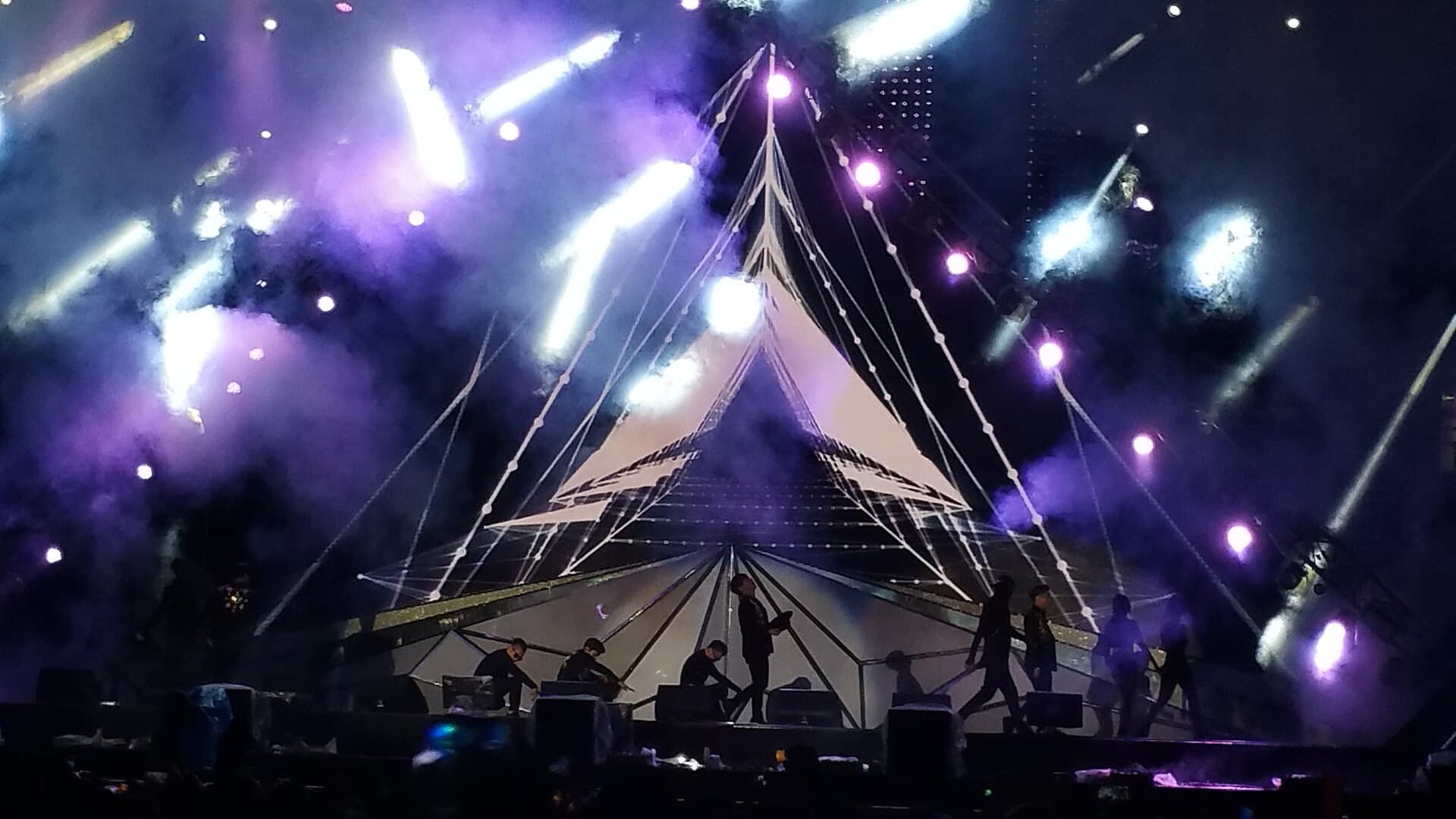
| 2017 | Top Social Artist at the Billboard Music Awards | First major American award for a Korean act |
| 2018 | Love Yourself: Tear tops the Billboard 200 | First Korean-language album at number one in the US |
| 2018 | Speech at the UN General Assembly | Stepping outside the musical register |
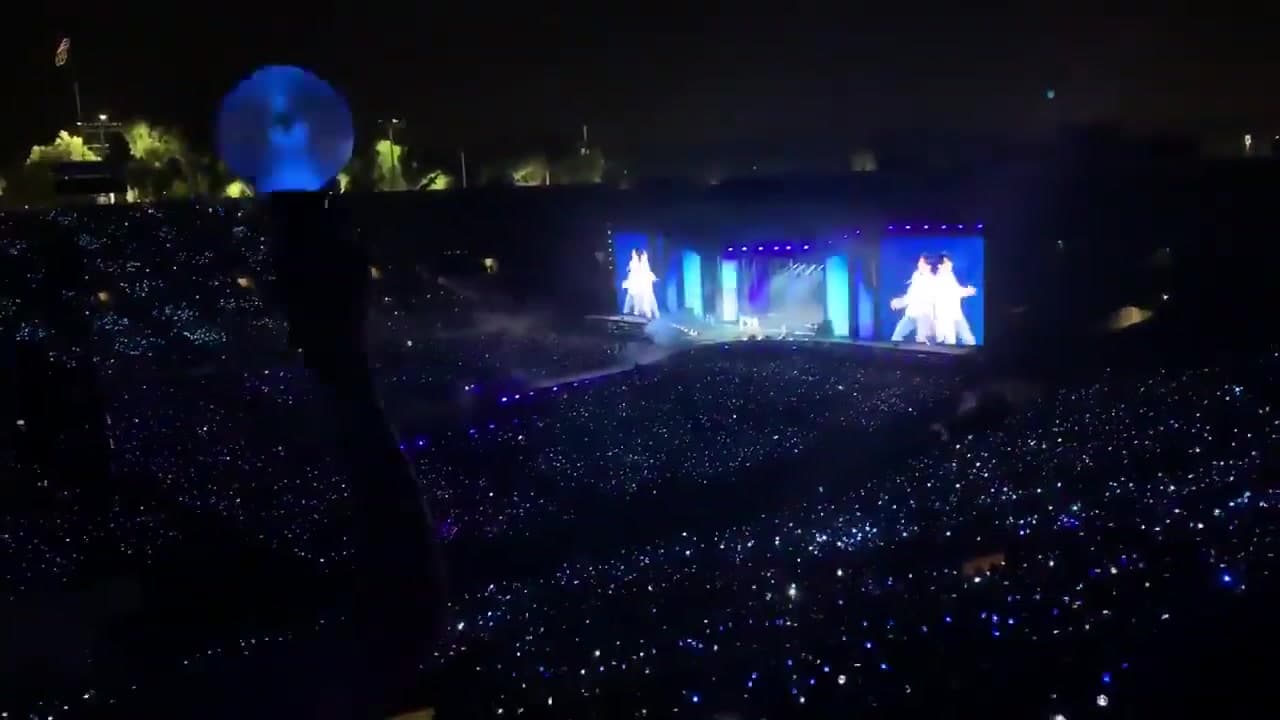
| 2019 | Stadium tour, including Wembley | Scaling up to Western venues |
| 2020 | Dynamite tops the Hot 100 | First number one single for a Korean group |
| 2020 | Life Goes On tops the Hot 100 | A Korean-language track at number one, a first |
| 2022 | Reception at the White House | Speaking out against anti-Asian hate |
Two dates deserve a pause. Love Yourself: Tear topping the Billboard 200 in 2018 broke an American industry belief: an album sung in Korean cannot take the top spot. Two years later, Life Goes On did the same on the singles chart, something Dynamite, sung in English, had prepared.
ARMY, or the audience that does the work#
The BTS fandom has a name, ARMY, an organisation and methods. Volunteer teams translate every piece of content into dozens of languages within the hour, others coordinate radio requests, others document and archive.
That structure has produced effects far beyond music. In 2020, after the group donated a million dollars to the Black Lives Matter movement, fans gathered under the One In An ARMY banner matched the sum in a little over a day. The Love Myself campaign, run with UNICEF since 2017, has funded programmes against violence towards young people.
In 2018 the Hyundai Research Institute attempted to quantify BTS's economic effect on South Korea, aggregating tourism, consumer goods exports and brand image. The estimate, several billion dollars a year, was debated by economists, but it durably installed the idea that a music group could be treated as a line in the trade balance.
Military service, a test of the model#
From 2022, military service, compulsory for Korean men, became a political subject. Parliamentary debate over a possible exemption for internationally significant artists occupied the press for months. The group settled it itself by announcing that each member would serve, starting with Jin at the end of 2022.
The episode is revealing. It shows both what the country projects onto the group and the limit of the soft power argument when set against equality before conscription. All seven members completed their service and the group has announced its return, after a period in which each built a distinct solo career.
BTS did not open a door for itself alone: it proved the door had never been locked.
Three words are enough to follow the group's news in Korean: 아미 (ami, ARMY), 컴백 (keombaek, comeback) and 군 복무 (gun bokmu, military service). KoreanSRS, our spaced repetition app, installs that vocabulary along with the everyday Korean around it.
What the group leaves the industry#
Three legacies are already visible.
The first is commercial: after 2018, no Western distributor could still treat K-pop as a niche market, and stadium tours became a realistic prospect for other Korean groups.
The second is editorial: personal speech, mental health, doubt, entered a repertoire that used to avoid them. Younger groups now write about these subjects without it being remarkable.
The third is structural: HYBE, born of the group's success, has become a listed company that buys agencies and exports the Korean training model to other markets. One group's success financed an industry's transformation.
There remains the open question everyone asks and nobody settles: does what BTS achieved rest on a reproducible model, or on a rare conjunction of seven personalities, a technological moment and an organised audience? The answer will tell us whether the story repeats or stays an exception.
Read alsoWhy K-pop works everywhere: the anatomy of an exportK-pop's global success is not the story of one group: public policy, songwriting camps and fan platforms form a complete machine.
BTS belongs to K-pop's third generation, the one that went global, whose codes our survey retraces.
FAQ#
What does BTS stand for? The acronym comes from the Korean Bangtan Sonyeondan, "bulletproof boy scouts". A second English reading, Beyond The Scene, was officially adopted in 2017.
How many members are there? Seven: RM, Jin, Suga, J-Hope, Jimin, V and Jungkook, all present since the 2013 debut.
Has BTS broken up? No. In 2022 the group announced a period devoted to solo projects and military service, which many outlets wrongly presented as a break-up.
Why is ARMY talked about so much? Because the fandom operates like an organisation, with translation, archiving, campaign coordination and charitable action, at a scale rare in music.
Should you start with the earliest albums? Not necessarily. The Hwayangyeonhwa series is a good artistic entry point, and Love Yourself the most accessible one.
Photo credits: images in this article come from Wikimedia Commons and are under free licence.
In this article
The cultural terms covered here, each with a short definition.
- Hallyu
- The "Korean Wave": the global spread of South Korean pop culture (k-pop, k-dramas, film).
K-pop: the history and backstage of the Korean industry
The history of K-pop: from Seo Taiji to global idols, the agency system, the fandoms, Korean soft power and the hidden side of a finely tuned industry.
Cover image: SeokJinned - Basically BTS Feed · Wikimedia Commons · CC BY 3.0