The historical c-drama: why Chinese costume series are booming
Hengdian, online novels, regulation, platforms and short clips: the industrial reasons behind the success of Chinese costume dramas, from imperial palace to xianxia.
La rédaction Kotoba Interactive
Studio éditorial
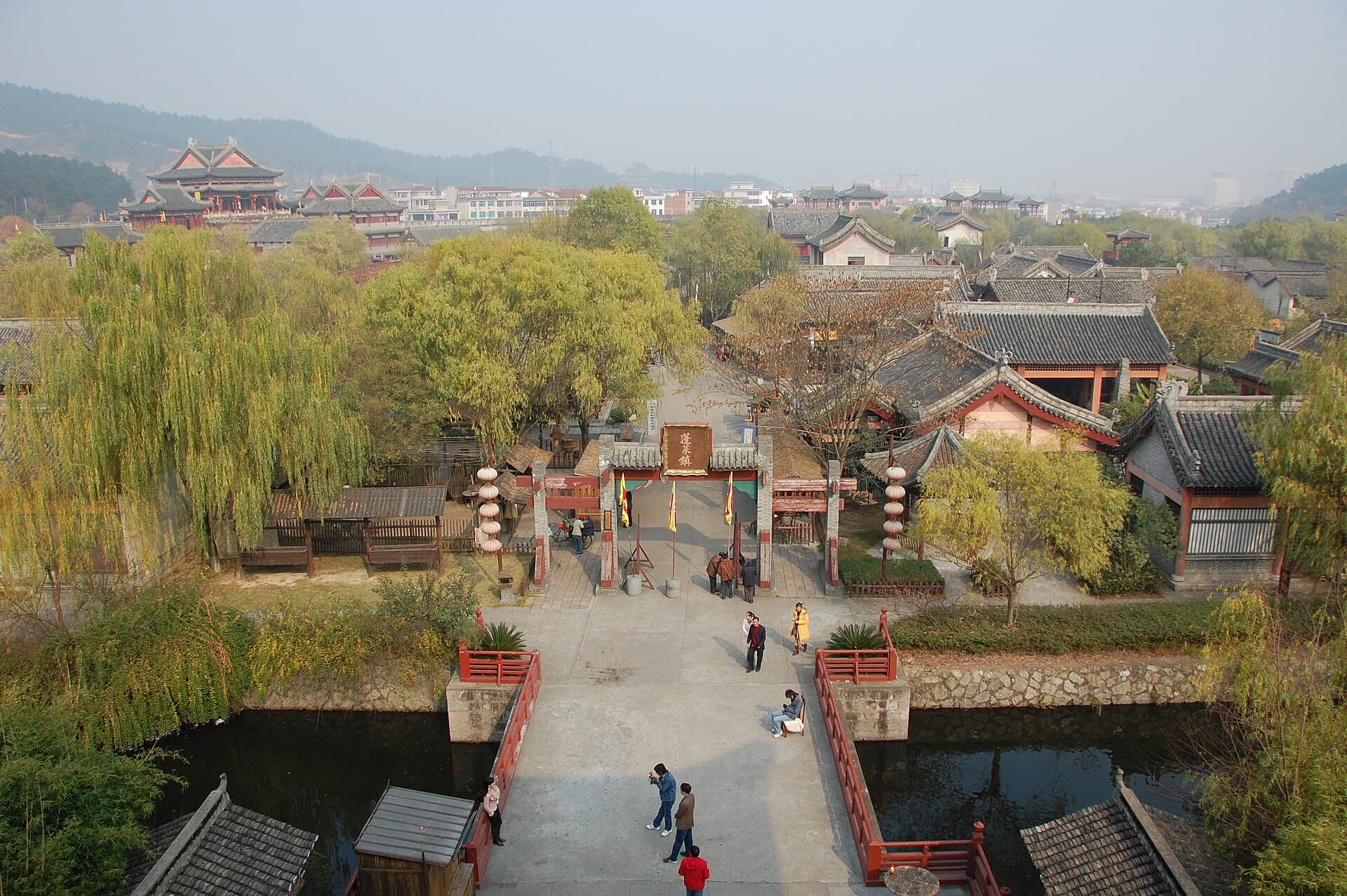
Three hours by road from Shanghai, in Zhejiang province, an entire town exists only to be filmed. Hengdian lines up full-scale replicas of the imperial palace, a Qing dynasty street, a 1930s Hong Kong district and dozens of permanent sets. Thousands of extras work there by the day, and several dozen shoots can run at the same time.
No other audiovisual industry in the world has such a tool. That is the first, very material reason China produces so many costume dramas: at home, the past is cheaper to film than the present.
The genre has a name, and it does not mean "historical"#
The word to know is , the "ancient costume series". It does not mean historical drama in the Western sense, but a family of productions set in a more or less imaginary past.
Under that umbrella live very different forms:
- : historical drama proper, with attested figures and events.
- : the palace intrigue, where imperial consorts manoeuvre to survive.
- : martial chivalry, its schools and its code of honour.
- : immortals, cultivation and celestial realms.
- : costume idol romance, the most produced category today.
Confusing these categories leads to false judgements. Faulting a xianxia for historical inaccuracy is like faulting a superhero film for weak legal procedure.
means "suspended in the void" and describes a deliberately fictional setting: invented dynasty, imaginary geography, chronology with no real anchor. The word has become a production tool as much as an aesthetic choice.
Regulation, an unexpected engine#
The paradox of the sector sits here. Chinese authorities regulate historical fiction closely: 2011 guidance discouraged time-travel plots, and several waves of restrictions have targeted palace intrigues, accused of glorifying courtly excess and distorting history, notably in early 2019.
The studios' answer was not to produce less, but to produce elsewhere. By moving the action into jiakong realms, writers escape the accuracy charge, since there is no longer a referent. Constraint therefore manufactured a genre: modern xianxia, with its celestial continents and invented dynasties, owes a great deal to that exit.
Economic measures had a comparable effect. After the tax scandals of 2018, regulators capped the share of budget that can go to actors' fees. Productions reinvested the difference where audiences can see it: sets, costumes, digital effects.
The fuel: online novels#
Almost every major costume series of the past decade comes from a novel published on the internet. Chinese writing platforms, Jinjiang for romance, Qidian for fantasy and wuxia, work as laboratories: very long texts build a readership chapter by chapter, and studios buy the rights to titles whose rankings do not fall back.
The advantage is double. The story has already been validated by an audience, and that audience forms the core viewership of the adaptation. The drawback is familiar: plots are long, which produces series of forty to sixty episodes, sometimes more.
That circuit also produced the genre's most exportable hit. The Untamed (陈情令, 2019), adapted from a novel, that literature of male romance, had to turn its central relationship into unbreakable friendship to clear censorship. The result was watched far beyond China, and served as an entry point for millions of foreign viewers.
| Series | Year | Subgenre | What it proved |
|---|---|---|---|
| Empresses in the Palace | 2011 | Palace intrigue | The genre can aim at adult writing |
| Nirvana in Fire | 2015 | Historical politics | A c-drama can be a critical benchmark |
| Story of Minglan | 2018 | Song domestic life | Careful reconstruction is a selling point |
| Story of Yanxi Palace | 2018 | Palace intrigue | The global platform phenomenon |
| The Untamed | 2019 | Xianxia | Mass export beyond Asia |
| Joy of Life | 2019 | Costume and comedy | The next season can take its time |
Platforms changed the measure of success#
Modern c-drama no longer depends on broadcasters. iQiyi, Tencent Video and Youku finance, distribute and exploit, with internal production "tiers" and models where viewers pay to watch episodes early.
That integration changes how shows are made. Platforms hold precise data on where viewers drop off, and it flows back to producers. The pacing of the first episodes, the placement of the meet-cute, the length of court sequences have all been adjusted accordingly.
International success travels the same channel. Story of Yanxi Palace was one of the most searched television shows in the world in 2018, carried by online distribution rather than by sales to foreign broadcasters. The international arms of the Chinese platforms, along with Western streaming catalogues, took over from there.
The Hengdian studios are open to visitors. A tourist can walk past several shoots in one day, rent court dress and be photographed in a replica of the Forbidden City whose interiors are in places more accessible than the original in Beijing.
Why now#
Three recent shifts explain the acceleration.
The first is aesthetic. Costume is photogenic by nature, and clips circulate endlessly on Chinese short-video platforms. A three-minute scene, pulled out of context, becomes free advertising for a fifty-hour series.
The second is the movement, that wave of pride in Chinese styles and brands. Costume has stopped being a disguise and become a cultural marker, with very real effects in fashion and in old-town tourism.
The third is the arrival of vertical short-form series, produced in a few weeks to be watched on a phone. Many are set in costume, with plots of revenge and rebirth, and they have opened the genre to an audience that does not watch long series.
The costume c-drama does not need to be faithful to the past. It needs to be recognisable in three seconds, and costume is exactly what makes that possible.
Three words are enough to follow drama talk in Chinese: 古装剧 (gǔzhuāngjù, costume series), 宫斗 (gōngdòu, palace intrigue) and 仙侠 (xiānxiá, the immortal tale). ChineseSRS, our spaced repetition app, installs that vocabulary along with the everyday Chinese around it.
The limits of the model#
The genre carries weaknesses Chinese viewers point out themselves.
Length remains a problem: many series stretch because episode count drives part of the revenue, and subplots multiply at the expense of pacing. Heavy reuse of the same sets and rented costumes produces a visual uniformity critics call "the Hengdian look". And dependence on adapted novels limits renewal: when one title works, ten projects in the same subgenre launch behind it.
Still, the genre has never been more visible outside China, and the barrier is no longer availability but habit: you have to accept a rhythm, a length and a system of conventions unlike any other.
Read alsoC-Drama: The Guide to Chinese Series Captivating the WorldTo choose where to start, genre by genre and show by show, our guide to c-dramas sorts it out.
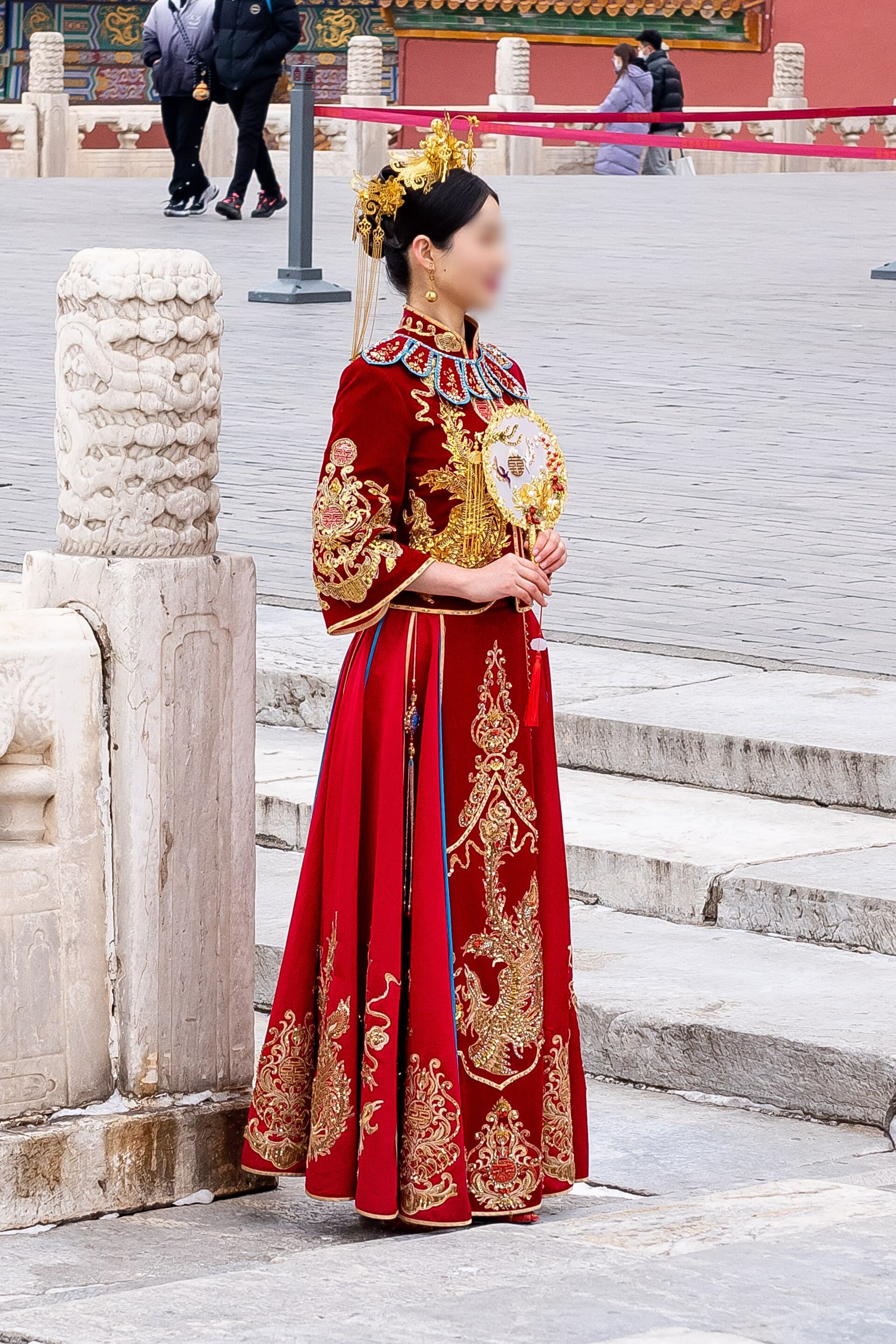
The costumes of these series left the screen long ago: they have become a fashion industry in their own right.
FAQ#
Are historical c-dramas faithful to history? Rarely, and often deliberately. A large share of production is set in invented dynasties, which shields it from accuracy complaints.
Why do the series have so many episodes? Because they adapt very long novels, and because episode count weighs in the platforms' business model.
Where can you watch them legally outside China? On the international services of the Chinese platforms and on several Western streaming catalogues, with subtitles of variable quality.
What is the difference between wuxia and xianxia? Wuxia stays human: martial arts, schools, a code of honour. Xianxia adds immortality, spiritual cultivation and celestial realms.
Which series should you start with? Nirvana in Fire for politics and writing, Story of Yanxi Palace for palace intrigue, The Untamed for xianxia and the scale of the phenomenon.
Photo credits: images in this article come from Wikimedia Commons and are under free licence.
C-drama fashion: from guzhuang to the Chinese street
Chinese series costumes, the mamianqun skirt, xiuhefu wedding outfits: how the c-drama wardrobe became a very real fashion industry.
Cover image: kanegen from Tokyo, Japan · Wikimedia Commons · CC BY 2.0