Japanese game centers: arcade culture and its decline
The history of Japanese game centers, from Space Invaders to claw machines: golden age, versus rituals, the collapse in venue numbers and the survivors.
La rédaction Kotoba Interactive
Studio éditorial
In the mid-1980s Japan counted more than 26,000 arcades registered with the national police. Fewer than 4,000 remain today. No other venue in Japanese popular culture has retreated so far in a single generation, and yet none has left a deeper mark: versus fighting, rhythm games, photo booths and a good part of modern gaming vocabulary were born in these halls.
The , which everyone shortens to , is at once a regulated business, a codified social space and a school of competition. For twenty years it has also been a sector in permanent reinvention. Its history tells how Japan played in public, and then stopped.
A business apart, framed by law#
Game centers fall under a specific legal regime in Japan: the entertainment business law, known as , classifies them among businesses requiring police authorisation, alongside other night-time leisure establishments. That classification, inherited from the postwar era and from suspicion towards gambling halls, explains rules that foreign visitors notice quickly: strict closing hours, evening access for minors limited by prefectural ordinance, a mandatory manager on site.
The law also draws a line with gambling: a game center cannot pay out cash. Hence the invention of , where you win an object, and of medal games (メダルゲーム), where tokens never leave the venue. The whole economy of claw machines follows from that regulatory constraint.
is the colloquial contraction of , a calque of the English game center. The operators' official term is quite different: アミューズメント施設 (amyūzumento shisetsu), "amusement facility", a neutral formulation chosen to distance these halls from the image of gambling.
1978: Space Invaders empties the nation's pockets#
The birth certificate of the Japanese arcade has a date. In 1978 Taito released , designed by Tomohiro Nishikado. The success was such that cafés and vacant premises converted into "Invader houses" (インベーダーハウス) lined with table cabinets around which customers sat as if at a counter.
The first rituals date from that period: the 100 yen coin placed on the cabinet edge to reserve your turn, scores chalked on a board, the crowd gathering behind a player on a streak. The 1980s set the lasting decor with Namco's Pac-Man (1980), Nintendo's Donkey Kong (1981), then upright single-screen cabinets replacing the tables.
A persistent legend holds that the triumph of Space Invaders caused a national shortage of 100 yen coins in 1978-1979. Video game historians consider it heavily exaggerated, since the Bank of Japan mainly increased its minting. The rumour is false in the letter and true in the spirit: the game did absorb an unprecedented share of Japanese pocket money.
1991: Street Fighter II invents versus#
The second earthquake was social as much as technical. With Capcom's Street Fighter II (1991), the cabinet stopped pitting a player against the machine and started pitting two strangers against each other. Operators invented the , two cabinets back to back and linked together, each player facing their own screen. It became possible to interrupt a stranger's game by inserting a coin, a gesture called , the intrusion.
From this came codes that still structure esports: the queue materialised by coins in a row, respect for the winner who keeps the cabinet, local players who become neighbourhood figures, the first in-venue tournaments. The Japanese fighting game community formed in that physical face-off, not online.
In a game center you were not playing an abstract opponent: you were playing someone sitting a metre away, whose breathing you could hear and whom you would meet again next week.
The mid-1990s widened the audience. Virtua Fighter (Sega, 1993) imposed 3D. Above all the , a sticker photo machine developed by Atlus and distributed by Sega, brought high school girls in numbers into halls that had been largely male. The word entered the language, and game centers gave whole floors to these booths.
Read alsoPurikura: The Japanese Photo Booths That Invented the SelfieThe sticker photo booth was born in arcades before becoming an industry of its own: the history of purikura and its retouching codes.
Rhythm games and the era of the body#
At the end of the 1990s Konami opened a genre that exists only in venues: the , music game. beatmania (1997) imposed its five-key keyboard and turntable; Dance Dance Revolution (1998) moved play to the feet and turned the player into a show for the street, the cabinet placed facing the window. Namco answered with Taiko no Tatsujin (2001) and its drums.
These machines have a property the living room cannot copy: they are expensive, take up significant floor space and require a heavy physical controller. That is why rhythm games remain, thirty years later, the main driver of attendance in Japanese venues, through series like beatmania IIDX, maimai or CHUNITHM and their ranking communities.
| Decade | Landmark machine | What it changed |
|---|---|---|
| 1978-1985 | Space Invaders (Taito) | Creates the venue itself and the table cabinet |
| 1985-1990 | UFO Catcher (Sega, 1985) | Establishes prize games, the future top revenue line |
| 1991-1995 | Street Fighter II (Capcom) | Invents versus, the taisen-dai and the coin queue |
| 1995-2000 | Print Club, then beatmania and DDR | Brings in a female audience, creates rhythm games |
| 2000-2010 | Networked cabinets and card games | Builds loyalty through saved data and online rankings |
| 2010-2026 | Claw machines and ongē | Refocuses the economy on prizes and community |
A Japanese arcade is read through its signage: 両替 (ryōgae, change machine), 景品 (keihin, prize), 一回 (ikkai, one play), 順番待ち (junban machi, queue). JapaneseSRS, our spaced repetition app for learning Japanese, is coming soon: join the waiting list to walk into a gēsen without hesitating in front of the buttons.
The decline: four causes stacking up#
The fall is clear in national police statistics: from a peak above 26,000 establishments in the mid-1980s, the estate dropped below 4,000 venues by the late 2010s. Operating revenue, which the Japan Amusement Industry Association (JAIA) estimated on the order of 700 billion yen in the 1990s, has shrunk by several hundred billion.
Four factors added up. Home consoles, from the PlayStation (1994) onwards, caught up with and then surpassed cabinet quality, removing the technical reason to leave the house. Mobile phones captured teenagers' free time and leisure budget in the 2010s. The property cost of large urban floors made multi-storey halls unsustainable. Finally the 2020 pandemic struck a sector that lives on physical attendance.
The year 2020 provides the symbol of the shift: Sega, whose sign was synonymous with arcades, withdrew from operations by selling its venue subsidiary to the GENDA group, a deal completed in 2022, with the halls rebranded GiGO. One of Sega's Akihabara buildings, the backdrop of thousands of tourist photos, had closed a few months earlier.
What survives, and why#
The sector did not die out, it specialised. Three models hold.
Claw machines first: prize games are now the top revenue line in Japanese venues according to JAIA surveys, driven by character licences, fast rotation of prizes and a family audience. A contemporary GiGO or Taito Station often devotes its entire ground floor to these machines.
Networked games next: cabinets linked to a server, personal save cards, national rankings, seasons. The model turns a one-off play into a de facto subscription, and retains the rhythm, mahjong or military simulation players that nothing at home replaces.
Retro sanctuaries finally, carried by enthusiasts and by social media. Mikado in Takadanobaba, Tokyo, streams its tournaments online and survived the health crisis thanks to a crowdfunding campaign; the Hey arcade in Akihabara remains a pilgrimage site for shoot 'em up fans. These addresses live as much on their distant audience as on their machines.
Read alsoSega: the rise and fall of a video game giantSega's withdrawal from venue operation is part of a longer trajectory, from arcade triumph to console-less publisher.
What the venue had, and the screen does not#
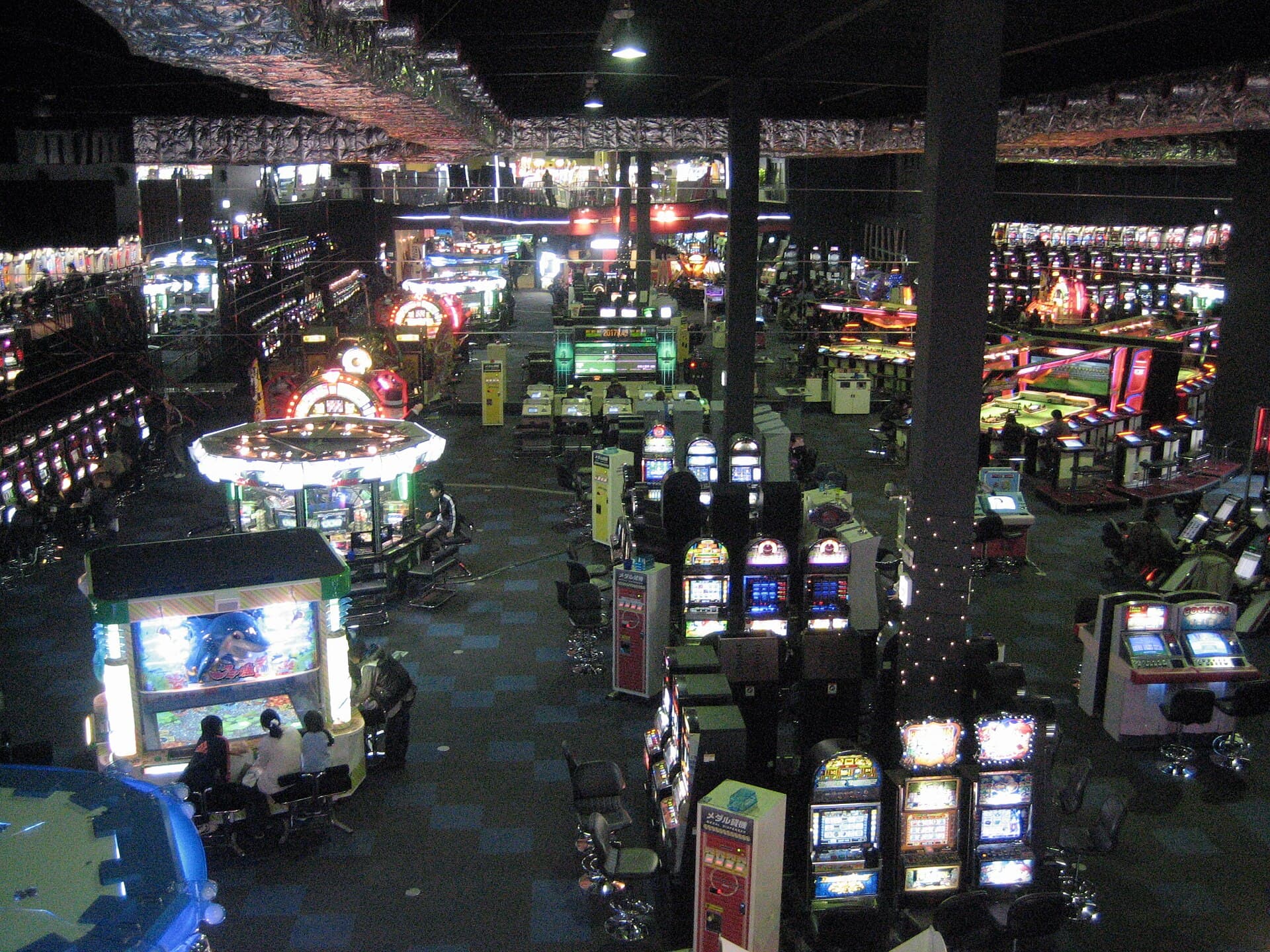
Something in a Japanese game center has never been digitised: the noise. A wall of layered sound, recorded announcements, the clack of joysticks, the mechanics of the claws, a humid warmth and the smell of heated plastic. That materiality is exactly what founded a culture of playing in public, with its visible hierarchies, its codes of politeness and its enforced encounters.
The venues still standing have understood it: they no longer sell access to a game available everywhere, but the experience of playing it in front of others. The game center went from being obvious to being a choice, and that may be what lets it last.
FAQ#
What exactly does "game center" mean in Japan? A game center (ゲームセンター, shortened to ゲーセン) is an arcade. It is a business regulated by the entertainment business law, which imposes opening hours, restrictions on minors and a ban on cash payouts.
Why are game centers closing? Four causes stack up: rising home console quality since the 1990s, smartphones capturing leisure time, the cost of urban commercial property and the shock of the 2020 pandemic. The estate fell from more than 26,000 venues to fewer than 4,000.
Which game launched Japanese arcade culture? Taito's Space Invaders, released in 1978. Its success converted cafés and vacant premises into "Invader houses" and set the first rituals of the venue, including the 100 yen coin placed to reserve a turn.
What is a taisen-dai? The taisen-dai (対戦台) is the arrangement of two back-to-back cabinets that appeared with Street Fighter II in 1991: each player sees their own screen and faces a stranger. It produced the codes of versus fighting, including rannyū, a challenger's intrusion.
What is left of arcades in Japan today? Three models survive: claw machines, now the top revenue line; rhythm games and networked cabinets that the living room cannot reproduce; and a few retro venues such as Mikado in Takadanobaba, supported by their online community.
Photo credits: the images in this article come from Wikimedia Commons and are under a free license.
Comiket: The World's Largest Fanzine Fair
Comiket (コミックマーケット): 32 tables in 1975, 35,000 today. The history of Tokyo's dōjinshi fair, how it runs, its legal grey zone and its parallel economy.
Cover image: Corpse Reviver · Corpse Reviver, via Wikimedia Commons · CC BY-SA 3.0