Comiket: The World's Largest Fanzine Fair
Comiket (コミックマーケット): 32 tables in 1975, 35,000 today. The history of Tokyo's dōjinshi fair, how it runs, its legal grey zone and its parallel economy.
La rédaction Kotoba Interactive
Studio éditorial
, shortened to コミケ, is a fair for self-published comics held twice a year in Tokyo, in August and at the end of December. With roughly 35,000 tables and several hundred thousand visits per edition, it is the largest fan gathering in the world.
It resembles no other convention. Nothing is sold there by a publisher: every table is staffed by an author or a collective, called a サークル (sākuru, "circle"), selling what they printed themselves.
1975, thirty-two circles#
The first Comiket was held on 21 December 1975 in a meeting room in Toranomon, Tokyo. Thirty-two circles took part, for around seven hundred visitors. It was organised by the critical group 迷宮 (Meikyū), around 米澤嘉博 (Yoshihiro Yonezawa), who remained its representative until his death in 2006.
The event was born of a grievance: fanzines of the day had nowhere to be sold, and existing conventions vetted their exhibitors. Comiket's founding principle is the opposite: take everyone, with no quality panel.
One fact is often forgotten. Women were the majority at the early editions, and a good share of the circles came from shōjo manga fandom, source of the early works that would later shape the BL genre. The cliché of a men's convention came afterwards and was never accurate.
同人誌 (dōjinshi) combines 同人 (dōjin, "people of the same taste", a circle of authors) and 誌 (shi, "publication"). The word denotes a self-published work, original or derivative. It long predates manga: Japanese literary magazines of the early twentieth century already called themselves that.
How it works#
The fair's vocabulary is as codified as its organisation.
| Term | What it is |
|---|---|
| サークル | The exhibiting circle, one person or a group, holding a table |
| 一般参加者 | The visitor, designated a "general participant" rather than a customer |
| カタログ | The catalogue, once a phone-book-sized volume, now digital |
| 壁サークル | Circles in heavy demand, placed along the walls to absorb queues |
| 島中 | The middle of the aisles, where the vast majority of exhibitors sit |
| 企業ブース | Corporate booths, the only commercial presence, in a separate hall |
Getting a table means entering a lottery: applications far exceed available spots. The organising body, the コミックマーケット準備会, publishes a thick rulebook every exhibitor undertakes to follow, and runs the event with several thousand volunteers in vests.
One phrase recurs in all its texts: there is no audience at Comiket, only participants. A visitor who stacks a chair or flags a problem is part of the machinery, which explains the queue discipline foreign news reports return to every year.
The numbers#
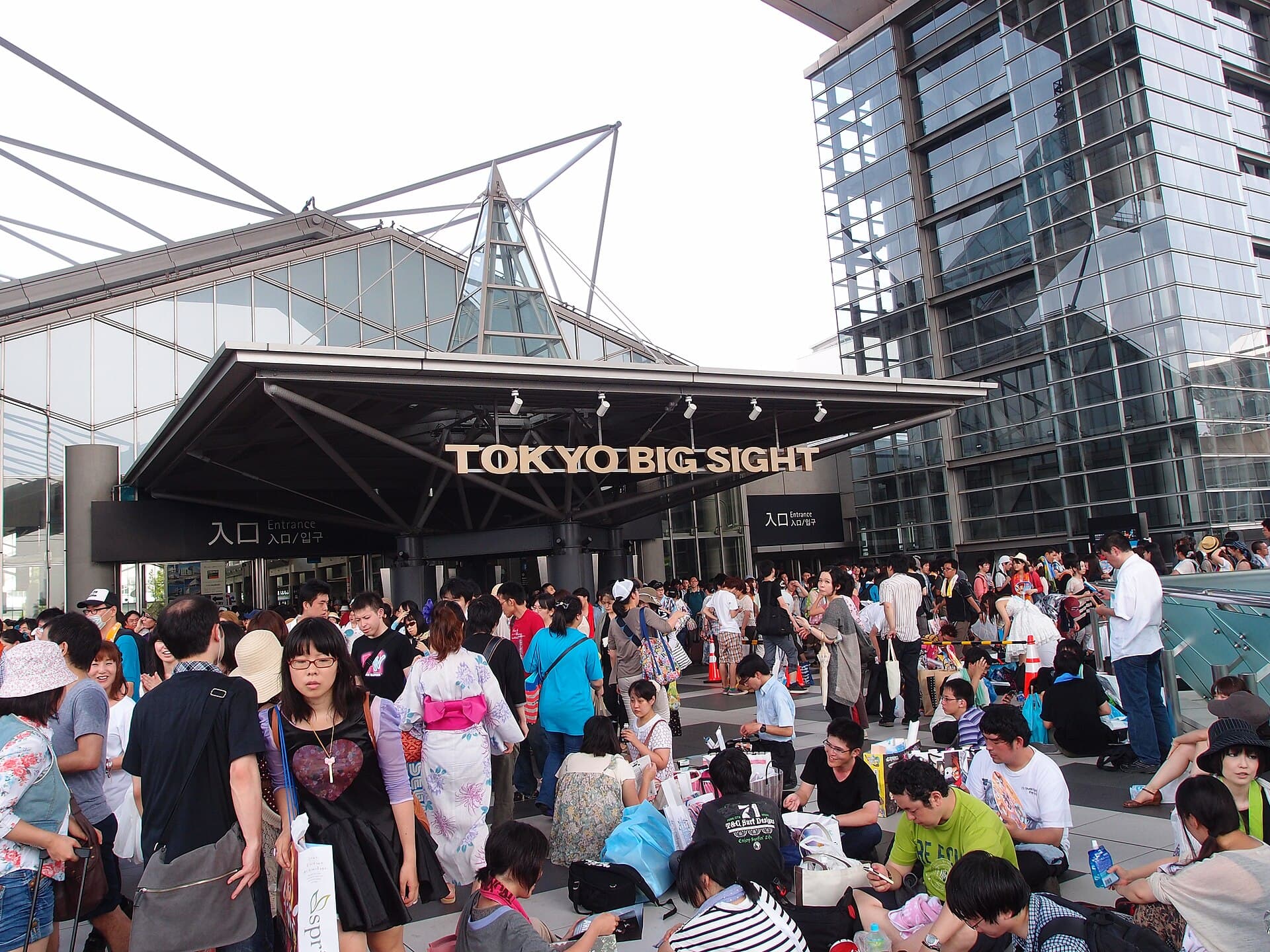
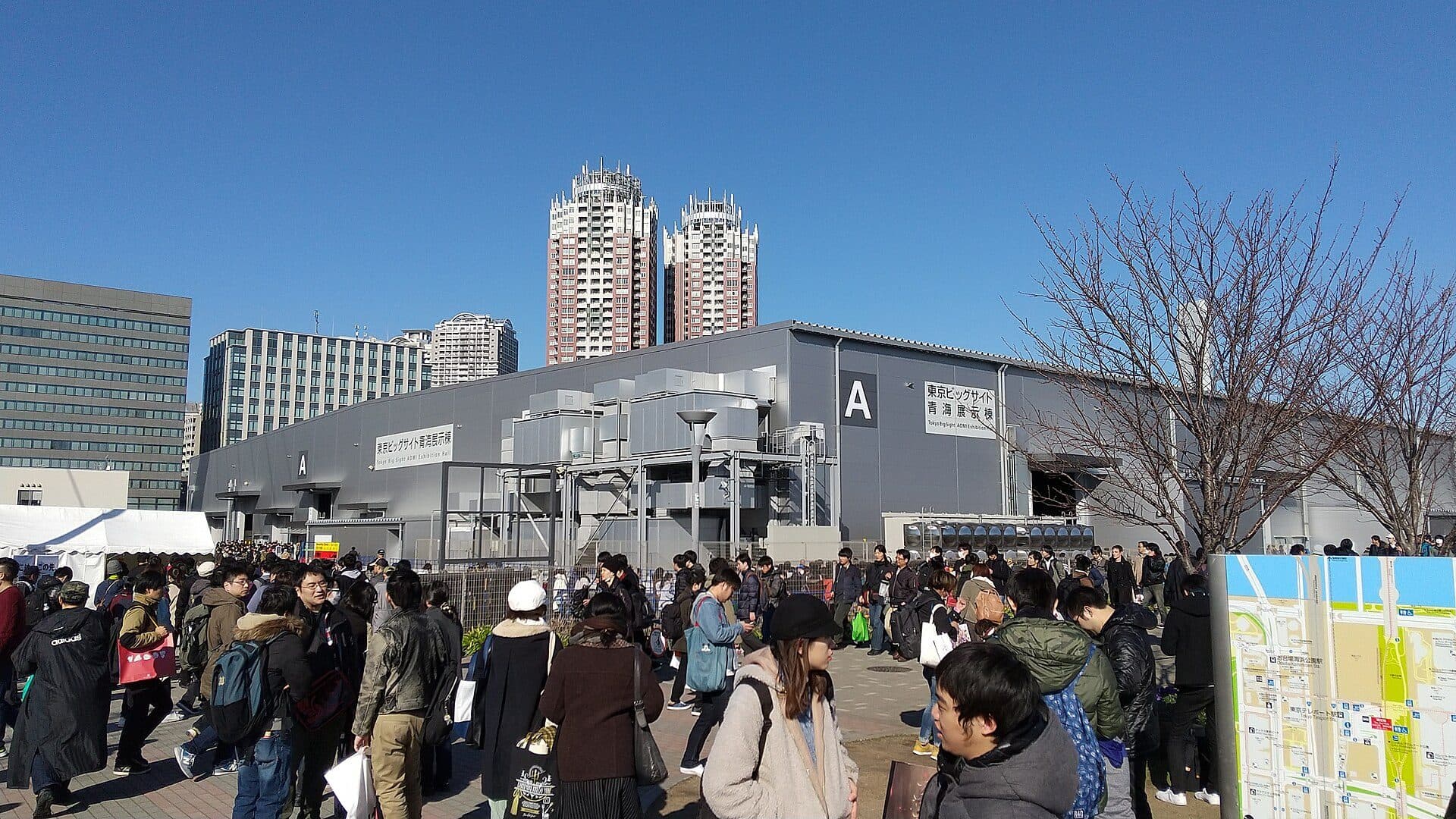
The event grew until it filled its walls. It was held at Harumi until the mid-1990s, then at Tokyo Big Sight from 1996, the only site in the city able to take it.
The historic peak came in August 2019: four days instead of three, more than 700,000 cumulative visits, an extended edition because the venue was to be requisitioned the following year as the Olympic press centre.
The summer 2020 edition was cancelled, the first interruption in forty-five years. The fair returned in December 2021 in a modified form that has since become the norm: reduced capacity, advance registration and a paid entry for everyone, in the shape of a wristband, where general admission had always been free. Recent editions run at 250,000 to 280,000 visits over two days.
Comiket was never a commercial fair that welcomes amateurs. It is an amateurs' fair that commerce visits.
Japanese fan vocabulary is quick to learn because it turns up everywhere: 同人誌 (dōjinshi), 新刊 (shinkan, the new release a circle brings for the occasion), 完売 (kanbai, "sold out"). JapaneseSRS teaches these words with their kanji and their contexts.
The legal grey zone#
A large share of what sells at Comiket is 二次創作 (niji sōsaku), derivative work: characters owned by publishers, drawn and published by third parties, without a licence.
Japanese law permits this no more than French law does. What holds the system together is the tolerance of rights holders, who see in it a testing ground, a talent pool and a machine for sustaining attachment to their series. Several publishers issue charters spelling out what they accept: small-scale non-commercial use, no reproduction of original artwork, no industrial merchandise.
The balance came up for debate in 2018, during the revision of Japanese copyright law that followed the trans-Pacific agreement, which made certain infringements prosecutable without a complaint from the rights holder. The final text carried written conditions so as not to sweep up derivative fanzines, after the sector mobilised.
What the fair has produced#
Comiket works as a documented springboard. The collective CLAMP sold its first fanzines there before becoming one of the most widely read manga studios in the world. Video game series born as amateur work, starting with ZUN's Tōhō Project, found their initial audience there and still sustain an ecosystem of dozens of circles at every edition.
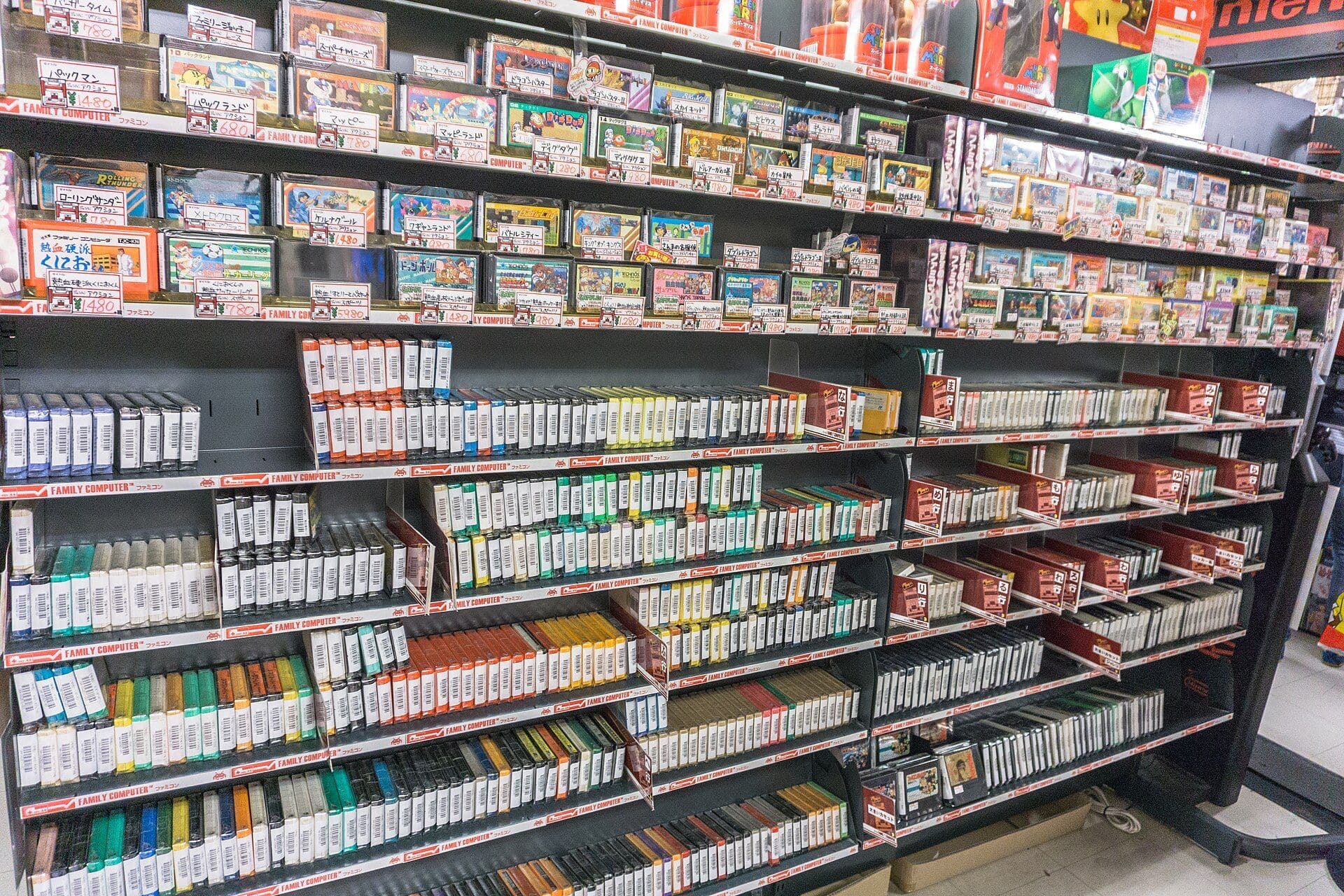
A whole economy has grown around it: printers specialising in short runs delivered straight to the table, resale shops such as Toranoana and Mandarake, digital sales platforms. The fair itself takes no commission on sales.
The Comiket catalogue, long sold in print, ran past 1,300 pages and weighed more than two kilos. Regulars cut it up by hall so they only had to carry the useful pages, until the digital version made the exercise pointless.
FAQ#
When is Comiket held? Twice a year, in August and late December, over two to four days depending on the edition, at Tokyo Big Sight.
Do you have to pay to get in? Yes, since the December 2021 restart. General admission used to be free, with the paid catalogue serving as the visitor's usual contribution.
Is it worth going if you do not read manga? Nothing forbids it, but the event is dense, hot in August, and built for buyers who know what they are after. The catalogue and the floor plan are essential.
Are derivative fanzines legal? They rest on rights holders' tolerance, not on a legal exception. Several publishers issue charters setting out the uses they accept.
Read alsoCosplay: From American Sci-Fi to Japanese Pop Culture PhenomenonCosplay, the other fan practice born in the aisles of Japanese conventions, and its history.
Sources and further reading#
- Comic Market Preparatory Committee (コミックマーケット準備会), edition reports and rulebooks
- Yoshihiro Yonezawa Memorial Library, Meiji University, collection devoted to the history of dōjinshi
- Agency for Cultural Affairs (文化庁), copyright law revision, 2018
In this article
The cultural terms covered here, each with a short definition.
- Comiket
- Huge twice-yearly Tokyo fair where doujin creators sell self-published manga and games.
Doujinshi: the amateur manga that shaped Japan
Doujinshi (同人誌), self-published manga made by circles of enthusiasts, fuels Comiket and launched CLAMP and Type-Moon. Inside a counter-economy of drawing.
Cover image: 高木あゆみ · 高木あゆみ, via Wikimedia Commons · CC BY-SA 4.0