Kaizen: The Japanese Philosophy of Endless Improvement
Born in postwar Japan at Toyota, the kaizen philosophy transforms daily life through tiny, constant improvements, at work and beyond.
La rédaction Kotoba Interactive
Studio éditorial
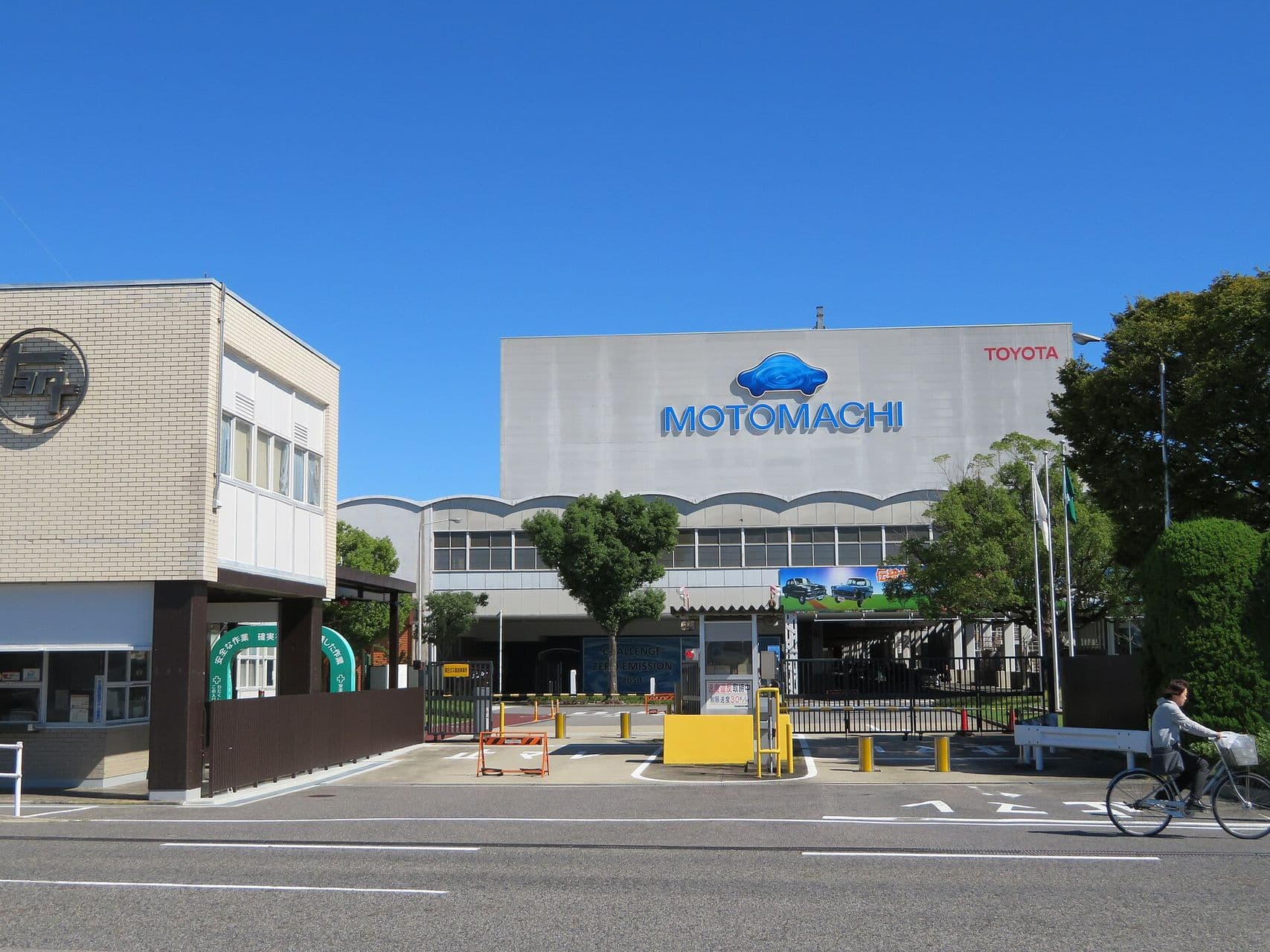
Inside the Toyota plant in Takaoka, near Nagoya, a worker on the assembly line notices that the bolt he tightens on the front right door, at a rhythm of one car every sixty seconds, requires a minuscule extra twist of the wrist. He pulls the , the lighted cord every worker is encouraged to activate the moment they detect an anomaly. The line stops; an hour later, the jig is adjusted by three millimeters. Multiplied by a thousand cars a day and three hundred days a year, that half-second saved adds up to millions of gestures spared. This has a name known around the world: , from and , literally "change for the better." Behind those syllables lies a revolution that allowed a Japan devastated in 1945 to become the world's second largest economy within forty years, and one that still shapes management and self-improvement alike.
The Roots of Kaizen: From Defeated Japan to Industrial Revolution#
To understand kaizen, you have to return to Japan in 1945 to 1950: a country in ruins, charred cities, a shattered economy, dismantled factories, a starving population. Companies, stripped of capital, raw materials and markets, face an absolute imperative: produce more and better with infinitely less. It is in this urgency that kaizen takes root.
Irony of history: this quintessence of Japanese thinking owes a great deal to two American consultants sent by General MacArthur's occupation. W. Edwards Deming (1900 to 1993), a Yale-trained statistician, and Joseph M. Juran (1904 to 2008), a Romanian-born engineer who became a global quality-control authority, arrived in Japan at the turn of the 1950s at the invitation of JUSE (Japanese Union of Scientists and Engineers), founded in 1946. They delivered seminars to executives at Toyota, Mitsubishi, Sony and NEC on statistical quality control. Deming, dismissed back home, found an audience hungry for ideas.
The PDCA cycle (Plan-Do-Check-Act) sits at the heart of his teachings: instead of treating a process as a fixed step that is executed and then forgotten, conceive it as a permanently rotating loop (plan, implement, check, adjust, start again). This logic overturned a Western industrial tradition founded on rigid procedures.
The Japanese did not copy American methods: they transformed them. In a culture where humility, collective spirit and attention to detail prevail, continuous improvement found fertile ground. Deming spoke of statistics; the Japanese spoke of and . The synthesis produced something without precedent: a scientific method rooted in a Zen philosophy, which would name kaizen and introduce to the world in his 1986 book, Kaizen: The Key to Japan's Competitive Success.
Before the 1950s, kaizen meant simply "to improve" or "reform." Its use by Toyota, then by Imai, gave it its modern sense: a systematic philosophy involving every employee at every level.
Toyota and the Toyota Production System: Operational Birth#
No company embodies kaizen like Toyota. It was in the factories of the firm founded in 1937 by that the concept reached its most accomplished form, driven by two engineers: and .
The Legacy of Sakichi Toyoda and the Invention of Jidōka#
The story reaches back to Kiichirō's father, , an inventor who filed his first loom patent in 1891 and founded the Toyoda Loom Works in 1907. In 1924 he perfected the G-Type loom, the world's first fully automatic loom capable of stopping production the moment a thread broke. This principle, which he named , would become one of the two pillars of the Toyota Production System: rather than churning out defects at scale, let the machine stop so a human can intervene. The right to halt the line, granted to every operator, is the living translation of this philosophy.
Taiichi Ōno and the Toyota Production System#
After World War II, as Toyota shifted from looms to automobiles, Taiichi Ōno, who joined the company in 1943, systematized these principles. Inspired by American supermarkets, where shelves are restocked only as purchases are made, he developed from the 1950s the , or "Toyotism."
TPS rests on two inseparable pillars: jidōka and just-in-time (JIT), whereby each workstation produces only what the next needs, without intermediate stock or overproduction. Kaizen is the tool that lets these two pillars work in harmony.
Daily practice takes shape in several rituals. Quality circles, , gather small groups of workers (five to ten) to identify problems and propose improvements. The has managers leave their offices to observe work directly on the line. Standardization, finally, is not bureaucratic rigidity but a temporary baseline that each improvement is meant to revise.
Shigeo Shingō and SMED#
Shigeo Shingō, an engineer-consultant at Toyota, formalized several fundamental methods. SMED (Single-Minute Exchange of Die), which reduces press tooling changeover from hours to under ten minutes in some cases, revolutionized line flexibility. , simple devices that prevent human error at its source (a part only fits one way, a button only activates under certain conditions), embodies kaizen applied to prevention.
These methods spread worldwide from the 1970s. Toyota, which produced 100,000 cars per year in 1955, was building 3.3 million by 1980 and 8 million by 2010, and through the 2000s and 2010s regularly held the position of world's top automaker, ahead of General Motors and Ford. Kaizen was the invisible ingredient of this rise.
The vocabulary of kaizen is rooted in a language of subtle nuance: 改善 (kaizen, "change for the better"), 現場 (genba, "the actual place") and 無駄 (muda, "waste"). Learn to read these words in their original script with the spaced repetition of JapaneseSRS, one small vocabulary step per day.
The Fundamental Principles of Kaizen#
Behind its apparent simplicity, kaizen rests on a precise body of concepts, developed in Japan between the 1950s and the 1980s.
The Three Ms: Muda, Muri, Mura#
The Japanese codified three broad categories of waste, the three Ms:
| Concept | Script | Meaning | What it refers to |
|---|---|---|---|
| Muda | 無駄 (muda) | Waste | Resources consumed without adding value |
| Muri | 無理 (muri) | Unreasonable | Overloading of people or machines |
| Mura | 斑 (mura) | Irregularity | Erratic variation, peaks and troughs of activity |
- refers to anything that consumes resources without adding value. Taiichi Ōno distinguished seven forms: overproduction, waiting, unnecessary transport, unnecessary processing, excess inventory, unnecessary motion and defects. Later authors added an eighth: the underuse of human creativity.
- refers to overloading people or machines, which eventually generates accidents, breakdowns and absenteeism.
- refers to erratic variation, peaks and troughs of activity, which wear down teams and machines far more than steady output.
These three enemies must be hunted simultaneously: eliminating muda without addressing muri exhausts teams, reducing muri without smoothing mura generates new muda.
The PDCA Cycle and the 5S Method#
The PDCA cycle, inherited from Deming, remains the core tool. Plan: identify a problem, analyze its causes, define an improvement. Do: implement it on a small scale. Check: measure results. Act: standardize it if it works, restart if it does not. Each cycle solves only a small problem, but the accumulation of thousands of cycles radically transforms an organization.
The 5S method, developed in Japan in the 1980s and popularized by , organizes the workplace around five Japanese words starting with "s":
- : sort, eliminate what is unnecessary
- : set in order, give everything its place
- : shine, clean
- : standardize rules of order and cleanliness
- : sustain the discipline over time
The 5S are not a tidying checklist: they form the gateway to kaizen, the step that lets every operator become an actor of its improvement.
The "Ask Why Five Times" Principle#
One of kaizen's most emblematic practices is the 5 whys. Faced with a problem, you do not settle for the apparent cause: you ask "why?" five times in a row, until you reach the root cause. The canonical example, given by Ōno, is a stopped machine: why? Overloaded. Why? Bearings insufficiently lubricated. Why? The oil pump was underperforming. Why? Its shaft was worn. Why? No filter was keeping dust out. The root cause was not the machine but the missing filter, which costs pennies where repeated pump repairs would cost fortunes. The technique invites you never to accept the first explanation and to look beyond the symptom.
Kaikaku and Kaizen: Two Speeds of Change#
Japanese distinguishes from . Where kaizen proceeds through daily micro-adjustments, kaikaku is a brutal transformation, often top-down: a new production line, a complete process redesign, a massive investment. Kaikaku creates the conditions for a fresh start, kaizen polishes it day to day.
Practicing only kaikaku exhausts teams; practicing only kaizen risks missing major disruptions. The best-performing organizations alternate both tempos.
Beyond the Enterprise: Kaizen as a Philosophy of Daily Life#
Born in industry, kaizen has long since outgrown the factory to become a genuine philosophy of life.
Personal Kaizen: The Small Steps Method#
Robert Maurer, a UCLA psychologist, popularized personal kaizen in One Small Step Can Change Your Life (2004). His thesis: ambitious goals most often produce anxiety, procrastination and failure, because the brain, wired to detect threats, resists changes perceived as massive. Personal kaizen proposes the opposite: steps so small they slip under the radar of this resistance.
The canonical example: someone wanting to start exercising does not set "one hour per day" but "one minute of walking per day." One minute, no one lacks the time. The second week, two minutes; the third, five. Six months later, the habit is anchored. It all rests on the trivial nature of the first step, which breaks the barrier of starting.
This method, sometimes called atomic habits by James Clear in his 2018 bestseller, or mini habits by Stephen Guise, has direct roots in Japanese kaizen.
Wabi-sabi, Ganbaru, and Kaizen: A Cultural Constellation#
Kaizen belongs to a Japanese cultural constellation. , the aesthetic of imperfect and ephemeral beauty, reminds us that nothing is ever truly finished. , "to persevere, to do one's best," embodies the ethics of steady effort. , the obsession with detail that makes a master sushi chef spend ten years learning to cook rice before touching fish, expresses the same patience applied to excellence. These notions form the substrate that makes kaizen possible: outside Japan, the greatest difficulties are often cultural before they are technical.
Kaizen in Education and Parenting#
The small-steps philosophy has also resonated in education. Pedagogies of progressive learning and emphasis on effort (such as those inspired by Carol Dweck and the growth mindset) share the kaizen spirit. Rather than asking a student to "become good at math," they ask to improve proofs by 1 percent per week: a micro-goal that is attainable and measurable.
In parenting, the same spirit imbues family kaizen, where a household tests one micro-improvement each week: a bedtime ritual, a way to prepare breakfast, a rule on screen time. Validated or dropped after a few weeks, these small experiments transform family life without friction.
Kaizen is not the sum of great feats. It is the sum of small gestures, repeated with patience, none of which alone would suffice, but whose addition, over years, reshapes the face of a company, a family or a life.
Global Kaizen: From the West to Silicon Valley#
In the 1980s, as Japanese cars overwhelmed the American market and Sony TVs eclipsed their competitors, the West sought to understand the strength of the Japanese model. Kaizen then experienced its first wave of global diffusion.
Masaaki Imai and the Export of the Concept#
Masaaki Imai played a central role. A graduate of the University of Tokyo, he founded the Kaizen Institute in Tokyo in 1986 (today headquartered in Zug, Switzerland, with branches in more than thirty countries) and that same year published Kaizen: The Key to Japan's Competitive Success, translated into more than fifteen languages.
The Shingo Prize, created in 1988 at Utah State University in tribute to Shigeo Shingō, rewards companies that best embody operational excellence.
Lean Manufacturing and Its Adaptations#
From the late 1980s, driven by MIT and the International Motor Vehicle Program, the Toyota Production System was rebranded as lean manufacturing. The 1990 book The Machine That Changed the World by James Womack, Daniel Jones and Daniel Roos, the result of a five-year study, enshrined the term "lean" for Western managers.
The movement swept every sector: automotive, aerospace (Boeing, Airbus), electronics (Intel, HP), healthcare (lean healthcare), administration, financial services. In the 2000s, Six Sigma, developed by Motorola then General Electric, merged with lean to form Lean Six Sigma.
In companies that apply these methods seriously, results are often spectacular: 50 to 90 percent reductions in lead times, fewer defects, improved employee satisfaction. But failures, due to superficial application, are numerous.
Kaizen and Silicon Valley#
At the turn of the 2000s and 2010s, kaizen found a second wind in Silicon Valley. Agile methodologies, born from the 2001 Agile Manifesto, share its principles: short iterations, self-organization. Scrum includes a retrospective ritual at the end of each sprint: PDCA in disguise.
Lean startup, a concept developed by Eric Ries in 2011, applies the kaizen philosophy to entrepreneurship: the MVP (Minimum Viable Product) and build-measure-learn, driven by real customer feedback. Amazon, Google and Toyota itself, through its Toyota Research Institute, embody this fusion of Japanese kaizen and American innovation.
The Limits of Export#
The global diffusion has not been without disappointment. Many companies have implanted the tools (kanban, 5S, quality circles) without adopting the philosophy. Several authors, including Imai himself, have stressed that kaizen is not a set of tools but a mindset to cultivate. Without patience, humility and long-term management commitment, the tools become empty shells.
Western corporate culture, marked by financial short-termism, rapid leadership turnover and distrust of the shop floor, sometimes structurally resists a practice that unfolds over the long run.
Criticism and Limits of Kaizen#
Kaizen is not universally praised. Since the 1990s, critical voices, some from within the Japanese world, have pointed to its possible drifts.
Kaizen as a Tool for Work Intensification#
When every worker is encouraged to eliminate waste, including the micro-breaks that provide respite, productivity gains can translate into heightened pressure. Journalist Satoshi Kamata, in Japan in the Passing Lane (1982), documented the sometimes brutal reality of Toyota factories in the 1970s: punishing pace, scant breaks.
The phenomenon of , death by overwork, documented in Japan since the 1970s, hovers over any evaluation of the Japanese model. Kaizen is not directly responsible, but it developed in a culture where total employee engagement is the norm.
The Illusion of Consensus#
Kaizen assumes a harmony of interests between management and workers. Yet productivity gains can be captured mostly by shareholders or customers, without equivalent return to the workers who generated them. Several labor economists, notably Philippe Askenazy in France and Mike Parker in the United States, have pointed to this imbalance.
In some companies, "quality circles" have become mandatory rituals where employees are pressed to find improvements under threat of sanction.
Conservatism and Resistance to Disruption#
A company focused on incremental improvement can miss the disruptions that render its processes obsolete. Kodak polished its silver-halide lines without seeing digital photography coming; Nokia applied rigorous lean methods while missing the smartphone revolution.
Kaizen alone is not enough: it must be paired with occasional ruptures, with kaikaku, or even with a capacity to destroy what was built to start afresh. Companies that survive alternate kaizen and disruption.
Kaizen Facing the Environmental Crisis#
Finally, kaizen was conceived within a growth paradigm, an assumption under challenge in the era of ecological crisis. Some authors in the degrowth or industrial ecology movements propose a reoriented kaizen aimed at reducing ecological footprint at constant utility. Toyota itself has begun this shift, with carbon neutrality goals for its factories by 2035.
Kaizen in the Twenty-First Century#
More than seventy years after its birth, kaizen finds new fields of application.
In healthcare, lean healthcare has become a major movement: hospitals like Virginia Mason in Seattle, Saskatoon Health Region in Canada and AP-HP in Paris apply it to reducing waiting times and preventing medical errors. Documented results are sometimes spectacular: emergency-room wait times cut by two-thirds, nosocomial infections down 80 percent in some wards.
In public administration, countries like the United Kingdom with its Office for Improvement, Japan and Singapore have institutionalized kaizen-type practices: digitizing procedures, reducing processing times.
In sustainability, kaizen now applies to carbon footprint: companies like Unilever, Patagonia and Interface gradually reduce emissions, water use and waste, resting on thousands of accumulated micro-improvements.
In personal life, finally, kaizen feeds a vast self-improvement literature: habit-tracking apps, bullet journal, pomodoros, well-being approaches that advocate daily meditation. All share the kaizen spirit: prefer consistency to flash.
Kaizen is not a method, it is a way of inhabiting time. Every day is a chance to do a little better than yesterday, without ever believing you have arrived. And perhaps that is the deepest wisdom Japan has offered the modern world.
Born in the ashes of postwar factories, kaizen has become one of Japan's most influential cultural exports: a life philosophy, a management method, a self-improvement tool, a lever for transforming public services and the ecological transition. Its success comes from its capacity to reconcile the irreconcilable: the ambition to transform the world and the humility of the small step. Misunderstood, it becomes another form of pressure; properly applied, a path to mastery and meaning. It reminds us of an often forgotten truth: that most changes that matter happen silently, through the patient accumulation of small gestures, each nearly invisible, together irreversible.
Photo credits: images used in this article come from Pexels and Unsplash and are royalty-free.
In this article
The cultural terms covered here, each with a short definition.
- Kaizen
- Japanese philosophy of continuous improvement through small, constant gains.
Nemawashi: The Japanese Art of Deciding by Consensus
Nemawashi (根回し), the Japanese art of building consensus before the meeting even begins. Origins, its link to ringi and the hanko seal, strengths and limits.
Cover image: Evelyn-rose · Evelyn-rose, via Wikimedia Commons · CC0