Nemawashi: The Japanese Art of Deciding by Consensus
Nemawashi (根回し), the Japanese art of building consensus before the meeting even begins. Origins, its link to ringi and the hanko seal, strengths and limits.
La rédaction Kotoba Interactive
Studio éditorial
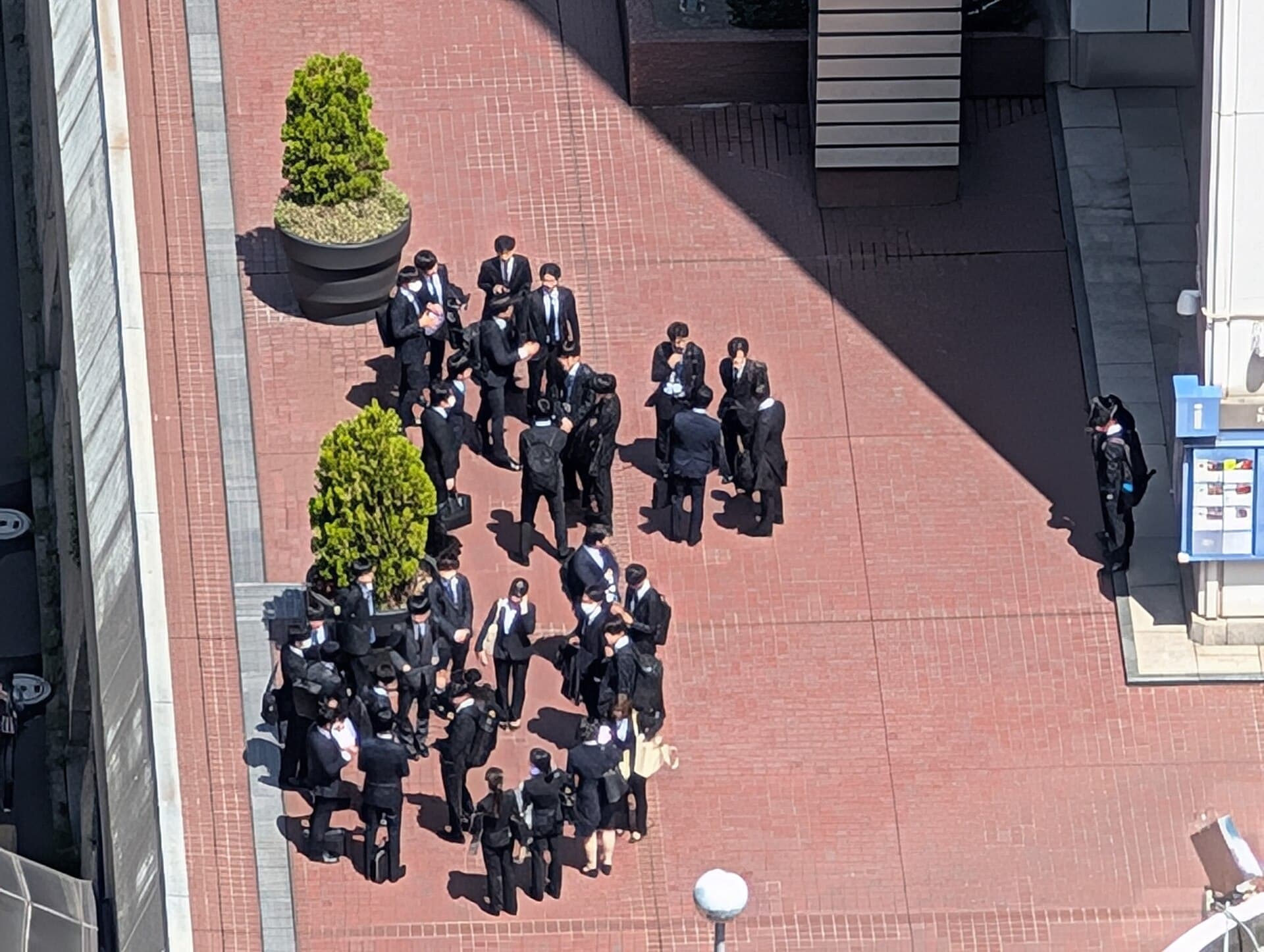
In an office tower in Ōtemachi, Tōkyō's business district, a leadership meeting begins at exactly two o'clock. The project manager presents his proposal, the executives nod, a few questions are asked, and within twenty minutes the decision is adopted unanimously. A Western observer might think he was watching a rushed formality, a mere simulation of deliberation. He would be both wrong and right: the meeting really was just a formality, but the actual decision had already been made. It had taken shape over days, in hallways, over coffee, at a well-lubricated dinner, through a succession of discreet conversations that no one ever put on record. This underground work has a name: .
Nemawashi is perhaps the most misunderstood concept in Japanese management culture. It is too often reduced to "hallway lobbying" or to some exasperating bureaucratic slowness. It is in fact a complete philosophy of collective decision-making, one in which a group is never asked to rule cold, but where the ground is patiently prepared so that, by the time the official moment arrives, agreement is already ripe. To understand nemawashi is to understand why Japanese companies seem so slow to decide and so formidably fast to execute.
Working Around the Roots Before Transplanting#
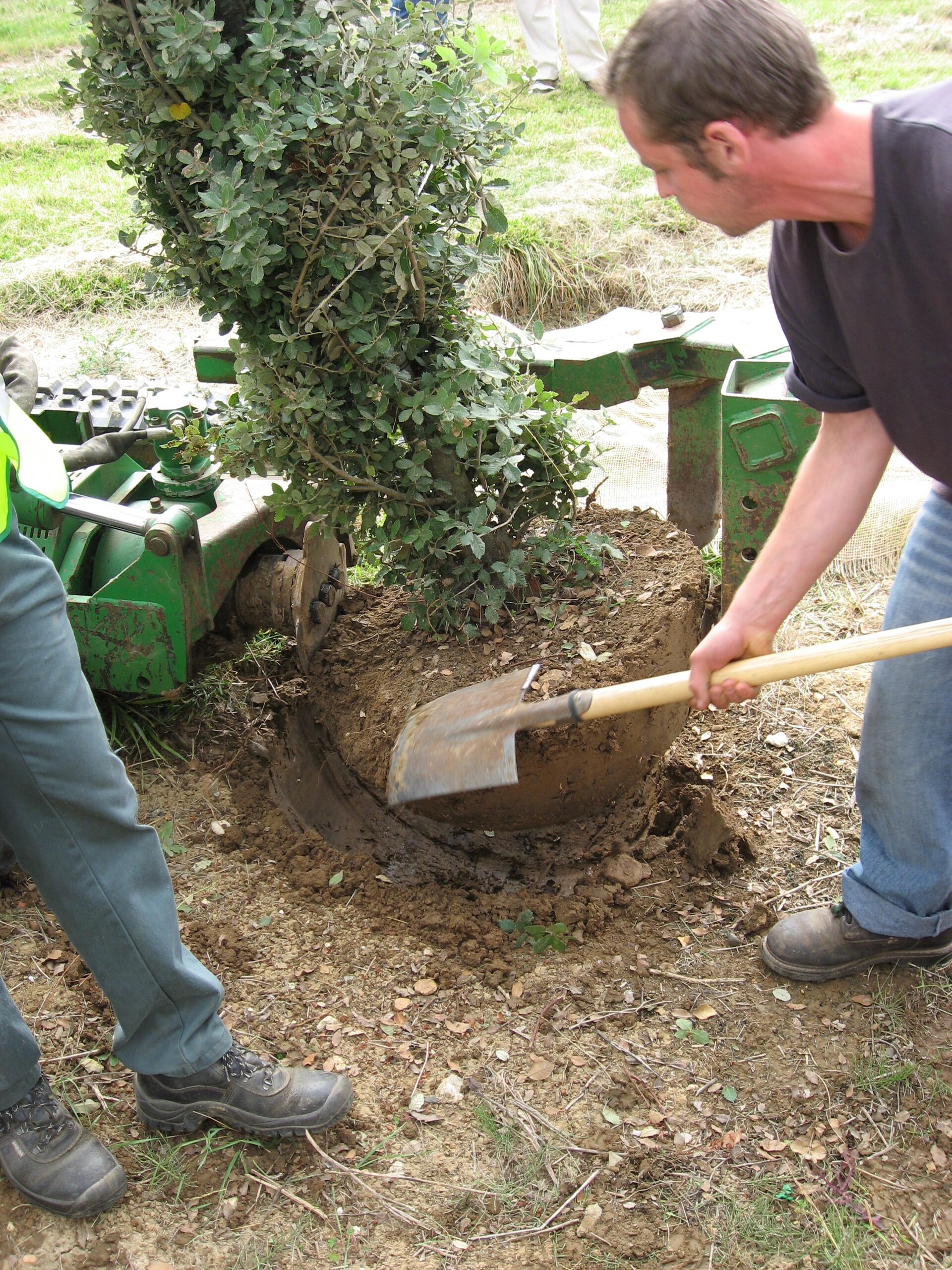
The word is a horticultural metaphor, and that is where all its poetry lies. It joins ne (根, "root") and mawashi (回し, "to go around," "to turn about"), from the verb mawasu (回す). Literally: "to go around the roots." The term is borrowed from the Japanese art of gardening, and more specifically from the transplanting of trees.
combines ne (根, "root") and mawasu (回す, "to turn, to go around"). In gardening, it is the operation of digging out the root ball of a tree and pruning its roots months before moving it, so that it survives the transplant. By extension: discreetly preparing the ground before a collective decision.
When a Japanese gardener wants to move a mature tree, he does not tear it out all at once. Months, sometimes a full year ahead, he digs around the trunk, exposes the peripheral roots, prunes them, wraps them, and encourages the plant to grow a compact new mass of fine feeder roots. When moving day comes, the tree withstands the shock because it has been prepared for it: its roots are ready to anchor themselves in the new soil. To transplant without nemawashi is to condemn the tree.
The shift of vocabulary from the garden to the company follows a perfect logic. A decision, like a tree, cannot be transplanted abruptly into a group. If you impose a new idea on an assembly without having prepared it, you provoke rejection; the roots have had no time to form. Managerial nemawashi therefore consists of circulating among each stakeholder beforehand, one by one, to lay out the idea, listen to objections, adjust the proposal, and gather an in-principle agreement, before the question ever reaches a formal meeting. When it finally gets there, the consensus is already present, like a tree whose roots are ready.
This metaphorical origin reveals the Japanese conception of time and maturation. You do not force a decision, you let it grow. Western haste (deciding fast to move forward) clashes with a temporality in which preparatory slowness is an investment, not a loss.
The Official Theater and the Hidden Stage#
Nemawashi only takes on its full meaning when set against a fundamental distinction in Japanese culture: the one between and . Honne is a person's true feelings and opinions, the ones they often keep to themselves. Tatemae, literally "the facade," "what is built out front," refers to the socially acceptable attitude and speech, what one displays in public to preserve the harmony of the group.
and form a pair: the first is one's intimate, sincere opinion, the second the public position that conforms to the group's expectations. Far from being hypocrisy, this duality is a social art of preserving harmony (wa, 和).
In a formal Japanese meeting, you are in the register of tatemae: no one will voice disagreement head-on, because publicly contradicting a superior or a colleague would mean making them lose face and breaking the harmony of the group, the . This is why the real negotiation cannot happen in the meeting: the public format precisely forbids the expression of reservations. Nemawashi is the hidden stage where honne can finally speak. One-on-one, over a drink in the evening, an executive will confide his true misgivings, the ones he would never have voiced before the assembly.
A Japanese meeting is not for deciding: it is for celebrating a decision already made. All the real work has been done beforehand, in the shadow of private conversations.
The role of alcohol deserves a parenthesis here. The , the evening when colleagues and superiors drink together after work, is more than relaxation: it is a codified social space where hierarchical barriers are temporarily lowered and where honne can flow. A Japanese phrase captures this mechanism: bureikō (無礼講), the provisional suspension of the rules of politeness that permits, for the duration of a drinking session, a candor impossible at the office. Many of the most delicate acts of nemawashi are sealed with a beer in hand, and what is said there is binding, even if no one will acknowledge it the next morning, sober.
This two-tiered architecture disorients foreigners, who read it as concealment. It is in fact a form of social intelligence: by separating the place of disagreement (private) from the place of validation (public), Japanese culture avoids head-on confrontation while still handling the real objections. Conflict is not denied, it is relocated.
Behind every Japanese meeting lies the vocabulary of consensus: 本音 (honne, true feelings), 建前 (tatemae, social facade) and 和 (wa, group harmony). Learn to read these kanji of Japanese work culture with JapaneseSRS, the spaced repetition that anchors words in memory for the long run.
Ringi and Ringisho: When Consensus Becomes a Document#
Nemawashi does not float in a vacuum; it is bound to a formal administrative device, the system, which is its written extension. The word combines rin (稟, "to submit to a superior") and gi (議, "to deliberate, to debate"). Ringi is the procedure by which a proposal circulates upward through an organization to be approved collectively.
At the heart of the device is a document, the . A mid-ranking executive drafts a detailed proposal (an investment, a new supplier, a reorganization) and then circulates this document from department to department, office to office. Each relevant manager reads it, possibly comments on it, and above all affixes their seal. The decision is validated only when all the required seals appear on the document.
The Seal, the Signature of East Asia#
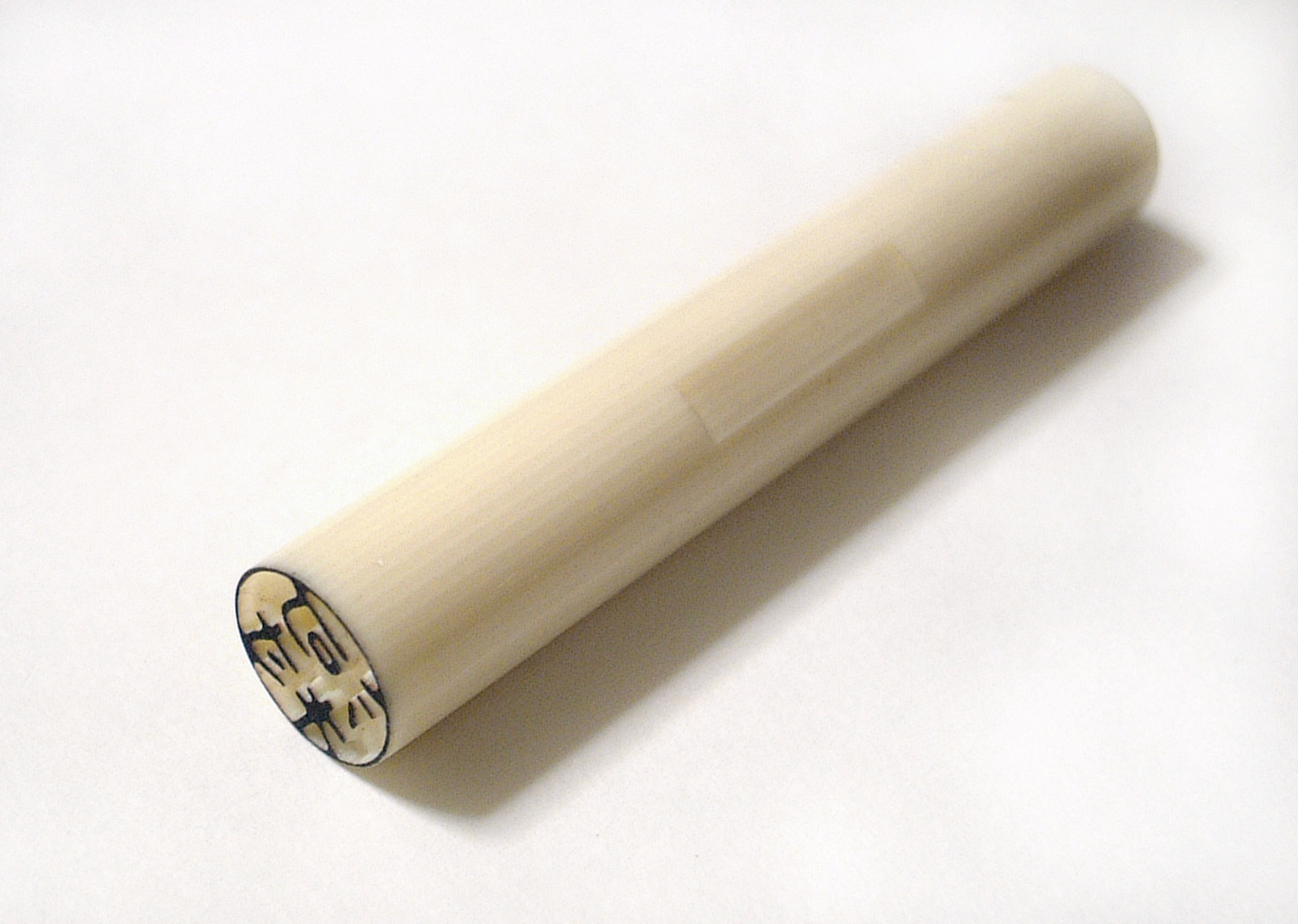
The personal seal, called or , is to Japan what the handwritten signature is to the West: the legally binding mark of an agreement. Every white-collar employee has their own, a small cylinder engraved with their name that they press onto a red ink pad before stamping it onto the ringisho. On a proposal document, the row of red seals visually tells the story of the approval's journey: the more stamps there are, the more shared the decision, and the more diluted the responsibility.
One cultural detail long circulated in Japanese companies, as much office legend as observation: the seal that is stamped slightly tilted toward the hierarchical superior, like a bow, the stamp leaning toward the person to whom deference is owed. True or embellished, the anecdote says something accurate: even the angle of a seal can carry meaning in a culture where form is a language.
The hanko seal is so central that its administrative management survived the digital age far longer than one might imagine. During the pandemic of 2020, thousands of Japanese employees had to come back to the office solely to physically affix their hanko to documents, even as remote work was being recommended. This paradox triggered a government campaign to "de-hankoize" administrative procedures.
The link between nemawashi and ringi is organic: nemawashi is the informal, oral phase, ringi the formal, written phase. First you go around the roots, you obtain the in-principle agreements one-on-one; then, once the ground is prepared, you launch the ringisho, which collects the seals almost automatically, since everyone has already given their assent. Launching a ringisho without prior nemawashi is considered a rookie executive's blunder: the document is liable to stall on the desk of the first manager who was not "worked" in advance.
This written system has a formidable consequence: it makes the decision impersonal and collective. When all goes well, everyone claims a share of the success. When all goes wrong, it becomes nearly impossible to pin down a single person responsible, since ten people affixed their seal. This dilution is both the strength and the weakness of the model, as we will see.
Bottom-Up Versus Top-Down: Two Grammars of Decision#
The singularity of nemawashi comes into full light when compared to the dominant Western model. In a classic American or French company, the decision is generally top-down: a leader rules, often alone or with a small committee, then communicates the decision that must be applied. Legitimacy comes from above; the speed of decision is high; responsibility is clearly identified. In return, execution may run into the passive resistance of those who were not consulted.
| Criterion | Western model (top-down) | Japanese model (nemawashi 根回し) |
|---|---|---|
| Direction of decision | Downward, from management | Upward (bottom-up), from the base |
| Where it is truly decided | In the official meeting | Beforehand, one-on-one (ringi, 稟議) |
| Decision time | Short | Long |
| Execution time | Long, resistance possible | Short, almost frictionless |
| Responsibility | Individual, identified | Collective, diluted (hanko seals, 判子) |
The Japanese model is bottom-up, at least in its ideal form. The initiative may arise at a middle tier, the proposal moves upward aggregating agreements, and the final decision is merely the ratification of a consensus built from the base. This inversion has profound consequences. Where the West sharply separates the time of decision (fast) from the time of execution (potentially conflictual), Japan does the opposite: it invests massively in a very long decision time, but reaps an almost frictionless execution.
The anthropologist Chie Nakane, in her classic work Japanese Society (Tateshakai no ningen kankei, 1967), theorized this arrangement as a "vertical society" in which membership in the group takes precedence. Nemawashi holds this structure together: by consulting everyone, you reaffirm their belonging and maintain the sense that the group is deciding together.
One must guard against idealization. Nemawashi is not direct democracy: hierarchies exist, and a superior can strongly steer the consensus. But form matters. Even when the decision is de facto imposed by management, it is dressed in a consultative process that gives everyone the feeling of having been heard. This difference of form produces a very real difference in buy-in.
Toyota, or Consensus Built into a System#
No company embodies institutionalized nemawashi better than Toyota. The Aichi-based manufacturer built its famous Toyota Production System not only on principles of engineering, but on a culture of consensual decision-making that runs through the entire organization. Two in-house concepts extend the spirit of nemawashi.
The first is nemawashi itself, which Toyota explicitly lists among the behaviors expected of its managers: before any important proposal, an executive must have consulted all the parties concerned. The second, complementary, is the principle of genchi genbutsu (現地現物, "go and see the real thing on the spot"): you do not decide from behind a desk, you go and observe the facts at the source, on the shop floor, alongside those who do the work.
It is again Toyota that popularized a striking formula attributed to its decision culture: "make decisions slowly by consensus, thoroughly considering all options; implement decisions rapidly." The manufacturer owns the paradox: yes, deciding takes time; but that time is an investment that guarantees a smooth execution, because no one needs to be won over after the fact. Sociologists and lean management theorists have extensively documented this trait, which partly explains the group's legendary industrial stability.
Decide slowly, by consensus, weighing every option; then execute in a single motion. The Japanese secret is not slowness: it is placing the slowness in the right spot.
Yet there is a flip side, and Toyota has felt it. During the crisis of the massive recalls of 2009-2010 in the United States, the company was criticized for the slowness of its response to the accelerator problems. Some analysts then pointed to the limits of a consensual, centralized culture: in the urgency of a worldwide media crisis, the long time of Japanese consensus fit poorly with the Western demand for immediate reaction. The strength became a weakness the moment the environment demanded speed.
Want to decipher 根回し, 稟議 and 建前 in the original? JapaneseSRS (japanesesrs.com) is coming soon to learn the kanji of everyday and business Japanese, sign up for the waitlist.
The Two Faces of Consensus: Strengths and Fragilities#
Nemawashi is neither a cure-all nor an archaism: it is a trade-off, with identifiable gains and costs. Its proponents point first to the power of buy-in. Because everyone has been consulted, everyone feels co-owner of the decision. There is no "camp of the losers" dragging its feet: disagreement was handled beforehand, in private, and those who did not get their way accept it because they were heard. Execution is therefore fast, aligned, without passive sabotage.
The quality of the decision gains too. By consulting broadly, you surface information, objections, blind spots that an isolated leader would never have perceived. Nemawashi is a device of collective intelligence: it aggregates knowledge scattered across the organization. Gross errors are often filtered out before they even reach a meeting.
But the costs are real. The first is slowness. Going around the roots takes time: days, weeks for a decision of scale. In a stable environment, this slowness is an acceptable luxury; in a market that tips over in a few months, it can be fatal. Many have attributed part of Japanese companies' difficulty in reacting to the digital disruptions of the 2000s and 2010s to this decisional heaviness.
The second cost is the dilution of responsibility. When a decision bears ten seals, who is responsible for its failure? No one, therefore everyone, therefore no one. This diffusion can breed excessive caution: nobody wants to be the person through whom failure comes, so bold proposals are smoothed out, rounded off, until they become consensual in the blandest sense of the word. Consensus can smother disruptive innovation, the kind that, by nature, does not command unanimity.
A third pitfall lurks: the pseudo-consensus. It happens that nemawashi produces only the appearance of agreement, everyone having withheld their honne so as not to break the harmony. You believe you have a consensus when you only have a polite silence. The best practitioners are those who know how to flush out the real disagreement behind the facade.
What Foreigners Get Wrong#
Foreign companies setting up in Japan regularly stumble on nemawashi, failing to grasp its logic. The most frequent mistake is to treat the official meeting as the place of decision. A Western leader arrives in the meeting room with his proposal, expects to debate it and rule on the spot, and runs into impassive faces, evasive answers, a "we will think about it" (kentō shimasu, 検討します) that commits to nothing. He leaves frustrated, convinced that his counterparts are indecisive or acting in bad faith. In reality, he skipped the decisive step: he did no nemawashi. No one was prepared, so no one could commit.
The expression kentō shimasu deserves a word. Literally translated as "we will study the matter," it is often a polite tatemae meaning, depending on tone and context, "it's a no" or "not now." The foreigner who takes it at face value waits for an answer that will never come. Decoding these formulas is part of the indispensable apprenticeship of nemawashi.
The second misunderstanding is to confuse nemawashi with backroom manipulation. A Western manager may see in it a vaguely dishonest backstage politics, a way of bypassing the transparency of collective deliberation. This misses the point that, in Japanese logic, it is the opposite that would be shocking: imposing an unprepared idea on an assembly, forcing people to take a position cold and in public: that would be violent and disrespectful. Nemawashi is not a bypassing of deliberation: it is the deliberation, simply moved into a setting that protects everyone's face.
The companies that succeed in Japan are those that learn to embrace this tempo. They often appoint a local intermediary, a Japanese executive who knows how to "go around the roots," to identify the key people to consult, in what order, with what regard. They stop measuring effectiveness by the number of meetings and accept that the essential plays out elsewhere, in a hallway, an elevator, an izakaya. Nemawashi cannot be imported: it is practiced.
Read alsoKaizen: The Japanese Philosophy of Endless ImprovementThe same culture of slow maturation: kaizen turns continuous, incremental improvement into a philosophy, a direct cousin of nemawashi's patient consensus.
In Korea, hoesik plays a role comparable to the Japanese nomikai: real candor is spoken with a drink in hand, outside the walls of the office.
At the other end of the Asian work spectrum, China's 996 system bets on hourly intensity where Japan bets on consensus: two opposite answers to the same question of collective performance.
A Model at a Crossroads#
Will nemawashi survive twenty-first-century Japan? The question is a serious one. The pressure of globalization, the arrival of activist investment funds in the capital of major firms, the need to react quickly to technological disruptions: all of this erodes the long time of consensus. A new generation of leaders, often trained abroad, argues for faster, more clearly owned decisions. Emblematic Japanese companies have adopted more Western governance structures, with leaders wielding expanded powers.
And yet nemawashi holds on, because it rests not on a mere office habit but on deep layers of the culture: the primacy of the group over the individual, the aversion to open conflict, the value of harmony. You do not rewrite these foundations with a memo from management. Many companies today are seeking a balance: keeping the execution strength that consensus provides while gaining decision velocity. The "de-hankoization" of administrative procedures, begun in the 2020s, is the visible symptom of this tension between tradition and modernity.
There is, in nemawashi, a lesson that goes beyond the Japanese frame. At a time when organizations around the world are rediscovering the virtues of collective intelligence, participative management, and team buy-in, the old gardener who patiently frees the roots of his tree before moving it may have something to teach us. You do not transplant a decision: you grow it. And sometimes, the fastest route to action runs through the slowest of preparations.
FAQ#
Is nemawashi lobbying or manipulation? No. It is a prior, institutionalized consultation, regarded in Japan as respectful: it avoids imposing an unprepared idea on a group and forcing people to take a position in public. Far from being clandestine, it is an expected step in any serious decision-making process.
What is the difference between nemawashi and ringi? Nemawashi (根回し) is the informal, oral phase: you consult each person one-on-one to gather an in-principle agreement. Ringi (稟議) is the formal, written phase: a document, the ringisho, circulates to collect the hanko seals of the managers. The first prepares the second.
Why do Japanese decisions seem so slow? Because the time is invested upstream, in building consensus, before the official meeting. What looks like excessive slowness in fact guarantees a very fast, resistance-free execution once the decision is made. Japan places the slowness before the action, the West after.
Can a foreigner practice nemawashi? Yes, but it has to be learned. You must identify the key people, respect the hierarchical order of consultation, decode the politeness formulas (kentō shimasu often means "no") and accept that the essential plays out outside meetings. Many foreign companies rely on a Japanese executive as an intermediary.
Is nemawashi disappearing? It is eroding under the pressure of globalization and the demand for speed, and some firms are adopting more Western governance. But it remains anchored in deep cultural values (primacy of the group, aversion to open conflict) that make it resilient. It is evolving more than it is fading away.
Photo credits: images in this article come from Wikimedia Commons and are under free licenses.
Broccoli: The Japanese Company That Bet Everything on Fans
From Galaxy Angel trading cards to the Uta no Prince-sama phenomenon, the story of Broccoli, the Japanese publisher that built its model on media mix and fan devotion.
Cover image: Syced · Syced, via Wikimedia Commons · CC0