Kabukichō Host Clubs: The Job, the Rankings, the Tab
Japanese host clubs: how a Kabukichō club works, the shimei system, the champagne call, the sales rankings, and the 2025 law that banned running a tab.
La rédaction Kotoba Interactive
Studio éditorial
A is a Japanese night venue where salaried men keep company with a female clientele: conversation, drinks service, sustained attention, in exchange for a bill counted in tens of thousands of yen and sometimes far more. The trade concentrates in the district of Shinjuku, where several hundred clubs sit within a few hectares.
It is the male mirror of an older institution, the キャバクラ (kyabakura), where hostesses receive male customers. Both belong to the 水商売 (mizu shōbai, "the water trade"), the generic name for Japan's night-time occupations.
How a club works#
The central mechanism is nomination, 指名 (shimei): a customer picks a designated host, and most of her later spending is credited to him.
| Term | What it means |
|---|---|
| 初回 | The first visit, at a very low entry price, a few thousand yen |
| 指名 | Nominating a designated host, which structures the whole commercial relationship |
| シャンパンコール | The "champagne call": a collective chant by the staff when a bottle is ordered |
| ボトル | The bottle bought by the customer, from a few thousand to several million yen |
| 売掛 | The tab: consumption put on credit, to be settled later |
| ナンバーワン | Top of the monthly sales ranking, displayed at the entrance |
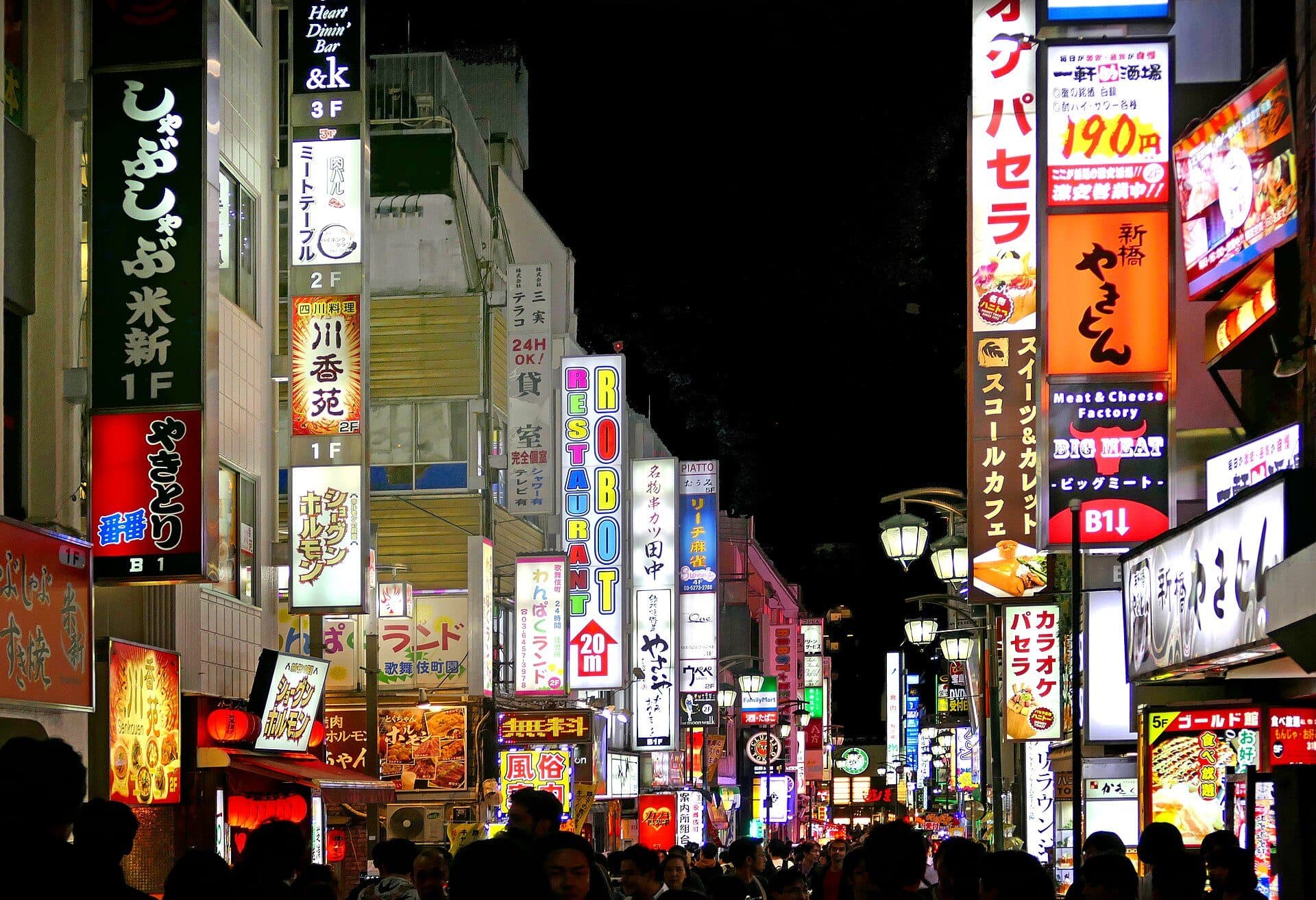
The ranking is the keystone. Every club publishes each host's monthly sales, posts them on its front and on the district's advertising screens. A host's pay is almost entirely variable, indexed to those sales, which makes keeping a handful of regulars the whole of his income.
The bottle serves as a currency of recognition. A customer who orders an expensive champagne triggers the champagne call, a loud ritual in front of the whole room, and pushes her host up the ranking. The stacked coupe towers, filmed and shared on social media, belong to the same apparatus.
水商売 (mizu shōbai), "water trade", covers all night-time occupations. The origin of the word is debated: it is explained by income as unstable as water, or by the tea houses of the Edo period. It has no exact English equivalent and covers a neighbourhood bar as readily as a Ginza club.
Where the trade comes from#
The first venue of the kind, ナイト東京, opened in Ginza in 1966, with a then novel format: hosts inviting customers to dance. The modern form settled in Kabukichō during the 1970s, around 愛田武 (Aita Takeshi), founder of the Aihonten house, whom the trade calls the king of hosts and who codified the ranking, the nomination and the house style.
Appearance has followed successive fashions: voluminous hair and glossy suits in the 2000s, then a plainer silhouette and cuts inspired by Korean idols in the 2020s, better suited to a clientele recruited through social media.
The real economics#
The trade attracts through its stories of spectacular earnings: Kabukichō's top hosts report monthly sales of tens of millions of yen, and their faces fill the district's advertising screens.
The reality of the profession is narrower. Pay rests on a percentage of sales, expenses come out of the host's own pocket, hours are nocturnal, and turnover is very fast. A beginner lives off keeping a few customers loyal, which explains the hours spent in private messaging outside service time.
A host is not paid to serve drinks. He is paid for a customer coming back, and the whole system is built around that single variable.
Nightlife vocabulary turns up in dramas as much as in the press: 指名 (shimei, nomination), 常連 (jōren, regular customer), 売上 (uriage, sales). JapaneseSRS teaches these words with their kanji and their contexts.
The tab, and what it produced#
The system's breaking point is called 売掛 (urikake). A host may let a customer drink on credit, personally guaranteeing the amount to the club: if she does not pay, the debt is docked from his own pay. The mechanism pushes both parties the same way, one so as not to lose income, the other so as not to lose the relationship.
From 2023 onward, the Japanese press and women's support organisations documented the consequences: young customers, in debt for millions of yen, steered into the sex industry or into street prostitution to repay. The phenomenon became visible around Ōkubo Park, a few hundred metres from the clubs, and drew repeated police operations.
The trade responded in December 2023 with a collective undertaking by Kabukichō clubs to abolish the tab for new customers. Lawmakers went further: a revision of the Entertainment Business Act (風営法), passed in 2025, explicitly bans letting a customer accumulate consumption debt and steering an indebted person into prostitution, with criminal penalties attached.
Kabukichō's advertising screens, covered with host portraits, were themselves reined in: Shinjuku ward and the merchants' associations restricted the public display of sales rankings, judging that it directly fed the spending race.
What else the phenomenon says#
Two readings coexist, and they do not exclude one another.
The first is economic. The host club sells a relationship by the unit, measured, ranked and invoiced, in a country where prolonged singlehood is rising and where mixed-gender sociability outside work is rare. The model resembles that of idols and 推し活 (oshikatsu), spending devoted to one's favourite artist: the same vocabulary of support, the same rankings, the same expenditures of recognition.
The second is regulatory. The sector falls under a control law that, until its recent revision, governed opening hours and premises while saying nothing about credit extended to customers. That gap is what made the spiral documented from 2023 possible.
FAQ#
How much does an evening at a host club cost? The first visit sells for a few thousand yen. An evening with a bottle runs into the tens of thousands, and prestige orders from certain regulars reach amounts with no ceiling.
Are host clubs prostitution venues? No. They are licensed drinking establishments under the Entertainment Business Act. Relationships outside the venue exist but fall outside the club's legal framework and are barred by the trade.
How many host clubs are there in Tokyo? Several hundred in Kabukichō, which concentrates most of the sector, with a second cluster in Osaka. The exact number swings sharply with openings and closures.
What did the 2025 law change? It bans the tab and coercion into repayment through prostitution, two practices the earlier text did not address.
Read alsoIzakaya: how the Japanese small-plates bar actually worksThe izakaya, the other great institution of Japanese evenings, with its codes and its vocabulary.
Sources and further reading#
- Japan's Entertainment Business Act (風営法) and its 2025 revision
- National Police Agency (警察庁), announcements on operations conducted in Kabukichō
- Shinjuku Ward Office, measures on district advertising displays
- Japanese press and women's support organisations, investigations published from 2023 on customer debt
The 8050 Problem: Parents in Their 80s, Children in Their 50s
8050 mondai (8050問題): in Japan, octogenarian parents support a withdrawn child in their fifties. Official figures, the term's origin, the "after we are gone" question and the support system.
Cover image: Bernard Spragg. NZ · Bernard Spragg. NZ, via Wikimedia Commons · Public domain