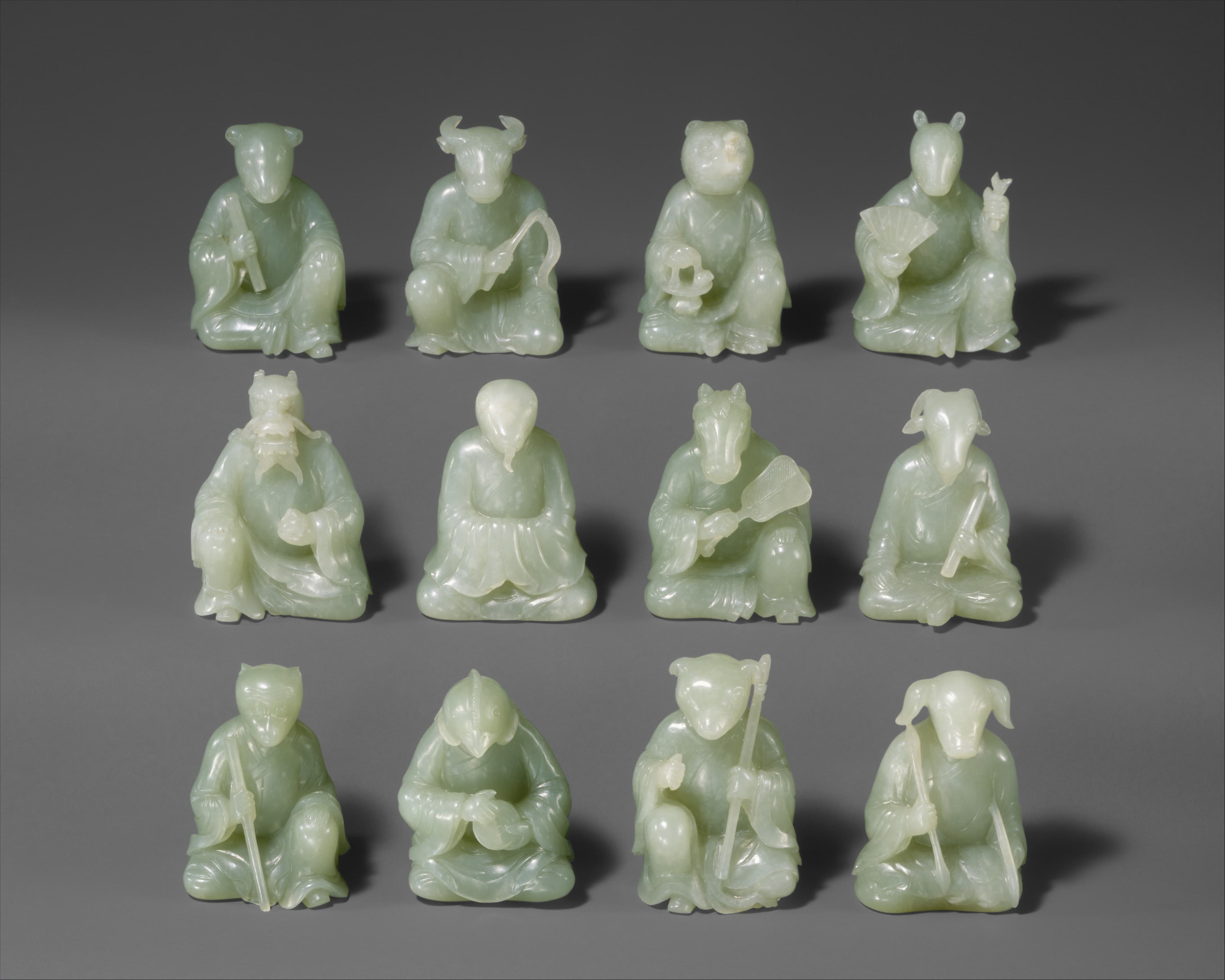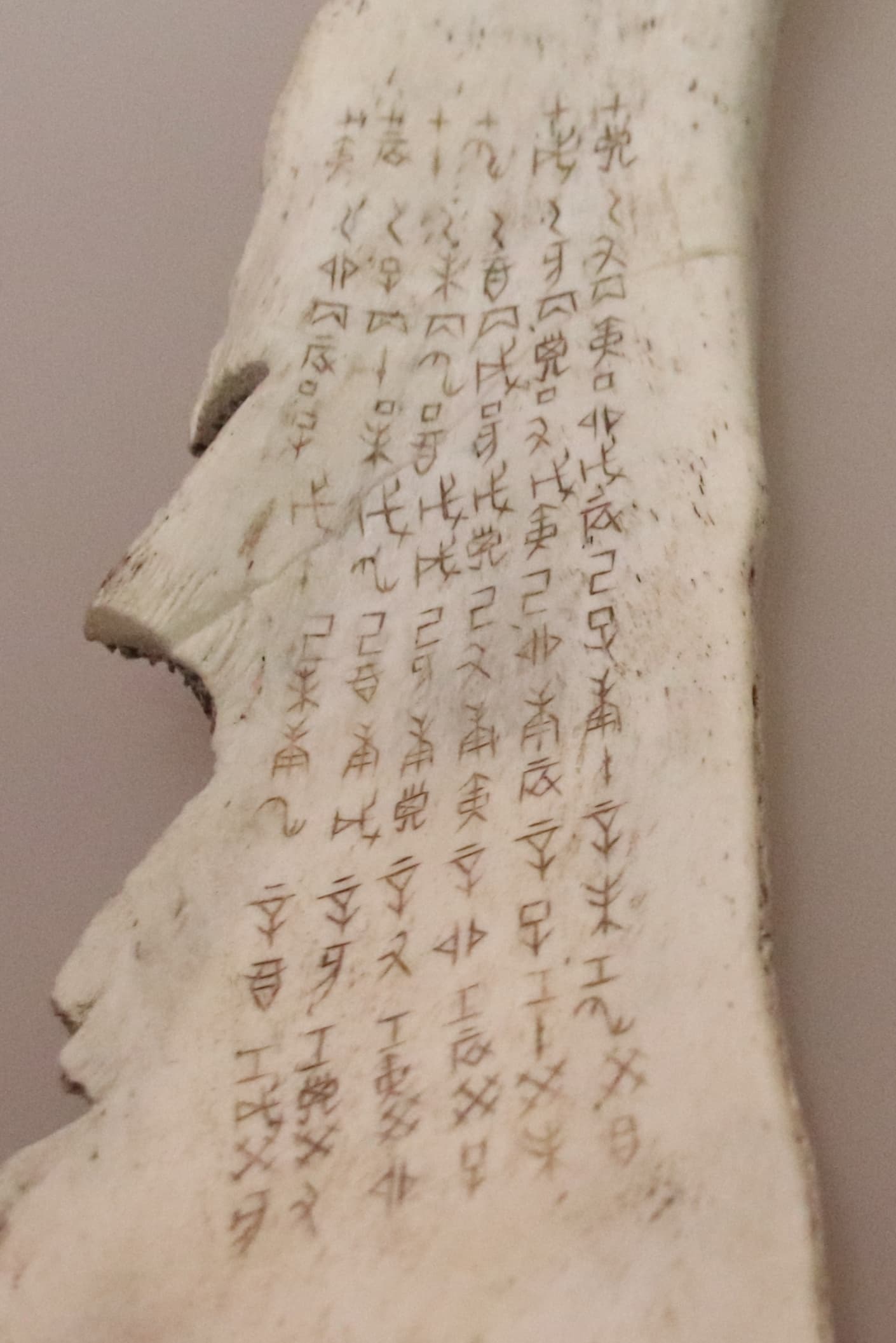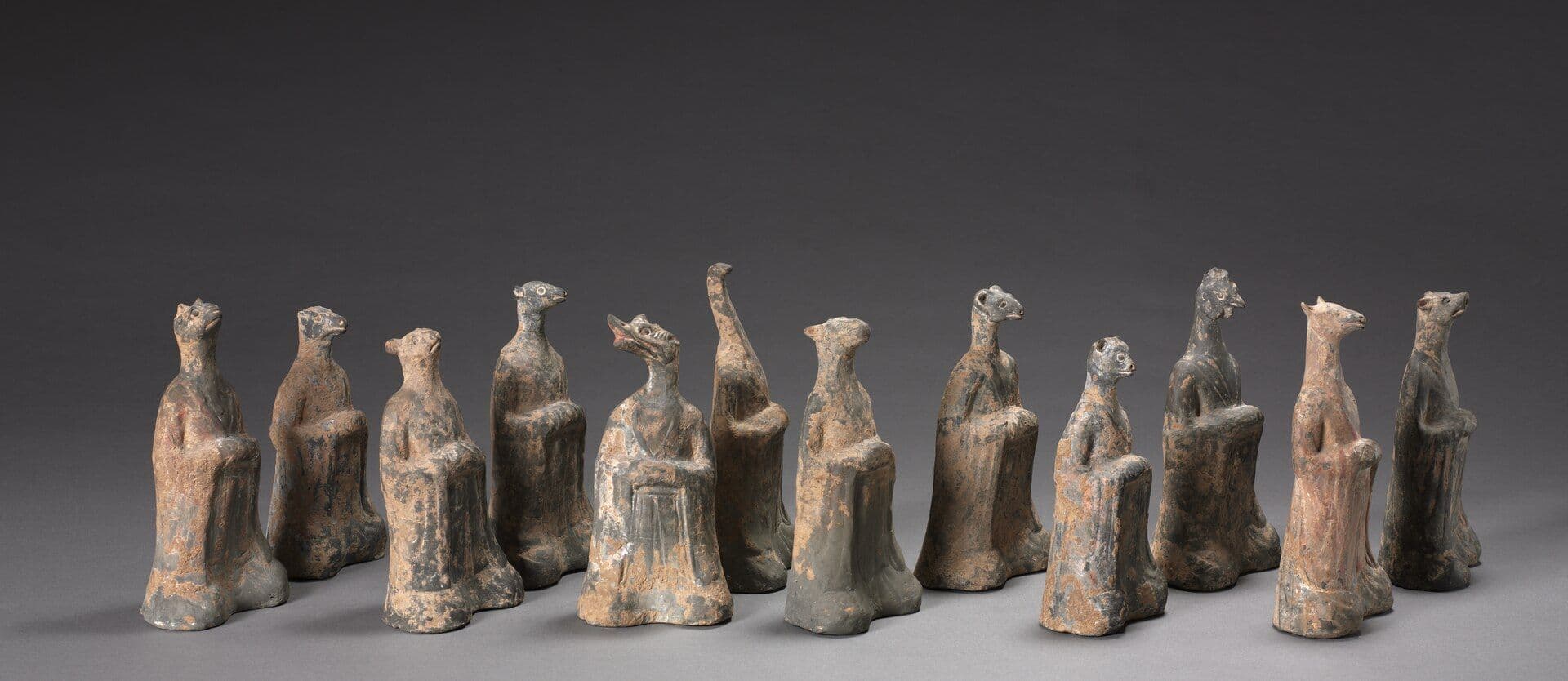
Chinese Zodiac: The Twelve Animals and Their Legend
From twelve animals to five elements, the Chinese zodiac hides a fascinating cosmology. The great race legend, the betrayed cat, and Fruits Basket.
La rédaction Kotoba Interactive
Studio éditorial
Lunar New Year's Eve in Taipei. In the crowd of the Dihua Street night market, a little girl tugs at her grandmother's sleeve and asks: "Nainai, what animal are you?" The old woman smiles: "I'm a Snake. And you're a Dragon. That's why you're so brave."
Behind this casual exchange lies one of the most enduring symbolic systems in human civilization: the , the Chinese zodiac. Built on a cycle of twelve animals that follow one another year after year, it has shaped how billions of people across East and Southeast Asia think about time, personality, and human relationships for over two thousand years. From marriages to business, the shengxiao is not dusty folklore: it is a living cultural code.
But how did twelve animals end up governing the calendar? Why does the Dragon have a place while the Cat does not? And how did a Japanese manga draw from this ancient legend one of the most devastating stories in modern pop culture? It all begins with a mythical race where cunning, generosity, and betrayal sealed the fate of every animal.
The Great Race: The Founding Legend#
Long ago, the heavens were ruled by the , supreme sovereign of all deities. Noticing that humans had no reliable way to measure time, he decided to create a calendar by assigning an animal to each year.
He sent a decree to every creature: a great race would be held. The animals would have to cross a vast river, and the first twelve to reach the opposite bank would become the signs of the zodiac, ranked in order of arrival.
The Rat's Cunning and the Ox's Loyalty#
The , small but formidably clever, knew he could never cross alone. He proposed a deal to the , the earliest riser and hardest worker of all the animals: "You're the strongest swimmer, but your eyesight is poor. Let me ride on your head, and I'll guide you." The Ox, generous to a fault, agreed. What he did not know was that the Cat (mao, 猫), the Rat's best friend, was still asleep.
The Rat had promised to wake the Cat at dawn. But when it was time to leave, he did not wake him. In some versions, he even pushed the Cat into the river when the Cat tried to catch up. Either way, the Cat missed the start, and his fury would last forever.
The Ox, with the Rat on his head, crossed the river with powerful strokes. He was about to touch the far bank when the Rat leapt off and landed on the shore a split second ahead of him. The Rat was declared first; the Ox, betrayed but stoic, accepted second place without a word of complaint.
The Tiger, the Rabbit, and the Generous Dragon#
The arrived third, soaked and gasping: the current had swept him far downstream, and he had fought to reach the bank. The Jade Emperor commended his courage.
The , too small to swim, leapt from stone to stone. Halfway across, he nearly got swept away but grabbed a floating log that carried him to the opposite bank. He arrived fourth.
Then came the , and his fifth-place finish stunned everyone: he could fly and should have come first. The Jade Emperor asked why. While flying over the land, the Dragon had seen a village parched by drought; he had stopped to bring rain, then blown a gentle wind to push the little Rabbit safely to shore. Moved by this generosity, the Emperor granted him fifth place with full honors.
From the Snake to the Pig: The Last Seven#
The was galloping toward the bank when the , coiled around one of his hooves since the start, suddenly darted out in front of him. The Horse, terrified, shied sideways. The Snake finished sixth, the Horse seventh.
Then a makeshift raft approached carrying three animals: the , the , and the . The Rooster had found the raft, and the Goat and Monkey had cleared the weeds. The Jade Emperor, charmed by their teamwork, rewarded them in order: the Goat eighth, the Monkey ninth, the Rooster tenth.
The arrived eleventh, to everyone's surprise: he was one of the strongest swimmers. But he had found the water so pleasant that he started playing and swimming in circles. Finally, long after the rest, the dragged himself to the shore: he had gotten hungry, stopped to eat, then fallen asleep. Last of the twelve, he crossed the finish line just in time.
The Betrayed Cat#
And the Cat? He arrived far too late, the race over and all twelve places taken. Soaking wet and furious, he realized the Rat had betrayed him. From that day on, cats have hunted rats with undying ferocity. This is the legend that explains, in Chinese tradition, why the two animals are mortal enemies.
There is something in the zodiac legend that transcends the animal fable. The Jade Emperor's race is a parable about human nature itself, where cunning triumphs over strength, where generosity costs the one who practices it, and where the betrayal of a friend is the only crime that time never forgives.
Many variants exist. In the Buddhist version, it is the Buddha Shakyamuni who summons the animals. In others, the Cat was not betrayed but simply hated water. Regardless of the version, the outcome is the same: twelve animals, an eternal cycle, and a Cat shut out forever.
The Twelve Animals of the Shengxiao#
The shengxiao cycle is elegantly simple: each animal governs a year, and the cycle restarts every twelve years. Born in 1996, you are a Rat; in 2000, a Dragon; in 2025, a Snake. Keep in mind, however, that Chinese New Year does not fall on January 1 but follows the lunar calendar, between January 21 and February 20. Someone born in January might therefore belong to the previous year's sign.
Each animal does more than name the year: it imparts a character and a personality, believed to influence the temperament, strengths, and destiny of those born under its sign. Here are the twelve signs, in the order of the race.
| Rank | Animal | Dominant trait | Recent year |
|---|---|---|---|
| 1 | Rat (鼠, shǔ) | Intelligence and resourcefulness | 2020 |
| 2 | Ox (牛, niú) | Patience and reliability | 2021 |
| 3 | Tiger (虎, hǔ) | Courage and magnetism | 2022 |
| 4 | Rabbit (兔, tù) | Elegance and diplomacy | 2023 |
| 5 | Dragon (龙, lóng) | Power and prestige | 2024 |
| 6 | Snake (蛇, shé) | Wisdom and intuition | 2025 |
| 7 | Horse (马, mǎ) | Energy and freedom | 2026 |
| 8 | Goat (羊, yáng) | Gentleness and creativity | 2027 |
| 9 | Monkey (猴, hóu) | Ingenuity and curiosity | 2028 |
| 10 | Rooster (鸡, jī) | Frankness and punctuality | 2029 |
| 11 | Dog (狗, gǒu) | Loyalty and a sense of justice | 2030 |
| 12 | Pig (猪, zhū) | Generosity and sincerity | 2031 |
The Rat, the Ox, and the Tiger#
The opens the cycle. Recent years: 1984, 1996, 2008, 2020. It embodies intelligence, resourcefulness, and charm, with a tendency toward manipulation and greed. Famous people born under this sign include William Shakespeare (1564), Louis Armstrong (1900), and Marlon Brando (1924). Beware the cut-off date: Mozart, born 27 January 1756, and Washington, born 22 February 1732, are often wrongly listed as Rats, when both were born before the lunar New Year of their year and therefore fall under the Pig. In China, far from its negative Western connotation, the Rat symbolizes prosperity: where there is a rat, there is food.
The , the second sign, governs 1985, 1997, 2009, 2021. Patient, methodical, reliable, it is the zodiac's tireless worker; its perseverance always pays off. Its flaws: stubbornness and difficulty expressing emotions. It is linked to agriculture and the nurturing earth, a powerful symbol in a civilization built on rice farming.
The roars in third position. Years: 1986, 1998, 2010, 2022. Brave, passionate, magnetic, it is a natural leader, but can be impulsive and overbearing. In Chinese culture, the Tiger is the king of land animals (unlike the lion in the West) and symbolizes power. Parents often place a tiger-head cap (hu tou mao, 虎头帽) on their newborns to ward off evil spirits.
The Rabbit, the Dragon, and the Snake#
The , the fourth sign, reigns over 1987, 1999, 2011, 2023. A symbol of elegance, diplomacy, and sensitivity, it is the most refined of the twelve, with a talent for avoiding conflict and a hidden melancholy. In Chinese mythology, it is linked to the Moon: the prepares the elixir of immortality there with its mortar.
The , the fifth sign, is the most prestigious of the zodiac. Years: 1988, 2000, 2012, 2024. The only mythical creature in the cycle, it is not the evil beast of the West: it embodies power, nobility, luck, and success. Natives are said to be ambitious, charismatic, and bursting with extraordinary energy. Its prestige triggers baby booms (more on this later). The Emperor of China was traditionally associated with the Dragon, and wearing a robe embroidered with five-clawed dragons (五爪龙) was a privilege reserved for the sovereign.
The , the sixth sign, governs 1989, 2001, 2013, 2025. Mysterious, wise, intuitive, it is the zodiac's thinker: it observes and understands before acting, said to possess a sixth sense. Its shadows: suspicion, possessiveness, an apparent coldness masking intense emotions. In Chinese, it is sometimes called "little Dragon" (xiao long, 小龙). The year 2025, the Year of the Wood Snake, is the year this article was written.
The Horse, the Goat, and the Monkey#
The , the seventh animal, gallops through 1990, 2002, 2014, 2026. Energy, freedom, sociability: it loves to travel and meet new people, a born communicator, warm and witty, though its impatience and fickleness can frustrate. In China, it symbolizes speed and success, and the expression is one of the most popular good-luck sayings.
The , the eighth sign, presides over 1991, 2003, 2015, 2027. Gentle, creative, sensitive, it is the zodiac's artist: boundless imagination, natural empathy, but a tendency toward indecision and pessimism. It is also the most superstitious sign: a popular belief holds that natives are destined for misfortune, causing a drop in births during Goat years (more on this later).
The , the ninth animal, reigns over 1992, 2004, 2016, 2028. Ingenious, funny, curious, it is the cleverest of the twelve after the Rat: where the Rat calculates, the Monkey invents. Its flaws: arrogance, craftiness, and a difficulty taking things seriously. The most famous Monkey in Chinese culture is , the Monkey King from Journey to the West (Xiyou Ji, 西游记), written by in the sixteenth century, who has inspired countless adaptations, from Akira Toriyama's Dragon Ball to The Monkey King.
The Rooster, the Dog, and the Pig#
The , the tenth sign, crows through 1993, 2005, 2017, 2029. Punctual, honest, flamboyant, it speaks the truth even when it stings. Its shadows: vanity, excessive criticism, and a need to be the center of attention. In Chinese tradition, the Rooster announces the dawn and drives away evil spirits.
The , the eleventh animal, watches over 1994, 2006, 2018, 2030. Loyal, righteous, faithful, it is the ideal companion: a sharp sense of justice, absolute devotion to loved ones. Its weaknesses: chronic anxiety and difficulty trusting strangers. In China, it is an ambivalent sign: respected for its loyalty, yet sometimes associated with negative connotations in certain expressions.
The , the twelfth and final sign, closes the cycle with 1995, 2007, 2019, 2031. Generous, sincere, epicurean, it loves life's pleasures without tipping into greed. Its flaws: naivety, laziness, and a gullibility that makes it vulnerable. Unlike in the West, the Pig symbolizes wealth and contentment in China, and piggy banks are no coincidence.
The Five Elements and the Sixty-Year Cycle#
The zodiac does not stop at twelve animals. Each animal combines with one of the five fundamental elements of Chinese cosmology, the : , , , , and .
Each element governs two consecutive years. Thus, 2024 is the Wood Dragon, 2025 the Wood Snake, 2026 the Fire Horse, 2027 the Fire Goat. The element modifies the animal's traits: a Water Rat (1972) is more flexible and intuitive, a Fire Rat (1996) bolder and more impulsive.
Wood confers growth and creativity, but also rigidity when out of balance. Fire brings passion and charisma, with the risk of impulsiveness. Earth embodies stability and patience, with a tendency toward inertia. Metal symbolizes determination and discipline, but can make one inflexible. Water represents intelligence and fluidity, with the danger of indecision.
Just met the Dragon and the Snake of the legend? Learn to recognize 龙 (lóng, dragon), 蛇 (shé, snake), and hundreds of everyday Chinese words with ChineseSRS and its spaced repetition.
The Great Sixty-Year Cycle#
Twelve animals multiplied by five elements yield a cycle of sixty unique combinations, the , one of the oldest timekeeping systems in the world. Celebrating one's sixtieth birthday in East Asia means celebrating a cosmic return to one's starting point. In Japan, this celebration is called , and the honored person wears a red vest to symbolize their return to infancy.
The five elements maintain dynamic relationships of and . Production: Wood feeds Fire, Fire produces Earth, Earth yields Metal, Metal generates Water, Water nourishes Wood. Destruction, in reverse: Wood depletes Earth, Earth dams Water, Water extinguishes Fire, Fire melts Metal, Metal cuts Wood.
Yin, Yang, and Compatibility#
An additional layer comes with and . Each animal is classified by the number of its toes or claws: an odd number, Yang (the Rat is an exception, with four toes in front and five behind, making it both Yin and Yang and justifying its place at the head of the cycle). The Tiger, Dragon, Horse, Monkey, and Dog are Yang; the Ox, Rabbit, Snake, Goat, Rooster, and Pig are Yin.
Compatibility between signs has fascinated the Chinese for centuries. Three "harmonious trinities" (sanhe, 三合) group four signs each: the Rat, Dragon, and Monkey (action and ambition); the Ox, Snake, and Rooster (strategic intelligence); the Tiger, Horse, and Dog (passionate idealism); the Rabbit, Goat, and Pig (artistic sensitivity). Conversely, diametrically opposite signs are conflicting: Rat and Horse, Ox and Goat, Tiger and Monkey, Rabbit and Rooster, Dragon and Dog, Snake and Pig. In traditional China, and still in some families, a marriage between two opposing signs may be discouraged or even forbidden.
Twelve animals, five elements, Yin and Yang: the Chinese zodiac is not a simplified horoscope. It is a complete cosmology, a mirror in which every living being can read their place in the order of the world.
The Missing Cat: From Legend to Fruits Basket#
An Absence That Haunts Every Memory#
Of all the creatures, the Cat is the one whose absence speaks loudest. It is not in the Chinese zodiac, and yet everyone knows its story, as famous as the legend itself because it touches something universal: exclusion, rejection, the injustice of being left behind by those you trusted.
A remarkable fact: the Cat is not missing from every Asian zodiac. In Vietnam, the replaces the Rabbit as the fourth animal. Some linguists believe the Chinese word for Rabbit, , was confused with when the system was transmitted to Vietnam; others argue the Cat, useful for protecting rice harvests from rodents, was more relevant in Vietnamese culture. Either way, if you were born in 1999, you are a Rabbit in China but a Cat in Vietnam.
Fruits Basket: The Legend Becomes a Masterpiece#
It was a Japanese manga artist who gave the betrayed Cat its most devastating tribute. published the first chapter of in January 1998 in the magazine , published by Hakusensha. The series ran until November 2006, spanning 23 volumes and 136 chapters, becoming one of the best-selling shojo manga in history, with over 30 million copies sold worldwide.
The story opens with , a sixteen-year-old orphaned high school girl taken in by the powerful and ancient family. She discovers their secret: thirteen members are cursed by the spirits of the zodiac animals. Whenever a cursed member is embraced by someone of the opposite sex (or subjected to intense stress), they transform into the animal whose spirit they carry.
But the curse does not strike only the twelve animals. There is a thirteenth cursed spirit: the Cat.
is its bearer. Within the family, he is the pariah, the one whose very existence is a disgrace. While the bearers of the twelve signs enjoy some prestige, Kyo is rejected, confined, despised. His mother took her own life, unable to bear his curse (the Cat possesses a hideous "true form" that manifests when his bead bracelet is removed). The family head, , has destined him for a life of solitary confinement after high school.
Opposite Kyo stands , the bearer of the Rat's spirit. Beautiful, brilliant, admired, Yuki appears his exact opposite, and their rivalry mirrors the legend: the Rat betrayed the Cat, and Kyo harbors a fierce hatred toward Yuki. But Takaya Natsuki gradually reveals that Yuki suffers just as much, trapped by his apparent perfection and traumatized by Akito's abuse. The Rat and the Cat are not villain and victim: they are two faces of the same loneliness.
It is Tohru, with her stubborn kindness and her refusal to treat anyone as an outcast, who slowly breaks the cycle of suffering. Chapter by chapter, she earns the trust of the cursed Somas and calls into question the very foundation of the curse.
A Metaphor for Social Exclusion#
What elevates Fruits Basket above a simple fantasy manga is the depth of its message. The zodiac curse is a metaphor for every form of exclusion: familial, social, psychological. Kyo embodies the pain of someone born "outside the system," rejected for who he is and not for what he has done.
Takaya Natsuki explores the dynamics of the toxic family with nuance. The Soma clan is a microcosm of Japanese society at its most oppressive: rigid hierarchy, the crushing weight of others' expectations, the sacrifice of the individual for the group. Akito, the family head, is both the ultimate perpetrator and the ultimate victim, raised to be the "god" of the twelve spirits.
The manga addresses with rare sensitivity grief (Tohru), domestic violence (Rin and Hiro), depression (Yuki), gender identity (Akito, whose biological sex is a closely guarded secret), and love in all its forms. Fruits Basket is not content to tell a pretty story with cute animals: it is a deep dive into the complexity of being human.
From Page to Screen#
Fruits Basket received two anime adaptations. The first, produced by Studio DEEN in 2001, ran for 26 episodes but diverged from the original storyline toward the end (the manga had not yet concluded), leaving many fans frustrated.
The second, broadcast from 2019 to 2021, changed everything. Produced by TMS Entertainment and directed by Ibata Yoshihide, it adapted the entire manga across 63 episodes over three seasons. Its animation quality, faithfulness, and emotional depth made it one of the most acclaimed anime of its era, supervised by Takaya Natsuki herself.
Fruits Basket's success is enduring: over 30 million copies sold, a fan community still active twenty years later, and a profound influence on the shojo genre. The work popularized the Chinese zodiac far beyond Asia. In 2022, the animated film Fruits Basket: Prelude told the story of Tohru's parents.
The Zodiac in Everyday Life Across Asia#
The Dragon and the Goat: Born at the Right Time#
The Chinese zodiac concretely influences the life decisions of hundreds of millions of people, starting with birth rates. In China, the Year of the Dragon is linked to spikes in natality: in 2012, the most recent Dragon year, births rose roughly five percent over 2011, a massive increase for a country of 1.4 billion people. Analysts estimated the "Dragon babies" would face heightened competition throughout their lives for school places, university spots, and jobs.
The Year of the Goat, by contrast, is dreaded. A stubborn superstition holds that natives are destined for misfortune, summed up by the expression . In 2015, several Chinese provinces recorded a notable decline in births, as couples chose to wait for the Year of the Monkey. This superstition creates regular "dips" every twelve years.
The Zodiac in Japan and Korea#
In Japan, the zodiac was adopted under the name . The most visible practice is the , New Year's greeting cards: hundreds of millions are printed each year, featuring the corresponding animal. The Japanese collect commemorative stamps, and department stores begin offering merchandise featuring the upcoming sign as early as November. Each animal is linked to a guardian temple: Sumiyoshi Taisha in Osaka is associated with the Rabbit, while the Shimogamo Shrine in Kyoto honors all twelve animals in separate pavilions.
Japan also has its own superstition: women born in the Year of the Fire Horse (hinoe uma, 丙午) are traditionally believed to bring bad luck to their husbands. This belief, dating to the Edo period and the legend of , a young woman who set fire to her own house out of love in 1683, caused a drop in births in 1966, the last Fire Horse year: the birth rate fell by 25 percent, unique in the country's demographic history. The next Fire Horse year will be 2026, which demographers are watching closely.
In South Korea, the zodiac is called . Asking someone's sign is a polite and indirect way to learn their age, crucial information in a society where respect for elders is fundamental: saying "I'm a Tiger" (horangi tti, 호랑이 띠) indicates one's birth year without naming it. During Lunar New Year (Seollal, 설날), families decorate their homes with the year's animal and exchange wishes linked to its qualities.
From Tradition to Pop Culture#
The Chinese zodiac pervades Asian popular culture well beyond Fruits Basket. In by , created in 1986, the work draws on Eastern symbolism. In Naruto by , the twelve hand signs (in, 印) used by ninjas correspond directly to the twelve animals: Ne (Rat), Ushi (Ox), Tora (Tiger), U (Rabbit), Tatsu (Dragon), Mi (Snake), Uma (Horse), Hitsuji (Goat), Saru (Monkey), Tori (Rooster), Inu (Dog), and I (Pig).
Video games are no exception: the Pokemon franchise weaves numerous zodiac references into its creature designs, and , a novel by adapted into an anime in 2017, pits twelve warriors, each embodying a zodiac animal, in a fight to the death.
In marketing, the zodiac is a goldmine. Every Lunar New Year, luxury brands (Gucci, Dior, Louis Vuitton) launch capsule collections featuring the year's animal. Postal services in China, Japan, South Korea, Taiwan, Vietnam, and Singapore issue commemorative stamps, and central banks mint gold and silver coins. The zodiac has become a universal commercial language across Asia.
The shengxiao, born from a legend of a cunning rat, a generous dragon, and a betrayed cat vying for their place in the world, continues to shape the lives of billions. Two thousand years after its birth, it has lost none of its vitality. And somewhere, in an alley in Taipei or a bookstore in Tokyo, a child is still asking: "So, what animal are you?"
In this article
The cultural terms covered here, each with a short definition.
- Chinese zodiac
- Cycle of twelve animals tied to years, the basis of Chinese astrology.
- Five Elements
- Chinese theory linking wood, fire, earth, metal and water to explain the world's cycles.
- Fruits Basket
- Hit Japanese manga and anime whose story draws on the Chinese zodiac.
- Shēngxiào
- Chinese name for the zodiac: the twelve animal signs that structure the calendar.
Why Vietnam has a cat where China has a rabbit
The same twelve-animal zodiac, three countries, three lists that do not match: the Vietnamese cat, the Japanese boar, and the linguistic explanation for the gap.
Cover image: Wikimedia Commons · Wikimedia Commons, via Wikimedia Commons · CC0