Japanese Housing: Decoding Mansion, Apāto and the 1K Code
Apāto or mansion, 1K or 1LDK, tatami, shikikin, reikin: learn to read a Japanese rental listing and decode housing in Japan without getting lost.
La rédaction Kotoba Interactive
Studio éditorial
You are scrolling through a listing on your phone, in a Tōkyō café, a still-warm can of coffee sitting next to the keyboard. The photo shows a bright, clean, tiny room. Below it, a line of code: 1K・25.3㎡・6畳・マンション・南向き. To the untrained eye, it is a wall of symbols. To anyone who has learned to read it, it is a complete spec sheet: a studio with a separate kitchen, twenty-five square meters, a six-tatami room, in a concrete building, facing south. The entire logic of Japanese housing fits into that handful of characters.
Finding a home in Japan is not only a matter of budget. It is a language in its own right, with its own vocabulary, its units of measurement inherited from tatami mats, and a financial signing ritual that startles every newcomer. Understanding this language means you stop being defeated by listings and finally decode them, avoiding nasty surprises the day you set your suitcase down in the 玄関 (genkan), the sunken entryway where shoes come off.
Apāto or mansion: two words, two worlds#
The first fault line, the one that throws off English speakers, pits two words borrowed from English but completely redefined by Japanese usage.
The アパート (apāto), from apartment, refers in Japan to a small rental building, usually one or two stories, built of wood (木造, mokuzō) or light steel frame. These are the most affordable homes on the market: thinner walls, modest sound insulation, no elevator. You sometimes hear your neighbor cough. It is the student's first apartment, the young worker's, the one you start out in.
The マンション (manshon), from mansion, absolutely does not mean a manor house. The false friend is treacherous. In Japanese, a mansion is a reinforced-concrete building (鉄筋コンクリート, tekkin konkurīto, often abbreviated RC), taller, sturdier, better insulated against noise and better protected in an earthquake. Rent is higher, but you gain quiet and durability. Saying you live in a mansion is therefore not bragging about a palace: it simply states your building's construction category.
In English, a "mansion" evokes a grand house. In Japan, it is an everyday concrete apartment block. The same word, two imaginations: a first lesson in linguistic humility.
This distinction is neither official nor strictly regulated, yet it structures the whole market. When you read アパート or マンション on a listing, you already know, before the price, roughly what level of comfort and solidity you are stepping into.
The room code: R, K, D, L#
Next comes the heart of the system, that mix of numbers and letters describing the layout (間取り, madori). The rule is relentlessly logical once you grasp it.
The number indicates the count of living rooms, excluding the kitchen and any space already named by the letters. The letters describe the auxiliary functions:
- R for room: a single space with an integrated kitchen corner, no partition.
- K for kitchen: a kitchen separated from the main room.
- D for dining: a dining area.
- L for living: a living room.
So a 1K is a single room with a small kitchen set apart, often in the corridor leading to the room. A 1LDK offers a bedroom plus a large common space combining living room, dining area and open kitchen, the dream layout for a comfortable single person or a young couple. The table below sets the benchmarks.
| Code | Meaning | Ideal for / typical size |
|---|---|---|
| 1R | 1 room, kitchen integrated, no partition | Student, tightest budget; 13 to 20 ㎡ |
| 1K | 1 room + separate kitchen | Single, first apartment; 18 to 25 ㎡ |
| 1DK | 1 room + dining nook and kitchen | Single seeking calm; 25 to 30 ㎡ |
| 1LDK | 1 bedroom + large living/dining/kitchen | Couple, comfortable single; 35 to 50 ㎡ |
| 2LDK | 2 bedrooms + living/dining/kitchen | Small family, flatshare; 50 to 70 ㎡ |
The beauty of the system is that it is additive and predictable. A 3LDK? Three bedrooms around one large shared living space. A 2K? Two rooms and a separate kitchen, no real living room. Once the grid is in your head, you read any listing at a glance, from Sapporo to Naha.
The tatami, an invisible yardstick#
On that same listing, a number followed by the character 畳 (jō, the counted tatami) tells you the size of the rooms: 6畳, 8畳, 4畳半 (four and a half tatami). Because in Japan, a room is first measured not in square meters, but in , those woven rice-straw mats with standardized dimensions.
One tatami equals roughly 1.62 m², a rectangle of about 90 by 180 centimeters. But beware: the exact size varies by region. The tatami of Kyōto and the west (京間, kyōma) is larger than that of the Nagoya region (中京間, chūkyōma), itself larger than the tatami of Tōkyō and the east (江戸間, edoma). A "six tatami" room is therefore not exactly the same area in Ōsaka and in Tōkyō. Recent listings often add the surface in square meters (㎡) right beside it to remove the ambiguity.
This system says a great deal about the Japanese relationship to domestic space. The room is conceived from the human module of the mat on which you sit, unroll a futon, live at floor level. Even in a fully Westernized apartment, with wood floors and a raised bed, the memory of the tatami survives in the unit of measure. To go further into this art of living with little, the aesthetics of emptiness and decluttering, read our article on Japanese minimalism and danshari.
The financial ritual of signing#
This is where Japanese housing delivers its biggest culture shock. Moving in costs, up front, far more than a single month's rent. You must gather several distinct envelopes, each with its own name and logic.
The 家賃 (yachin) is the monthly rent, the baseline. Around it orbit initial fees that can add up to four to six times that rent before you even hold the key.
The 敷金 (shikikin) is a security deposit, in theory refundable when you leave, after deduction of any cleaning and repair costs. It often equals one or two months' rent. So far, an English speaker recognizes their deposit.
The 礼金 (reikin), however, is utterly disorienting. Literally "thank-you money," it is a sum paid to the landlord, the 大家 (ōya), as a pure gift, with no return service and no refund whatsoever. One or two months' rent handed over for the mere honor of being accepted as a tenant. This custom, inherited from the postwar housing shortage, is receding in big cities, and many listings now proudly display 礼金なし (reikin nashi, "no key money").
Reikin is money you give the landlord to thank them for being willing to rent to you. Nothing will be returned. It is not a deposit, it is a codified present.
Add to this the fee of the real-estate agency, the 不動産 (fudōsan), often a month's rent, and the first insurance premium. Finally, almost everywhere, a guarantor is required: a 保証人 (hoshōnin), a physical person who vouches for you, or, failing that, a 保証会社 (hoshō-gaisha), a paid guarantor company that plays this role for a commission, a solution that has become the norm for foreigners and young people without family nearby.
UR, the no-key-money option#
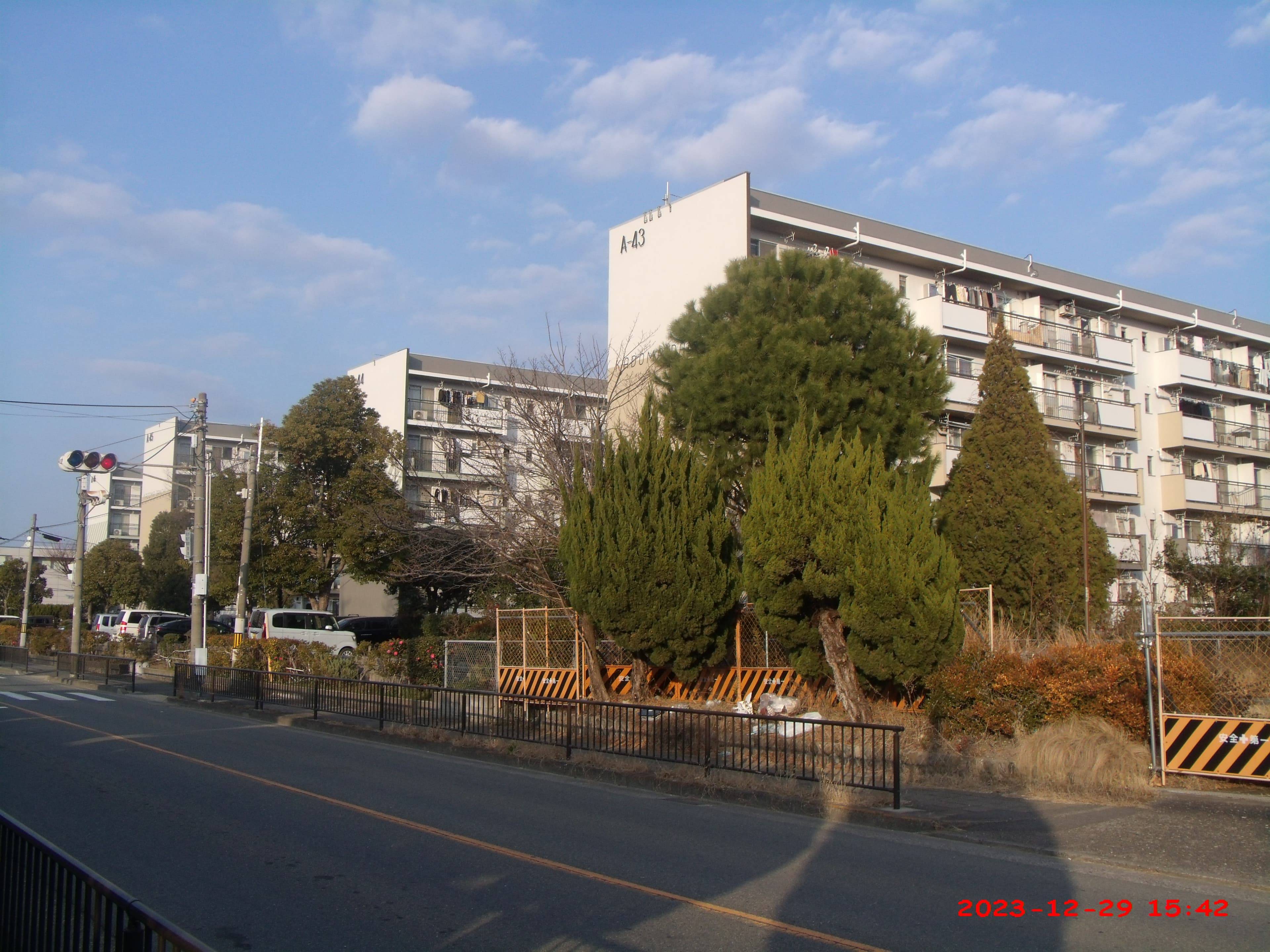
Facing this wall of fees, one institution offers a way out: the , the public housing agency. Its residences, often large concrete complexes, rent with no reikin, no agency fee, no guarantor and no paid lease renewal. In exchange, you must prove sufficient income and accept buildings that are sometimes old and out of the center. For many newcomers, UR remains the simplest gateway into the Japanese rental market.
Why so small? The logic of compactness#
There remains the question every visitor asks upon discovering a twenty-square-meter 1K: why are Japanese homes so compact? The answer lies in geography and history. Japan concentrates its population on narrow coastal plains, wedged between sea and mountains, which drives urban land prices to dizzying heights. In that context, every square meter is paid for, and housing turns dense, ingenious, optimized.
This compactness has forged an art of arrangement: built-in storage (押入れ, oshiire, the futon closet), a single-block modular bathroom (ユニットバス), a narrow balcony doubling as a drying rack, and that sunken entrance, the 玄関 (genkan), which ritually separates the shoe zone from the living space. Living in Japan, even in few square meters, means learning this economy of gesture and object. You find it everywhere, right down to the sophistication of Japanese toilets, a concentrate of technology in the smallest of spaces.
Reading 1K・6畳・敷金1・礼金なし on a listing stops being a puzzle the moment you master the kana and everyday vocabulary. With JapaneseSRS and its spaced repetition, you learn 家賃 (yachin, rent), 玄関 (genkan, entrance) and the words you will actually need, one at a time, until you decode your future apartment without a translator.
That tiny studio where people often do nothing but sleep also tells of a relationship to work that spills into private life. To understand that pressure, dive into karoshi, death by overwork.
What housing says about Japan#
Decoding a Japanese rental listing is, in the end, reading a society in miniature. The apāto/mansion distinction speaks of an earthquake-prone country obsessed with the solidity of concrete. The 1K/1LDK code betrays a methodical, predictable administration of space. The tatami keeps alive a memory of the body seated on the floor, even in Westernized studios. And the ritual of shikikin and reikin reveals a social order where the tenant-landlord bond was long a matter of codified gratitude, not mere contract.
Next time a line of symbols scrolls under a photo of a bright, tiny apartment, you will no longer see an opaque wall, but a clear spec sheet. You will know how many rooms, what construction, what surface in tatami, and how many envelopes to gather before you receive the key and finally set your shoes down in the genkan.
Frequently asked questions#
What does the K in 1K mean? The K stands for kitchen, a kitchen separated from the main room. The number indicates the count of living rooms besides that kitchen. A 1K is therefore a single room with a small kitchen set apart, usually in the entrance corridor.
What is the difference between an apāto and a mansion? The アパート (apāto) is a small wood or light-steel rental building, cheap and poorly insulated. The マンション (manshon) is a reinforced-concrete building, taller, sturdier, better soundproofed and more expensive. The word never means a manor house, unlike in English.
Is key money (reikin) refunded? No. The 礼金 (reikin) is a non-refundable gift paid to the landlord to be accepted as a tenant, often one to two months' rent. Do not confuse it with the 敷金 (shikikin), the security deposit, which is partly refundable when you leave. Many listings now display "礼金なし," no key money.
How big is a tatami? About 1.62 m², a rectangle 90 by 180 centimeters, but the size varies by region: the Kyōto tatami (kyōma) is larger than the Tōkyō one (edoma). A "6畳" room is therefore not exactly the same area everywhere, hence the complementary use of square meters.
Kabukichō Host Clubs: The Job, the Rankings, the Tab
Japanese host clubs: how a Kabukichō club works, the shimei system, the champagne call, the sales rankings, and the 2025 law that banned running a tab.
Cover image: Mr.ちゅらさん · Mr.ちゅらさん, via Wikimedia Commons · CC0