Karoshi: Understanding Death by Overwork in Japan
Karoshi, or death by overwork, has haunted Japan since the 1980s. The origins of the word, the Dentsu case, the reforms: the anatomy of a social ill.
La rédaction Kotoba Interactive
Studio éditorial
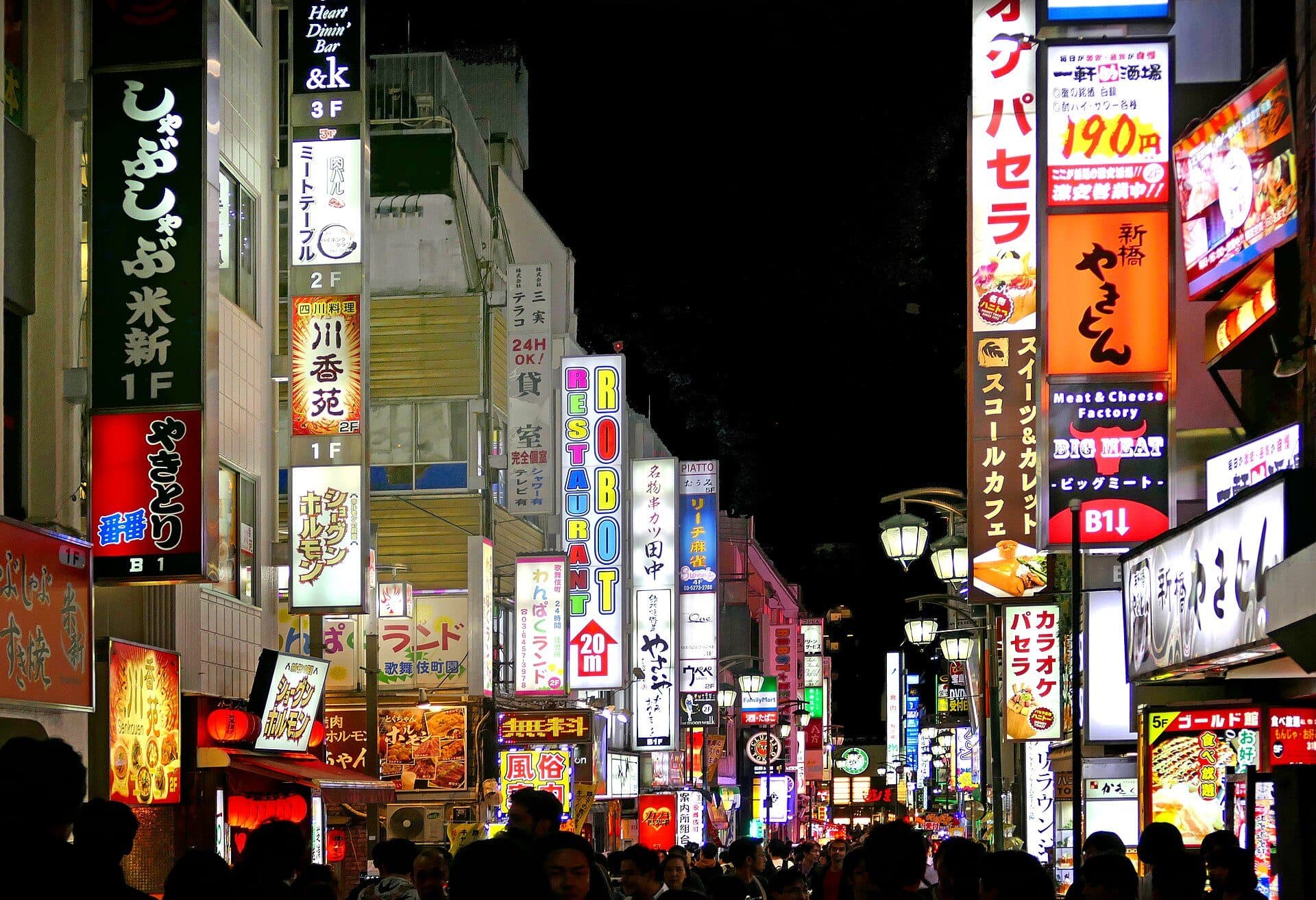
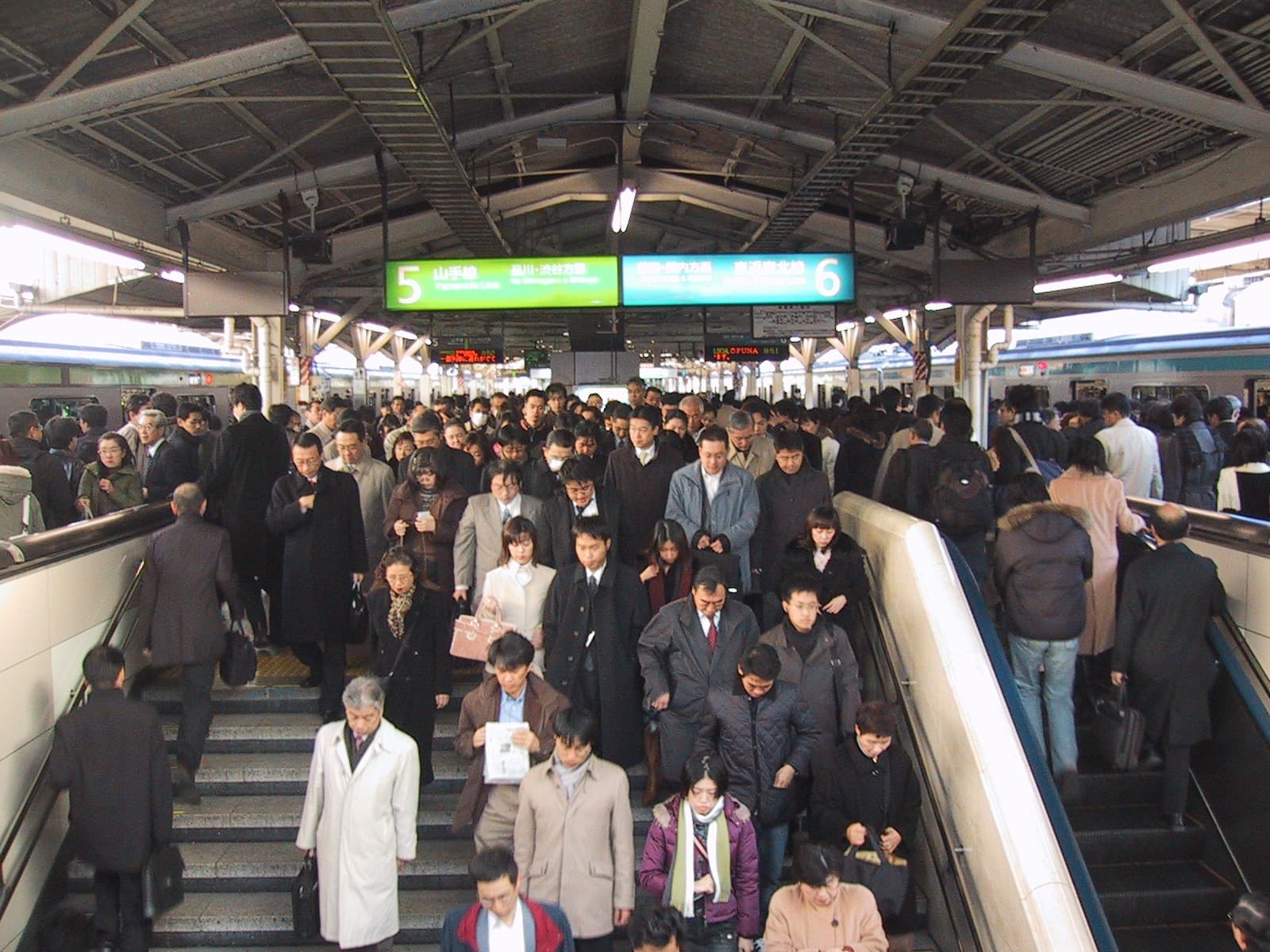
It is eleven at night in an office tower in Shinjuku, and half the floors are still lit. Behind the glass, figures in white shirts stay hunched over their screens long after the last train has gone. No one is forcing them, not officially at least. The boss has not left, so they stay. The file is not finished, so they stay. Tomorrow they will start again, and they will catch the first subway without having slept.
This scene, so ordinary it has become invisible, has a name when it turns to tragedy: 過労死 (karōshi, "death by overwork"). The word describes the sudden death of an exhausted worker, struck down by the pace rather than by any diagnosed illness. It entered the Japanese language, then dictionaries around the world, as the symptom of a society that long confused endurance at the desk with virtue. To understand karoshi is to read, in negative, an entire relationship to work, loyalty and the group.
A word born in the 1970s#
The term 過労死 was coined in the late 1970s. It is generally credited to the physician Tetsunojō Uehata, who from 1978 described cases of employees felled by a heart attack or stroke after months of overexertion. The word first stayed confined to medical journals, before bursting into public debate during the 1980s, when the Japanese economy was at its peak and the had become the heroic figure of national reconstruction.
Karoshi is not a metaphor. Physiologically, it covers very real deaths: brain hemorrhages and strokes, heart attacks, ruptured aneurysms, striking people who are often young, without serious prior conditions, after weeks of shortened nights and constant strain. Alongside this death of the body exists a second, darker form: 過労自殺 (karōjisatsu, "overwork suicide"), when exhaustion, harassment and professional despair drive a person to the fatal act.
Karoshi does not strike at random: it chooses those who obey best, those who cannot say no to one more hour of overtime.
The cultural machinery: why stay late#
To grasp the phenomenon, you have to look at what, in the Japanese organization of work, turns excess hours into a silent norm. The heart of the problem has a name too: 残業 (zangyō, "overtime"). Doing zangyō is not, in Japan, an exception reserved for busy spells. It is often a daily ritual, a way of showing your commitment to the company.
Worse still, part of these hours is never paid. This is known as サービス残業 (sābisu zangyō, literally "service overtime"), that is, work given free to the employer, outside any official count. The employee clocks out at the regulation hour, then sits back down at the desk. The phenomenon is hard to measure, precisely because it escapes the records.
This endurance is rooted in an old social contract. Postwar Japanese employment rested on an implicit pact: the company guaranteed lifetime employment and seniority-based progression, and in return the employee offered unreserved loyalty. Leaving the office before your boss, taking all your 有給 (yūkyū, paid leave), refusing an evening out with colleagues, all of this could look like a quiet betrayal of the group. The pressure comes not from an order, but from the gaze of others.
This logic of consensus and the unspoken runs through every corner of Japanese office life, right down to how decisions are made. It has its virtues, as shown by the art of nemawashi, that patient behind-the-scenes preparation of agreement. But pushed to the extreme, the same culture of collective harmony can lock the individual into limitless availability.
The words of the Japanese office tell a whole society: 残業 (zangyō, overtime), 会社員 (kaishain, company employee), 有給 (yūkyū, paid leave). With JapaneseSRS and its spaced repetition, you memorize this everyday vocabulary one word at a time, so you can read Japan's real stories in the original.
The Dentsu case: a face on the statistics#
For decades, karoshi remained an abstraction, a column of figures in ministry reports. It lacked a face. That face turned out to be Matsuri Takahashi, a young employee at Dentsu, the country's largest advertising agency. In December 2015, at twenty-four, she took her own life after months of excessive overtime and harassment. Her messages, later made public, described exhaustion, insomnia, the feeling of being no more than a machine.
The case sent a shockwave. Dentsu, already condemned in the past for a similar case in the 1990s, found itself in the dock. Its president resigned. Matsuri Takahashi's death was officially recognized as karoshi, and her name became the symbol of a national breaking point. For the first time, public opinion stopped seeing overwork as an honorable sacrifice and read it instead as a form of social violence.
It took the death of a young woman for the country to face what it had been celebrating for forty years.
What the law says: from recognition to reform#
Japan did not wait until 2015 to legislate, but the Dentsu case accelerated everything. The table below traces the main stages of institutional awareness.
| Period | Milestone | Scope |
|---|---|---|
| Late 1970s | Dr. Uehata describes the first karoshi cases | Medical birth of the term |
| 1980s | The word enters public debate | Social awareness |
| 2014 | Karoshi prevention law | Official recognition and surveys |
| 2015 | Death of Matsuri Takahashi (Dentsu) | Shock to public opinion |
| 2018-2019 | Work Style Reform law | Legal overtime caps |
In 2014, Japan passed a , which officially recognizes the problem and requires the state to conduct surveys and publish an annual report. It was a major symbolic step: to name the ill, measure it, make it visible.
The most concrete reform came next. The , passed in 2018 and in force from 2019, capped overtime for the first time. The principle limits zangyō to about forty-five hours a month and three hundred and sixty hours a year, with an absolute ceiling close to one hundred hours monthly in high-activity periods. Penalties are provided for employers who exceed these thresholds.
The limits of the reform#
It would be naive to think the problem solved. A legal cap does not erase the culture that made it necessary. As long as undeclared サービス残業 persists, as long as staying late remains a sign of seriousness in the eyes of the group, the law risks pushing overwork into the shadows rather than extinguishing it. The hardest change is not legal, it is mental.
Karoshi and society: a country's mirror#
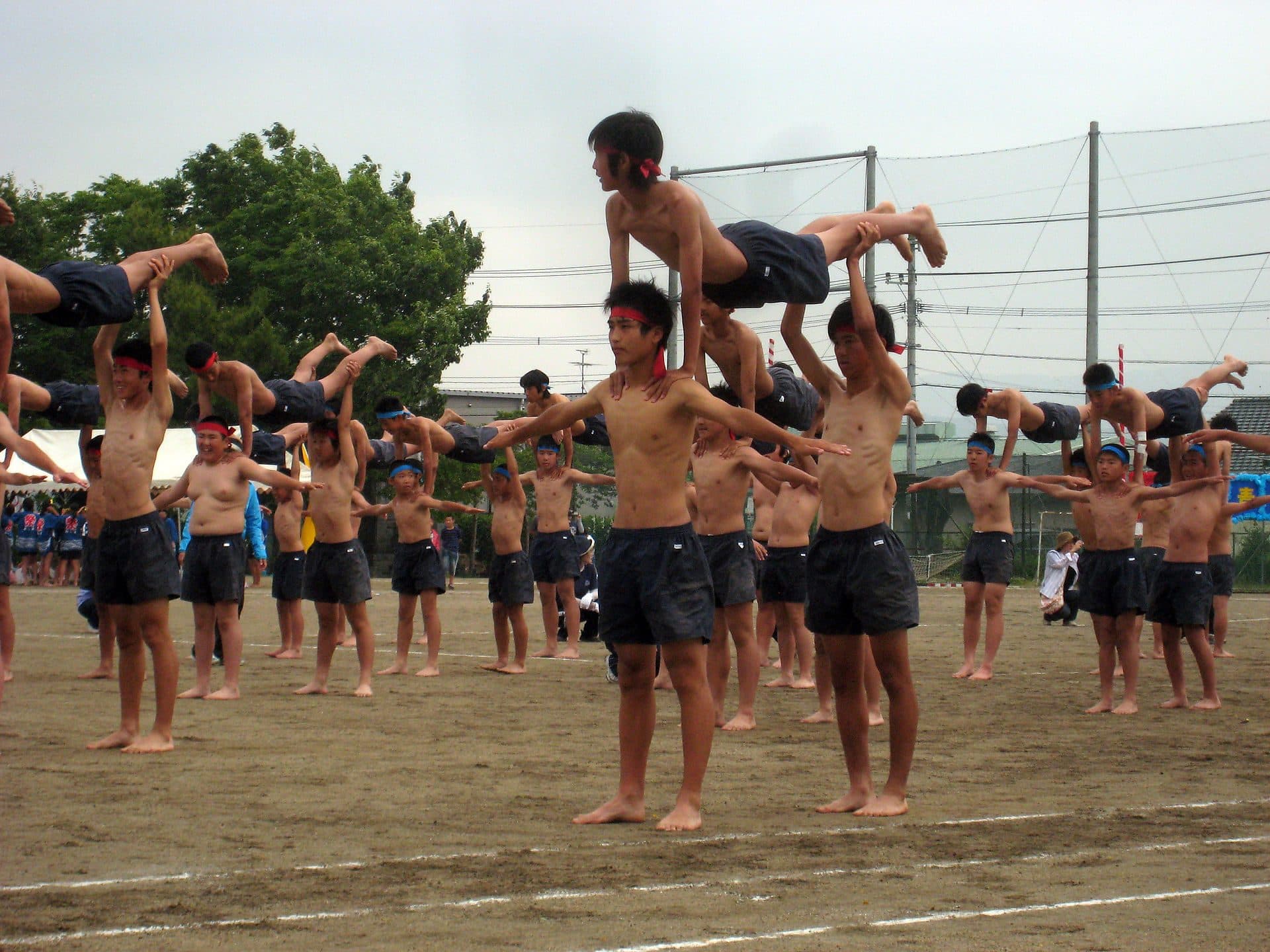
Karoshi cannot be understood in isolation. It fits into a continuum of pressure that begins very early, at school, with a demanding system described in our article on the Japanese school system. The endurance learned at the classroom desk continues naturally into the company. The same country that produces a work ethic admired around the world pays for that demand with a human price.
Since the 2010s, however, something has been shifting. Younger generations are more reluctant to sacrifice their lives to the company. Remote work, imposed by the pandemic, cracked the ritual of presenteeism. New expressions, around the balance between professional and private life, finally circulate without raising eyebrows. The social withdrawal of some, at the opposite pole from excess, forms in fact the other side of this same social tension.
Read alsoHikikomori: The Social Withdrawal That Is Ageing With JapanIf karoshi is the face of those who burn out at work, the hikikomori is its negative: the one who withdraws entirely from the world. Two extreme answers to the same pressure.
Karoshi will long remain a loaded word, at once an accusation and a warning. It reminds us that no collective performance is worth the lives of those who produce it, and that the border between devotion and destruction is sometimes as thin as a light left on, alone, at the top of a tower, long after midnight.
An ill that Japan exported#
For a long time, the world looked at karoshi as a Japanese curiosity, an excess peculiar to a unique corporate culture. The word itself ended up travelling: 過労死 entered English dictionaries as is, including the Oxford English Dictionary, for lack of a local equivalent. The irony is that the phenomenon had nothing specifically Japanese about it. As other Asian economies adopted comparable rhythms, they saw the same ill emerge, and sometimes copied the same word.
In China, the so-called 996 culture (working from nine in the morning to nine at night, six days a week), long widespread in the tech sector, brought the term back in its Chinese form, 过劳死 (guòláosǐ), written with the same characters as the Japanese karoshi. In South Korea, a country that has for decades ranked among those where people work the most within the OECD, the same tragedy goes by the name 과로사 (gwarosa), likewise modeled on the Sino-Korean characters for "death from excess work." Three countries, one shared script, one same grief.
In Japan, the recognition of these deaths runs through a specific mechanism: 労災 (rōsai, short for "industrial accident"), the compensation regime for work-related accidents. Having a death recognized as karoshi means proving the link between the workload and the death, a long and painful administrative battle for bereaved families. It is precisely that struggle that fed change. As early as 1988, lawyers and doctors opened a national helpline, the 過労死110番 (karōshi hyaku-tōban, "karoshi hotline"), to support the relatives. It was these family associations, carrying the faces behind the statistics, that eventually wrested the 2014 prevention law into being. In exporting itself, the word also exported a lesson: naming the ill is the first condition for fighting it.
Frequently asked questions#
What exactly does the word karoshi mean? The Japanese term 過労死 (karōshi) means death by overwork: a death caused by professional exhaustion, generally in the form of a heart attack or stroke, or by suicide linked to overwork (過労自殺, karōjisatsu). It is not an image but a category recognized by Japanese authorities.
Is karoshi common in Japan? Every year the Japanese government recognizes a number of deaths and disabilities linked to overwork, through compensation claims. The official figures are probably lower than reality, since many cases are never reported or recognized as such. The phenomenon remains a minority one at the scale of the population, but serious enough to justify a dedicated law.
What did the 2018-2019 reform change? The Work Style Reform law introduced, for the first time, legal caps on overtime: on the order of forty-five hours a month in principle, with an absolute limit close to one hundred hours in busy periods, backed by penalties. It does not erase the culture of presenteeism, but it provides a legal framework where the limitless once reigned.
Why do Japanese workers do so much overtime? 残業 (zangyō) is anchored in a social contract inherited from the postwar era: loyalty to the company in exchange for job security. Group pressure, the idea that leaving before your superior is improper, and the existence of unpaid hours (サービス残業) sustain the phenomenon, often without any explicit order being given.
Hikikomori: The Social Withdrawal That Is Ageing With Japan
Hikikomori, the prolonged social withdrawal born in Japan, is no longer a teenage affair: it is ageing, becoming chronic, and unsettling an entire society.
Cover image: Chris 73 · Chris 73, via Wikimedia Commons · CC BY-SA 3.0