Gosiwon: The Korean Room You Rent Without a Deposit
Gosiwon (고시원), Korea's tiny room, born for candidates sitting state exams: its floor area, its lack of a deposit, the 2018 fire and the standards adopted since.
La rédaction Kotoba Interactive
Studio éditorial
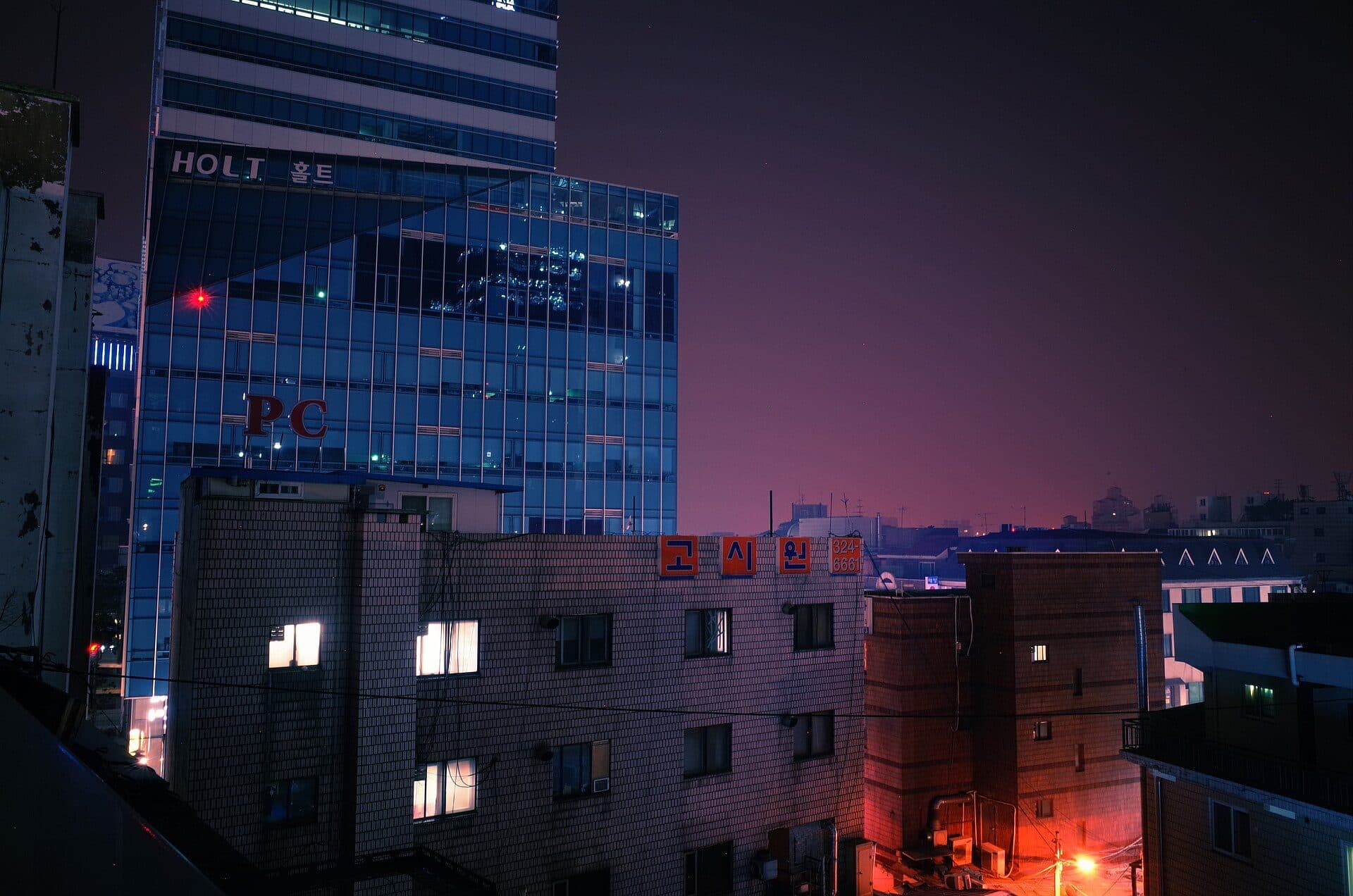
A is a single Korean room of three to seven square metres, often windowless, in a building where kitchen, showers and toilets are shared. Monthly rent runs between 200,000 and 500,000 won, and above all it is paid without a deposit.
That last point defines the product. In a country where moving into conventional housing requires a deposit of tens of millions of won, the gosiwon is the place you move into with one month up front and a suitcase.
A room for revision#
The name states the original use. 고시 (gosi) refers to Korea's major state examinations, starting with the entrance exam for the judiciary and the senior civil service exam, whose preparation takes years.
The first gosiwon appeared in the 1970s and 1980s, notably around the 신림동 (Sillim-dong) district, near Seoul National University. The principle was austere and deliberately so: a room just big enough for a bed and a desk, enforced silence, no distraction, and neighbours revising the same syllabus.
That market collapsed along with its object. The creation of law schools in 2009, then the final abolition of the judicial entrance exam in 2017, emptied the exam-preparation districts. The rooms stayed.
고시원 is written with the Chinese characters 考試院: 考試 (examination) and 院 (institution). Operators have multiplied commercial variants, 고시텔 or 리빙텔, built on "hotel", to signal slightly larger rooms or an en-suite bathroom.
What a gosiwon rents today#
The product shifted from the exam candidate to anyone the normal rental market excludes.
| What is included | What is not |
|---|---|
| A furnished room, bed, desk, sometimes a washbasin | Daylight, in a large share of the rooms |
| Utilities, often wifi | Space: three to seven square metres depending on the case |
| Self-service rice, kimchi and instant noodles | Sound insulation, since the partitions are thin |
| A monthly contract, cancellable, with no deposit | Tenancy rights and the protections that come with them |
The shared kitchen, with its permanently switched-on rice cooker and its tubs of kimchi, is a constant of the trade and counts for a lot in residents' real economics.
The clientele has changed. Students and exam candidates have been joined by low-income young workers, day labourers, people cut off from their families, and a substantial number of middle-aged men without stable housing. Seoul counts several thousand establishments, and city surveys put the population concerned at more than a hundred thousand people.
The gosiwon was never designed as social housing. It stands in for it, because it is the only place you can enter without capital.
Korean housing words are quick to learn and constantly useful: 고시원 (gosiwon), 보증금 (bojeunggeum, the deposit), 원룸 (wonrum, the studio flat). KoreanSRS teaches this vocabulary with its hangul and its situations of use.
November 2018#
On 9 November 2018 a fire broke out in a gosiwon in Jongno district, in central Seoul. Seven people died and eleven were injured. Most of the victims were middle-aged men, day labourers, who lived there year-round.
The building was old, its corridors narrow, and it had no sprinklers, a requirement that did not apply retroactively to existing structures.
The disaster produced three responses. A municipal programme subsidising sprinkler installation in older establishments. Tighter inspections under the rules governing public-access premises, a category gosiwon have fallen into since the late 2000s. And, above all, a floor area standard.
From 2020, the Seoul city government set for new establishments a minimum of about seven square metres per room and a mandatory window to the outside, rules subsequently written into its planning regulations. They apply only to new build, which leaves most of the existing stock untouched.
Koreans have a word for the three housing types of last resort taken together: 지옥고 (jiokgo), a contraction of 반지하 (the semi-basement), 옥탑방 (the room built on a roof) and 고시원. The three syllables also spell 지옥, "hell".
Why this housing type persists#
Three reasons, all economic.
The deposit first. The Korean system concentrates housing cost at entry rather than in the monthly payment, which shuts out anyone without savings or a guarantor.
Location next. A gosiwon sits in the city, near metro lines and jobs, where no conventional housing is affordable on the same income.
Flexibility last. A monthly contract with no commitment suits precarious work, a few months' assignment, a situation one hopes is temporary. It is also what deprives occupants of the protections attached to a lease.
FAQ#
How big is a gosiwon room? Three to seven square metres depending on the establishment. Rules adopted in Seoul from 2020 require about seven square metres and a window, but only for new establishments.
Is a deposit required? No, and that is the point of the product. You pay monthly, with no deposit, which sets it apart from both jeonse and conventional monthly rent.
Who lives there? Students, young workers, day labourers and isolated older people. The original clientele, state exam candidates, is now a small share.
Is it legal? Yes. Gosiwon fall under a regulatory category of public-access premises, subject to fire safety obligations tightened after the fires of the 2000s and 2010s.
Read alsoBanjiha: Korea's Semi-Basement, Before and After ParasiteThe banjiha, Korea's semi-basement, the second piece of the trio Koreans call "hell".
Sources and further reading#
- Seoul Metropolitan Government, surveys of gosiwon residents and the floor area and window standards adopted from 2020
- Korean regulations on public-access premises and fire safety
- Jongno gosiwon fire, 9 November 2018, Seoul emergency services reports
- Abolition of the judicial entrance examination (사법시험), effective 2017
Banjiha: Korea's Semi-Basement, Before and After Parasite
Banjiha (반지하), the Korean half-basement flat: its origin in a 1970 defence rule, its 1984 legalisation, Seoul's 200,000 households, and the plan launched after the 2022 floods.
Cover image: Tony · Tony, via Wikimedia Commons · CC BY 2.0