Daigou: The Personal Shoppers Who Emptied the Pharmacies
Daigou (代购), China's overseas personal shoppers: why they exist, how infant formula came to be rationed in Hong Kong and Australia, and what the 2019 law changed.
La rédaction Kotoba Interactive
Studio éditorial
A is someone who buys goods abroad for Chinese customers and forwards them home. The word covers both the activity and the person doing it: a student in Sydney, a flight attendant on the Paris route, a family settled in Osaka.
The trade is anything but marginal. Before 2019, estimates put this parallel commerce in the hundreds of billions of yuan a year, with no official statistic able to measure it, by design.
Why buy abroad what is sold at home#
Two reasons, one accounting, the other far heavier.
The first is the price gap. The same bag, the same bottle, the same jar of cream costs distinctly more in China than in Paris, Seoul or Tokyo: import duty, consumption tax on goods classed as luxury, VAT, and the brands' own pricing policies stack up. The gap long exceeded 30% in the most sought-after categories, which leaves room to pay an intermediary and their plane ticket.
The second is a health scandal. In 2008, Chinese infant formula cut with melamine, a molecule that artificially inflates measured protein content, sickened around 300,000 babies and killed several. The Sanlu company was at the centre of it, but dozens of brands were contaminated. Trust in locally produced formula never recovered.
Daigou was not born of a taste for luxury. It was born of a milk scandal, and luxury came afterwards.
代购 joins 代 (dài, "in place of", "to substitute") and 购 (gòu, "to buy"). The same 代 appears in 代表 (dàibiǎo, "to represent") and 代理 (dàilǐ, "agent"). The word implies nothing illegal: it simply means buying by proxy.
The stripped shelves#
The effect showed at the other end of the chain, in countries that had asked for none of it.
In Australia and New Zealand, pharmacies and supermarkets imposed purchase limits on infant formula, two tins per customer, as buyers swept up whole pallets for reshipment. In the Netherlands and the United Kingdom, several chains took comparable measures.
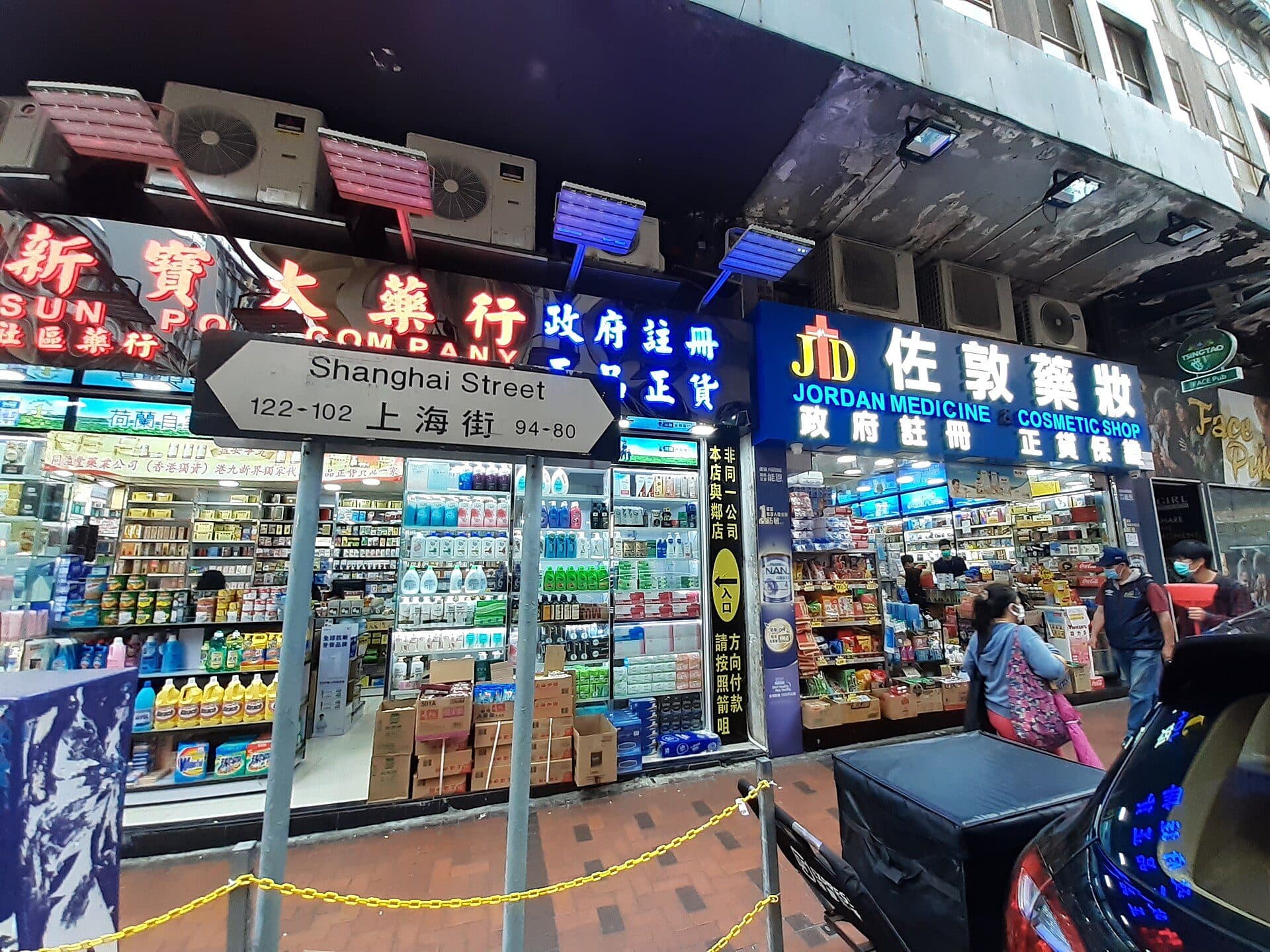
Hong Kong went as far as legislation. Since March 2013, a traveller leaving the territory may not carry more than 1.8 kilos of infant formula, that is two tins, on pain of a fine of up to HK$500,000 and two years in prison. The measure, taken after repeated stock-outs in the city's pharmacies, is still in force.
| Market | What daigou mostly bought there |
|---|---|
| Australia, New Zealand | Infant formula, supplements, lanolin, manuka honey |
| France, Italy | Leather goods, perfumes, luxury cosmetics |
| South Korea | Skincare, sheet masks, make-up |
| Japan | Over-the-counter medicines, cosmetics, household goods |
| Hong Kong | Infant formula, pharmaceuticals, watches |
Chinese commercial vocabulary is quick to learn and useful everywhere: 代购 (dàigòu, buying by proxy), 免税 (miǎnshuì, duty free), 正品 (zhèngpǐn, genuine article), the word that reassures in every listing. ChineseSRS teaches these terms with their characters and their pinyin.
The 2019 law changed the job#
Daigou long thrived in a blind spot: neither declared importer nor ordinary traveller. China's , in force since 1 January 2019, closed that gap by requiring every online seller, including a private individual selling through a messaging app, to register as a business operator, declare income and pay the corresponding tax.
Customs backed the text with tighter checks on frequent travellers' suitcases. Several high-profile cases made an impression, among them a former flight attendant sentenced in 2012 to eleven years in prison for bringing in undeclared iPhones, reduced to three years on appeal.
The state simultaneously built a legal door. The cross-border e-commerce pilot zones, created from 2015, allow foreign goods to be imported through bonded warehouses, with lighter taxation and an annual per-person cap. Buying a Korean cream on an approved Chinese platform became simple, fast and fiscally clear, which daigou was not.
What pushed it back#
Three successive blows.
The 2019 law, which drove out the amateurs and professionalised the rest.
The border closures from 2020 to 2022, which removed travel, meaning the tool of the trade. Part of the activity migrated to bonded warehouses and to livestream selling on video platforms.
Then price convergence. Luxury brands narrowed their pricing gaps between China and Europe, and the state developed duty free on the island of Hainan, where the annual per-traveller allowance was raised to 100,000 yuan in 2020 precisely to repatriate spending that was leaking abroad.
The trade has not disappeared, it has changed direction. The weak yen from 2022 made Japan the region's most profitable buying destination, and the cosmetics and over-the-counter medicine aisles of Japanese cities acquired, in their turn, the per-customer limits Australia had known ten years earlier.
FAQ#
Is daigou legal? Buying on someone's behalf is not illegal in itself. What is illegal is reselling without registering as an operator, not declaring goods at customs, and not paying the corresponding tax.
Why infant formula in particular? Because of the 2008 melamine scandal, which durably turned Chinese parents away from locally produced brands.
How much did the service cost? The usual commission ran between 10 and 30% of the purchase price depending on the product, which stayed attractive as long as the price gap with China exceeded that.
Does the phenomenon still exist? Yes, in a professionalised form that has shifted to cross-border online commerce, bonded warehouses and livestream selling.
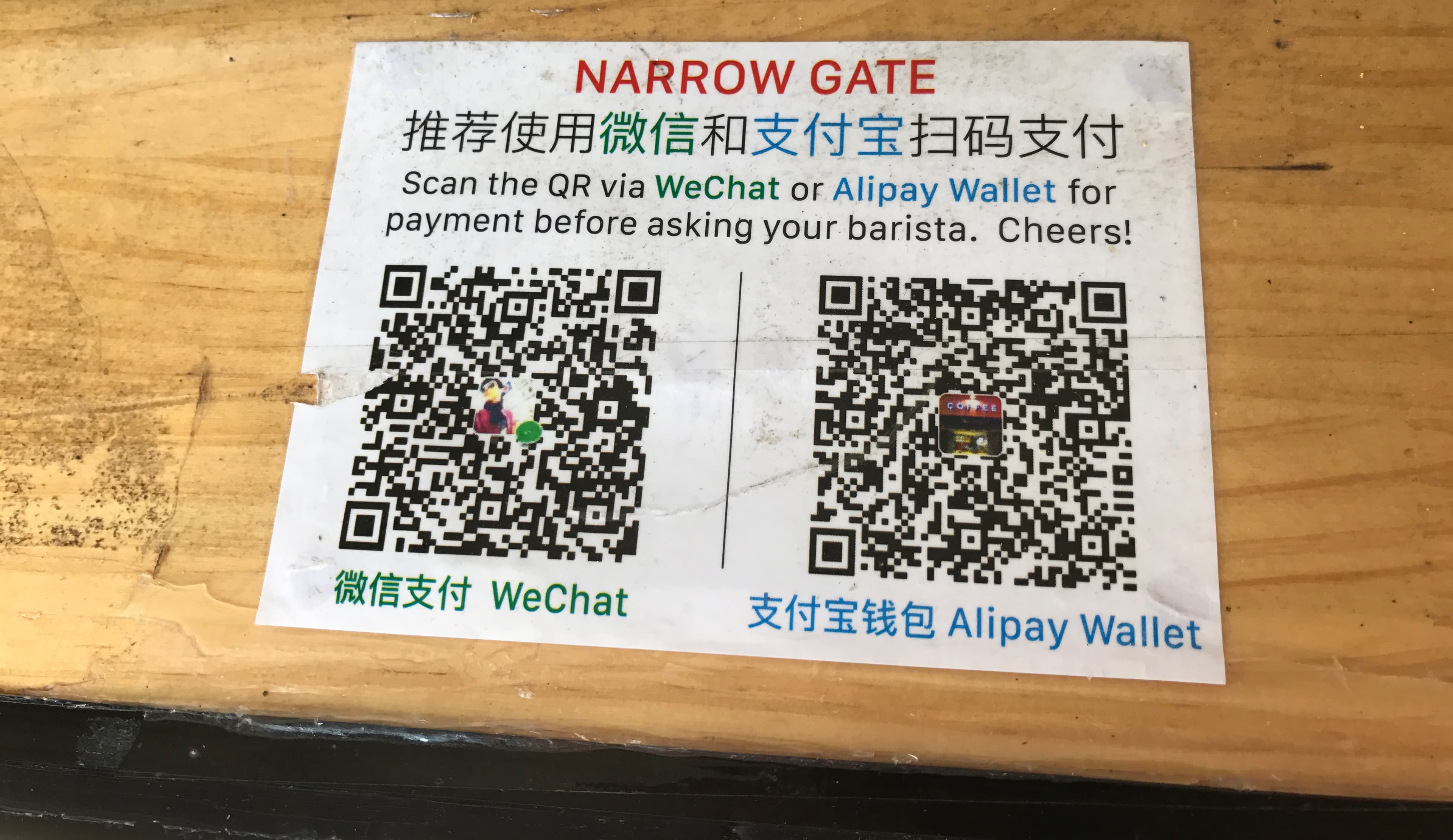
Read alsoAlipay, WeChat Pay: How China Abolished CashChinese mobile payment, without which this person-to-person trade could not have worked.
Sources and further reading#
- E-Commerce Law of the People's Republic of China (电子商务法), in force 1 January 2019
- Government of Hong Kong, order restricting the export of infant formula, in force since March 2013
- General Administration of Customs of China, rules applicable to cross-border e-commerce imports
- Hainan Province, duty free allowance raised to 100,000 yuan, 2020
Taobao Villages: Whole Towns Living Off an Online Shop
Taobao villages (淘宝村): how Chinese villages specialised in online selling, the official definition, the case of Dongfeng, and the limits of the model.
Cover image: Tweme Rum Lnsolwi · Tweme Rum Lnsolwi, via Wikimedia Commons · CC BY-SA 4.0