K-pop comebacks: anatomy of a marketing machine
The K-pop comeback decoded: teaser schedules, multi-version albums, first-week sales, music shows, TikTok challenges and the human cost of the cycle.
La rédaction Kotoba Interactive
Studio éditorial
In K-pop the word "comeback" does not mean a return after an absence. A group that never went away, interrupted nothing and released a record six months ago still stages a comeback. The term names a promotion cycle: a window of three to four weeks in which an agency concentrates everything, the release, the content, television, the charts, the shop.
That cycle is the most characteristic industrial object in Korean music. It turns a single release into a dramatised sequence, calibrated day by day, measured by public indicators and fuelled by an organised fandom. Understanding its workings means understanding how a market of 50 million people produces artists who fill stadiums on four continents.
The word, and the calendar it imposes#
A comeback (컴백) opens a period of activity, , as opposed to , the "blank period" without releases. An active group typically runs two comebacks a year, sometimes three, each cycle chaining preparation, intensive promotion, then withdrawal.
That rhythm follows from the structure of revenue. Music shows, weekly charts and physical sales all reward concentration: one month of omnipresence beats six months of diffuse presence. The promotion calendar is therefore cut to the day, published in advance as an image, and followed by fandoms like an official programme.
The word is an English loanword whose meaning drifted in Korean: it names not the return of a vanished artist but the opening of a new promotional campaign. Its antonym, , literally "period of emptiness", describes time without a release, a state fandoms dread.
Fifteen days of drama before release#
The teaser sequence is the most codified part of the exercise. Each element is published separately, at a fixed hour, to occupy the feed for two or three weeks and generate that many distinct attention peaks.
| Stage | Content released | Function |
|---|---|---|
| D-21 | Promotion schedule image | Announces and fixes the appointments |
| D-18 | Concept photos, by member then group | Establishes the visual world of the cycle |
| D-14 | Trailer or concept film | Provides a narrative, sometimes tied to group lore |
| D-10 | Tracklist | Reveals the credits, closely scrutinised by fans |
| D-7 | Highlight medley | Lets the album be heard without giving it away |
| D-3 | Music video teaser | Concentrates anticipation on one strong image |
| D-Day | Video, album, live broadcast, showcase | Everything is measured at once |
Many agencies graft a narrative continuity onto that frame, a group universe fans document from one cycle to the next. The device extends attention between comebacks and gives teasers the value of clues rather than plain advertising.
The physical album as collectible#
The Korean specificity lies in the vitality of the physical record in a globally dematerialised market. An album ships in several versions, each with a different booklet, random cards, posters and goods. The randomly inserted photocard creates a trading market, and retailers offer pre-order bonuses specific to each chain.
The measure that counts is called , first-week sales, recorded by the Hanteo chart. Circle Chart, the former Gaon renamed in 2022, publishes the industry's monthly and annual data. Aggregate figures crossed the hundred million mark for the best annual sales in 2023, before falling back in 2024, the first notable reversal after a decade of growth.
In most markets the physical album is a concert souvenir. In Korea it is the instrument that measures a fandom.
The model has its critics, including inside the sector: multiple purchases encouraged by signing lotteries, tonnes of plastic and paper, unsold stock. Lighter formats and albums with digital access codes have developed in response, without replacing the object.
Following a comeback in its own language takes few words: 컴백 (keombaek, comeback), 활동 (hwaldong, activity period), 음방 (eumbang, music show), 1위 (il-wi, first place). KoreanSRS, our spaced repetition app for learning Korean, is coming soon: join the waiting list to read agency announcements at the source.
Music shows and their arithmetic#
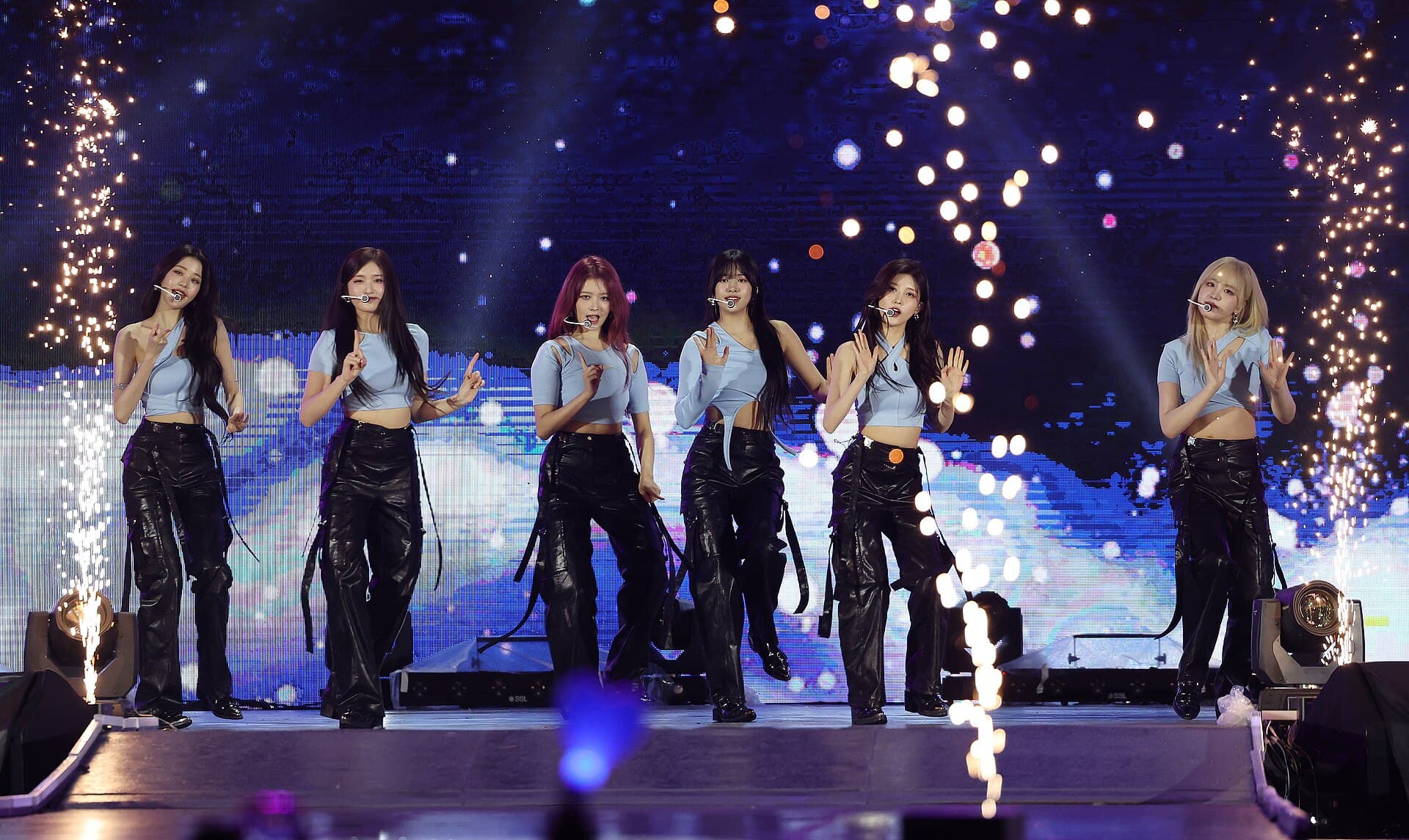
The televised heart of the cycle is still the circuit of , the weekly music shows: M Countdown on Mnet, Music Bank on KBS, Show! Music Core on MBC, Inkigayo on SBS, plus Show Champion and The Show. A group in promotion appears on these stages for several weeks in a row, varying staging and outfits each time.
Each show awards a weekly trophy according to a published formula combining digital sales, physical sales, broadcast airplay, audience votes and sometimes social media indicators. The weightings differ between channels, which yields different winners in the same week and turns the race for 1위 (first place) into a calculation game for fandoms, who split their effort between streaming, buying and voting.
Alongside those trophies, real-time charts on Korean platforms produced a notion specific to the country: the "all-kill", when a track tops every domestic chart at once, aggregated by a community service and brandished as a record.
The digital wake#
Promotion has shifted towards short video. Since 2020 nearly every comeback includes a dance challenge designed to be reproduced: a fifteen to thirty second sequence, simplified choreography, vertical framing, circulated on social platforms with partner artists. The device partly replaces buying advertising space with viral distribution.
Around the music video sits a catalogue of derived content: wide-shot dance practice, relay dance putting each member forward, behind the scenes, in-house shows, live broadcasts on fandom platforms, variety and radio appearances. Each format targets a slightly different audience, and each produces its own reshared clips, notably the fancams focused on a single member, a format born in Korea and now a genre of its own.
A market built for export#
Comeback strategy factors in the international from the design stage. Groups release Japanese and sometimes English versions of their tracks, slot world tours into the extension of the promotion cycle, and target Western festival stages: BLACKPINK became the first Korean act to headline Coachella, in April 2023.
Agencies have also exported the method itself. HYBE and the American label Geffen built a group from an international selection, KATSEYE, launched in 2024; JYP had previously built NiziU in Japan following the same casting and training protocol. The final product is no longer necessarily Korean: it is the comeback system that is being exported.
The recent landscape widened the audience further. The animated film KPop Demon Hunters (2025) carried the genre's aesthetics to a global family audience, and preparation for the full-group return of BTS, announced for 2026 after its members' military service, structures expectations across the industry.
Read alsoK-pop fandom: fanchants, lightsticks and fancafésA comeback works only because an organised fandom is waiting for it: fanchants, lightsticks, streaming campaigns and fancafés form the other half of the machine.
To place this cycle in its history, from the first generation of idols to publicly listed agencies.
The cost of the treadmill#
That efficiency comes at a price, increasingly discussed in Korea. Two or three comebacks a year, each with weeks of stages, shoots and travel, exhausts artists; cancellations for health reasons punctuate schedules regularly. Promotion periods overlap, creating saturated "seasons" in which several major releases compete for the same charts in the same week.
On the audience side, the financial pressure of the physical model and the intensity of support campaigns feed a fatigue expressed even in fan forums. Several agencies have begun spacing cycles out, favouring pre-released singles and trimming album formats.
The comeback nonetheless remains the Korean industry's structuring invention: a device that synchronises creation, marketing, television, retail and community within the same month of the calendar. Where other markets release records, Korea orchestrates returns.
FAQ#
What does "comeback" mean in K-pop? A comeback (컴백) is the opening of a promotion cycle around a new release, not a return after an absence. An active group usually runs two or three comebacks a year, each within a window of three to four weeks.
How does comeback promotion unfold? It follows a published calendar: schedule image, concept photos, trailer, tracklist, highlight medley, music video teaser, then simultaneous release of album, video and showcase, followed by several weeks of music shows.
What is chodong? refers to first-week album sales, measured by the Hanteo chart. It is the reference indicator for a fandom's strength, distinct from the monthly and annual data published by Circle Chart.
How does a group win a music show trophy? Each show applies its own formula, combining digital sales, physical sales, broadcast airplay, audience votes and sometimes social indicators. The weightings differ, so several groups can win in the same week on different channels.
Why do Korean albums exist in several versions? Because each version contains a different booklet and random cards, and because pre-orders at different retailers offer specific bonuses. The device supports physical sales but is criticised for the multiple purchases and waste it encourages.
Photo credits: the images in this article come from Wikimedia Commons and are under a free license.
In this article
The cultural terms covered here, each with a short definition.
- Hallyu
- The "Korean Wave": the global spread of South Korean pop culture (k-pop, k-dramas, film).
K-pop for export: YouTube, song camps and cultural policy
Three concrete cogs behind K-pop's export: distribution through YouTube, the song camps where foreign writers build the hits, and state support.
Cover image: Korea.net / Korean Culture and Information Service · Korea.net / Korean Culture and Information Service, via Wikimedia Commons · CC BY-SA 2.0