Auspicious Dates: Picking the Right Day with the Chinese Almanac
Weddings, moving house, opening a shop: how the Chinese almanac (huangli) and the art of choosing a lucky day (zeri) still guide China's biggest decisions.
La rédaction Kotoba Interactive
Studio éditorial
In a Hong Kong shop, between the bundles of incense and the statues of deities, a small yellowed pamphlet sells millions of copies every year: red cover, thin paper, columns of tightly packed characters. This is the , the popular almanac that Chinese families consult before fixing a wedding date, signing a lease, or launching a business. A couple does not marry "whenever they please": they open the almanac, look for the days marked 宜 (yí, "favorable"), avoid those marked 忌 (jì, "to be avoided"), and sometimes even choose the exact hour of the ceremony.
Behind this apparently superstitious gesture lies one of the most sophisticated systems of knowledge in Chinese civilization: a machine for calculating time that layers the lunar calendar, the sexagenary cycle, the five elements, and the zodiac. Choosing an auspicious day, , is not a marginal belief but an art codified for more than two thousand years, still alive in a China of skyscrapers and mobile apps. To understand the almanac is to understand how the Chinese conceived of time not as a neutral line, but as a fabric of charged moments, propitious or dangerous.
The Almanac, China's Most Widely Read Book#
The is a traditional almanac that indicates, day after day, the activities recommended and discouraged according to astro-calendrical rules. Its name refers to , the Yellow Emperor, the mythical sovereign to whom tradition attributes the invention of the calendar around the third millennium BCE. The legend is unverifiable, but it says the essential: in the Chinese imagination, ordering time was the first act of civilization.
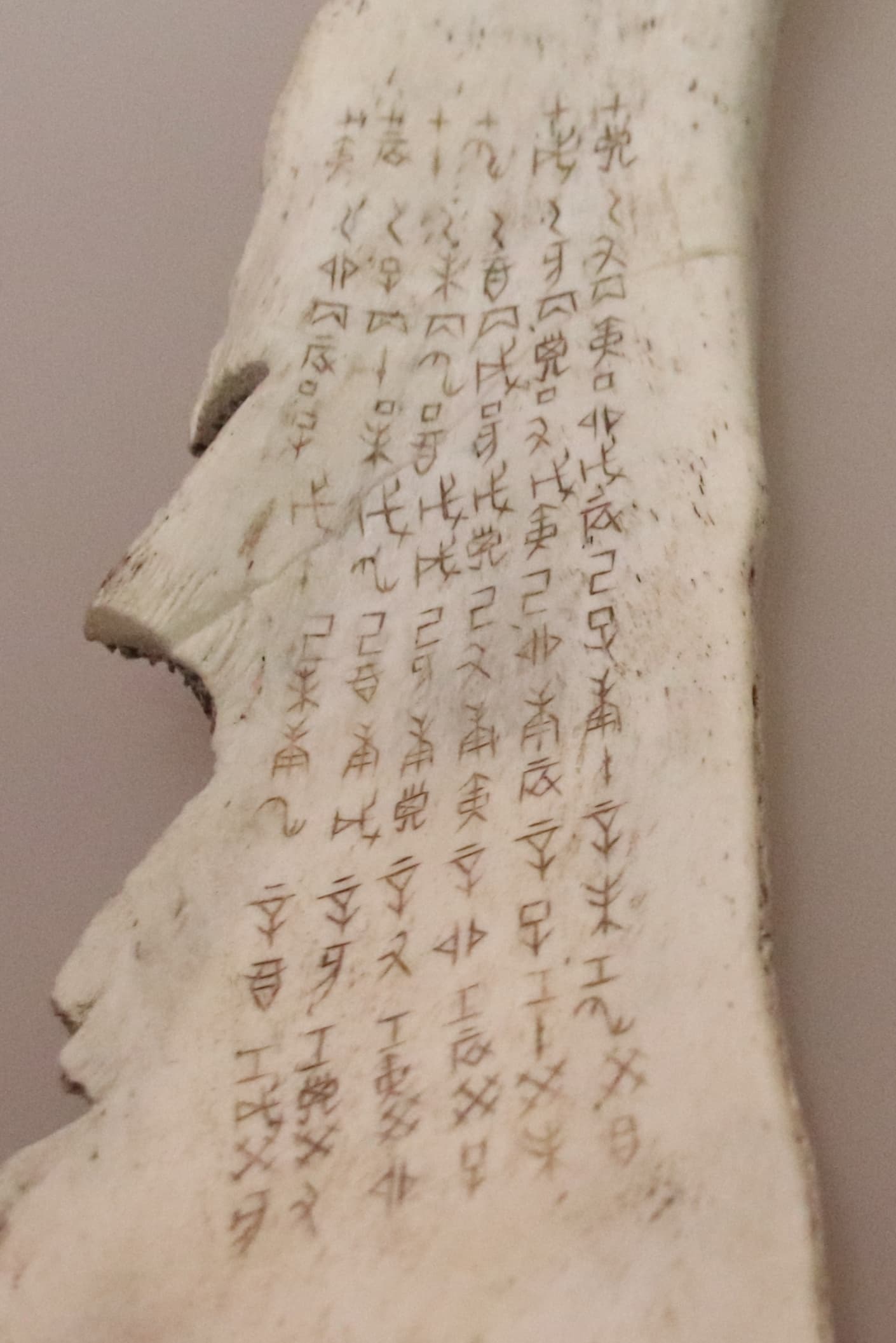
For a long time, this was an imperial privilege. Under the dynasties, the calculated and published the official calendar, and printing it without authorization was a crime: to master time was to hold an attribute of the Son of Heaven. The oldest surviving printed calendar in the world is thought to be a Chinese almanac from the year 877, found in the caves of Dunhuang. As early as the Tang (618-907), the almanac already circulated as an everyday object, blending astronomy, agriculture, and divination.
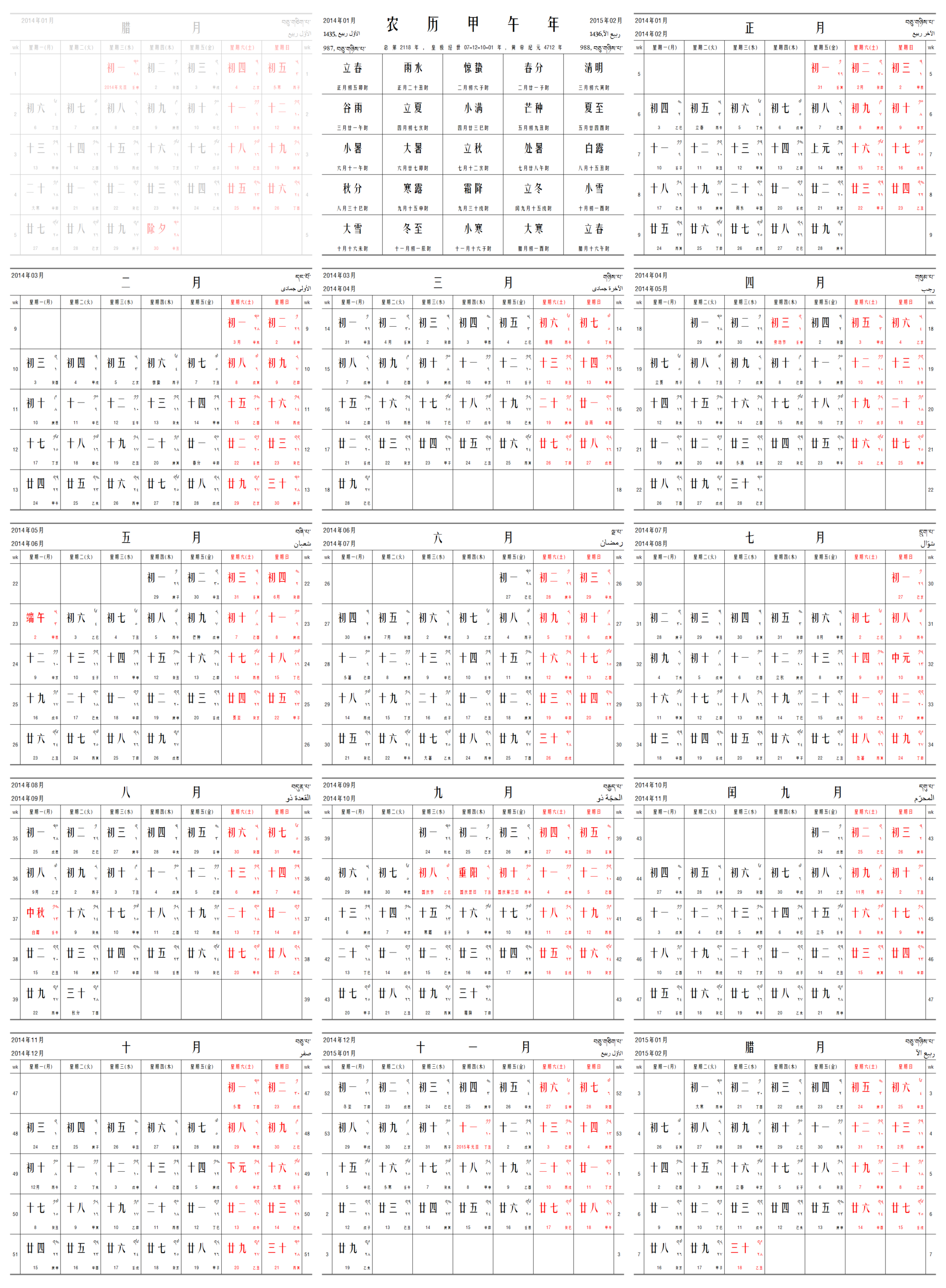
The popular version is known, in Hong Kong and the south, as the . Because shū ("book") is a homophone of shū (輸, "to lose"), the Cantonese, superstitious even in their words, renamed it to turn an unlucky omen into a promise of victory. This shift says a great deal: in this universe, language itself is a field of forces where the sound of a word can carry luck or misfortune.
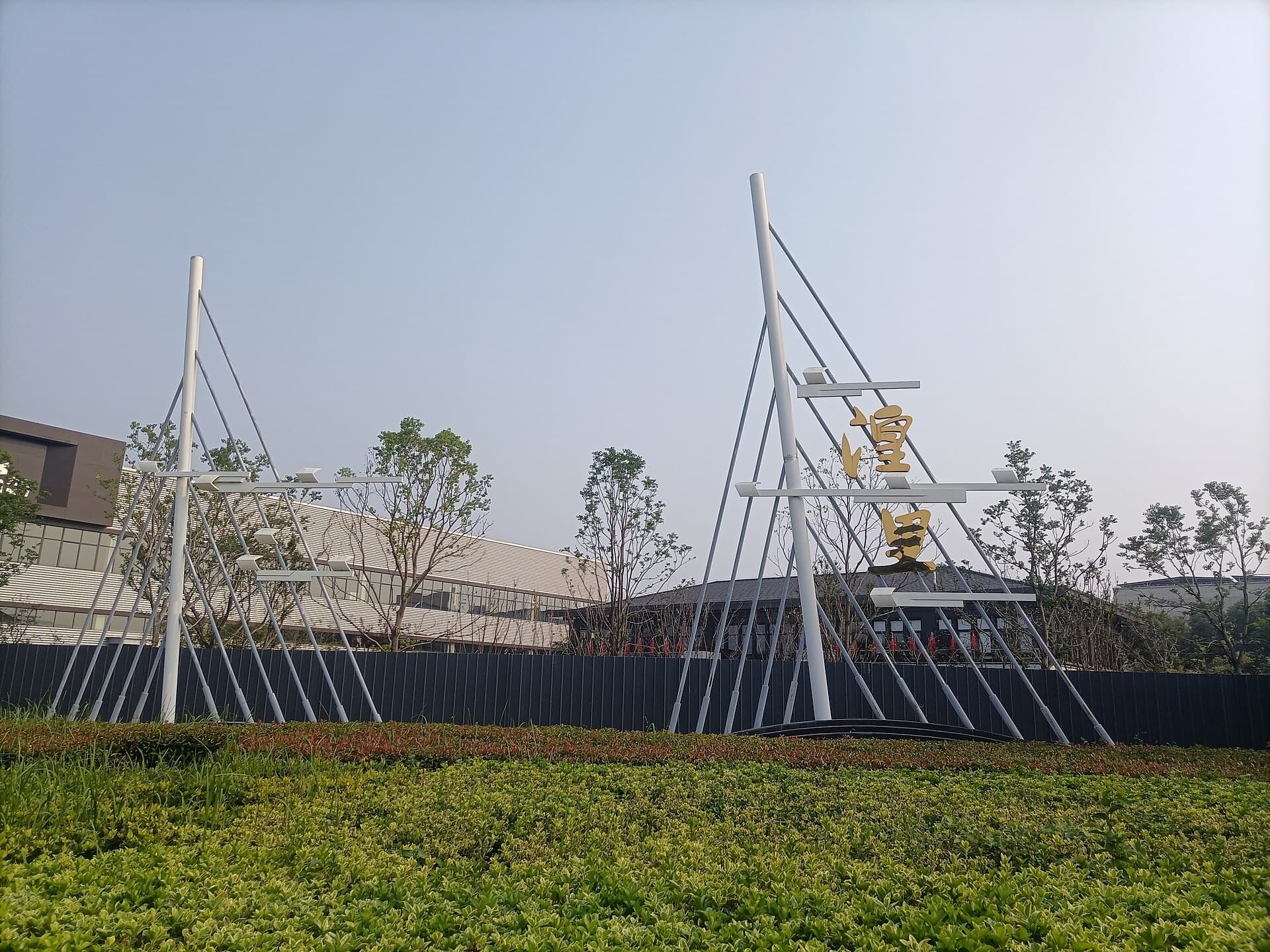
pairs huáng (黄, "yellow"), the color of the Yellow Emperor and of the central earth, with lì (历, "calendar"). Literally "the calendar of the Yellow Emperor," it designates the traditional almanac that prescribes the auspicious and inauspicious activities of each day.
The almanac remains a widely circulated object today. In Hong Kong, the most famous edition, the Tung Shing of the family, has been passed down from one generation of publishers to the next since the 19th century and still sells by the millions at the end of every year. In mainland China, lunar calendar apps have digitized these contents: tens of millions of users consult on their phones the same 宜/忌 columns their great-grandparents read on paper.
Reading a Page: 宜 and 忌, the Favorable and the Forbidden#
An almanac page answers, first of all, a simple question: what may one do today, and what should one avoid? Each day is described by two opposing columns. Under 宜 (yí, "it is fitting to") appear the recommended activities; under 忌 (jì, "to be prohibited"), those best postponed. One reads a vocabulary of astonishing precision, inherited from centuries of codification.
| Entry | Pinyin | Domain | Meaning |
|---|---|---|---|
| 嫁娶 | jiàqǔ | Union | To marry |
| 搬家 (入宅) | bānjiā (rùzhái) | Home | To move in |
| 開市 | kāishì | Business | To open a business |
| 動土 | dòngtǔ | Construction | To break ground |
| 出行 | chūxíng | Travel | To set out on a journey |
| 安葬 | ānzàng | Mourning | To carry out a burial |
Among the classic entries: 嫁娶 (jiàqǔ, to marry), 搬家 or 入宅 (bānjiā / rùzhái, to move in), 開市 (kāishì, to open a business), 動土 (dòngtǔ, "to break ground," to start construction), 安床 (ānchuáng, to install a bed), 出行 (chūxíng, to travel), 祭祀 (jìsì, to make an offering to the ancestors), and 安葬 (ānzàng, to carry out a burial). A single day may be excellent for a wedding and catastrophic for a funeral: the quality of a moment is never absolute, it depends on what one undertakes.
Around these two columns orbits an apparatus of data that only an initiate fully deciphers. Each day receives its pair of characters from the sexagenary cycle, its correspondence with one of the five elements, its zodiac animal, its favorable or unfavorable "stars," and sometimes precise auspicious hours. The page also indicates the 二十四節氣 (èrshísì jiéqì, the twenty-four solar terms that pace the agricultural year) and the phases of the moon. The almanac is a database before its time, condensed into a few square centimeters.
One does not ask whether the day is "good" in the abstract, but whether it is good for this, at this hour, for this person born in that year. Chinese time has no neutral value: every instant is already oriented.
This reading is anything but improvised. Serious practitioners of zérì, often masters or astrologers, cross the almanac's data with the client's particular situation. A day published as "favorable for marriage" may prove inauspicious for a given couple if their zodiac animal clashes with that of the day. The almanac provides the general framework; the expert adjusts it to the individual case. It is this tension between universal rule and personal exception that makes zérì an art, not a mere table lookup.
Fascinated by these columns of 宜 (yí, favorable) and 忌 (jì, to avoid)? Learn to read 黄历 (huánglì, the almanac), 嫁娶 (jiàqǔ, to marry) and hundreds of everyday Chinese words with ChineseSRS and its spaced repetition.
The Mechanics of Time: the Sexagenary Cycle and the Five Elements#
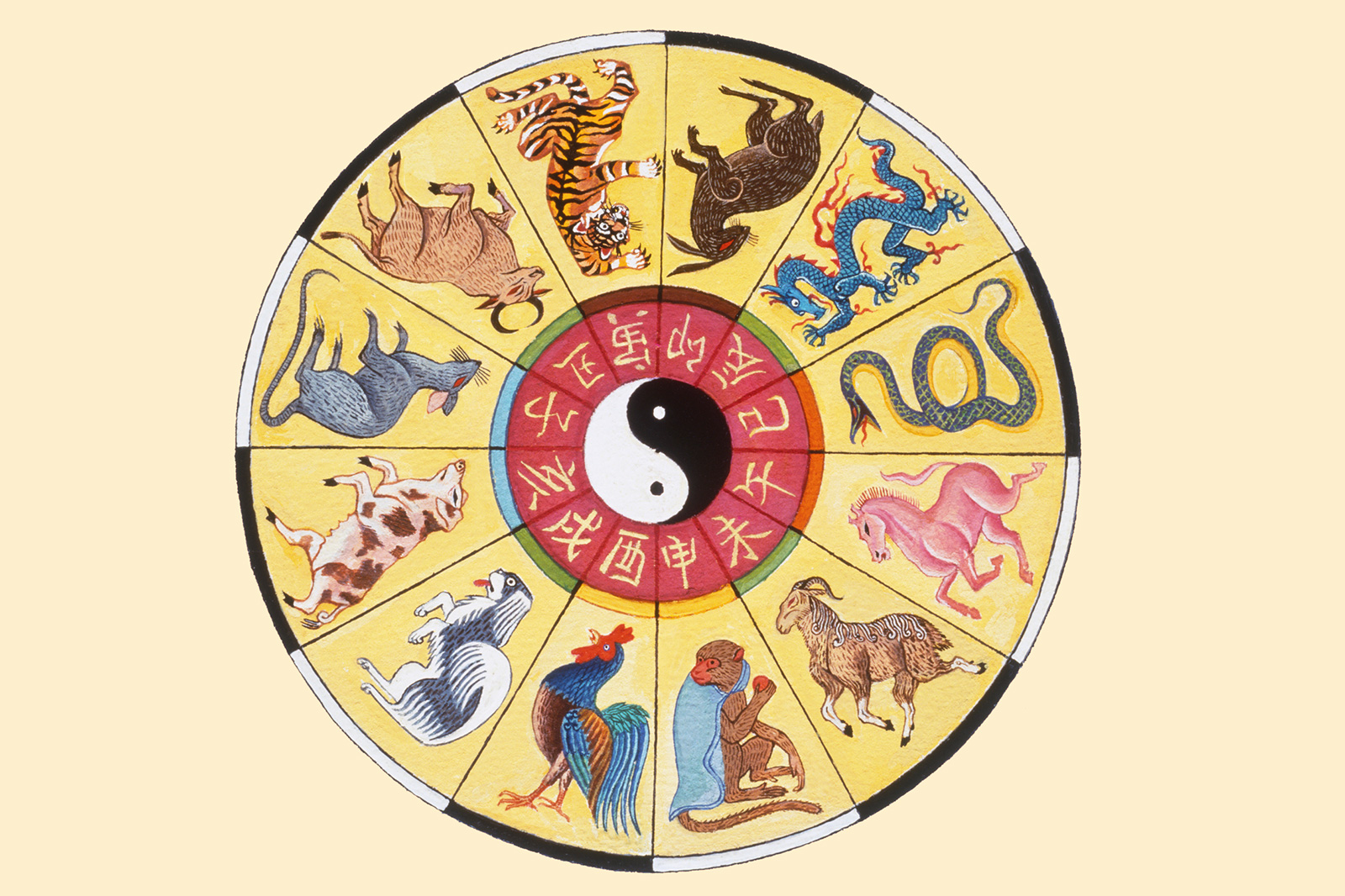
The heart of the system is the sexagenary cycle, the , which combines ten "heavenly stems" (天干, tiāngān) and twelve "earthly branches" (地支, dìzhī) to form a wheel of sixty combinations. This wheel turns without end: it numbers the years, but also the months, the days, and even the double-hours. Two dates separated by sixty units share the same energetic "character." It is this cycle, and not the mere Gregorian date, that gives each day its signature.
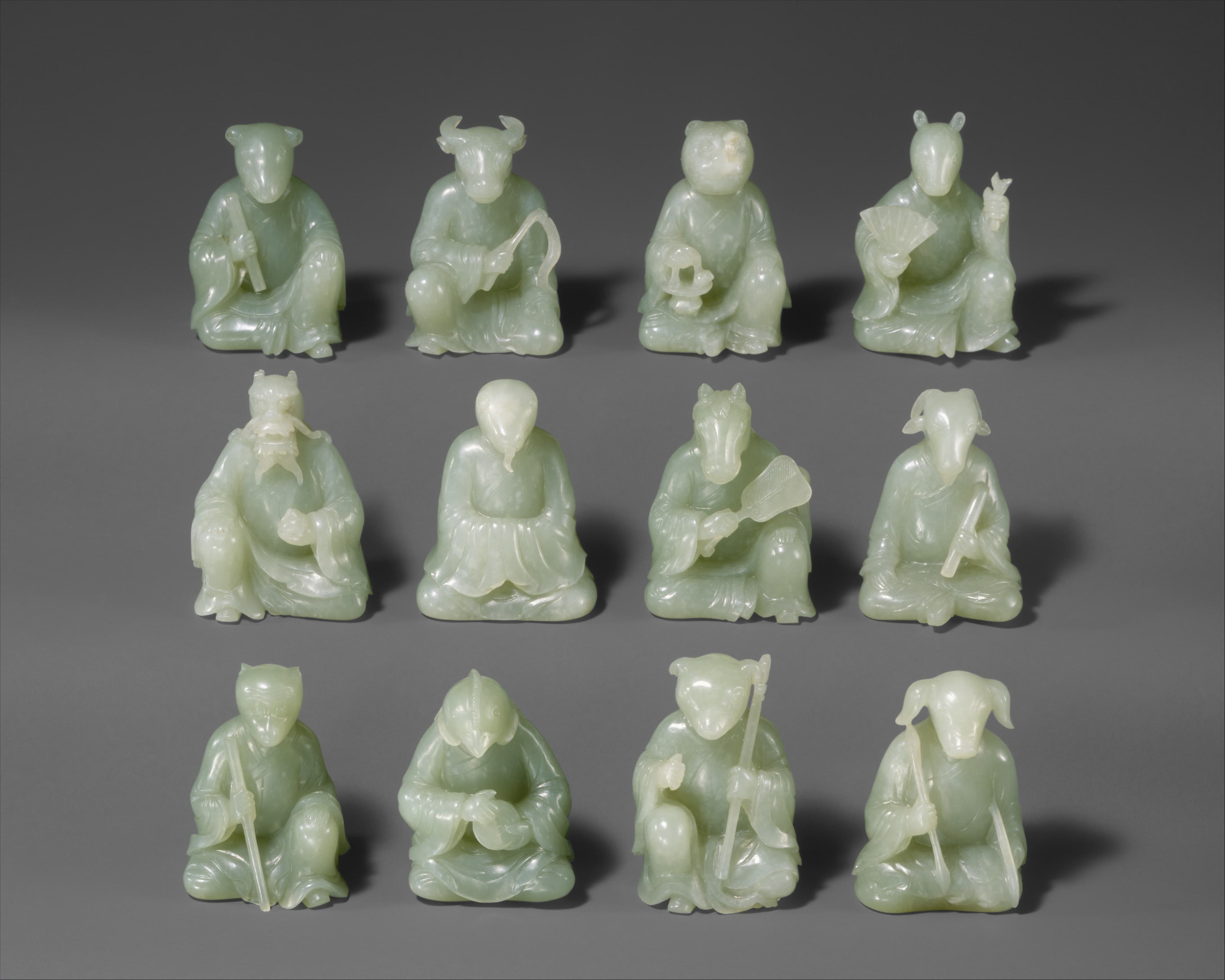
The ten heavenly stems pair with the : wood (木), fire (火), earth (土), metal (金), water (水), each under a yīn or yáng polarity. The twelve earthly branches correspond to the twelve zodiac animals: rat, ox, tiger, rabbit, dragon, snake, horse, goat, monkey, rooster, dog, pig. A year like 2024, the jiǎchén (甲辰), was thus that of the "wood dragon": jiǎ (yang wood) for the stem, chén (dragon) for the branch. Every day likewise has its stem and its branch, hence its element and its animal.
contracts tiāngān (天干, the ten "heavenly stems") and dìzhī (地支, the twelve "earthly branches"). Their combination generates a cycle of sixty units that has served, since antiquity, to count years, months, days, and hours: the very weave of Chinese time.
From these correspondences arises a logic of compatibilities and conflicts. The elements generate one another (water nourishes wood, wood feeds fire) or destroy one another (water quenches fire, metal cuts wood) according to two fundamental cycles. The branches, for their part, form harmonious trios (三合, sānhé) or antagonistic pairs (六沖, liùchōng). The dragon and the dog, for example, are in direct opposition: a dog day would be discouraged for someone born under the dragon. Choosing an auspicious date amounts to solving an equation in which all these factors must agree: between the day, the event, and the people concerned.
Finally, the is layered on top: the personal birth chart formed by the stems and branches of the year, month, day, and hour of birth. A competent zérì master does not settle for the almanac: he reads the bazi of the groom and the bride to verify that the envisaged date strengthens their destiny rather than thwarting it. This is where the printed almanac meets bespoke astrology.
Read alsoChinese Zodiac: The Twelve Animals and Their LegendRat, dragon, dog: the twelve animals that govern date compatibilities each have their own character. The Chinese zodiac is the key to the calendar's conflicts and harmonies.
Choosing a Day: Weddings, Moving House, Business#
The art of zérì unfolds above all around the great thresholds of existence, those moments when one "opens" something and wants to put every force on one's side. Marriage is the canonical example. Traditionally, the groom's family consulted a diviner who, from the bazi of the two betrothed and the almanac, fixed not only the day of the wedding but the precise hour of the procession, that of the bride's entry into her new home, sometimes even the layout of the nuptial bed (安床, ānchuáng).
Moving house follows the same prudence. A distinction is drawn between the day the furniture is transported and the more symbolic day when the family spends its first night under the new roof: the 入伙 (rùhuǒ, "bringing in the fire"), which marks the true establishment of the household. Many also choose an auspicious hour to light the first fire or boil the first water, gestures that "activate" the energy of the place.
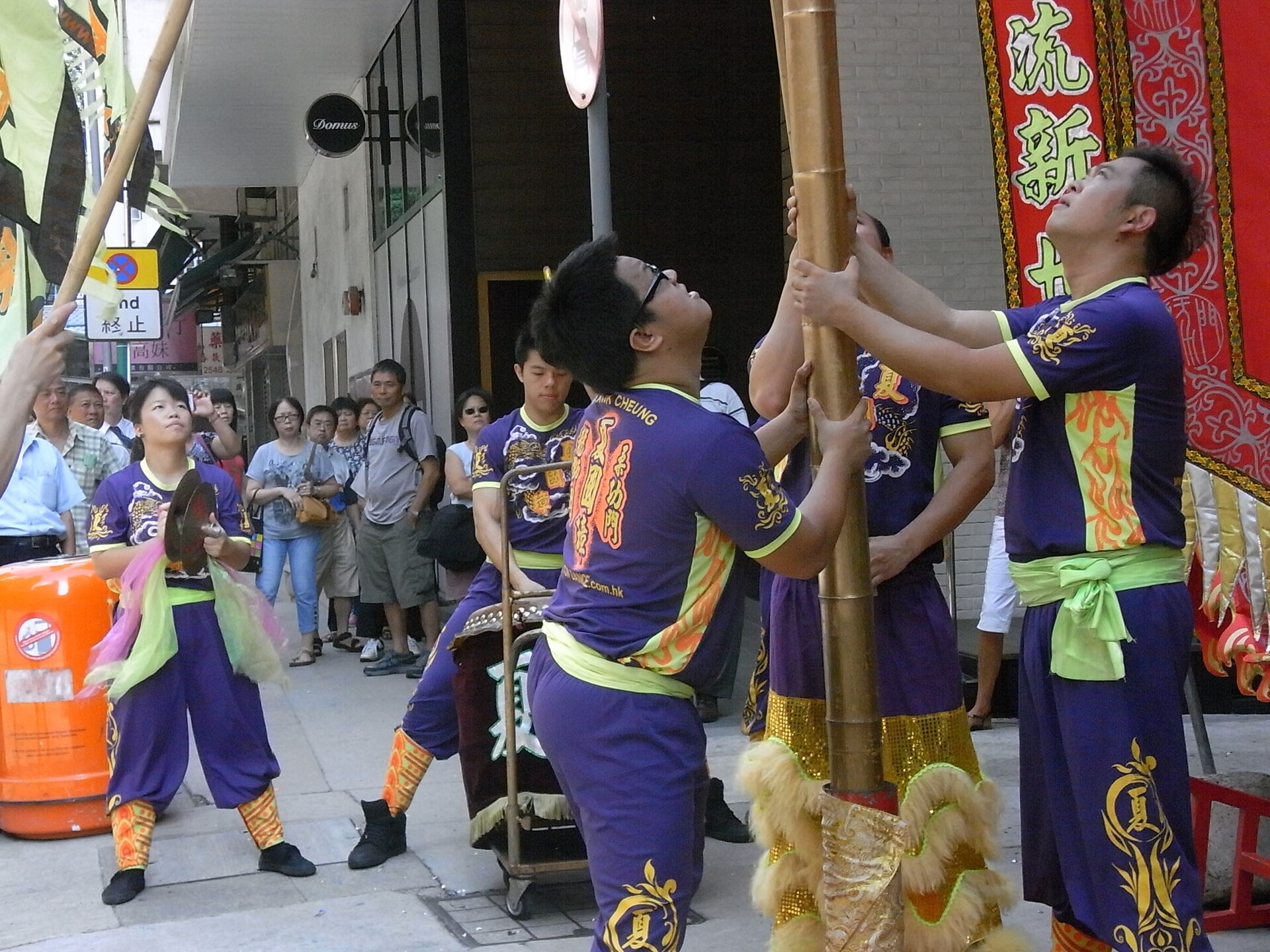
The is perhaps where the belief remains most visible in contemporary China. Restaurants, shops, and even corporate headquarters often schedule their inauguration on an auspicious day, sometimes accompanied by a lion dance and firecrackers. The Hong Kong magnate , long the richest man in Asia, is reputed to consult feng shui masters for his major decisions, and many a Hong Kong skyscraper has had its groundbreaking date set by an almanac.
Want to decipher these characters yourself? Learn 宜 (yí, favorable), 忌 (jì, to avoid), 嫁娶 (jiàqǔ, to marry) and hundreds of everyday Chinese words with ChineseSRS (chinesesrs.com).
Some dates exceed the almanac's logic to become mass phenomena. The 8th of the 8th month, or dates saturated with the number 8, bā (八) being a homophone of fā (發, "to prosper"), trigger peaks in weddings. Conversely, days associated with the number 4, sì (四), a homophone of sǐ (死, "death"), are shunned. This grammar of numbers complements that of dates, but it belongs to a distinct logic, phonetic rather than astro-calendrical.
Read also4 and 8 across Asia: the map of lucky and unlucky numbersThe 8 attracts, the 4 frightens: the grammar of lucky numbers extends that of auspicious dates, on an entirely different register: that of homophones.
The "blind month" (盲月, mángyuè), a lunar year without the solar term of "grain rain," is reputed inauspicious for marriage. Conversely, some years count a "double spring" (雙春, shuāngchūn), with two beginnings of spring, deemed so propitious for weddings that banquet halls are fully booked months in advance.
A Superstition? The Living Debate over Zérì#
The choice of auspicious dates has long divided opinion. As early as the 17th century, rationalist Confucian scholars denounced the almanac as a heap of superstitions diverting the people from work and virtue. Under the Republic and then under Mao, the almanac was periodically fought as a "feudal" relic; during the Cultural Revolution (1966-1976), possessing it could bring trouble. Yet it survived every campaign, proof of its deep roots.
Today, attitudes vary by generation and social milieu. Many urban, educated Chinese say they "don't really believe in it," while still consulting the almanac for their wedding, "just in case" and above all to reassure their elders. This pragmatic adherence, neither faith nor rejection, is doubtless the most widespread stance. One respects the custom out of family piety and prudence, more than out of cosmological conviction.
The most frequent argument in favor of zérì is not, in fact, supernatural but psychological and social: beginning a major undertaking on a chosen day confers a sense of control, of seriousness, of family consensus. The date becomes a ritual of coordination: everyone agrees, prepares, commits. Whether or not the almanac "works" in the magical sense, it structures the collective decision and gives it weight. This may be its true efficacy.
Still, zérì also feeds a sometimes opportunistic market: high-priced feng shui masters, paid apps, "good dates" sold to companies. Like any divinatory tradition, it oscillates between heritage wisdom and the commerce of uncertainty. The tradition itself invites measure: the best masters remind us that a good day replaces neither work nor virtue, and that no date can save a fundamentally bad decision.
Read alsoFeng shui: the Chinese art of harmonizing space and qiChoosing an auspicious day and orienting a house belong to the same cosmology: feng shui extends into space what the almanac orders in time.
Legacy: Chinese Time in the Digital Age#
The almanac has not disappeared, it has changed medium. On the phones of hundreds of millions of Chinese, lunar calendar apps display each morning the day's auspicious activities, the conflicting animal, the propitious hour, exactly like the printed tōngshèng. Matchmaking agencies and wedding planners fold zérì into their services; property developers still schedule the handover of keys on a favorable day. The cosmology of gānzhī, wǔxíng, and the zodiac, far from dying out, has slipped into the smartphone.
What is striking, in the end, is the continuity of an intuition: time is not an interchangeable raw material, but a fabric of qualities. To choose a day is to refuse the idea that all instants are equal: it is to affirm that a beginning deserves to be placed at the right point in the weave of the world. In a civilization that invented the oldest known printed calendar, the almanac remains this modest and immense gesture: to attune one's human acts to the rhythm of the sky, and to make of a simple date an act of meaning.
FAQ#
What is the difference between huangli and tongshu? They are two names for the same type of traditional almanac. Huánglì (黄历, "calendar of the Yellow Emperor") is the common term in mainland China; tōngshū (通書, renamed tōngshèng 通勝 out of linguistic superstition) designates the popular edition widespread in Hong Kong and the south. Both indicate the auspicious and inauspicious activities of each day.
What do the 宜 and 忌 columns mean? 宜 (yí) lists the "favorable" activities to undertake that day (marriage, moving house, opening a business) and 忌 (jì) those best "avoided." A single day may be excellent for one thing and discouraged for another: the quality of the moment always depends on the action envisaged.
How does one actually choose an auspicious date? For a minor event, one consults the almanac and picks a day marked 宜 for the desired activity. For a wedding or an important inauguration, one calls on a zérì (擇日) master, who crosses the almanac with the bāzì (八字, birth chart) of the people concerned and checks for the absence of a zodiac conflict.
Do Chinese people really believe in auspicious dates? Attitudes vary. Many city dwellers say they "don't really believe in it" while still consulting the almanac out of prudence and respect for their elders. Beyond belief, zérì plays a social role: it structures the collective decision and lends seriousness to major beginnings.
Is the calendar used lunar or solar? Both. The Chinese almanac is lunisolar: it follows the phases of the moon for the months, but aligns with the sun through the twenty-four solar terms (二十四節氣) that pace the agricultural year. The sexagenary cycle (干支) is layered on top to give each day its energetic signature.
Photo credits: images in this article come from Wikimedia Commons and are under free licenses.
Qixi: China's Valentine's Day and what it used to be
On 19 August 2026, China celebrates Qixi. Astronomical origin, the cowherd and weaver girl legend, needle contests: the story of a festival that was never romantic.
Cover image: Fumikas Sagisavas · Fumikas Sagisavas, via Wikimedia Commons · CC0