Korean Superstitions: Why Korea Dreads the Number 4
Lifts with no fourth floor, names forbidden in red ink, death by fan, auspicious days: a deep dive into Korean superstitions about numbers and dates.
La rédaction Kotoba Interactive
Studio éditorial
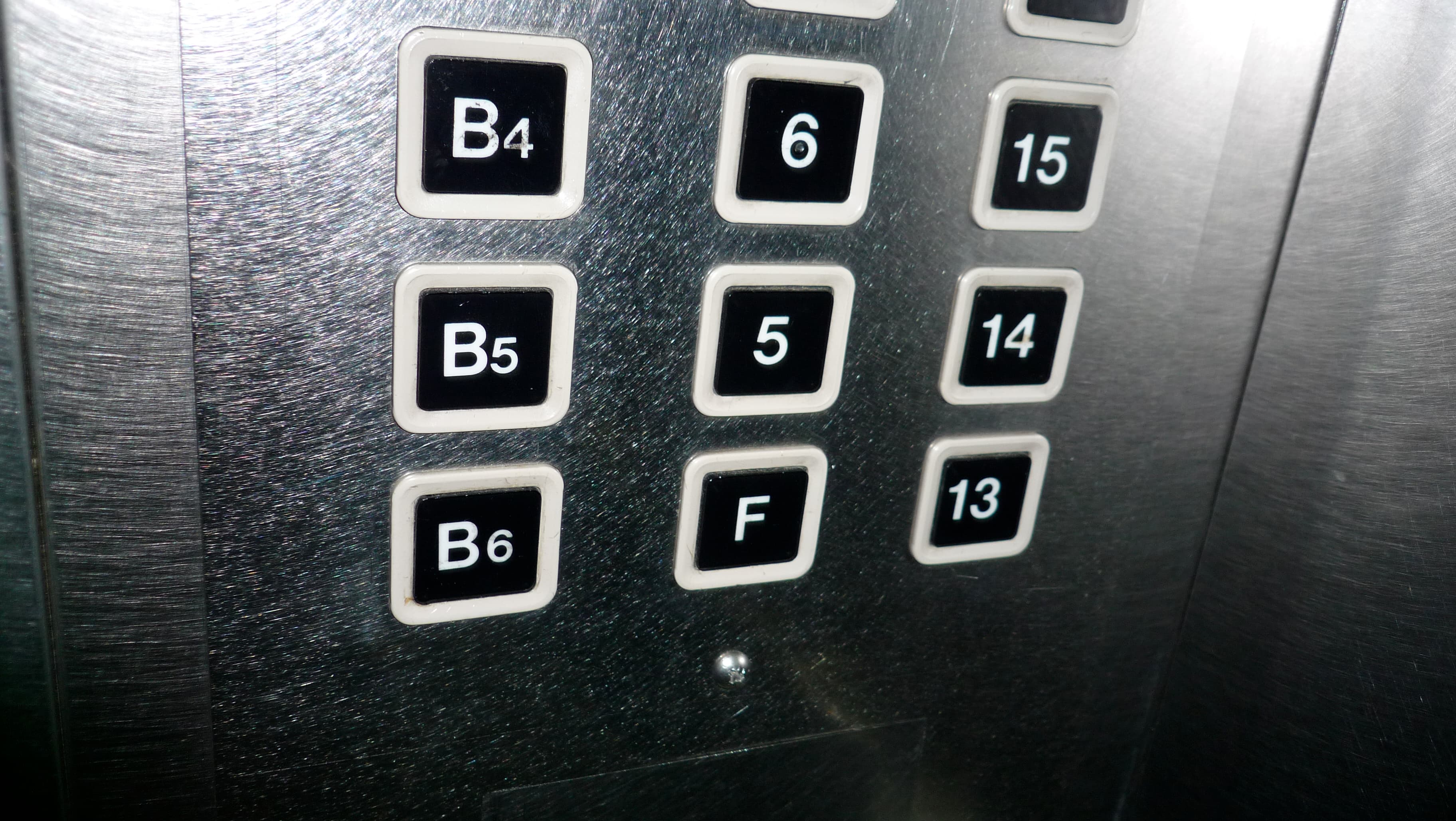
In a Seoul office building, you step into the lift and press the button for the top floor. As your eyes sweep the panel, something feels off before you can name it. Then you see it: between the third and the fifth floor, where a 4 should sit, a letter has taken its place. A discreet, almost innocuous F. The building does have a fourth floor, of course. It simply refuses to name it.
That letter is no architect's whim. It is the visible sign of a deeply rooted superstition, tetraphobia, the fear of the number four. And that fear, like almost every Korean belief around numbers and dates, springs from language itself. To understand why a Korean avoids the 4, refuses to write a name in red ink or carefully picks the day of a house move is to read, between the lines, an entire way of inhabiting the world, one where the sound of a word is enough to carry luck or ruin.
A Lift With No Fourth Floor#
The scene with the F button repeats in countless Korean buildings: hospitals, hotels, apartment blocks and shopping malls. Where tradition prevails, the fourth floor is renamed "F", the initial of the English word four, or simply skipped, the panel jumping from 3 to 5. In hospitals, where death is never far, the avoidance is most scrupulous: no one wants a care ward on the "fourth".
Why 4 Frightens: When a Sound Carries Death#
It all comes down to a homophone. Korean has two counting systems. The native numbers, of Korean origin, are used for objects, age and hours: 하나 (hana, one), 둘 (dul, two), 셋 (set, three), 넷 (net, four). Alongside them stand the Sino-Korean numbers, borrowed from Classical Chinese more than a thousand years ago and used for dates, money, figures and floors: 일 (il, one), 이 (i, two), 삼 (sam, three), 사 (sa, four), 오 (o, five).
Now this 사 (sa) that means four is the perfect homophone of another Sino-Korean word, written with an entirely different Chinese character: 死 (sa), "death". To the ear, saying "four" and saying "death" is producing exactly the same sound. The number thus drags behind it, like a shadow, the echo of dying. There is nothing uniquely Korean about the mechanism: it recurs in China and Japan, where the same character 死 haunts the matching digit. But Korea turned it into a visible social rule, etched into its lift panels.
A single sound shared between "four" and "death", and here is a number banished from floors, room numbers and gifts. Korean superstition nestles in the folds of the language.
Here is how the connotations of the first Sino-Korean numbers fall out, as they weigh on the everyday imagination:
| Number | Sino-Korean | Connotation |
|---|---|---|
| 1 | 일 (il) | Neutral, the beginning, unity |
| 2 | 이 (i) | Neutral, the pair, balance |
| 3 | 삼 (sam) | Auspicious, harmony and completeness |
| 4 | 사 (sa) | Ill-omened, homophone of 死 "death" |
| 5 | 오 (o) | Neutral |
| 6 | 육 (yuk) | Neutral |
The Numbers That Bring Luck#
If 4 unsettles, other numbers reassure. The best loved is 삼 (sam), three. Heir to a long East Asian tradition, it evokes completeness and balance: heaven, earth and humanity form a triad, and many ritual gestures or proverbs come in threes. To offer, to begin again, to bow three times: the number breathes stability.
칠 (chil), seven, also enjoys a favourable reputation, reinforced by the Western notion of the "lucky seven". As for 팔 (pal), eight, it benefits from the prestige granted it by the neighbouring Chinese-speaking world, where it is tied to prosperity. None of these numbers reaches the emotional charge of the 4, but together they sketch, in negative, a small grammar of the fortunate and the ominous that one keeps in mind when choosing a phone number, a licence plate or the sum tucked into an envelope.
Red Ink and Forbidden Names#
Hand a Korean friend a red pen and ask them to write their name: they may well hesitate, refuse, or look at you with faint unease. Writing the name of a living person in red ink is one of the most stubborn taboos in Korean culture.
Its origin is funerary. Traditionally, the names of the deceased were inscribed in red, whether on family registers, gravestones or certain ritual documents, a colour thought to keep evil spirits away from the dead. By a simple reversal, tracing the name of a living person in that same hue amounted to listing them among the departed, calling misfortune down on them, even wishing them dead. Red, a colour of life and protection in many contexts, becomes here the colour of a dire omen the moment it touches the identity of someone still of this world.
You do not write a living name in red ink: that would lay them, in a single stroke, on the register of the dead.
The belief has softened among younger generations, at ease with pens of every colour and with keyboards. But the reflex remains: in an official, family or simply polite setting, people prefer black or blue for a name, and avoid red out of both caution and regard.
Death by Electric Fan#
No Korean superstition intrigues foreigners more than 선풍기 사망 (seonpunggi samang), literally "fan death". The belief holds that an electric fan left running all night in a closed room can kill the sleeper. For a long time, fans sold in Korea even came fitted with a timer, meant to switch the device off before disaster struck.
The explanations offered vary: the fan supposedly dries the air to the point of suffocation, dangerously lowers body temperature, or thins the room's oxygen. None of these hypotheses withstands scientific scrutiny, and nothing establishes that a fan can cause the death of a healthy adult. The belief was nonetheless widely shared for decades, relayed even in certain summer news bulletins that, every heatwave, blamed nocturnal deaths on the faithful appliance.
선풍기 사망 offers a fascinating textbook case: a modern superstition, born in the twentieth century around an industrial object, yet as firmly lodged in the collective imagination as the ancient taboos. It is a reminder that beliefs are not frozen relics: they readily graft themselves onto new technologies.
Choosing the Right Day: Auspicious Dates#
Korean superstition does not stop at numbers: it also inhabits the calendar. For an important event, a wedding, the opening of a business and above all a house move, one does not pick a date at random. One seeks an auspicious day, and avoids those the tradition deems charged with malign influences.
The key concept bears a vivid name: 손 없는 날 (son eomneun nal), the "day without son". The 손 (son) here denotes a wandering spirit, a malevolent entity that shifts along the cardinal directions across the days of the lunar calendar and that, when present in a place, thwarts human undertakings. On the days this spirit is deemed absent, traditionally those whose lunar date ends in a 9 or a 0, everything is allowed: one may move, sign and set out with no fear of drawing its ill will.
This belief has very concrete effects. 손 없는 날 days see demand for removal trucks surge, and prices climb accordingly. Choosing an ordinary day costs less, but clashes with the widely shared wish to begin a new life under the best auspices. Here again, superstition is not mere folklore: it shapes calendars, prices and very real decisions.
Behind every superstition hides a word: 사 (sa), which confuses four and death, 삼 (sam), the auspicious three, 손 없는 날 (son eomneun nal), the day without a spirit. Learning to read and tell them apart is already stepping into Korean culture. With KoreanSRS and its spaced repetition, you memorise the Sino-Korean numbers and everyday vocabulary, one word at a time.
Once the right day is chosen and the lift tamed, the Korean street holds out its steaming little dishes. Set off to discover hoddeok, gyeranppang and the other treasures of street food.
These beliefs do not live in isolation: they intertwine with the Korean relationship to time, as shown by the reform of Korean age reckoning, and with an ancient spiritual bedrock found in Korean shamanism and its mudang.
Frequently Asked Questions#
Why does Korea avoid the number 4? Because four is pronounced 사 (sa) in Sino-Korean, exactly like the word 死 (sa), "death". This homophone makes the number unsettling: in many buildings and hospitals, the fourth floor is replaced by the letter "F" or simply omitted.
Why should you not write a name in red ink? Because red was traditionally reserved for the names of the dead, on registers and gravestones. Writing a living person's name in red ink symbolically places them among the deceased, a gesture seen as a bad omen, even a wish for death.
Is "fan death" real? No. 선풍기 사망 (seonpunggi samang) is a Korean popular belief that a fan running all night in a closed room could kill the sleeper. No scientific evidence supports it, but the superstition was long widespread, to the point of inspiring built-in timers on the appliances.
What is a "day without a spirit" (손 없는 날)? It is a day considered auspicious, when the wandering spirit called 손 (son) is deemed absent and therefore unable to thwart human plans. Traditionally, these are the days whose lunar date ends in 9 or 0. They are favoured for weddings, business openings and above all house moves, so much so that removal trucks cost more on them.
The Korean wedding: the pyebaek, the hall and the envelope
A thirty-minute ceremony, the pyebaek rite, congratulatory cash envelopes, dowries and a marriage rebound: how South Korea gets married today.
Cover image: Nam-ho Park from Seoul, Korea · Nam-ho Park from Seoul, Korea, via Wikimedia Commons · CC BY 2.0