Korean MMORPGs: Lineage, MapleStory and an Industry
Birthplace of the MMORPG and free-to-play, Korea gave the world Lineage, MapleStory and a business model that reshaped the global games industry.
La rédaction Kotoba
Studio éditorial
In a room inside a Seoul office building, two hundred warriors coordinate an assault on a besieged castle. They don't all know one another, but they belong to the same guild, they have prepared this battle for weeks, and what they win or lose tonight matters to them as much as any real prize. The castle exists only on a server; the alliances, betrayals and fortunes, however, are entirely real. This is the late 1990s, and South Korea has just invented a way of living online that the rest of the world will take a decade to understand.
South Korea is not merely a large market for video games: it is one of the genre's founding laboratories. On a foundation of broadband rolled out at breakneck speed and scattered across every neighborhood, its studios gave birth to MMORPGs that were at once technical feats and social phenomena. From to , by way of the free-to-play business model they popularized, understanding Korean MMORPGs means understanding how a country turned a niche for enthusiasts into a multi-billion-dollar global industry.
Why Korea is the birthplace of the MMORPG#
South Korea became the world's MMORPG powerhouse because three conditions came together at the same moment, in the late 1990s: an unrivaled ultra-high-speed broadband network, a physical network of PC bangs that made online gaming accessible to everyone, and pioneering studios ready to seize the opportunity.
An MMORPG (Massively Multiplayer Online Role-Playing Game) is a role-playing game in which thousands of players permanently share the same persistent world, develop a character within it, forge alliances and fight one another. Such a genre demands a stable, fast connection for crowds connected at the same time. Yet in the late 1990s, Korea deployed one of the fastest and densest broadband networks on the planet, backed by an assertive public policy and favored by a vertical, densely packed urban housing pattern.
The acronym MMORPG stands for Massively Multiplayer Online Role-Playing Game. "Massively multiplayer" means thousands of participants share the same world at once; "online" that it is hosted on remote servers; "role-playing game" that you play a character who progresses lastingly. The world is "persistent": it keeps existing and evolving even when you log off.
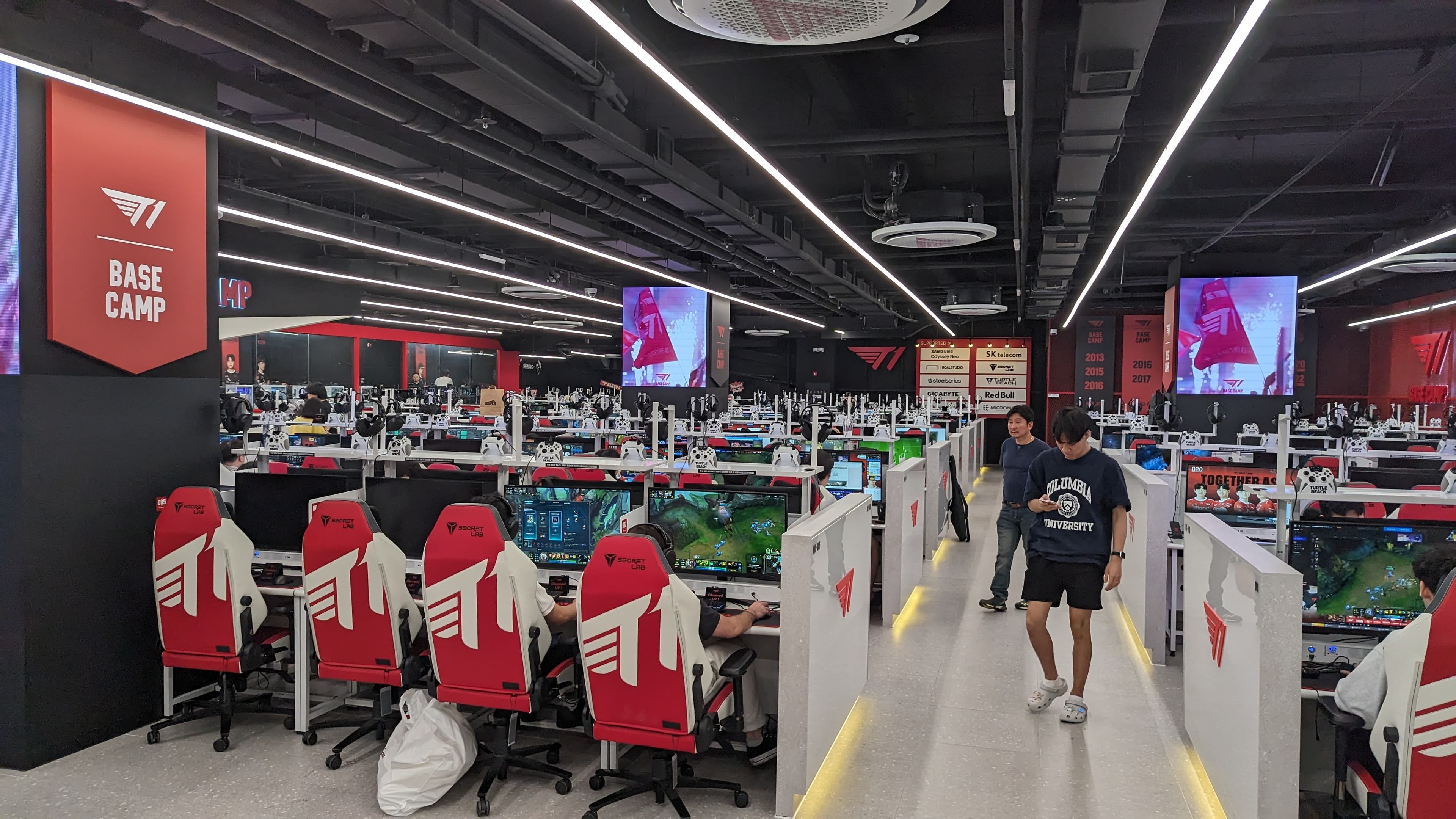
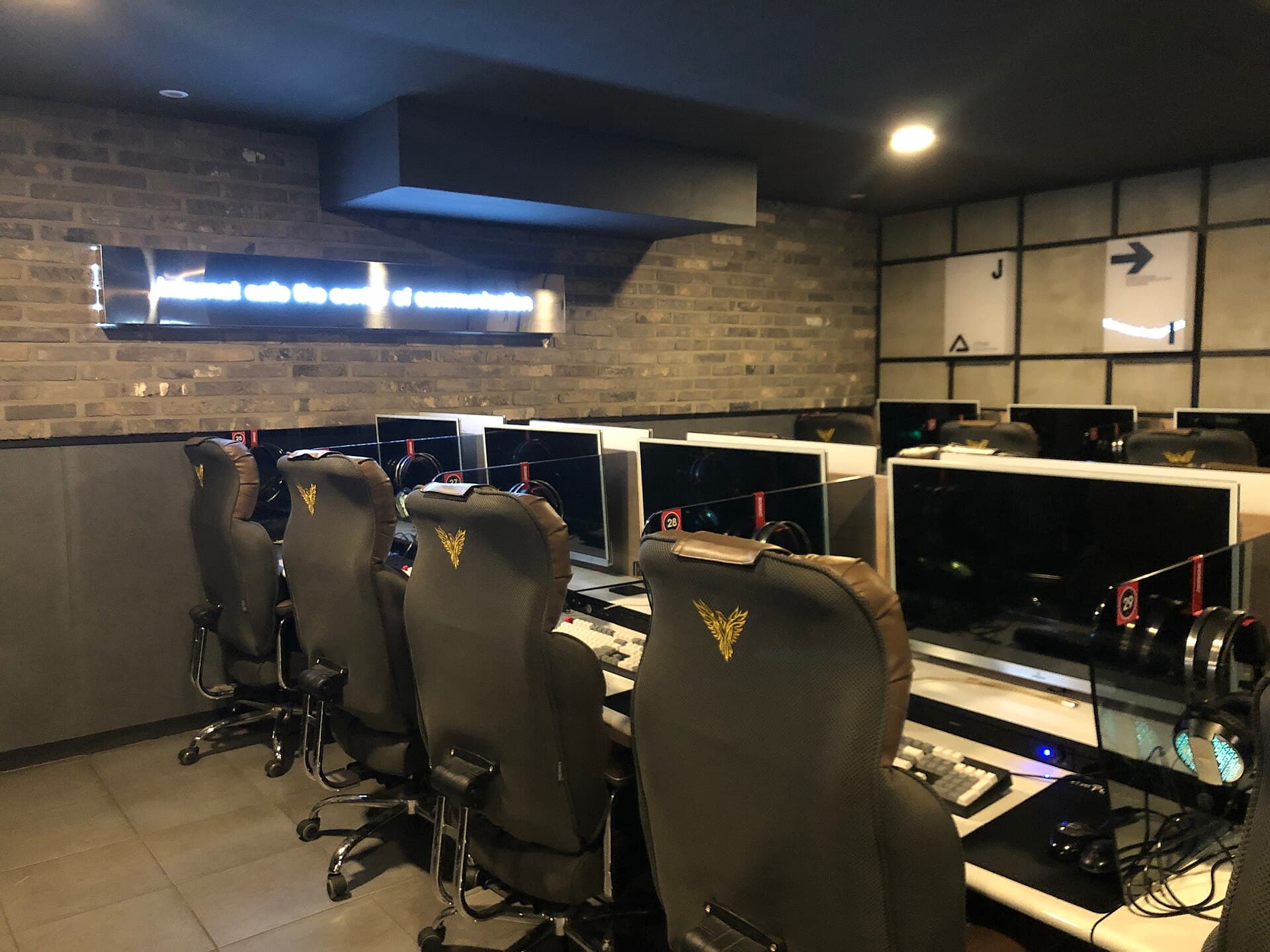
To this network was added a decisive social infrastructure: the PC bang, the gaming café where you rent a powerful machine by the hour. There was no need to own a high-end computer to play: you simply walked down to the corner. MMORPGs and PC bangs fed off one another, the former filling the rooms, the latter offering the former a vast and immediate audience. It was in this soil that the genre's founding games took root.
Nexus: The Kingdom of the Winds, one of the very first#
In 1996, the Korean studio launched , one of the first commercial graphical MMORPGs in history. Where the online games of the era were often text-based, it offered a pixelated, top-down world in which players embodied characters inspired by ancient Korea.
The game drew on a popular webtoon of the same name and transposed its universe into a shared, persistent world. Its longevity is astonishing: launched in 1996, it ranks among the oldest commercial MMORPGs still running, earning it a place in the genre's longevity records. Above all, it laid down the template for everything that would follow in Korea: a persistent graphical world, character progression, and a community that gathered night after night.
Nexon, founded in 1994, found its birth certificate here. With this game and those that followed, the studio would become one of the three giants of the Korean industry.
Lineage: the social phenomenon#
In 1998, the studio released , a top-down MMORPG that quickly outgrew the status of a mere game to become a genuine Korean social phenomenon. Its heart was not the solitary quest, but politics: players banded together into , seized castles and defended them in massive that could bring hundreds of participants together in a single battle.
These sieges turned the game into a social arena. Holding a castle brought prestige, virtual revenue and power over a territory. Guilds waged wars lasting several weeks, wove alliances, betrayed one another. A hierarchy, leaders, diplomacy, an economy: Lineage reproduced online the workings of a feudal society, and millions of Koreans invested in it with rare intensity.
In Lineage, the real game was not played against monsters, but between players: it was a struggle for territory, prestige and power, waged by guilds as structured as clans.
The success was colossal. Lineage amassed millions of subscribers and reigned for years atop the PC bang rankings. Its monthly subscription model made it one of the most powerful revenue machines in the history of video games in its era, long ahead of the best-selling Western productions. In 2003, NCSoft extended the phenomenon with , now in 3D, which reprised the formula of guilds and sieges for a new generation.
At its peak, Lineage long generated revenue greater than that of any Western game of its generation. The phenomenon even gave rise to a Korean word: 린저씨 (rinjeossi), a blend of Lineage and ajeossi (아저씨, "mister, uncle"), which affectionately denotes adult players, often in their forties, who have remained loyal to the game since their youth and are willing to spend considerable sums on it.
The nickname 린저씨 (rinjeossi) fuses 리니지 (Lineage) and 아저씨 (ajeossi, "middle-aged man"). It denotes the "Lineage uncles": those long-time players, now grown up and often well-off, who keep pouring time and money into the game of their youth. The term alone captures the generational loyalty an MMORPG managed to inspire.
MapleStory: the 2D world that conquered the planet#
In 2003, the studio Wizet, later absorbed by , launched , a 2D side-scrolling MMORPG whose colorful, cartoonish style stood in radical contrast to Lineage's dark universe. You control a small character who jumps from platform to platform, as in a classic action game, but within an online world populated by thousands of other players.
This apparent simplicity concealed a major innovation. Where Lineage was paid for by subscription, MapleStory was one of the great worldwide popularizers of the free-to-play model: the game was free to download and play, and earned its keep through an item shop, the , where players bought outfits, ornaments and bonuses à la carte. This model, tested and refined in Korea, was about to spread everywhere.
MapleStory's accessibility, its cute aesthetic and its free access opened it to a far wider audience than traditional MMORPGs, notably a young and international one. The game enjoyed a resounding worldwide success, spinning up servers in dozens of countries and, over the years, gathering a cumulative player base counted in hundreds of millions of accounts across the globe.
| Game | Studio | Year | Major contribution |
|---|---|---|---|
| Nexus: The Kingdom of the Winds | Nexon | 1996 | One of the first graphical MMORPGs, still running |
| Lineage | NCSoft | 1998 | Guilds and sieges, social phenomenon, millions of subscribers |
| Lineage II | NCSoft | 2003 | Shift to 3D, massive sieges |
| MapleStory | Wizet / Nexon | 2003 | 2D side-scrolling, globalized free-to-play and item mall |
| Lineage M | NCSoft | 2017 | Mobile port, record revenue on smartphone |
The vocabulary of Korean gaming starts with its script: 리니지 (Lineage), 넥슨 (Nexon), 게임 (geim, "game"). KoreanSRS, our spaced-repetition app for learning Korean, is coming soon: join the waitlist to start reading hangeul from day one.
Free-to-play, a Korean invention gone global#
The business model now dominant in video games, free-to-play funded by micro-transactions, was largely invented and popularized by Korean studios at the turn of the 2000s. This may be their deepest legacy, far more universal than any single title.
The idea was counterintuitive: give the game away for free rather than sell it. Its strength lay in the Korean audience of the time, young and playing in PC bangs, often reluctant to pay a fixed monthly subscription but ready to spend, item by item, on a specific object. Rather than a barrier to entry, the studios installed an item shop (item mall) where players bought outfits, mounts, progression boosters and adornments. The game stayed free; you paid to stand out, go faster or beautify your character.
This model upended the sector's economics. It lowered the barrier to trial to zero, massively broadened the player base, and let a minority of big spenders fund the whole. Proven in Korea on MapleStory and many other titles, it was then adopted by the global industry, from PC to mobile, until it became the dominant economic norm of contemporary gaming. Most of today's big mobile hits rest, often unwittingly, on an architecture devised in the studios of Seoul.
Read alsoPC Bang: The Cybercafés That Shaped Korean GamingMMORPGs would not have spread without the rooms that ran them: step into the PC bang, the gaming café that shaped Korean video gaming.
An industry: NCSoft, Nexon, Netmarble#
Three companies dominate the Korean gaming landscape and carried its MMORPGs onto the world stage: , and . Together, they form an industrial cluster that weighs heavily on the country's digital economy.
NCSoft, founded in 1997, is the studio behind Lineage. It built its empire on subscription MMORPGs and then on their mobile spin-offs, and ranks among the most profitable game developers in Asia. Nexon, older, is the publisher of Nexus and MapleStory, and a pioneer of free-to-play; publicly listed, it is one of the largest video game companies in the world by market value. Netmarble, which rose to power with the surge of mobile gaming, distributes and co-publishes numerous hit titles on smartphone.
This concentration made video games a strategic export sector for Korea, on a par with electronics or popular culture. MMORPGs and their mobile successors generate considerable revenue, a substantial share of it coming from foreign markets.
Gaming, regulation and the addiction debate#
The success of MMORPGs came, in Korea, with public concern over play time and addiction, which led to sometimes spectacular regulation. The most emblematic case is the nighttime shutdown law, nicknamed the "Cinderella law" (셧다운제, shutdown je).
Passed in 2011, this law banned minors under sixteen from playing online between midnight and six in the morning, cutting off server access for that age group, like Cinderella's carriage turning into a pumpkin at midnight. The measure, hotly debated, was criticized for its dubious effectiveness, its difficulty of enforcement and its infringement on freedoms. It was finally repealed in 2021, in favor of a system in which control over play time was left to families.
These debates reflect a tension particular to a country where online gaming is at once an industrial pride, a cultural pillar and a source of social anxiety. Korea, which invented part of the world's MMORPG culture, was also one of the first states to legislate against its excesses.
Read alsoK-pop: the history and backstage of the Korean industryMMORPGs are not the only cultural industry Korea has globalized: K-pop applies the same logic of production and export to music.
The legacy: from PC to mobile, and a global influence#
The story of Korean MMORPGs did not end with the decline of the PC bangs: it migrated to the smartphone and continues to irrigate video games worldwide. The turning point was the porting of the great franchises to mobile.
In 2017, NCSoft launched , a smartphone version of the phenomenon of the 1990s. The success was immediate and dizzying: the game dominated the app revenue charts in Korea for a sustained period, generating sums that rivaled those of its PC ancestor at its peak. The mechanics of guilds, sieges and item spending, transposed to mobile, rediscovered intact the fervor of players, starting with the famous rinjeossi, now grown up and solvent.
Beyond its own titles, Korean influence is everywhere in contemporary gaming. The free-to-play model, item shops, the idea of an online world as a permanent social space, the structuring into competitive guilds: so many building blocks proven in Korea, then spread across the planet. The country that, in the late 1990s, filled its PC bangs with warriors besieging virtual castles has lastingly shaped how the whole world plays online today.
FAQ#
Why were MMORPGs born in Korea? Three factors converged in the late 1990s: the rollout of exceptional broadband across the country, the network of PC bangs that made online gaming accessible without owning a powerful computer, and pioneering studios such as Nexon and NCSoft ready to seize the opportunity. This convergence made Korea the founding laboratory of the genre.
What is the difference between Lineage and MapleStory? Lineage (NCSoft, 1998) is a dark, top-down MMORPG centered on guilds and castle sieges, funded by a monthly subscription. MapleStory (Wizet/Nexon, 2003) is a colorful, accessible 2D side-scrolling game, free to play and monetized through an item shop. They embody two opposing business models.
What is the free-to-play model and why does it come from Korea? Free-to-play means giving the game away for free and earning revenue through the sale of virtual items in an integrated shop (item mall). It was largely invented and popularized by Korean studios at the turn of the 2000s, on titles such as MapleStory, before being adopted by the global industry, from PC to mobile.
What was the "Cinderella law"? The "Cinderella law" (nighttime shutdown law) was a Korean regulation passed in 2011 that banned minors under sixteen from playing online between midnight and six in the morning. Judged ineffective and an infringement on freedoms, it was repealed in 2021 in favor of controls left to families.
Do Korean MMORPGs still exist today? Yes. Nexus and MapleStory are still running, and major franchises such as Lineage have migrated to the smartphone with considerable success, as with Lineage M (2017), which broke mobile revenue records in Korea. The industry, led by NCSoft, Nexon and Netmarble, remains a major export sector.
Crédits photographiques : les images de cet article proviennent de Wikimedia Commons et sont sous licence libre.
PC Bang: The Cybercafés That Shaped Korean Gaming
Born of the 1997 crisis and the StarCraft wave, Korea's PC bang industrialized a passion and invented modern e-sports.
Cover image: MatthieuRicard · MatthieuRicard, via Wikimedia Commons · CC0