Chongyang: The Double Ninth Festival and Chinese Autumn
On the 9th day of the 9th lunar month, China celebrates Chongyang: climbing the heights, chrysanthemum wine, Wang Wei's poem, and honoring the elderly.
La rédaction Kotoba Interactive
Studio éditorial
On the ninth day of the ninth lunar month, when the air turns crisp and the maples begin to redden, Chinese families leave the plain to climb a hill. At the top, they spread out a mat, pour an amber wine scented with chrysanthemum, pin a fragrant sprig to their jacket, and watch autumn stretch out below. This day bears a name that rings like a doubling: , the Double Ninth Festival.
The is one of the great traditional festivals of the Chinese calendar, dedicated to ascent, to the contemplation of autumn, and, today, to respect for the elderly. Behind its customs (climbing the heights, drinking chrysanthemum wine, wearing dogwood) lies a cosmological reading of the number nine and a two-thousand-year-old meditation on old age and longevity. To understand Chongyang is to grasp how China transformed a dreaded date into a celebration of life that endures.
Why "Double Yang": The Cosmology of Nine#
The name Chongyang lies entirely in a play of numbers. In the numerology of the ancient Book of Changes, the , odd numbers are yáng (阳), associated with heaven, the masculine, light, and expansion; even numbers are yīn (阴), tied to earth and withdrawal. Now is the largest of the single-digit odd numbers: it is yang carried to its peak. When the ninth day meets the ninth month, two maximal yang overlap: hence chóng (重, "double," "repeated") + yáng (阳). The Double Ninth is the point of the most intense concentration of the year's yang energy.
combines chóng (重, "to repeat, to double") and yáng (阳, the bright, active principle of the yīn-yáng pair). Because 9 is the quintessential yang number, its repetition on the 9th day of the 9th month gives the festival its name: "the doubling of the yang."
This overabundance of energy was first perceived as ambivalent, even threatening. Too much concentrated yang unbalances the harmony of the world, and ancient tradition held this day to favor miasmas and evil spirits. The customs of Chongyang (rising to altitude, adorning oneself with protective plants, drinking purifying brews) arose in large part from a need to ward off this peril. Yet nine has a second virtue: jiǔ (九, "nine") is pronounced exactly like jiǔ (久, "long, lasting"). This homophony made the Double Ninth, over the centuries, a day of longevity, an omen of a life that endures. The festival thus swings between two poles: warding off danger, and wishing for duration.
The date's roots run deep. Mentions of the ninth day of the ninth month appear as early as the Han dynasty (206 BCE – 220 CE), and the festival is solidly documented under the Wei and Jin (3rd-5th centuries), then fully established as a popular festival under the Tang (618-907), the golden age in which poets and scholars made it a major literary motif.
Climbing the Heights: The Sovereign Custom#
The central custom of Chongyang is , "climbing the heights": on this day, one scales a hill, a mountain, or a tower to gain altitude. The practice, attested since the Han, obeys first a logic of avoidance: rising above the plain to escape the harmful exhalations of the double yang. A founding legend, recorded in the Xù Qí Xié Jì (续齐谐记, "Sequel to the Records of Strange Things of Qi"), compiled in the 6th century, fixes the tale.
A man named , a disciple of a Taoist master, was said to have been warned that a catastrophe threatened his family on the ninth day of the ninth month. On his master's advice, he took his household to a height, had them wear sprigs of dogwood and drink chrysanthemum wine. When they returned that evening, they found their livestock (goats, hens, dogs, oxen) dead in their place. The mountain had saved them. From this episode, tradition holds, derive the ascent, the dogwood, and the wine of the festival. The legend is worth what legends are worth: it does not explain the real origin of the customs, which are older and likely tied to agrarian rites of the end of harvest, but it seals their meaning in the collective imagination.
Beyond protection, the ascent became contemplation. To climb to the summit on a clear autumn day is to take in the immensity with one's gaze, to feel the cool wind, to measure the flight of time. Scholars would climb to compose poems, drink among friends, contemplate the maples and the chrysanthemums in bloom. Chongyang thus became the great festival of Chinese autumn, the one in which the season is celebrated at its peak before the entry into winter.
Just climbed the heights of Chongyang? Learn to read 登高 (dēnggāo, climbing the heights), 秋 (qiū, autumn), and 山 (shān, mountain), then hundreds of everyday Chinese words with ChineseSRS and its spaced repetition.
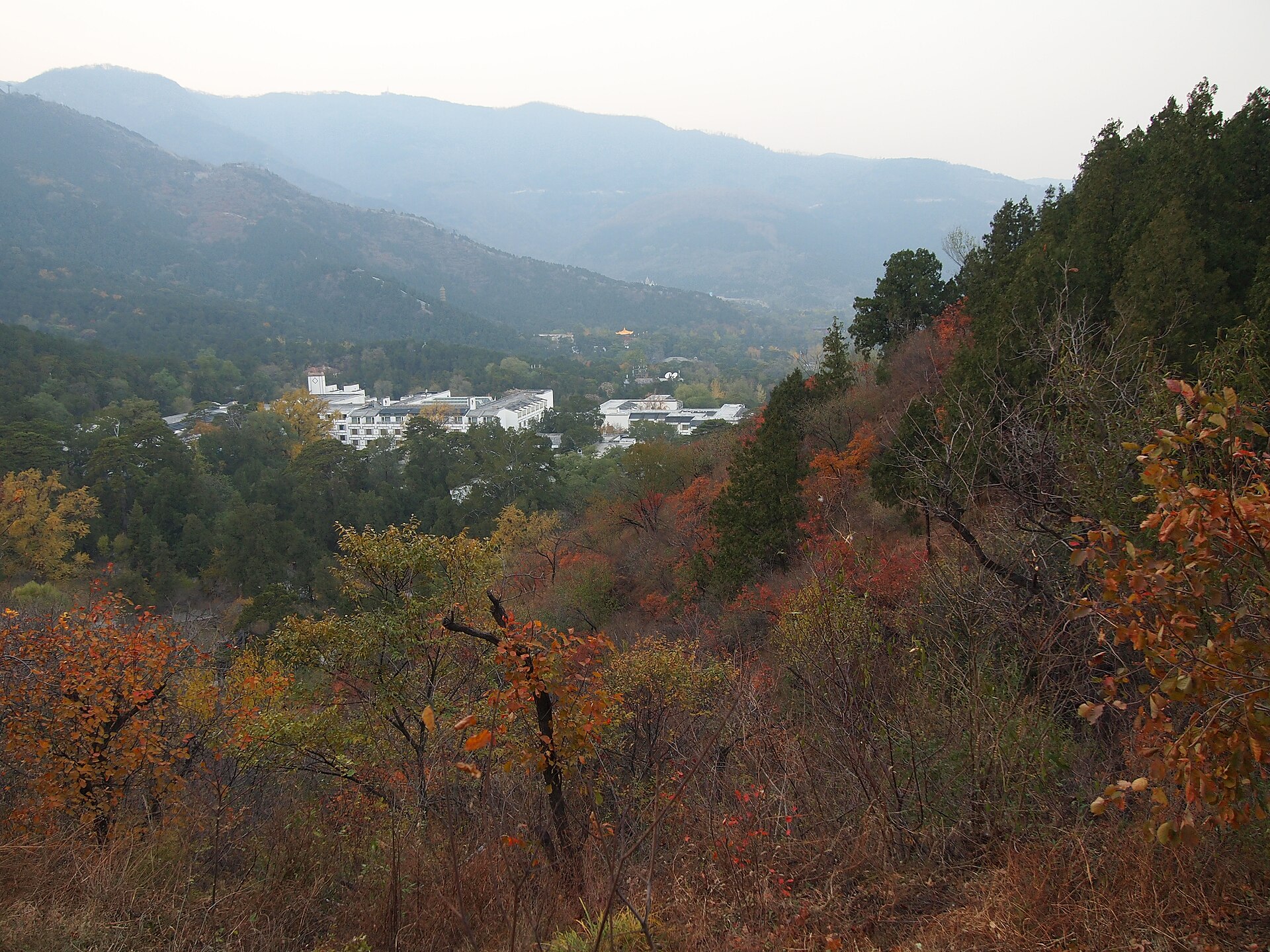
To rise on a Double Ninth day is not to flee the plain but to command the year: to see all of autumn in a single glance, and behind it, the passage of time.
Chrysanthemum, Dogwood, and Cakes: The Trio of Symbols#
Three symbols govern the festival, each playing on a meaning or a homophone of its own. The table below sums up this ritual trio.
| Symbol | Function | Meaning or homophone |
|---|---|---|
| Chrysanthemum (菊花, júhuā) | Ritual wine and contemplation | Flower that braves the cold: longevity and purity |
| Dogwood (茱萸, zhūyú) | Sprig worn on oneself | Protective berry that keeps evil away |
| Cake (重阳糕, chóngyáng gāo) | Ritual dish | gāo (糕, cake) sounds like gāo (高, to climb high) |
The Chrysanthemum Wine and Flower#
The emblematic flower of Chongyang is the , which blooms precisely at this time and embodies, in Chinese culture, resilience and nobility: it flowers when other flowers wither, braving the cold. Drinking , a grain alcohol macerated with petals and sometimes goji berries, prepared a year in advance, is the day's ritual drink. It was credited with virtues of purification, clarity of the eyes, and longevity, echoing the festival's great symbolic pole. Where the double yang threatens, the autumn flower and its wine repair.
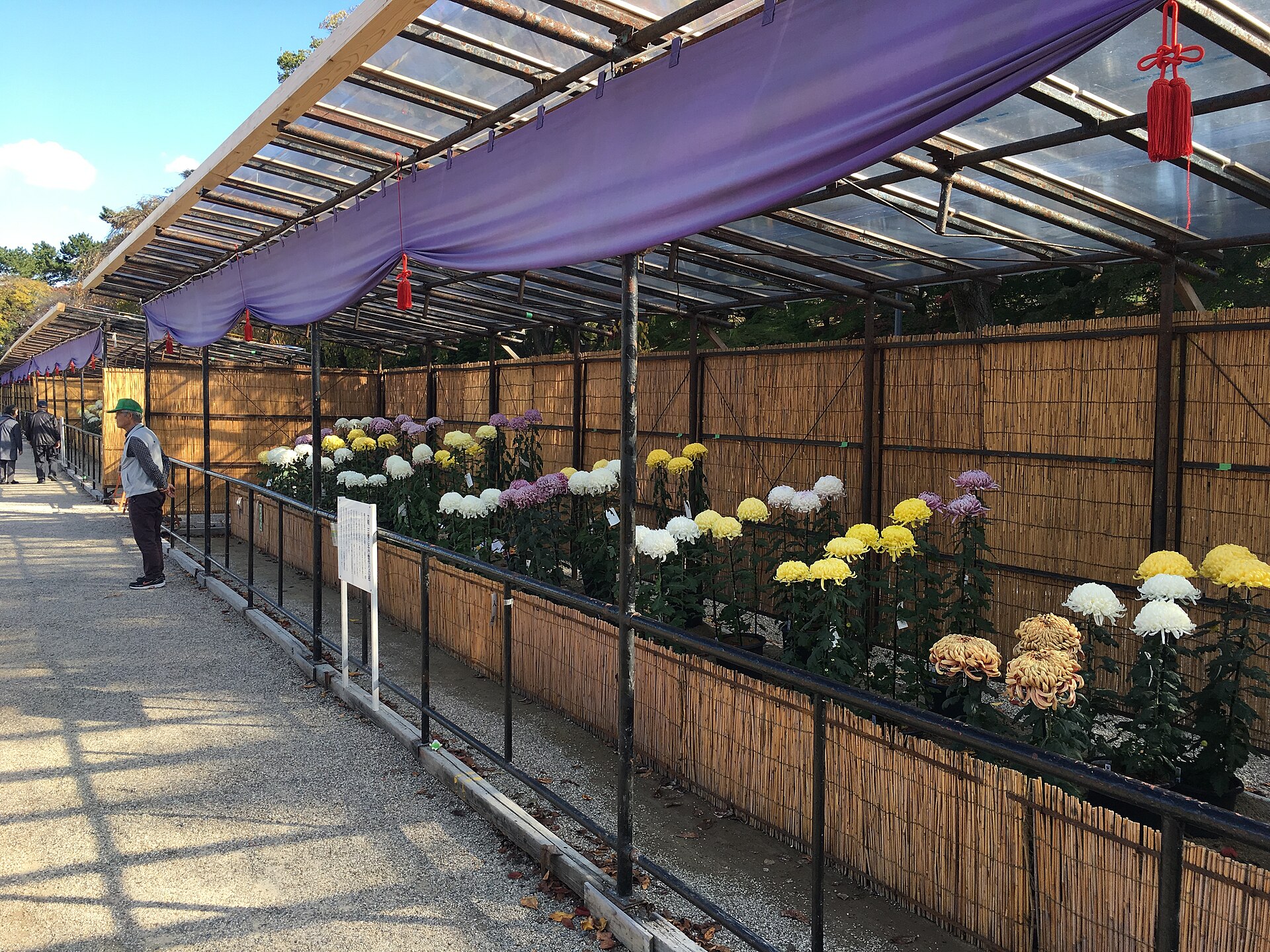
The chrysanthemum is also an object of aesthetic contemplation. Flower fairs and exhibitions (菊花展, júhuā zhǎn) draw crowds; the poet-hermit , a legendary lover of chrysanthemums, durably associated the flower with the ideal of virtuous retreat far from the vanity of the world. To pick chrysanthemums beneath the eastern hedge, he wrote, is to recover peace.
The chrysanthemum is so bound to autumn and the ninth lunar month that the latter is traditionally nicknamed, in Chinese, the "chrysanthemum month" (菊月, júyuè). A flower of withdrawal and longevity, it is by contrast associated with mourning in several neighboring countries: one and the same plant, two symbolic grammars.
The Dogwood One Wears on Oneself#
The other ritual plant is , the medicinal dogwood (sometimes translated as wild "Sichuan pepper," or simply "dogwood"), a red berry with a pungent scent. On Chongyang day, people would pin sprigs of dogwood to their sleeve or tuck them into a small sachet, believed to keep evil away, drive off insects, and prevent the cold ailments of autumn. To wear the zhūyú was to arm oneself against the harmful influences of the double yang. This custom, very much alive under the Tang, largely declined in modern times, but it survives in the most famous verses ever written about the festival (see below).
The Cakes of the Double Ninth#
On the culinary side, the ritual dish is the , the "Chongyang cake," a steamed glutinous rice pastry, often in several colored tiers, garnished with dried fruit, red dates (枣, zǎo), or seeds. Here again, a play on words governs the symbol: gāo (糕, "cake") is pronounced like gāo (高, "high, elevated"). To eat the cake thus amounts to "climbing high": an edible substitute for the ascent, a way to "rise" and to advance in life and in business. The most elaborate cakes bore little paper pennants planted at the top, or even figurines of sheep, since yáng (羊, "sheep") is yet another homophone of the yáng of Chongyang. The festival is a carnival of homophones as much as a seasonal celebration.
Want to decipher these characters? Learn 重阳 (chóngyáng), 菊花 (júhuā), and hundreds of everyday Chinese words with ChineseSRS (chinesesrs.com).
"The Ninth Day of the Ninth Month": Wang Wei's Poem#
No text has done as much to immortalize Chongyang as a seven-character quatrain written by a teenager. Around the year 717, the young , one of the three greatest poets of the Tang dynasty, barely seventeen, found himself far from home, in the capital, separated from his family who had remained east of the river. On the Double Ninth day, seized by nostalgia, he composed .
独在异乡为异客, 每逢佳节倍思亲。 遥知兄弟登高处, 遍插茱萸少一人。
Which may be rendered thus: "Alone in a strange land, a stranger I remain; / at every festival, the longing for my kin redoubles. / From afar I know my brothers climbing the heights, / all wearing dogwood, and one will be missing."
In four lines, the poem condenses the whole of Chongyang: the ascent (登高), the pinned dogwood (插茱萸), the family reunion, and the pain of the absent one. The second line, měi féng jiā jié bèi sī qīn, "at every festival, one thinks doubly of one's kin," has become one of the most quoted lines in all of Chinese, a phrase every schoolchild recites and which is still murmured today, far from one's family on a festival day. A homesick teenager gave Chongyang its literary soul: that of a festival of belonging, where the altitude gained makes one measure all the better the distance separating loved ones.
From Danger Averted to Respect for the Elderly#
The most striking transformation of Chongyang is recent and official. In 1989, the government of the People's Republic of China designated the Double Ninth as , also called the Festival of Respect for the Elders (敬老节, jìnglǎo jié). In 2013, the Law on the Protection of the Rights and Interests of the Elderly enshrined this dimension in legislation, making Chongyang a national occasion to honor, visit, and care for the elderly.
This shift is anything but arbitrary. It exploits the festival's old homophonic mechanism: jiǔ jiǔ (九九, "nine-nine") sounds like jiǔ jiǔ (久久, "long-long"), an omen of long life. What more fitting date, then, to celebrate longevity and those who have attained it? Filial piety (孝, xiào), a pillar of Confucian ethics, finds in the Double Ninth a calendrical anchor. People visit their grandparents, offer gifts to the elderly, communities organize banquets, performances, and outings for the neighborhood's elders, and many families take their old ones on an excursion: the climbing of the heights then replays as an intergenerational walk.
Chongyang thus illustrates a capacity proper to the great traditions: to reinvent itself without renouncing itself. The festival born to flee a cosmic danger has become a festival of duration and of the bond between generations. Yang energy at its peak, once dreaded, is now read as a fullness to celebrate in those who have lived long.
Chongyang Today#
Unlike the New Year or the Mid-Autumn, Chongyang is not a national public holiday in mainland China (people work, school is in session), but it remains widely observed, with varying intensity from region to region. In Hong Kong and Macao, by contrast, the Double Ninth is a holiday, and there it takes on a strong funerary dimension: families climb to the cemeteries, often located on hillsides, to sweep the ancestral tombs, burn incense and votive money, in a rite that echoes the Qingming of spring. In southern China, this visit to the ancestors remains a living aspect of the festival.
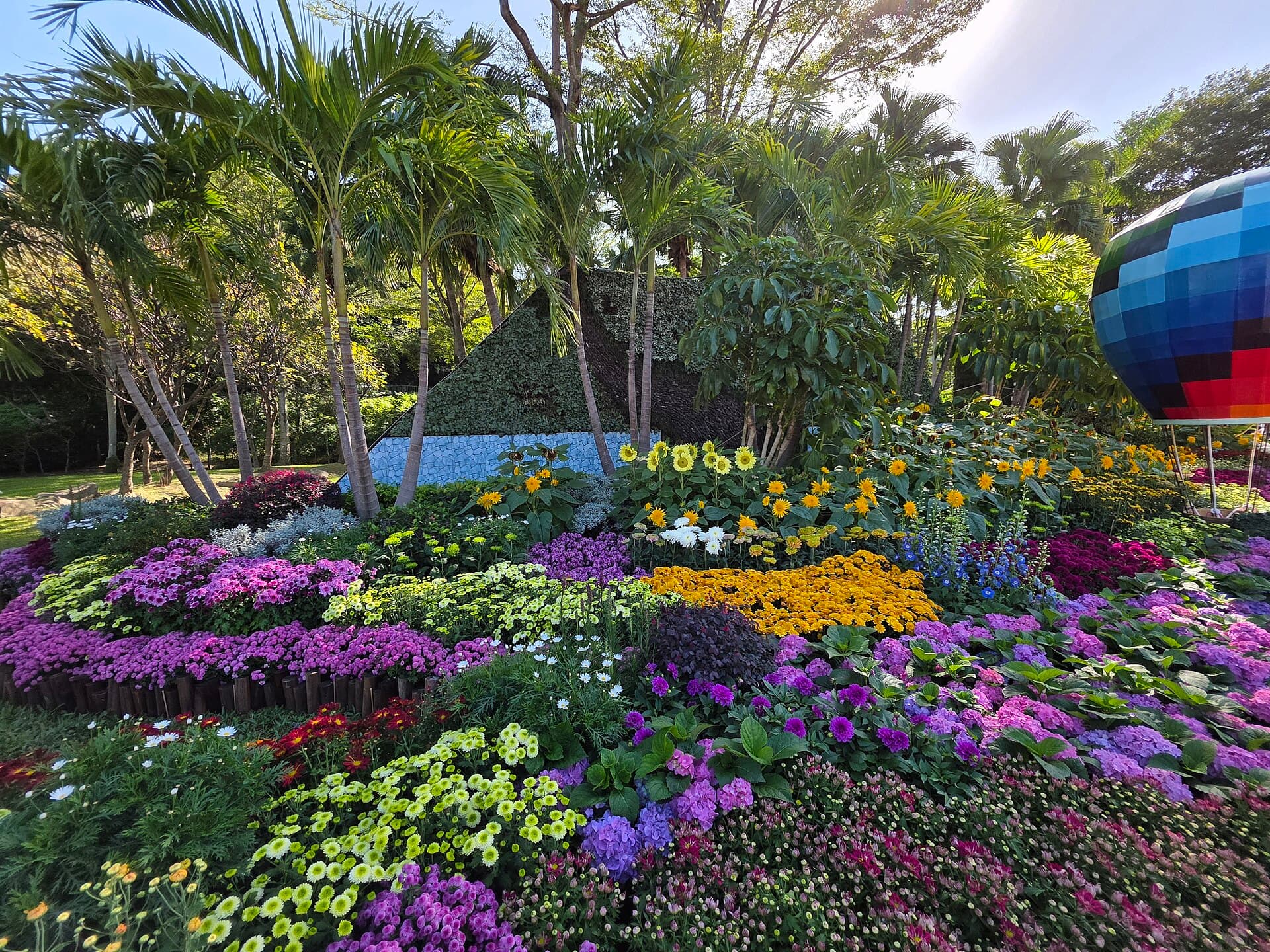
Elsewhere, Chongyang is experienced above all as a day of autumn hiking and gestures toward the elderly. Parks and mountain sites see particular crowds; chrysanthemum exhibitions bloom in public gardens; retirement homes and neighborhood associations redouble their activities. Businesses and brands have, unsurprisingly, seized on the date: campaigns around senior health, longevity products, gifts for grandparents. The festival also spills beyond China's borders: it is celebrated among diaspora communities and has spread, in local forms, to Japan (Chōyō no sekku, 重陽の節句, the "Chrysanthemum Festival") as well as to Korea.
Beneath contemporary usages remains the same ancient intuition: at the moment the year tips toward decline, China chooses to climb rather than descend, to celebrate the flower that resists the cold, to salute those who have endured. The Double Ninth is not a festival of the end; it is a festival of what persists.
FAQ#
When does the Chongyang Festival fall? Chongyang is celebrated on the 9th day of the 9th month of the Chinese lunar calendar, which corresponds, in the Gregorian calendar, to a movable date most often in October. The exact date therefore varies each year according to the lunisolar cycle.
Why is it called the "Double Ninth" Festival? Because it falls on the ninth day of the ninth month: two "nines" overlap. Since nine is the highest yang number, this doubling produces a "double yang" (chóngyáng, 重阳), hence the name. The homophony of 九 (nine) with 久 (lasting) also links the festival to longevity.
What do people traditionally do on this day? People climb a height (登高, dēnggāo), drink chrysanthemum wine (菊花酒), wear sprigs of dogwood (茱萸) against ill fortune, and eat the Chongyang cake (重阳糕). Contemplating the chrysanthemums in bloom and gathering as a family round out the day.
What is the link between Chongyang and respect for the elderly? Since 1989, China has made the Double Ninth its Elderly Day. The link lies in the homophony of "nine-nine" (九九) with "long-long" (久久): the day of the number of longevity became the one on which the elders are honored and filial piety is celebrated.
Is Chongyang a public holiday? In mainland China, no: it is a working day, though widely observed. In Hong Kong and Macao, by contrast, Chongyang is an official public holiday, often devoted also to visiting and sweeping the ancestral tombs.
Read alsoQingming: China's Tomb-Sweeping Festival of the Dead
The Qingming of spring is Chongyang's brother: two festivals in which one climbs to the ancestral tombs, one at the awakening of the year, the other at its decline.
A month before the Double Ninth, the full moon of the Mid-Autumn already gathers families around a festival of fullness and homecoming.
Yang and yin, auspicious numbers, homophonies: the symbolic grammar of Chongyang extends that of the Chinese zodiac and almanac.
Photo credits: images in this article come from Wikimedia Commons and are under free licenses.
Qixi: China's Valentine's Day and what it used to be
On 19 August 2026, China celebrates Qixi. Astronomical origin, the cowherd and weaver girl legend, needle contests: the story of a festival that was never romantic.
Cover image: 阿道 · 阿道, via Wikimedia Commons · CC BY-SA 4.0