Qingming: China's Tomb-Sweeping Festival of the Dead
Every spring, the Qingming festival gathers Chinese families around ancestral graves. Discover its origins, rites, foods, and living meaning today.
La rédaction Kotoba Interactive
Studio éditorial
In the early morning of an April day, on a hill in Zhejiang still wet with dew, a family climbs a path loaded with baskets. The grandfather carries a hoe, the children armfuls of incense and flowers, the mother a tray of soft green cakes. Before the ancestors' grave, they pull up the wild grasses, replace the sunken earth, lay out the food, and bow their heads three times. Then a flame rises: bundles of paper money burn away, sent to the other world so that the dead lack for nothing. This scene, repeated by hundreds of millions of Chinese people on the very same day, has a name: .
Qingming is not merely a day of mourning. It is the meeting point of three layers of Chinese civilization: an astronomical marker inherited from the farmers of antiquity, a rite of filial piety codified by Confucianism, and an open-air festival celebrating the return of spring. In a single morning, people weep for the dead and tread the new grass. To understand Qingming is to grasp how China wove, into one single date, the memory of ancestors and the joy of the living.
A Solar Term Before It Was a Festival#
Qingming first designates a precise moment in the astronomical year, around the 4th or 5th of April. The traditional Chinese calendar divides the solar year into twenty-four , segments of about fifteen days that set the rhythm of farm work. Qingming is the fifth of them: it begins when the Sun reaches a celestial longitude of 15 degrees, a position that falls each year around April 4-5 in the Gregorian calendar.
joins qīng (清, "clear, pure, limpid") and míng (明, "bright, luminous"). Literally "clear and bright," the term describes the atmosphere of mid-spring: the air washed by rains, the crisp light, the greening vegetation. It is weather made into a word.
This agrarian origin explains Qingming's place in the peasant imagination. A well-known saying sums up the season: "At Qingming, the rains fall thick" (清明时节雨纷纷, qīngmíng shíjié yǔ fēnfēn), the opening line of a famous poem attributed to under the Tang dynasty. It is the signal to transplant rice in the south, to sow the spring crops in the north. Long before it became a festival of the dead, Qingming was a celestial clock announcing that it was time to return to the fields.
The shift from solar term to festival happened slowly, over more than a millennium, by absorbing other spring celebrations that fell around the same period. It was only around the Tang dynasty (618-907), and then fully under the Song (960-1279), that Qingming established itself as the great occasion for ancestor worship. The astronomical date lent its name and its calendar; the rituals themselves came from elsewhere.
Hanshi, the Cold Food, and the Legend of Jie Zitui#
The festival we call Qingming today descends in a direct line from an older, distinct festival: , the "Cold Food Festival," held one or two days before Qingming. During Hanshi, lighting even the smallest fire was forbidden; people ate cold, put out their hearths, and left the house in the silence of dead embers. This fire taboo, singular in a civilization that revered the hearth, called for an explanation. Tradition gave it one, tragic and exemplary.
The legend features , a loyal servant of Prince in the seventh century BCE, during the Spring and Autumn period. Exiled and starving, the prince is said to have owed his survival to Jie Zitui, who, so the story goes, cut a piece of flesh from his own thigh to feed his master a broth. Years later, Chong'er became Duke of the state of Jin under the name and rewarded his supporters, forgetting Jie Zitui, who had withdrawn with his mother into the mountains. Stricken with remorse, the duke sent for his former savior.
To force Jie Zitui out of the forest where he was hiding, Duke Wen ordered, so the legend says, that the mountain be set ablaze. Far from fleeing, Jie Zitui perished in the flames, embracing a willow tree together with his mother. The overwhelmed duke is then said to have forbidden all fire on the date of his death, giving birth to the "Cold Food" festival. The story is probably a late reconstruction, but it fixed the moral meaning of the festival: loyalty and gratitude.
This legend, celebrated as early as the Han dynasty and embellished over the centuries, charged Hanshi with a moral dimension: to honor the dead, to meditate on faithfulness, to remember those to whom one owes everything. When Hanshi and Qingming, so close in the calendar, eventually merged, it was this core of commemoration that survived. The fire taboo, for its part, softened, but a trace of it remains: at Qingming, people still gladly cook dishes meant to be eaten cold.
At Qingming, China lights fires for its dead and remembers a man who perished by fire for having asked nothing of the living.
Sao Mu: Sweeping the Tombs, Serving the Ancestors#
The ritual heart of Qingming bears a limpid name: , literally "sweeping the tomb." The expression is not metaphorical. The opening gesture is to physically clean the grave: pull up the weeds that have overrun it in a year, scrape off the moss, restore the earth of the mound, sometimes repaint the characters carved on the headstone. To maintain the tomb is to take care of the dead as one would take care of a living elder.
Intrigued by these gestures? Learn to read 扫墓 (sǎomù, to sweep the tomb), 孝 (xiào, filial piety), and 纸钱 (zhǐqián, paper money) with ChineseSRS and its spaced repetition, and grasp Chinese culture in its own words.
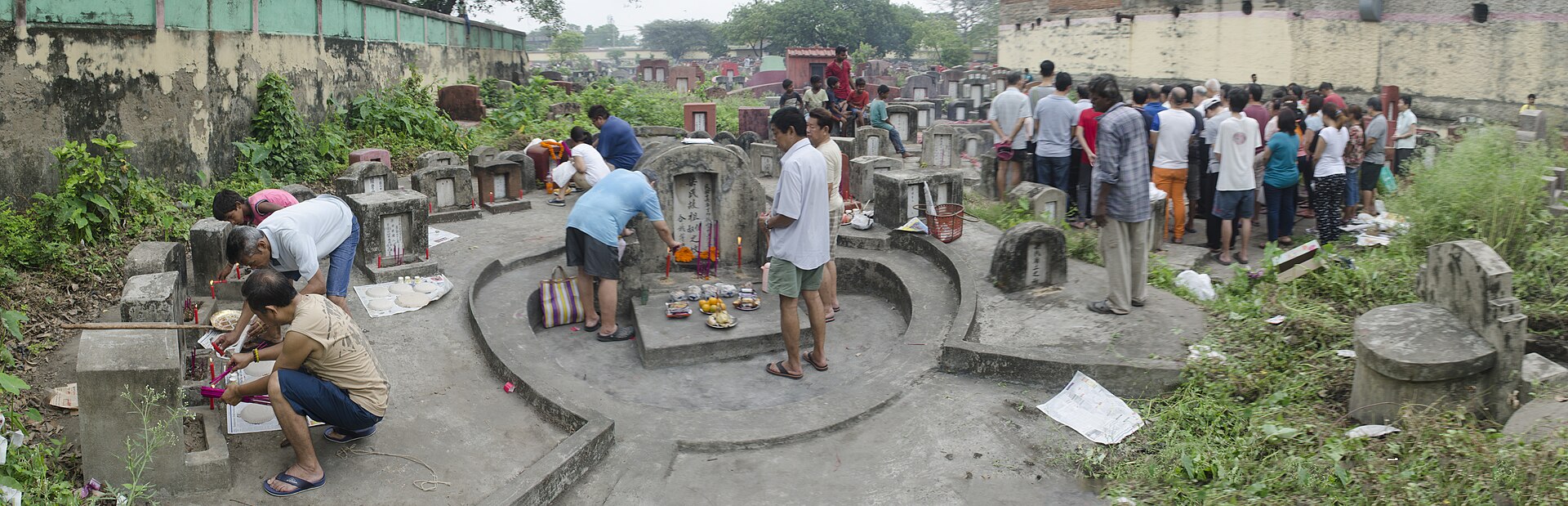
This material care extends a deeply Confucian conception of the bond between generations. Filial piety, , does not end with a parent's death: it continues in the form of veneration. To neglect an ancestor's tomb would be a serious failing, a break in the thread that ties the living to the departed and, through them, to the long chain of the lineage. At Qingming, this duty becomes collective and visible: the whole family travels, sometimes from very far, to gather before the same mound.
Once the tomb is clean come the offerings. People lay out food: the deceased's favorite dishes, fruit, rice wine poured onto the ground, tea, as well as sticks of incense planted in the earth. The living bow, often in a triple prostration, from the eldest to the youngest. Some speak to the dead in a low voice, telling them of the year gone by, a birth, a marriage, a school success. For the length of a morning, the tomb becomes a place of conversation between two worlds.
Paper Money and the Burnt Offerings#
The most spectacular rite is that of fire. People burn , the "paper money": fake bills, often stamped by a "Bank of Hell" for astronomical sums, meant to enrich the deceased in the afterlife. The old belief holds that what is consumed here reaches, transformed into smoke, the world of the dead. The dead thus have money, goods, everything they might need.
Contemporary inventiveness has multiplied this repertoire. To the bundles of bills have been added paper objects reproducing modern comfort: miniature houses, cars, cardboard smartphones, designer clothes, sometimes even bank cards or paper servants. Burning a paper iPhone for a departed grandfather is not incongruous at all: it translates into today's language a thousand-year-old intention, that of not leaving the dead destitute.
Want to decipher these characters? Learn 清明 (qīngmíng), 扫墓 (sǎomù), and hundreds of everyday Chinese words with ChineseSRS (chinesesrs.com).
This ancestor worship is not mere folklore: it structures part of Chinese family identity, in which the individual sees themselves as a link between those who came before and those who will follow. Korean funerary rites, the jesa, rest on a kindred logic, born of the same Confucian bedrock.
Read alsoJesa: the rite of the ancestors at the heart of KoreaIn Korea, the jesa perpetuates the same gesture: setting a table of offerings for the ancestors and bowing before them. A Confucian variation on the same duty of remembrance.
Ta Qing: The Spring Outing#
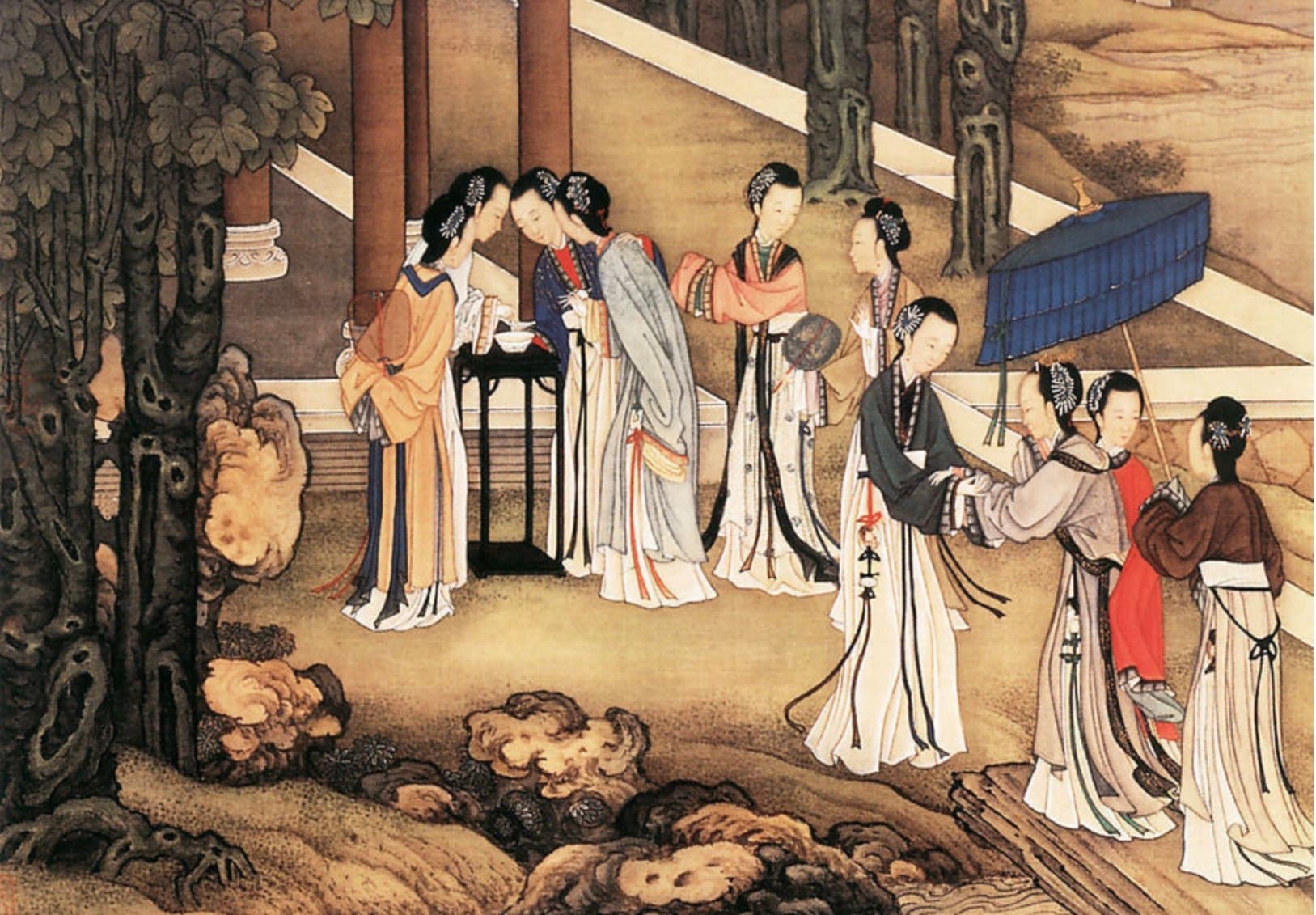
Qingming is not limited to solemn remembrance. The same day carries a second face, joyful and rural: the , "treading the green," that is, the spring outing. Once the duty before the tombs is fulfilled (the graves are often set in the countryside, on the hills), families take advantage of the clear air and the awakened nature to walk, picnic, and play.
| Custom | Chinese term | Gesture | Side |
|---|---|---|---|
| Sweeping the tomb | 扫墓 (sǎomù) | Cleaning the grave, laying out offerings | Remembrance |
| Burning paper money | 纸钱 (zhǐqián) | Sending goods to the dead through smoke | Remembrance |
| Treading the green | 踏青 (tàqīng) | Spring walk and picnic | Rejoicing |
| Flying the kite | 风筝 (fēngzheng) | Releasing bad luck and illness into the sky | Rejoicing |
This duality often surprises the outside observer: how can one weep for the dead and rejoice in the same morning? The answer lies in the very nature of Qingming, an agrarian festival of renewal grafted onto a funerary rite. The greening spring and the honored ancestors belong to one and the same cycle: life starting anew, the continuity of the lineage, nature reborn while memory, for its part, does not die. To tread the new grass after sweeping the tomb is to close the loop.
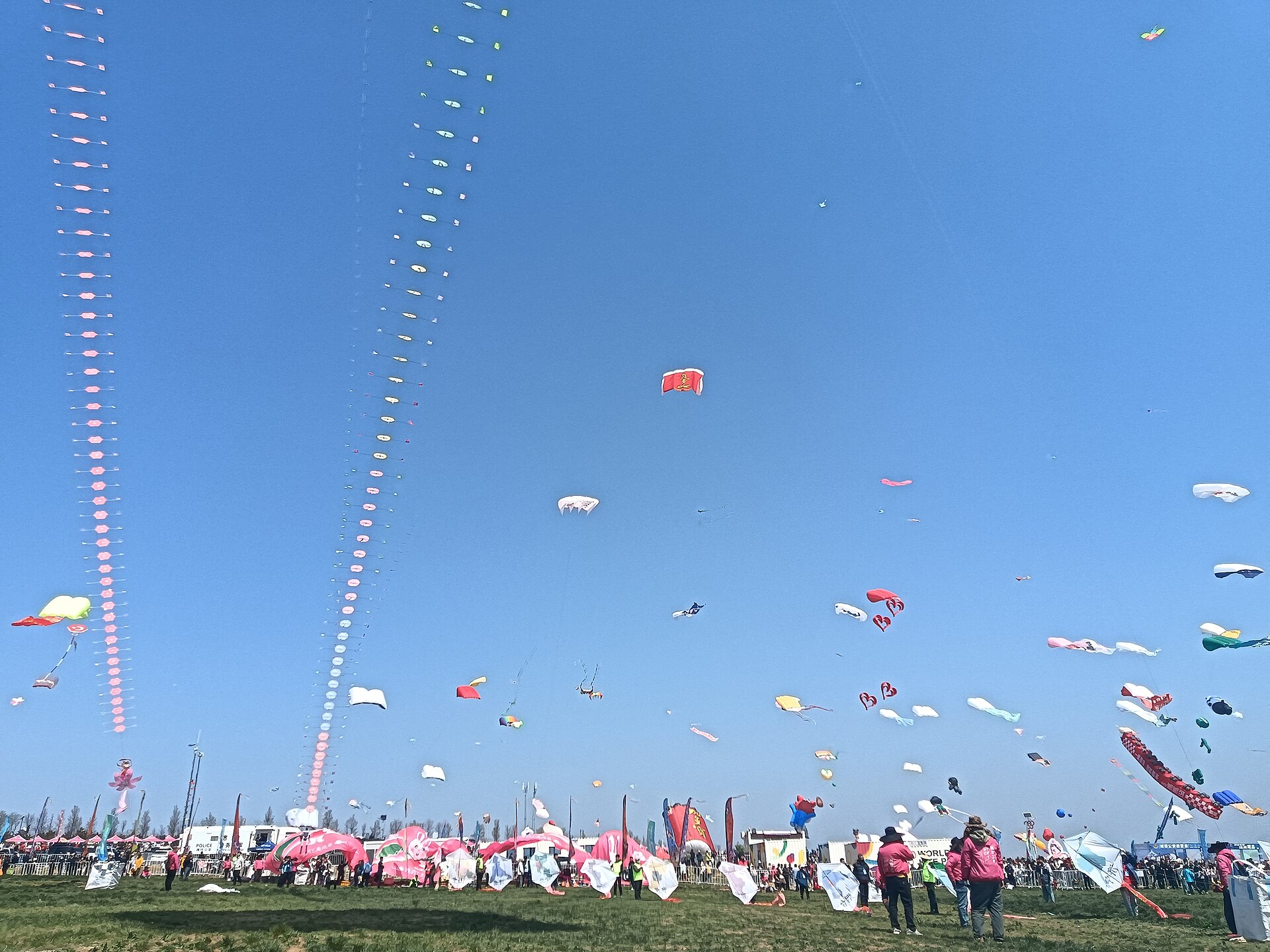
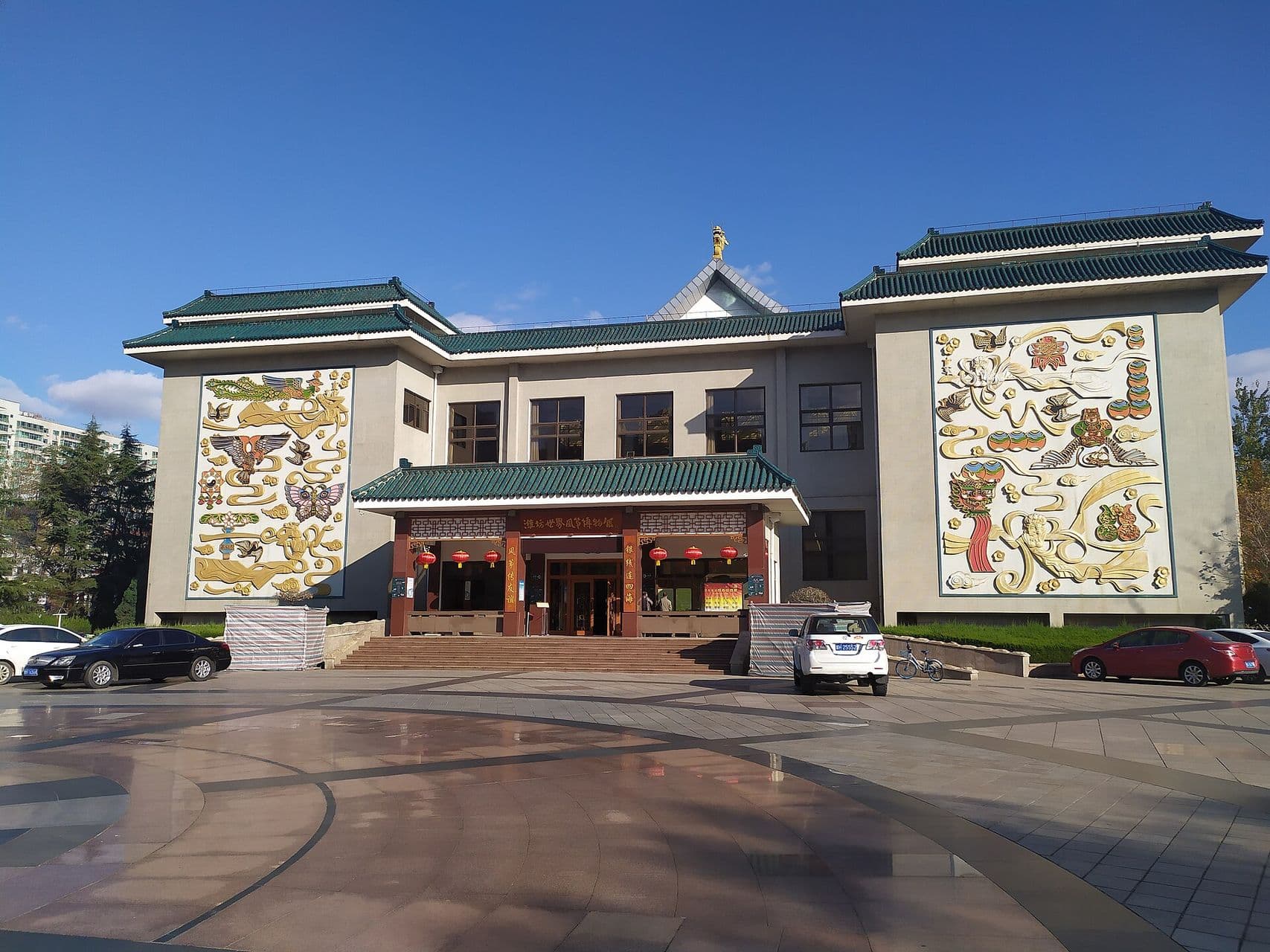
Several traditional activities accompany the taqing. The is emblematic of the season: it is flown high, and some, it is said, cut the string once the craft is in the sky so that bad luck and illness fly away with it. Branches of are also hung on doors: a tree associated with spring, with vitality, and, a distant echo of the Jie Zitui legend, with protection against evil spirits. Swings, outdoor games, and the gathering of the first herbs round out this bright side of the festival.
Qingtuan and the Green Flavors of the Festival#
Every Chinese festival has its dish; Qingming has its own, a deep and springlike green: the . These glutinous rice balls draw their color from an herb juice, mugwort (àicǎo, 艾草) or a wild grass called màiqīng, mixed into the dough, which then takes on a jade hue. Filled with sweet red bean paste (hóngdòushā, 红豆沙) or, in modern versions, with lotus seed, black sesame, or even salted egg yolk, they are eaten cold, steamed, barely lukewarm. A specialty of the Yangtze delta, around Shanghai, Suzhou, and Zhejiang, the qingtuan has become the emblematic taste of the season.
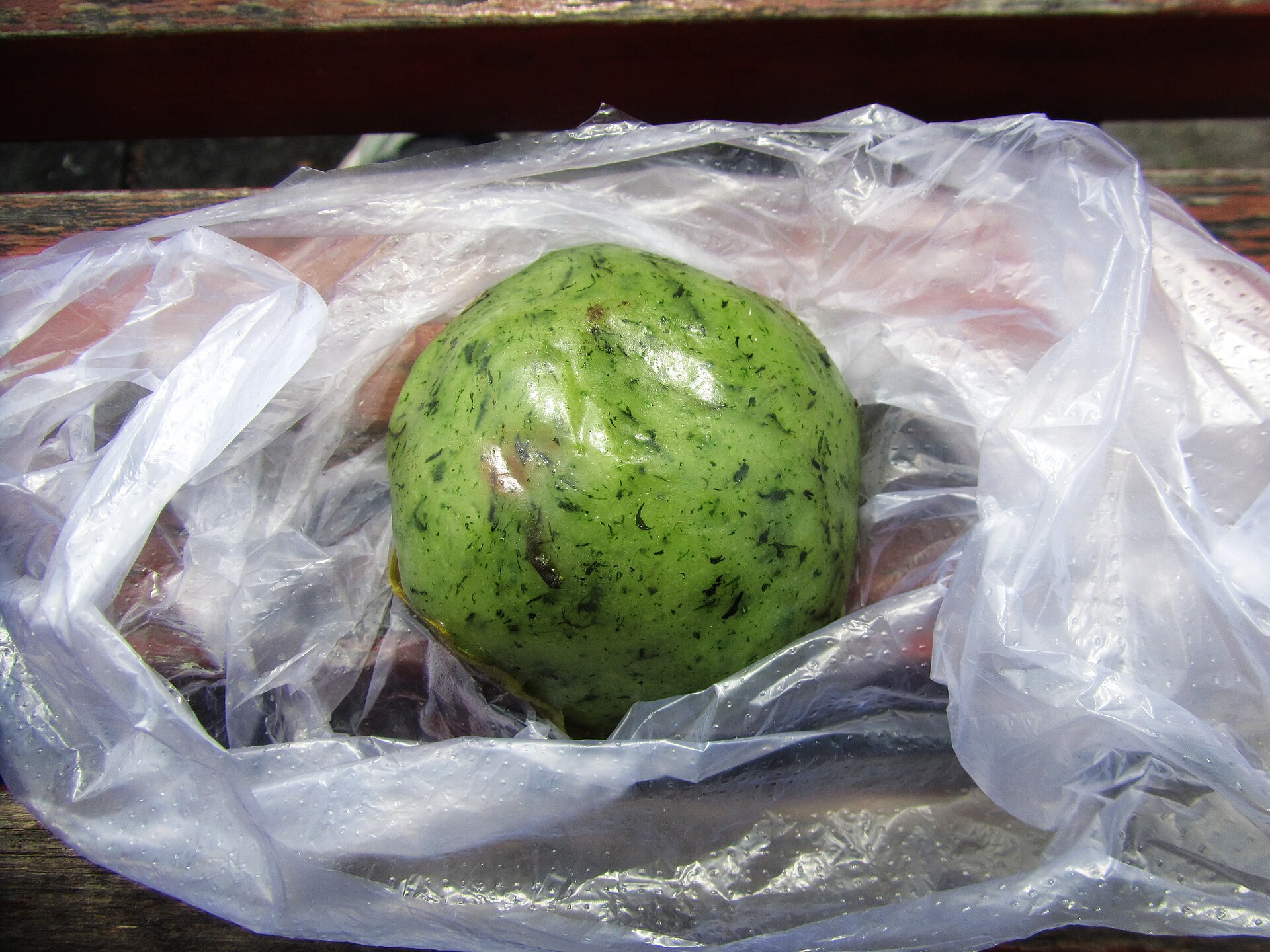
This choice of a cold dish is not accidental: it perpetuates, on the plate, the cold food taboo inherited from Hanshi. Where the old festival forbade all fire, Qingming cooking still favors preparations that keep well and are eaten without reheating. Depending on the region, other treats mark the day: spring pancakes (chūnbǐng, 春饼), colored eggs, various rice cakes. The Qingming table, like that of all Chinese festivals, tells in its own way the story of the celebration.
Read alsoMid-Autumn Festival: the full moon, mooncakes and Chang'eJust as the mooncake seals the Mid-Autumn Festival, the qingtuan is inseparable from Qingming: in China, every festival has its dish, and every dish its legend.
From Hanshi to Public Holiday: The Long Life of a Festival#
Qingming is today a national public holiday in mainland China, but this official recognition is recent: it dates from 2008. That year, the government reshaped the holiday calendar to restore the place of three long-neglected traditional festivals: Qingming, the Dragon Boat Festival (端午, Duānwǔ), and the Mid-Autumn Festival. Since then, Qingming opens a short long weekend in spring, allowing far-flung families to gather back home to sweep the tombs.
This official recognition marks a turning point. During the Cultural Revolution (1966-1976), ancestral rites were denounced as feudal superstitions, and the cult of the dead was practiced with discretion, even in secret. The return of Qingming to the rank of national festival reflects a broader rehabilitation of traditions, now valued as cultural heritage and social glue. In 2006, the customs of Qingming were in fact inscribed on the national list of intangible cultural heritage.
The festival travels beyond China as well. Wherever the Chinese diaspora has settled (Taiwan, Hong Kong, Singapore, Malaysia, Thailand, Indonesia), Qingming continues to gather families around the ancestors' graves, with local variations. It is modernizing too: since the 2010s, "online tomb-sweeping" services (网上扫墓) have made it possible to light a virtual incense stick or lay down digital flowers for those who cannot travel, while the authorities, concerned about pollution and fires, encourage replacing burnt paper money with offerings of flowers.
This tension between fidelity to the rite and adaptation to the modern world is the mark of every great living tradition. Ancestor worship draws, moreover, on multiple spiritual sources: to the Confucian foundation of filial piety are added Taoist conceptions of the soul and the afterlife, a cosmology in which the dead have never quite left the world of the living.
Read alsoTaoism: Laozi, the Dao and the art of not forcingTaoism runs through the Chinese conception of the soul and the afterlife: behind the incense of Qingming lies a cosmology in which the living and the dead share a single breath.
There is, at the other end of the year, a dark mirror of Qingming: the Hungry Ghost Festival, in high summer, when the dead without descendants return to wander among the living. Where Qingming celebrates the beloved and well-fed ancestors, this other festival appeases the forgotten spirits.
Read alsoThe Hungry Ghost Festival: China's Ghost MonthIn the seventh lunar month, the dead return, but these are the forgotten, the hungry ones. The summer flip side of Qingming's quiet piety.
What remains, in the end, is a simple and enduring image: a family kneeling before a mound of earth, one April morning, in the clear and luminous air that gives the festival its name. Qingming says that the dead do not fade so long as we speak their name, pull the grass from their tomb, and keep them a place at the spring table. In a civilization that thinks of itself in lineages rather than individuals, tending the memory of ancestors is not looking backward: it is holding the thread that, one day, will also hold our own name.
FAQ#
When does the Qingming festival take place? Qingming falls each year around April 4 or 5, when the Sun reaches 15 degrees of celestial longitude. It is one of the twenty-four solar terms of the Chinese calendar. Since 2008, it has been a national public holiday in China, the occasion for a short long weekend.
What does "tomb sweeping" (扫墓) mean? Sǎomù consists of physically cleaning the ancestors' grave: pulling up the weeds, repairing the mound, then laying down offerings (food, incense, flowers) and burning paper money. It is an act of filial piety, an extension of the respect owed to elders beyond death.
Why is paper money burned at Qingming? People burn zhǐqián (纸钱), fake bills meant for the "Bank of Hell," so that the deceased may have wealth in the afterlife. The smoke is believed to transmit these goods to the dead. Today, paper houses, cars, or smartphones are burned as well.
What is the connection between Qingming and the Hanshi festival? Qingming absorbed the old Cold Food Festival (寒食, Hánshí), tied to the legend of Jie Zitui, who died in a fire. Hanshi forbade all fire and was held just before Qingming; the two festivals, very close together, eventually merged, bequeathing to Qingming its core of commemoration.
What do people eat for Qingming? The emblematic dish is the qīngtuán (青团), a glutinous rice ball greened with mugwort and filled with red bean paste, eaten cold. This preference for cold dishes perpetuates the fire taboo inherited from the Hanshi festival.
Photo credits: images in this article come from Wikimedia Commons and are under free licenses.
The Chinese kite: two thousand years in the wind
History of the Chinese kite (fengzheng): ancient invention, military uses, popular art, the capital Weifang and the symbolism of cutting the string in spring.
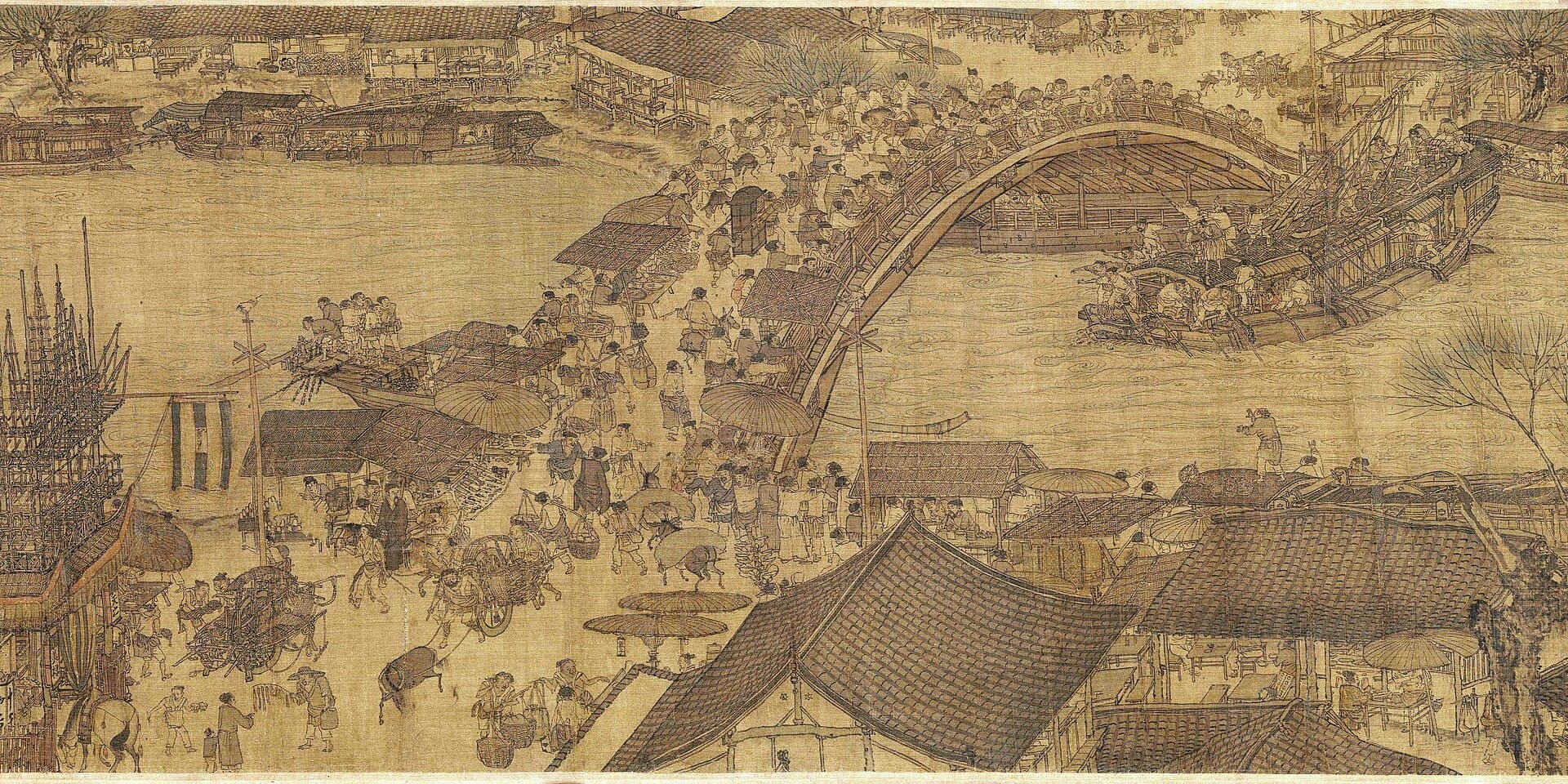
Cover image: Zhang Zeduan · Zhang Zeduan, via Wikimedia Commons · Public domain