CLAMP: Four Women Who Redefined Manga
The story of CLAMP, the legendary all-female manga collective, from their doujinshi origins to global dominance with Cardcaptor Sakura, X, xxxHolic, and more.
La rédaction Kotoba Interactive
Studio éditorial
CLAMP's story begins in the mid-1980s in Osaka. At the Dream Comic event, a dozen young women from a shared drawing class formed a circle, self-published manga sold at conventions like Tokyo's Comiket. They called it CLAMP Cluster, soon shortened to CLAMP.
A Collective Born in the Shadows#
The name is part of the legend. One version claims "clamp" refers to a storage heap, "a pile of potatoes." Another says they chose it so their booth would sit near the circle CLUB/Y in katakana order (both starting with クラ, kura).
Unlike most circles, CLAMP aimed at going professional from the start.
Between 1987 and 1989, members produced dozens of doujinshi, mainly parodies (aniparo) of series like Saint Seiya, Captain Tsubasa, and Jojo's Bizarre Adventure. Members from this early era included Tamayo Akiyama, Leeza Sei, Sei Nanao, Soshi Hishika, and Shinya Omi, now largely forgotten but instrumental in forging the collective's signature blend of graphic elegance, narrative complexity, and emotional depth.
The Four Pillars#
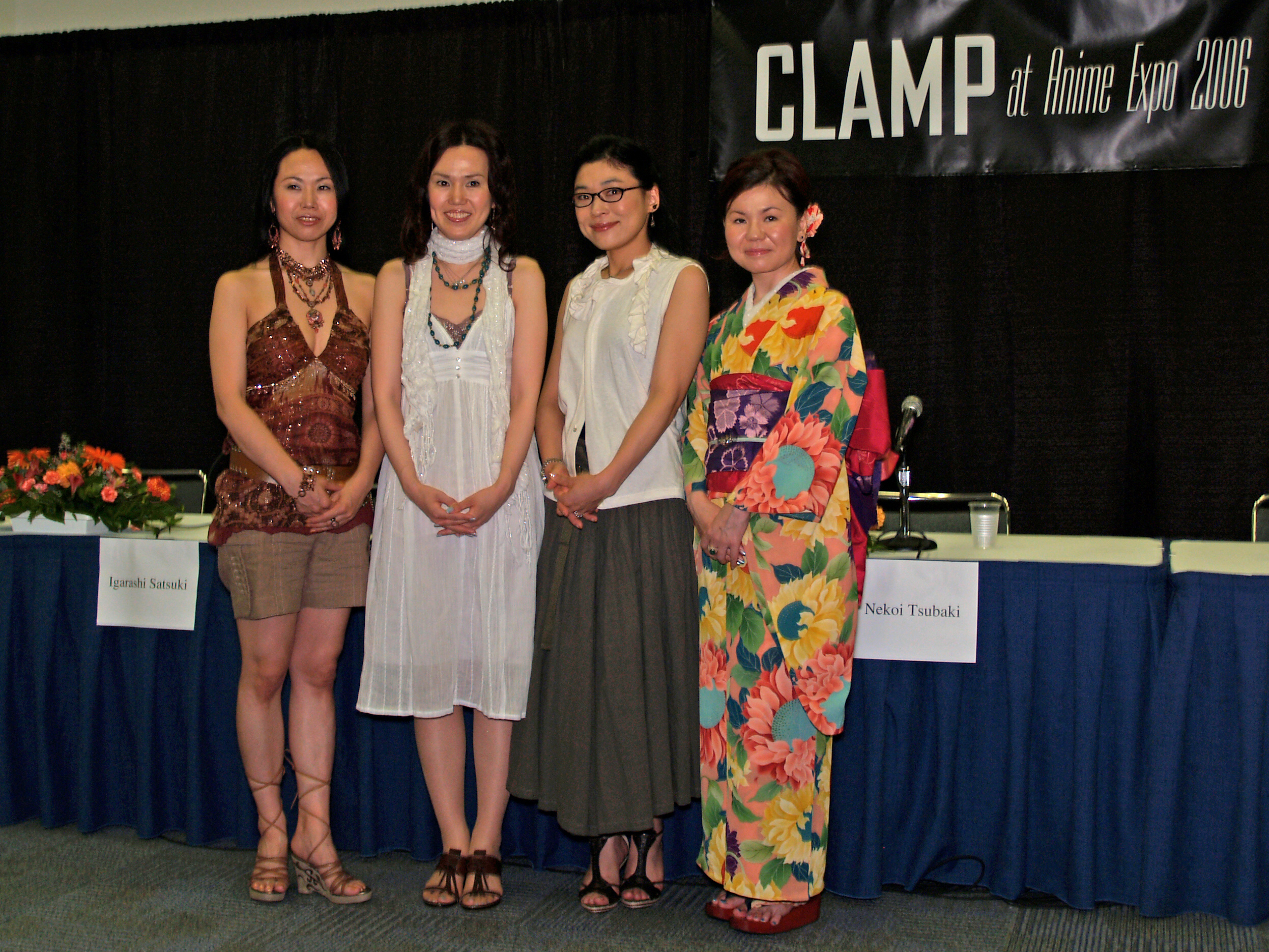
The collective tightened over the years: from twelve members originally, to seven when they went professional in 1989, then to four in 1993. These four form the definitive core, working together for over thirty years:
-
, born May 2, 1967 in Osaka: writer and group leader. She crafts the stories and oversees artistic direction, weaving plots across hundreds of chapters with clues that pay off much later, providing color direction and detailed per-chapter drafts: dialogue, panel sizes, props, character emotions.
-
, born June 16, 1968 in Kyoto: lead artist, responsible for final illustrations and character design. Formerly Mokona Apapa, she simplified her pseudonym in 2004.
-
, born January 21, 1969 in Kyoto: artist for layouts, backgrounds, and certain character designs. Formerly Mick Nekoi (changed in 2004), she is the group's specialist in super deformed (SD) drawings.
-
, born February 8, 1969 in Kyoto: responsible for graphic design, settings, project planning, and art direction for covers and merchandise, from logos to dust jackets, and manages the collective's schedule.
Four temperaments, one vision. That may be CLAMP's best-kept secret: the alchemy that turns collaboration into something greater than the sum of its parts.
A Unique Working Method#
CLAMP has kept the same quartet since 1993 and employs no assistants. The four share a single studio and communicate in an internal shorthand forged over decades, so opaque that they believe an assistant would slow them down.
Their pace for a twenty-page chapter: roughly twelve hours of storyboarding, eight hours of writing, then two to five days of drawing. The roles among Mokona, Nekoi, and Igarashi are not rigid; the three rotate between characters and backgrounds as each project demands.
RG Veda: The Gateway (1989-1996)#
In 1989, CLAMP made their professional debut in Shinshokan's Wings magazine with , a ten-volume fantasy epic inspired by the Hindu mythology of the Rigveda. Young Ashura and the warrior Yasha undertake a tragic quest against the tyrannical god Taishakuten, trapped in a cycle of prophecies and betrayals from which none emerges unscathed. Already present is a major CLAMP leitmotif, fate: is Ashura condemned by prophecy, or can he choose his path? For CLAMP, the answer is always "Fate is something you choose" (unmei wa erabu mono).
No runaway hit, RG Veda nonetheless established CLAMP as a name to watch, with an OVA in 1991-1992.
CLAMP's manga are full of words worth taming: 運命 (unmei, the fate that haunts Ashura), 陰陽師 (onmyōji, exorcist), or 妖怪 (yōkai, supernatural spirit). With JapaneseSRS and its spaced repetition, learn to read these terms in the original text, from shōjo to seinen.
The Clamp School Universe and Early Experiments (1990-1993)#
From 1990, CLAMP built a lighter shared universe centered on the , a fictional school across three interconnected series:
- 20 Mensou ni Onegai!! (Man of Many Faces, 1990-1991, 2 volumes, Newtype): a young gentleman thief in elementary school, an homage to Rampo Edogawa's character.
- CLAMP Gakuen Tanteidan (Clamp School Detectives, 1992-1993, 3 volumes, Monthly Asuka): three brilliant students investigate mysteries on campus.
- Duklyon: Clamp School Defenders (1991-1993, 2 volumes, Comic Genki): a sentai parody.
These reveal CLAMP's sharp sense of humor. The period also saw Shirahime Sho (Snow Goddess Tales, 1992), snow-themed tales, and Legend of Chun Hyang (1992-1994), a retelling of the Korean folk tale.
Tokyo Babylon and Narrative Maturity (1990-1993)#
With , published 1990 to 1993 in Wings, CLAMP reached a new dimension. This seven-volume series follows Subaru Sumeragi, a sixteen-year-old medium and heir to the Sumeragi clan, Japan's most powerful clan of onmyoji (exorcists), and his ambiguous relationship with the mysterious Seishiro Sakurazuka in the Tokyo of the economic bubble.
Beneath its shojo surface, it is a deeply social work, tackling teen suicide, urban loneliness, discrimination against immigrants, and rampant materialism. Each chapter is a standalone case Subaru resolves, a pretext for a contemporary social issue, while a love story of rare subtlety builds between Subaru and Seishiro toward a devastating conclusion.
A Twist That Became Legendary#
Its conclusion contains one of the most devastating twists in manga history, seeded from the first chapter. Creators including Hajime Isayama (Attack on Titan) have cited it as a major influence on their narrative reversals.
It also introduces a recurring CLAMP motif: the one-eyed character as an expression of solitude, reappearing with Fay in Tsubasa and elsewhere.
X/1999: Ambition at Its Peak (1992-2003)#
In 1992, CLAMP launched what was meant to be their masterpiece: , in Kadokawa Shoten's Monthly Asuka. Set in a Tokyo threatened by apocalypse as 1999 approaches, X pits the Dragons of Heaven (preserving humanity) against the Dragons of Earth (destroying civilization to save the planet). Subaru and Seishiro from Tokyo Babylon reappear, destinies crossing once more.

Its action and apocalyptic scope drew a male readership beyond shojo boundaries: the National Diet crumbling, the Rainbow Bridge shattering, Tokyo Tower buckling. The series spawned an animated film by Rintaro in 1996 and a TV adaptation in 2001.
But X became CLAMP's greatest unfinished work: on hiatus since 2003 after eighteen volumes. The official reason is escalating violence that Asuka could no longer publish after tightening its guidelines. CLAMP has never ruled out finishing it, but more than twenty years have passed.
Magic Knight Rayearth: Conquering the Mainstream (1993-1996)#
In 1993 CLAMP showed stunning versatility with , in Kodansha's Nakayoshi, the same magazine that ran Sailor Moon. This six-volume mecha magical girl series (three volumes per arc) sends three middle schoolers, Hikaru, Umi, and Fu, from Tokyo Tower to the fantasy world of Cephiro. The first arc seems to follow the classic formula but its conclusion upends every expectation, and the second arc deconstructs good and evil with unexpected maturity.
The studio TMS anime cemented CLAMP's mainstream popularity. Rayearth was also their first major international success, notably in France, where it was published as early as 1996 by Pika Edition.
This period also saw Miyuki-chan in Wonderland (1993-1995), a parody of Alice in Wonderland in Newtype, a one-volume one-shot.
Wish and Clover: Two Underrated Gems (1995-1999)#
Before the Cardcaptor Sakura phenomenon, CLAMP published two underappreciated works.
Wish (1995-1998, 4 volumes, Monthly Asuka) tells of an angel who falls to Earth and the lonely doctor who takes her in, a meditation on impossible love.
Clover (1997-1999, 4 volumes, Amie) may be CLAMP's most experimental work. In a dystopian future, children with supernatural powers are classified as "clovers" by strength; Su, a four-leaf clover, is the most dangerous and most isolated being in the world. Graphically it is radical: massive negative space, layouts borrowing as much from graphic design as from comics. The series went on hiatus after Amie folded.
Cardcaptor Sakura: The Global Phenomenon (1996-2000)#
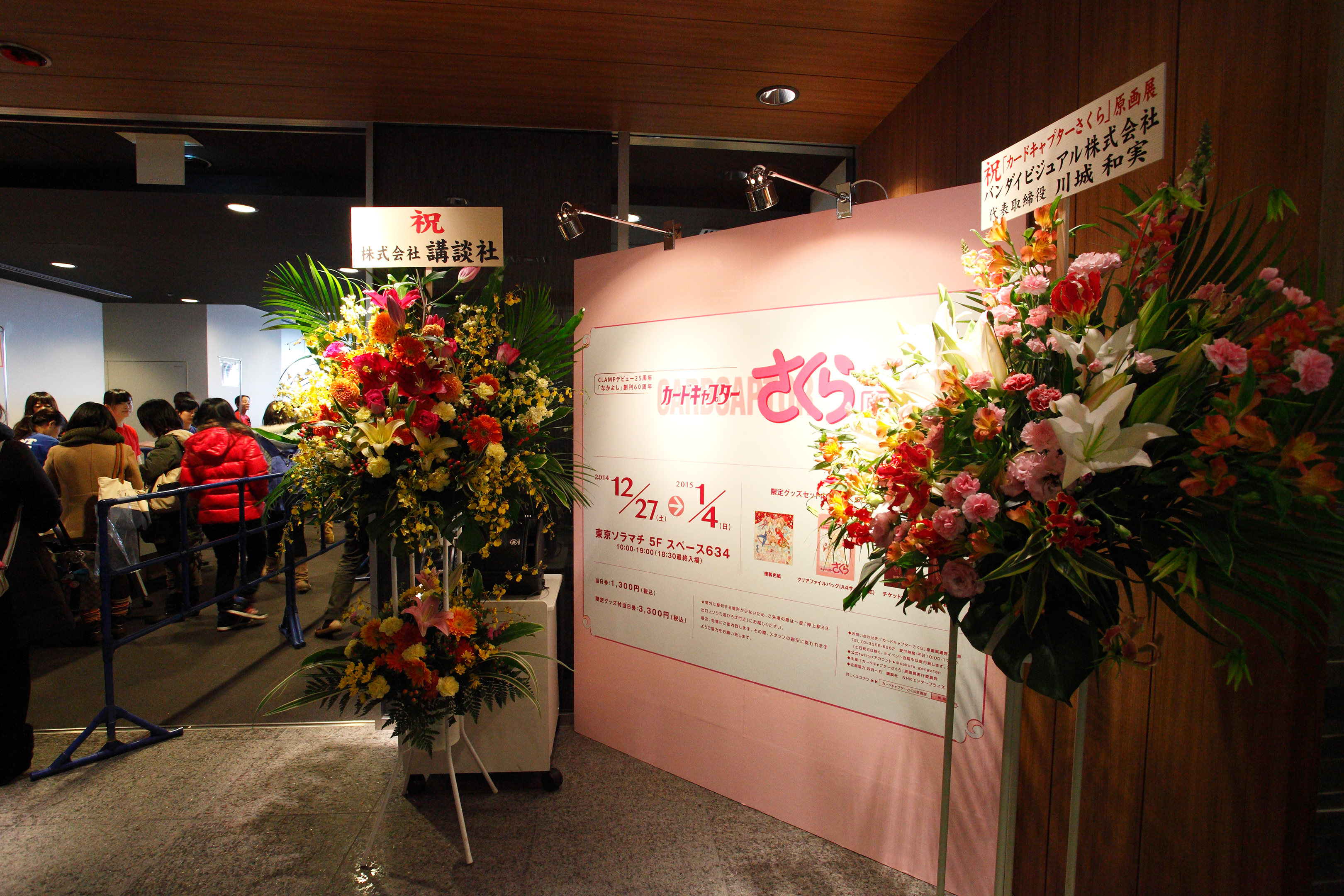
In 1996, CLAMP created the work that would make them truly global: , in Nakayoshi. Twelve volumes tell of Sakura Kinomoto, a schoolgirl from Tomoeda who must recapture the Clow Cards accidentally scattered into the world.
A Revolutionary Shojo#
Cardcaptor Sakura redefined the magical girl genre:
-
No gratuitous villainy: conflicts arise from circumstances, misunderstandings, and overprotectiveness. Even adversaries act out of love. The guardian Yue, seemingly the final antagonist, is carrying out his creator's will.
-
The portrayal of feelings: CLAMP presents diverse relationships naturally, the love between Toya and Yukito, Tomoyo's admiration for Sakura, the Rika/Terada pairing.
-
Kindness as strength: Sakura wins through understanding and empathy. Her famous "Zettai daijobu da yo!" (絶対大丈夫だよ, "Everything will surely be alright!") became a generation's mantra.
-
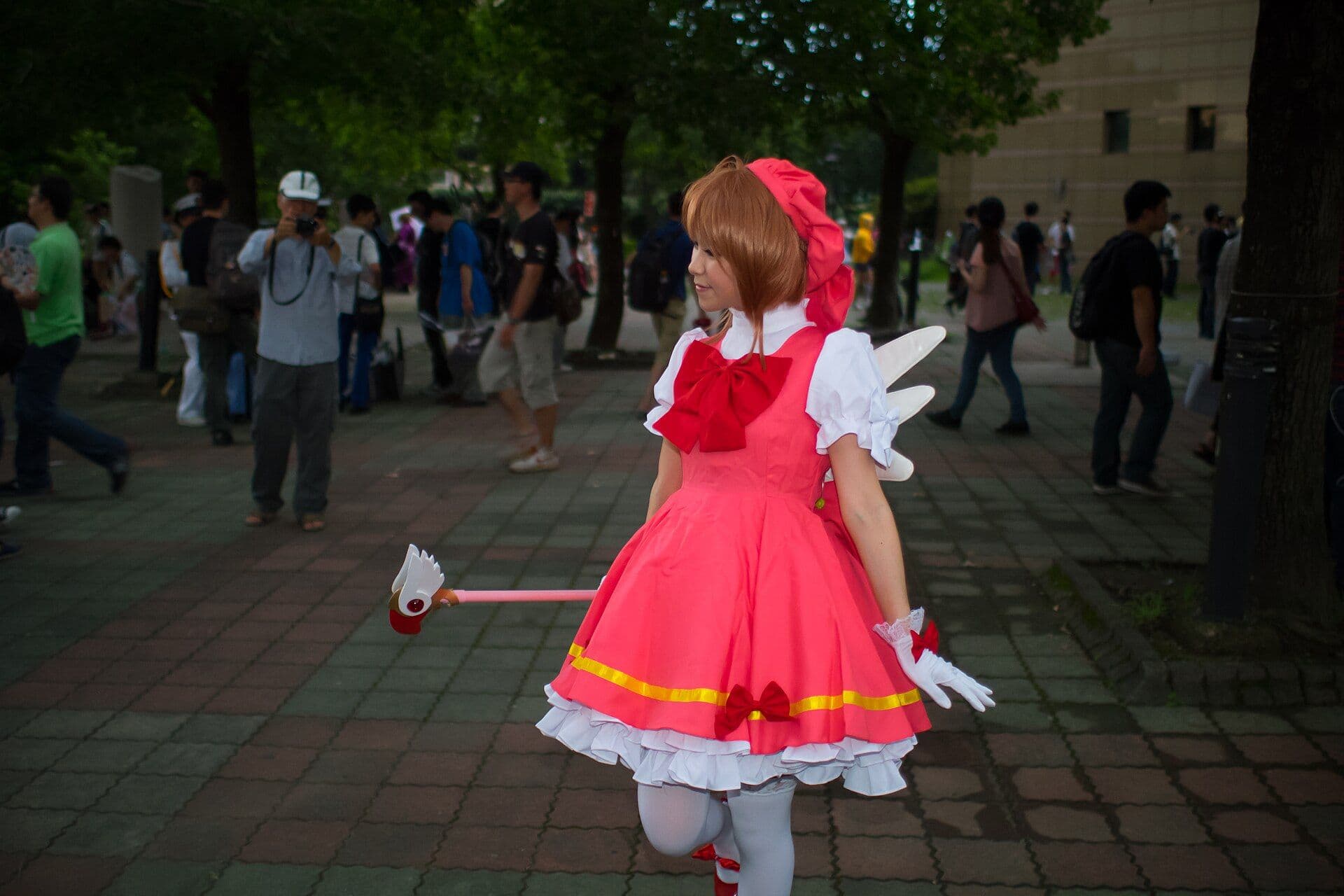
Aesthetics in service of story: the costumes Tomoyo designs for Sakura change every chapter, a fashion showcase that inspired countless cosplayers.
The Madhouse anime, 70 episodes and two films, turned it into a worldwide phenomenon. It won the Seiun Award for best manga in 2001. In France, it aired as Sakura, chasseuse de cartes on Canal+.
In 2016, CLAMP launched , a direct sequel following Sakura in middle school, completed in 2024 after sixteen volumes and eighty chapters.
Angelic Layer: The First Step Toward Shonen (1999-2001)#
Even before Chobits, CLAMP ventured into boys' manga with . Misaki Suzuhara, a shy middle schooler, discovers the Angelic Layer game, battles between thought-controlled dolls; behind the tournament lies a story about the bond between a girl and her absent mother. CLAMP's first series in a shonen magazine, it foreshadowed their expansion toward new readerships and introduced characters that would reappear in Chobits.
This period also saw Suki: A Like Story (1999-2000, 3 volumes, Monthly Asuka), a shojo about love between a high school girl and her teacher, and Legal Drug (2000-2003, 3 volumes, Monthly Asuka), a supernatural manga about two young men in a mysterious pharmacy, later revived as Drug & Drop.
Chobits and the Seinen Turn (2001-2002)#
In 2001, CLAMP surprised again with in Kodansha's Young Magazine, a seinen (young adult male) publication. This eight-volume story follows Hideki Motosuwa, a student who finds a persocom (a humanoid computer) abandoned in a trash heap and names her Chii, developing what CLAMP calls chaste love (junai): whether love can be genuine without a physical dimension. Behind its ecchi romantic comedy veneer, it asks whether you can love a machine, themes that resonate even more in the age of artificial intelligence.
The Los Angeles Times dubbed them "the Steven Spielberg of manga." Few creators publish in shojo, shonen, and seinen magazines with equal success.
Tsubasa and xxxHolic: The CLAMP Multiverse (2003-2011)#
In 2003, CLAMP simultaneously launched two interconnected series, the culmination of their narrative vision:
, in Kodansha's Weekly Shonen Magazine (28 volumes), is an epic where Shaoran and Sakura, alternate versions of the Cardcaptor Sakura heroes, travel across parallel dimensions to recover Sakura's memory feathers. Each world nods to a previous CLAMP work, with alternate versions of characters from Rayearth, RG Veda, Chobits, X, Tokyo Babylon, creating a multiverse long before the concept became ubiquitous. It sold over 20 million copies.
xxxHolic (×××HOLiC), in Young Magazine then Bessatsu Shonen Magazine (19 volumes, over 11 million copies), follows Kimihiro Watanuki, a high schooler haunted by spirits who works in the shop of the witch Yuko Ichihara to pay for his wish: to be freed from his ability to see yokai. Events in one series influence the other, objects pass between them, and Yuko is the pivot between both universes.
The Star System: A Legacy From Osamu Tezuka#
Reusing characters across works has a name: the Star System, popularized by Osamu Tezuka, the "god of manga." Where Tezuka treated his characters like a theater troupe playing different roles, CLAMP weaves genuine narrative connections between incarnations.
Long before Marvel popularized the shared cinematic universe, CLAMP had built their own. Characters from RG Veda appear in Tsubasa. The witch Yuko from xxxHolic is linked to the sorcerer Clow from Cardcaptor Sakura. The Dragons of X cross paths with the travelers of Tsubasa. Vampire Subaru in Tsubasa echoes the Subaru of Tokyo Babylon. The web was built organically over the years, rewarding devoted readers without excluding newcomers.
Reading CLAMP is like pulling a thread and discovering it's tied to every other. Each work is complete on its own, yet enriched by echoes of all the rest.
Kobato and the 2005-2013 Years#
After Tsubasa and xxxHolic, CLAMP kept producing steadily:
Kobato. (2005-2011, 6 volumes, Sunday Gene-X then Newtype) follows a mysterious young girl who must fill a bottle with healed broken hearts to have her wish granted, with ties to Tsubasa and xxxHolic. A 2009 Madhouse anime gave it a second life.
Gate 7 (2011-2013, 4 volumes, Jump Square) marked CLAMP's foray into Shueisha, blending the supernatural with historical figures from feudal Japan. On hiatus.
Drug & Drop (2011-2013, 2 volumes, Young Ace) continues the Legal Drug characters in a sequel connecting to xxxHolic. Also on hiatus.
xxxHolic: Rei (since 2013, Young Magazine) opens a new chapter for Watanuki and Yuko, while Tsubasa World Chronicle: Nirai Kanai-hen (2014-2016, 3 volumes) offers a sequel to Shaoran's dimensional epic.
Beyond Manga: Collaborations and Character Design#
CLAMP's influence extends far beyond their own series. The collective is regularly sought out for character design on major anime projects:
-
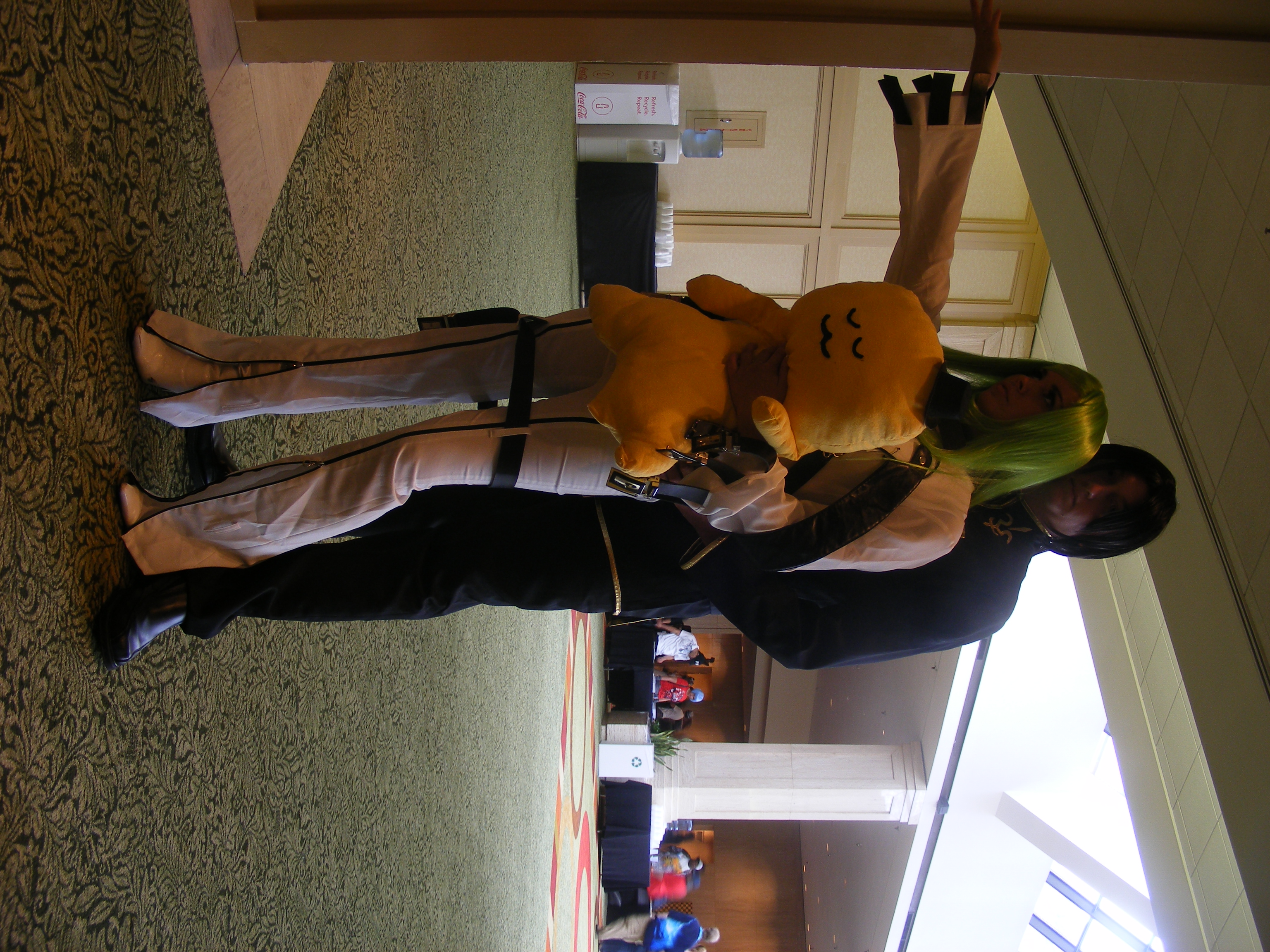
Code Geass (2006): their first character design collaboration on an anime they did not write. The elongated silhouettes of Lelouch and the Knights of Britannia bear the unmistakable CLAMP mark, and the franchise became a worldwide phenomenon.
-
Blood-C (2011): CLAMP wrote the original story and character design for this horror series by Production I.G, followed by the film Blood-C: The Last Dark.
-
Sweet Valerian (2004): character design for this short-form anime series.
-
Kabukibu! (2017): character design for this anime adaptation by studio Deen.
-
Cardfight!! Vanguard overDress (2021): CLAMP returned to character design for the card game franchise.
-
The Grimm Variations (2024): their most recent collaboration, with studio Wit for Netflix, a reimagining of the Brothers Grimm fairy tales.
CLAMP also contributed costume designs for the video game Tekken 6, proof their aesthetic influence reaches across every medium.
An Unparalleled Legacy#
After more than thirty-five years, CLAMP's track record is staggering:
| Demographic | Target readership | Representative CLAMP work |
|---|---|---|
| 少女 (shōjo) | Young girls | Cardcaptor Sakura (1996) |
| 少年 (shōnen) | Young boys | Tsubasa: Reservoir Chronicle (2003) |
| 青年 (seinen) | Young adult men | Chobits (2001) |
| 児童 (kodomo) | Children | Kobato. (2005) |
- Over thirty series published, spanning every manga genre: shojo, shonen, seinen, josei, kodomo
- Nearly 100 million copies sold worldwide, translated into more than twenty languages
- Countless adaptations: anime series, animated films, OVAs, video games, live-action dramas, musicals
- An aesthetic influence that extends far beyond manga: fashion, illustration, animation, game design, cosplay
- 9th most popular manga collective in Japan according to a 2007 Oricon survey, alongside legends like Fujiko F. Fujio
In 2006, CLAMP made their first public US appearance at Anime Expo in Los Angeles; the auditorium's 6,000 seats filled instantly. The collective remains notoriously private, avoiding public appearances to guard against fan harassment.
Why CLAMP Matters#
CLAMP proved that an all-female collective could dominate an industry long perceived as male. They shattered the barriers between manga's demographic genres and built a shared universe still without equal.
Their influence shows in creators as diverse as the MAGICA Quartet (Puella Magi Madoka Magica), Yuki Midorikawa (Natsume Yujincho), and studio Wit, their collaborators on The Grimm Variations. Above all, CLAMP reminded us that manga can do anything: Greek tragedy and romantic comedy, philosophical reflection and adventure, social critique and pure enchantment. Four women, one collective, and the story is not over.
Essential Works for Discovering CLAMP#
For newcomers, a reading path by taste:
- Cardcaptor Sakura (12 vol.): warmth and magic. The ideal entry point.
- Tokyo Babylon (7 vol.): depth and emotion, of rare narrative density.
- xxxHolic (19 vol.): mystery and philosophy.
- Chobits (8 vol.): tender sci-fi on our relationship with technology.
- Clover (4 vol.): graphic experimentation, a visual poem about solitude.
- Magic Knight Rayearth (6 vol.): adventure and nostalgia.
- Tsubasa: Reservoir Chronicle (28 vol.): the grand tour of the CLAMP multiverse.
In this article
The cultural terms covered here, each with a short definition.
- Anime
- Japanese animation, from feature films to TV series, often adapted from manga.
- CLAMP
- Japanese all-women manga collective of four artists, known for works like "Cardcaptor Sakura."
- Manga
- Japanese comics, read right to left, spanning a vast range of genres and audiences.
- Pop culture
- Mainstream popular culture (manga, idols, games, series) shared worldwide.
Shojo: How Girls' Manga Conquered the World
From Meiji-era magazines to Sailor Moon and Fruits Basket, discover how shojo manga revolutionized comics, invented a unique visual language, and amplified women's voices in the manga industry.
Cover image: othree · othree, via Wikimedia Commons · CC BY 2.0